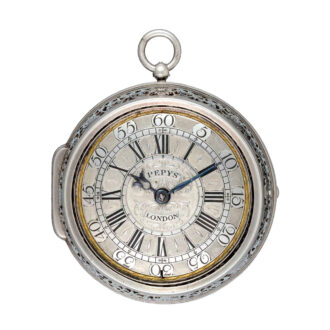
English silver and tortoiseshell alarm verge watch Circa 1685
- Kenmerk
- SA0114
- Diameter
- 54 mm
- Estimate
- € 8.000 - 15.000
- Price sold
- € 13.750
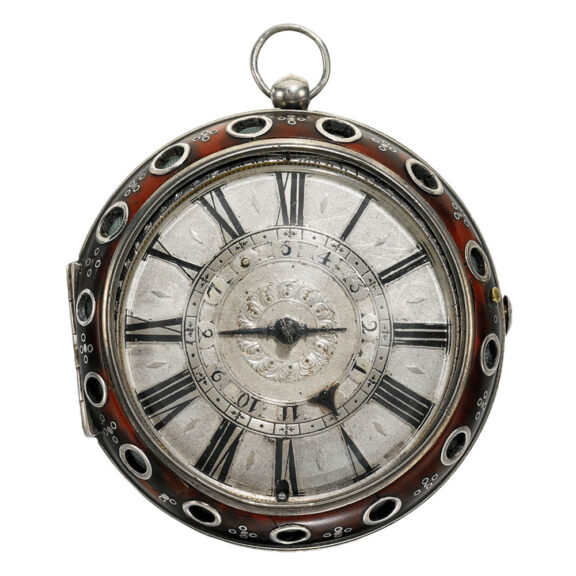
Silver and tortoiseshell two train alarm verge watch
–
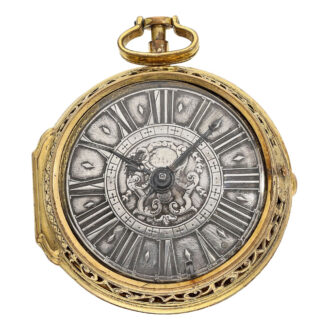
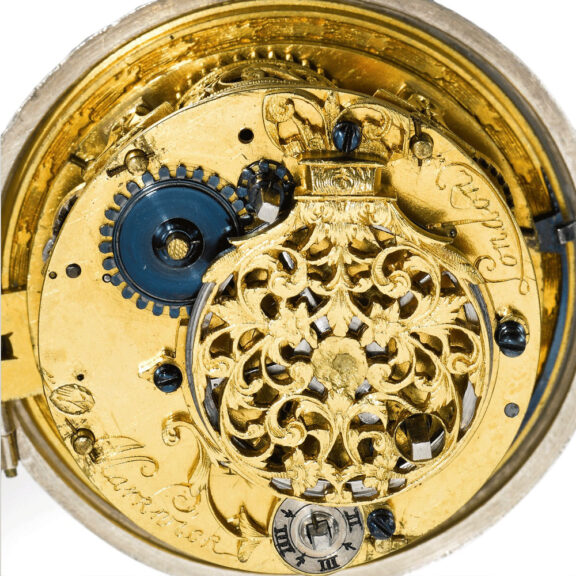
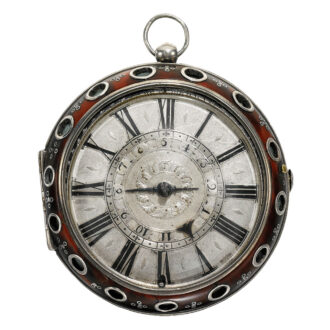
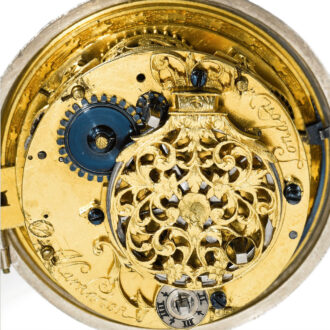
An English exceptionally fine silver and tortoiseshell pair cased two train alarm verge watch, circa 1685, gilded full plate, verge escapement, decoratively pierced and engraved balance cock, blued steel stop work for alarm visible to the backplate, fusee and chain, tulip pillars, standing barrel for alarm train with decorative pierced engraving, movement signed Markwick London.
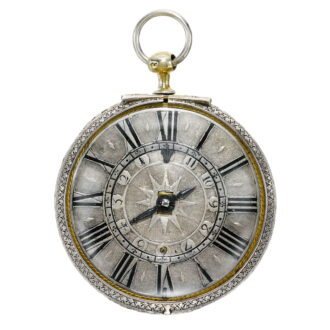
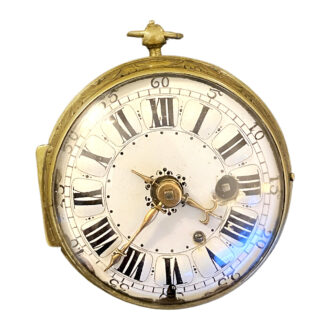
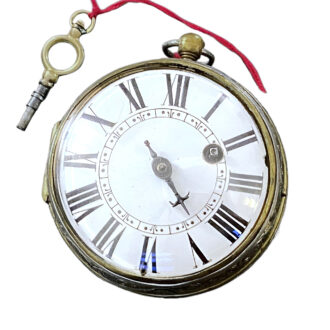
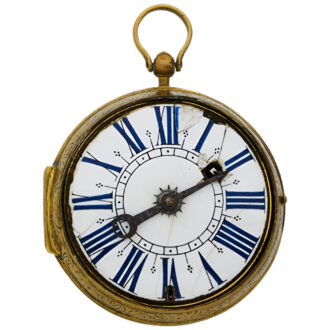
Silver champlevé dial, Roman numerals, inner quarter hour divisions, arrow head pointer mounted on the revolving center to indicate hours, central alarm disc with central blued steel turned hand.
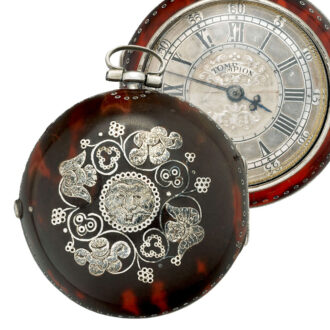
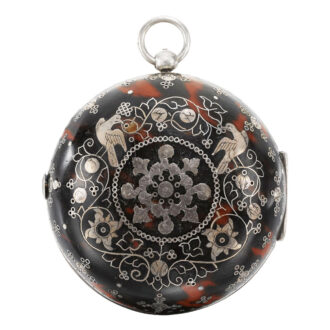
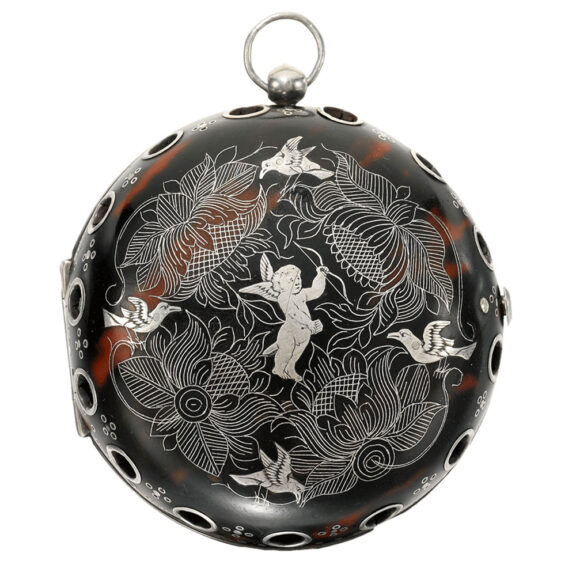
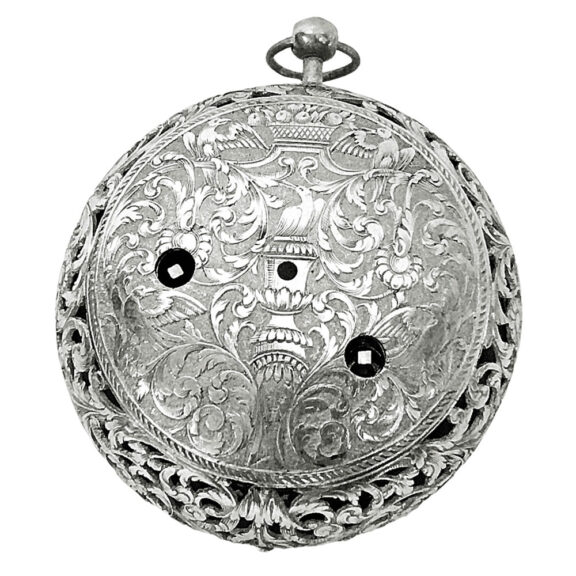
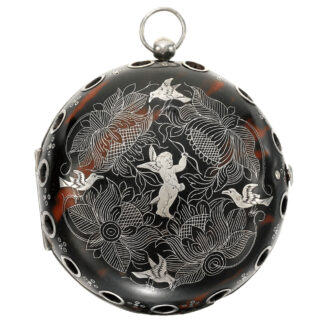
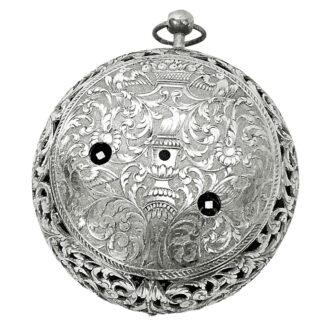
Inner fully decorated silver case, the centre of the case back with an urn surmounted by a bird and surrounded by further birds and scrolling foliage, the pierced band similarly decorated, and engraved flower head beneath the plain ring pendant, bezel with engraved stylised floral decoration, the inner case with maker’s mark WF incuse (probably William Finch), the tortoiseshell outer case with symmetrically arranged pierced silver roundels, interspersed with silver pin work, the center of the outer back with silver inlaid decoration depicting cupid with his bow to the center, flying birds to the four corners and surrounded by large flower heads.
–
Diameter: 54 mm
–
Signed: Markwick London
–
This superb watch is of the highest quality and is in outstanding condition.
The arrow head pointer mounted to the central disc indicates the time of day. The central blued steel hand is for alarm setting and can be moved to the desired position on the Arabic numeral ring, the alarm will then sound when it points to the 12 o’clock Roman numeral.
James Markwick Senior was apprenticed to Edward Gilpin in 1656 and freed in August 1666. He seems to have had a rather fractious relationship with the Clockmakers’ Company, being fined in 1677 for abuse of the Master and repeatedly fined for irregular attendance of the Clockmakers’ Court. His son, also called James, was made free of the Clockmakers’ Company by patrimony in April 1692. James Junior started the partnership with Markwick Markham with his son in law, Robert Markham, and they became some of the leading watchmakers of their day.
Signed: Markwick London
Share this page: