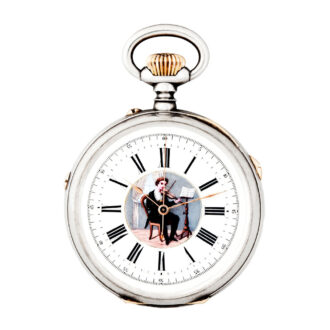
Swiss musical watch made for the Eastern market Circa 1880
- Kenmerk
- TA2593
- Diameter
- 57 mm
- Estimate
- € 10.000 - 25.000
- Price sold
- € 22.000
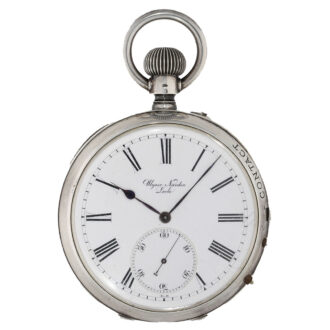
Silver lever watch with center seconds
–
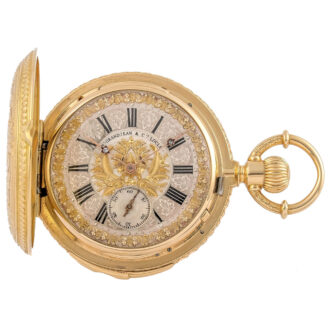
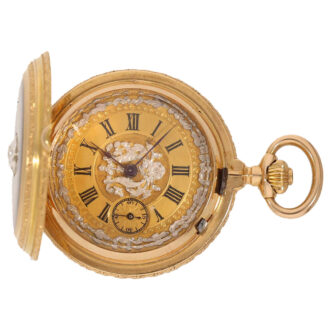
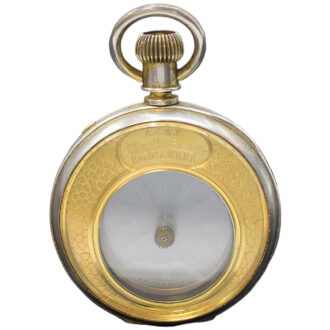
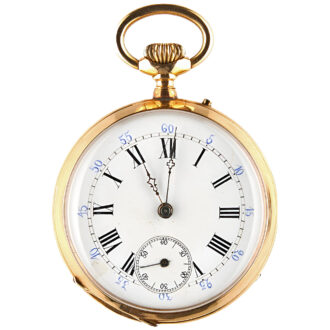
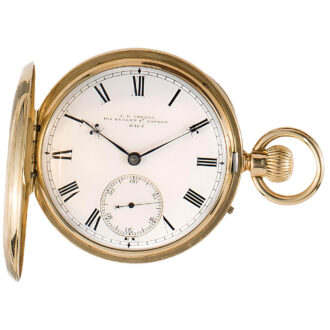
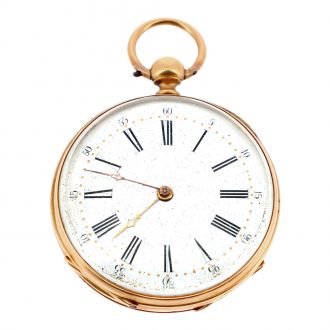
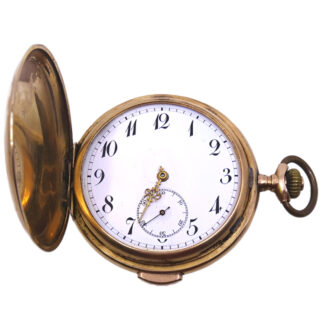
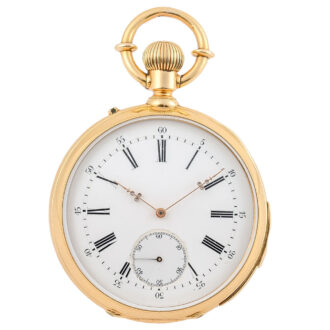
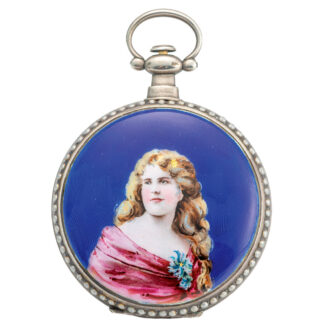
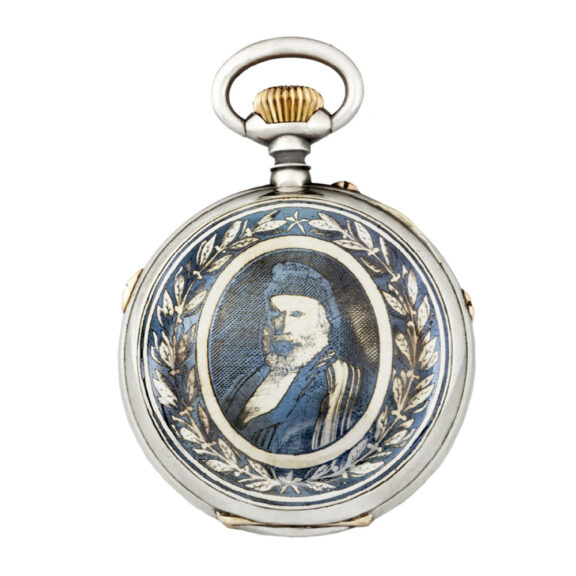
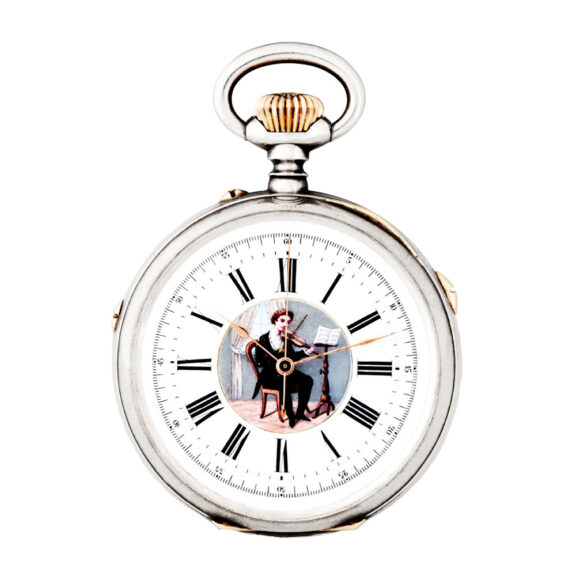
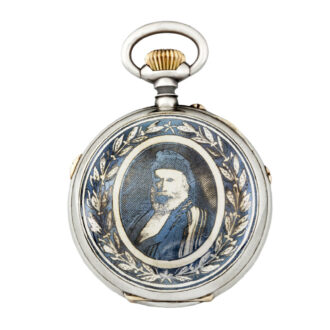
A very fine and extremely rare Swiss silver, gold and niëllo musical center seconds keyless lever pocket watch made for the Eastern Market, circa 1880. With an automaton violinist playing two tunes on a pinned cylinder at will. A polished case with gold hinges, the back cover is decorated with a niëllo portrait of Isma’il Pasha within a laurel wreath border. Hinged silver rimmed glazed cuvette. A two-piece white enamel dial with radial Roman hours, an outer minute track and outermost fifths of second divisions, Arabic five second numerals, the center painted with a seated violinist in an interior, one arm automated holding the violin bow and activated when the music plays, gold spade hands.
–
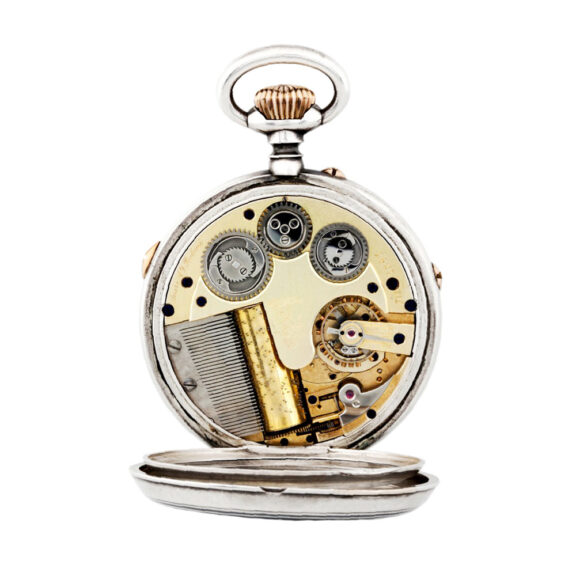
A frosted gilt movement, double train with differential winding, 19 jewels, counterpoised lateral lever escapement, cut bimetallic compensation balance, blued steel Breguet balance spring, index regulator, a musical train with pinned cylinder and 35 steel toothed combs playing two tunes at will, gold music activation and tune selection buttons in the band. Movement engraved with the Reuge trademark of a lion rampant.
–
Diameter: 57 mm
–
Signed: Charles Reuge Sainte-Croix
–
Charles Reuge registered his name and the lion trademark in 1883 for the making of music and watch movements. Only 50 of these watches were made, based on a patent registered on April 25, 1883. They were intended mostly for the Chinese and Indian markets. Reuge revived the idea of musical watches from the early 19th century, but instead of using the sur plateau type mechanism favoured by Piguet & Meylan, he used a pinned cylinder. The cylinder type is more robust and gives a more resonant sound, but requires a thicker case to house it. It also allows for more than one tune to be played from the same cylinder.
–
Isma’il Pasha (1830-1895) also known as Ismail the Magnificent, was a Khedive of Egypt and Sudan from 1863 until he was removed by the British in 1879. Isma’il Pasha left Egypt and initially went into exile in Naples, he was eventually permitted by Sultan Abdulhamid II to retire to his Palace of Emirgan in Constantinople on the Bosphorus.
Signed: Charles Reuge Sainte-Croix
Share this page: