French silver pre hairspring verge with triple date Circa 1660
- Kenmerk
- FA0202
- Diameter
- 55 mm
- Estimate
- € 50.000 - 80.000
- Price sold
- € 63.500
Silver triple date verge watch by Pierre de Montmain
–
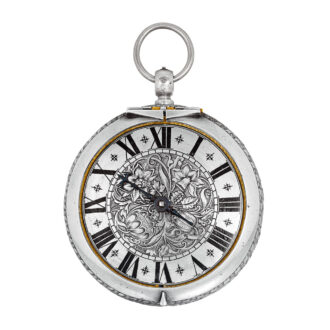
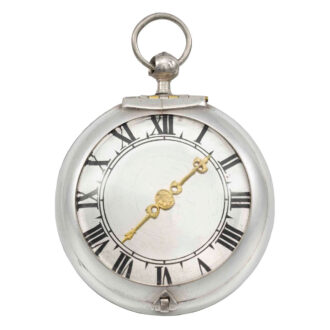
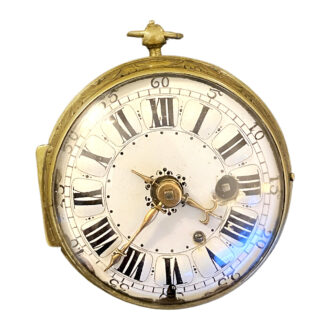
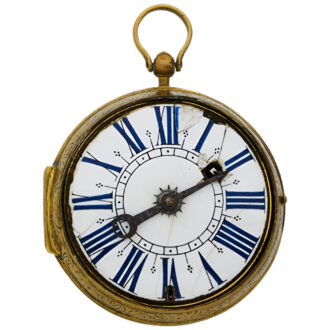
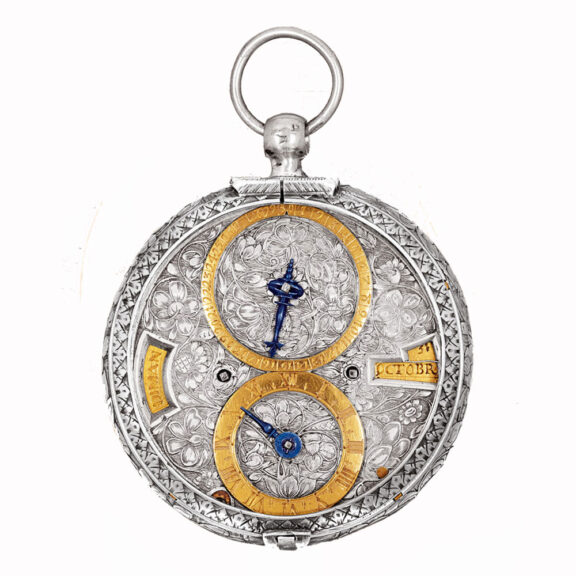
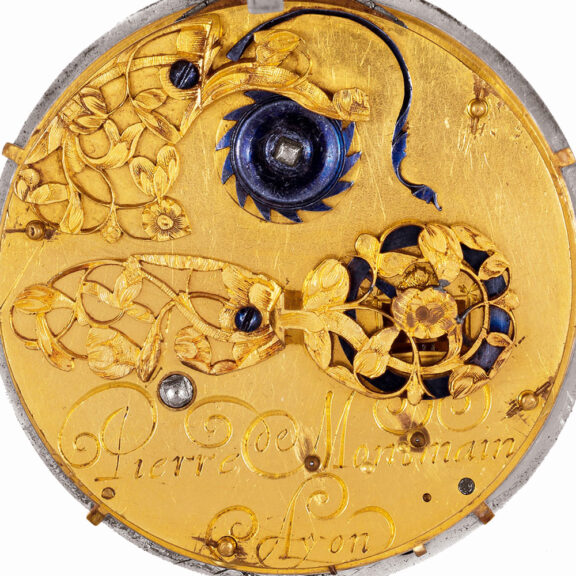
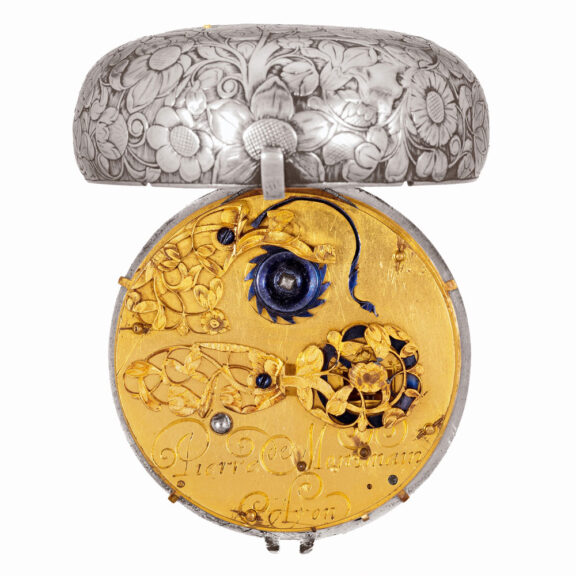
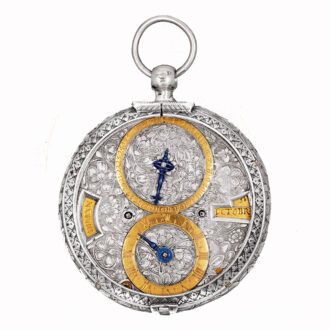
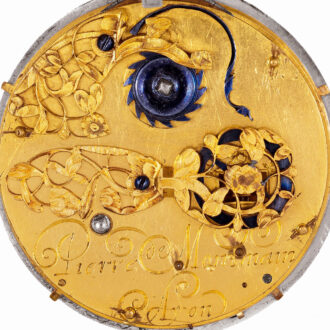
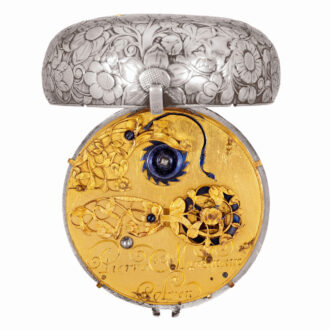
A very fine and rare French large silver pendant watch with triple date., circa 1660. Gilt brass full-plate with turned inverted baluster pillars, fusee with chain, verge escapement, plain small two-arm blued steel balance without spring, pierced and engraved irregular footed balance cock secured by a screw, backplate furniture, blued steel wheel and click spring.
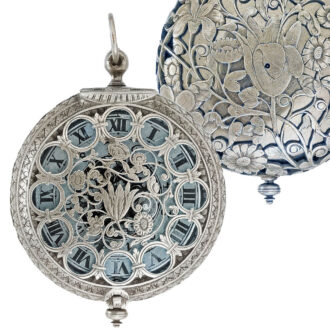
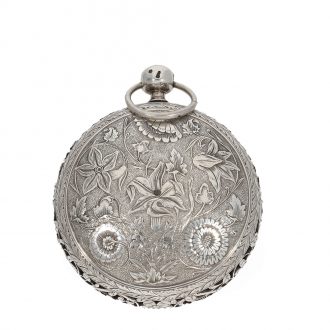
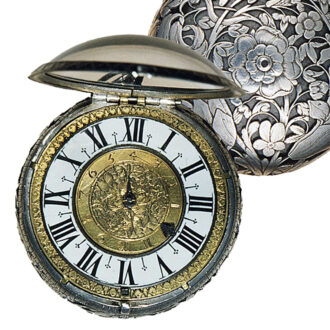
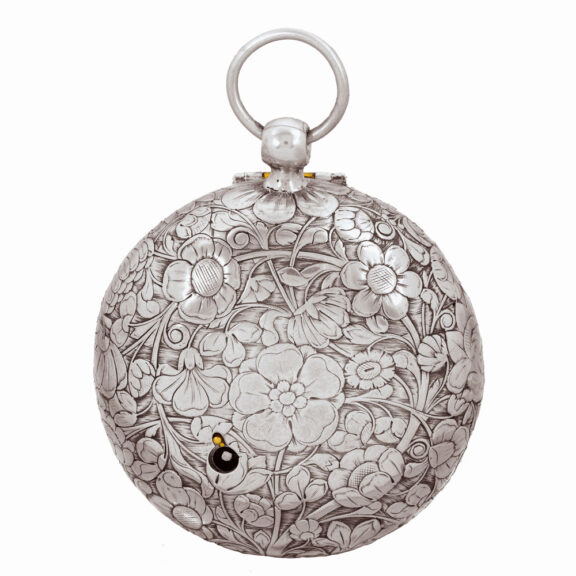
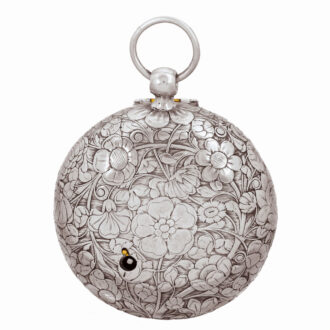
Case, split bezel with stiff-leaf decoration, loose ring pendant, profusely chased and engraved with summer flowers, shuttered winding hole.
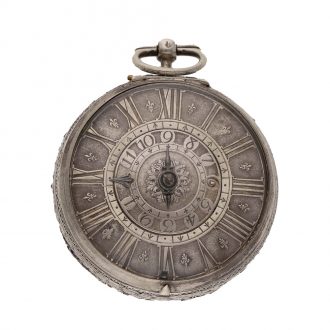
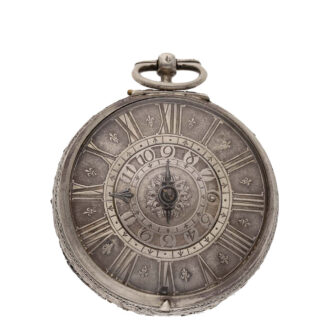
Silver dial plate chased and engraved with floral decoration matching the case, eccentric gilt brass chapter ring with radial Roman numerals and half-hour markers, date chapter above, apertures for the days of the week and months with their number of days. Blued steel hands. Movement signed.
–
Diameter: 55 mm
–
Signed: Pierre de Montmain à Lyon
–
Pierre de Montmain (1632 – 1669) The son of the elder Pierre de Montmain, he worked on the Rue de Flandre in Lyon. In 1655 he married Anne Guiger.
Tulipomania, Tulip cases, pendants, hands, and engravings, were evidence of the so-called “tulipomania”. Evans, in his “History of Jewelry”, as quoted by Dr. Hans Boeckh, states: “Gesner saw the first tulip in flower in Augsburg in 1559 and published the first picture of it in 1561. It took 75 years for the flower to conquer Europe”. In 1593, botanist Carolus Clusius brought tulips from Constantinople to the University of Leyden, using them for medicinal research and refusing to give away or sell any of them. One day bulbs were stolen from his garden and thus began the Dutch tulip trade. The upper classes, first in Holland, then abroad, were fond of them and over the next 70 years tulips increased dramatically in popularity and price. In 1636, for instance, one Viceroy tulip cost the equivalent of ten tons of cheese. No wonder the tulip became a very popular decorative object!
Signed: Pierre de Montmain à Lyon
Share this page: