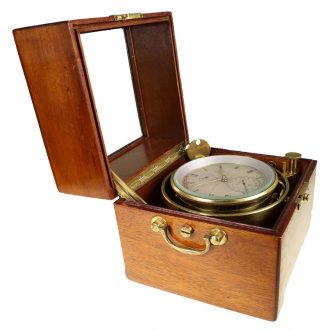
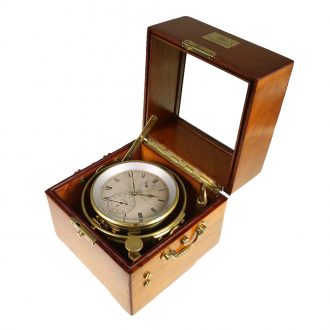
German early version marine chronometer in box Circa 1953
- Kenmerk
- HC1819
- Diameter
- -
- Estimate
- € 1.000 - 2.500
- Price sold
- € 1.250
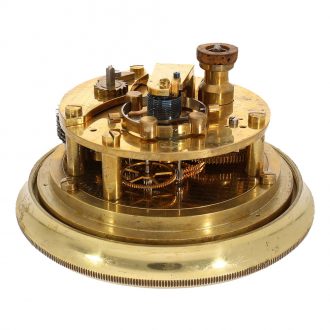
Marine chronometer with power reserve indicator
–
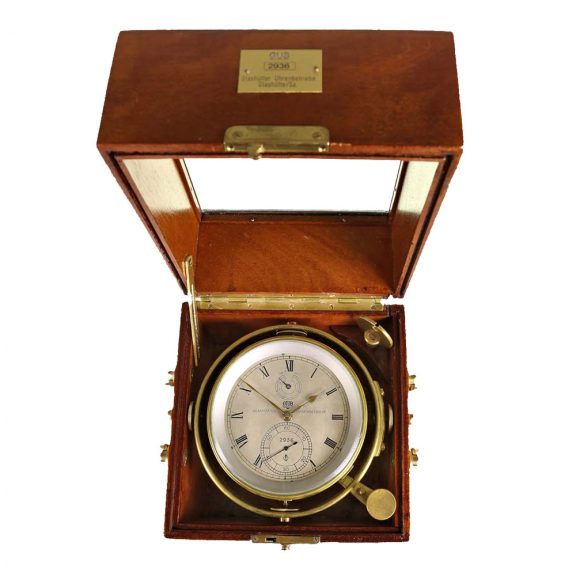
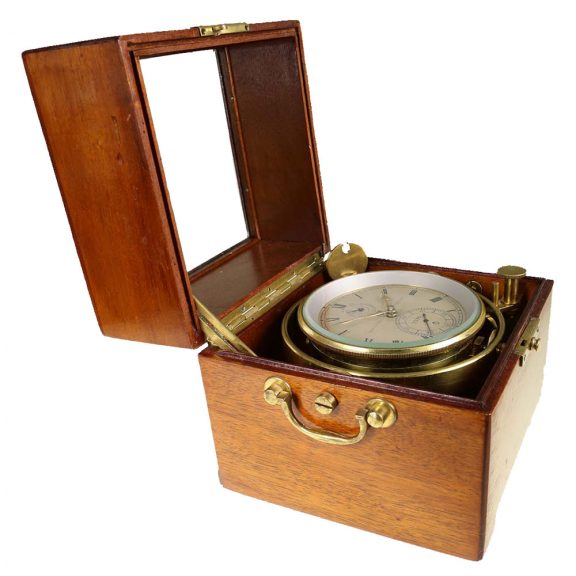
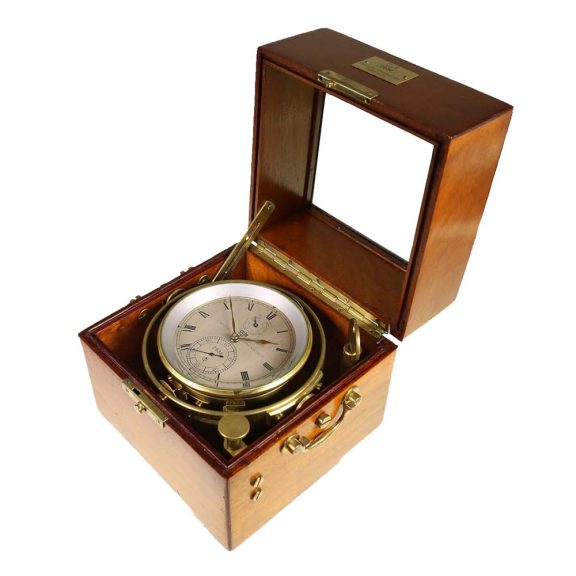
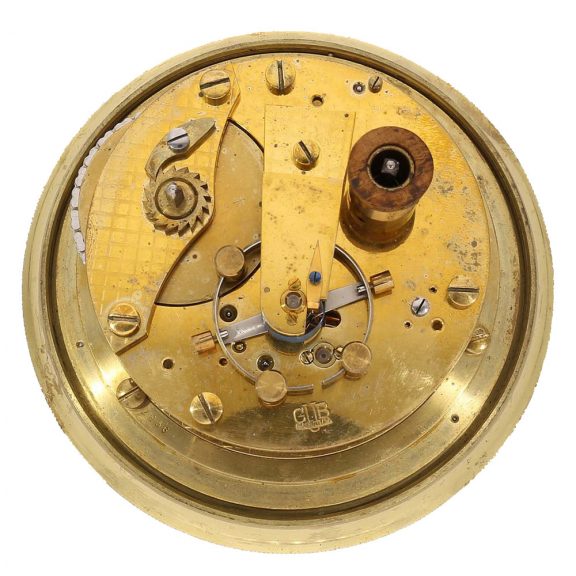
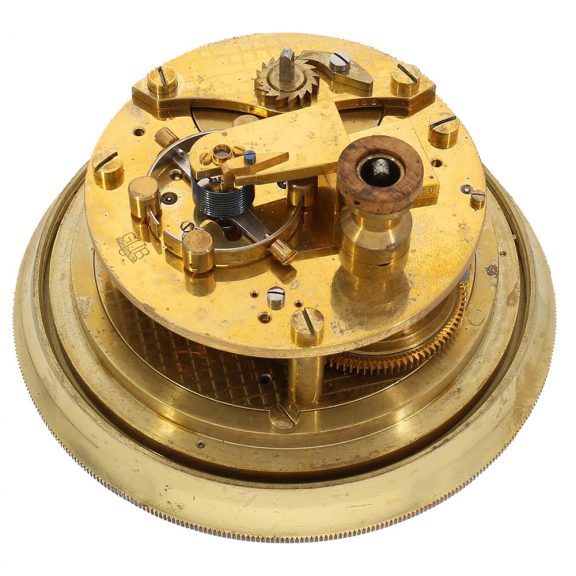
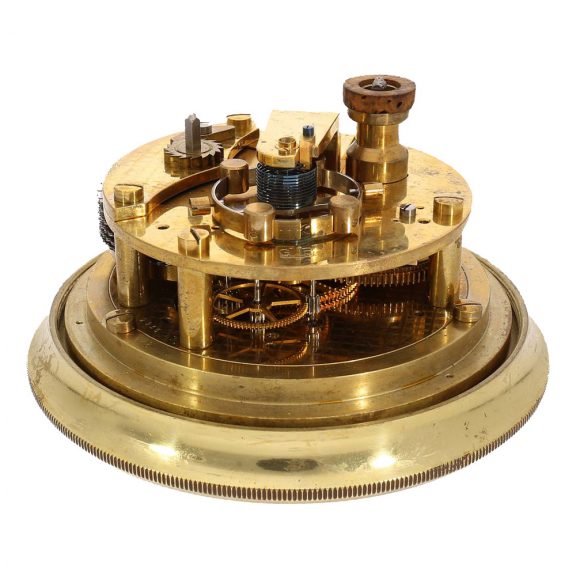
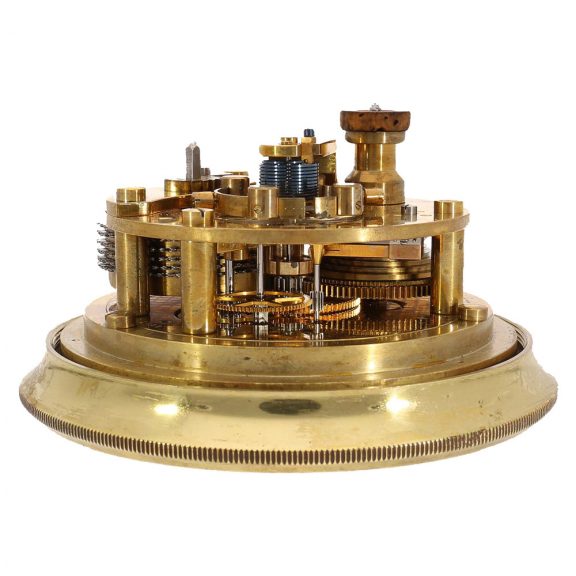
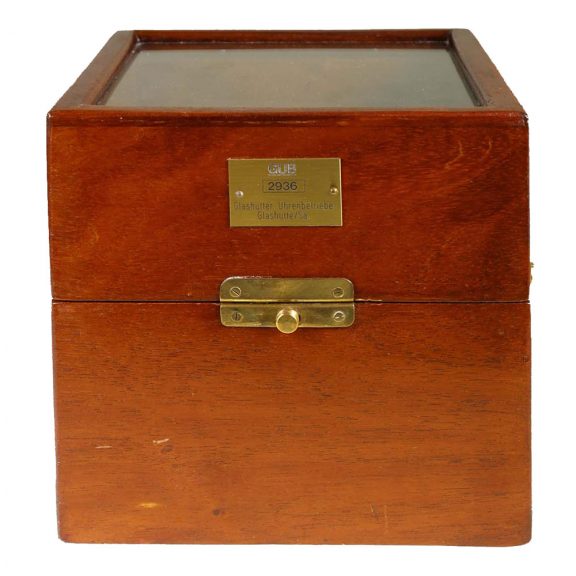
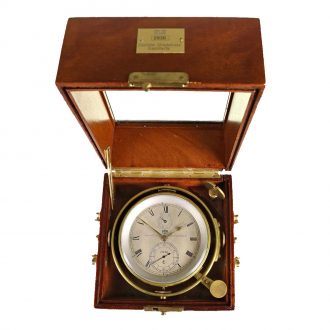
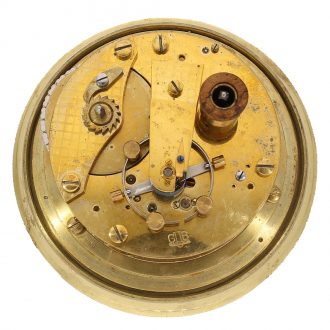
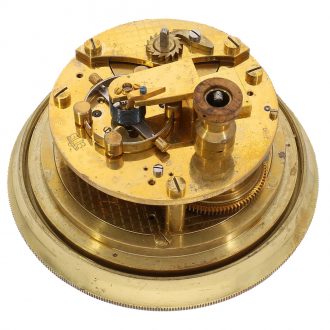
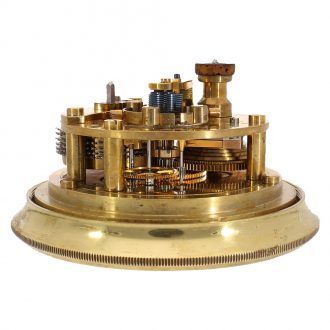
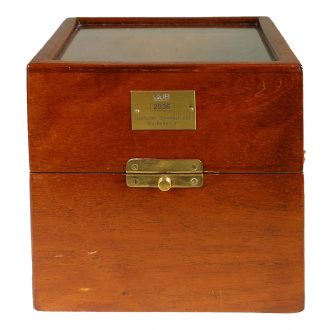
A fine, 1st quality, early version marine chronometer with original key made by the Glashütter Uhrenbetriebe Sa in Glashütte, circa 1953. The watch’s brass case is mounted on a gimbal suspension in a mahogany wooden box. The numbered, silvered dial, marked GUB and 1st quality, features Roman hour numerals, an outer minute track, subsidiary seconds dial at 6 o’clock, a 56 hour power reserve indicator at 12 and gold spade hands. The numbered movement is fitted with a chronometer escapement, chronometer balance and a helical hairspring.
The wooden box, case, dial and movement have matching numbers and are signed.
–
Dimensions: 185 x 185 x 180 mm
–
Signed: Glashütter Uhrenbetriebe Glashütte/Sa
–
The serial number of this watch suggests that it is a very early GUB chronometer from the first years of production.
–
Glashütter Uhrenbetriebe Sa
The history of Glashütter Uhrenbetriebe Sa (GUB) is defined by its role as the centralized state owned watchmaking entity of East Germany. It served as the bridge between the historic 19th century Saxon watchmaking tradition and the modern luxury brands operating today.
–
Following World War II and the Soviet occupation of East Germany, the independent watchmaking companies in Glashütte were nationalized. In July 1951, several previously private firms were merged into a single state owned conglomerate called VEB Glashütter Uhrenbetriebe (GUB). Key companies absorbed into the GUB included A. Lange & Söhne (then known as VEB Mechanik Lange & Söhne), Mühle & Sohn (VEB Messtechnik), UFAG and UROFA.
–
As a Volkseigener Betrieb (People’s Company), the GUB was the sole producer of watches in Glashütte during the German division. Its primary mission was to produce reliable, pragmatic timepieces for the Eastern Bloc, though it also exported many goods to earn foreign currency.
–
GUB produced millions of mechanical and quartz watches, as well as marine chronometers and scientific instruments.
–
The Spezimatic, produced from 1964 to 1980, became the most popular watch line in East Germany due to its automatic winding and flat design. It was followed by the Spezichron, made from 1979 to 1985.
–
GUB was the largest employer in the region and managed everything from technical training at the German School of Watchmaking to leisure activities for employees.
–
After the reunification of Germany in 1990, the Treuhandanstalt (privatisation agency) restructured the GUB. In 1990, the GUB was converted into Glashütter Uhrenbetrieb GmbH. By 1994, it was privatized and began marketing under the brand Glashütte Original, focusing on high end luxury horology. In 2000, the Swatch Group acquired Glashütte Original, providing it with the resources to compete globally as a premier German manufacturer. The dissolution of the GUB allowed historic names like A. Lange & Söhne and Mühl-Glashütte to be re-founded as independent entities once again.
Signed: Glashütter Uhrenbetriebe Glashütte Sa
Share this page: