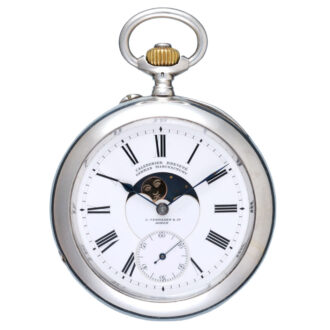
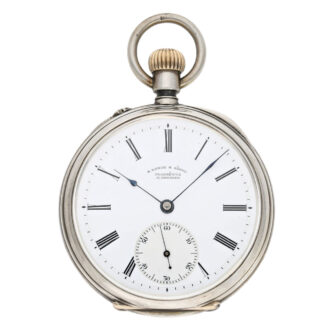
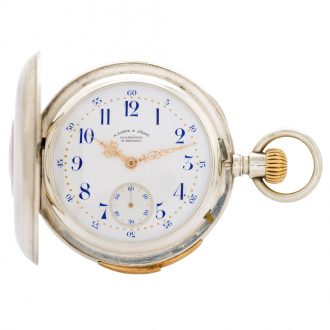
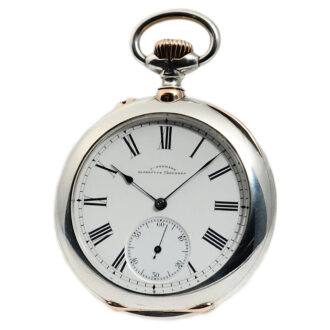
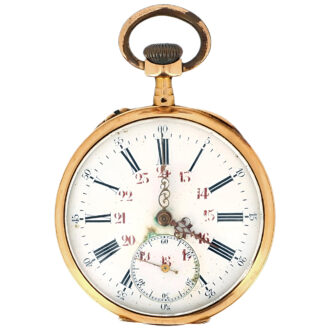
German extremely rare deck silver chronometer Circa 1890
- Kenmerk
- AD0059
- Diameter
- 57 mm
- Estimate
- € 20.000 - 40.000
- Price sold
- € 27.300
Very important silver case pocket watch
–
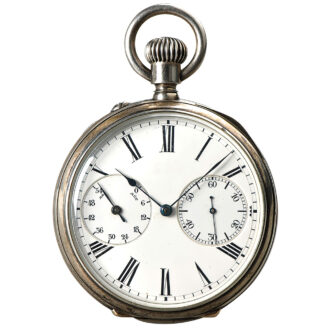
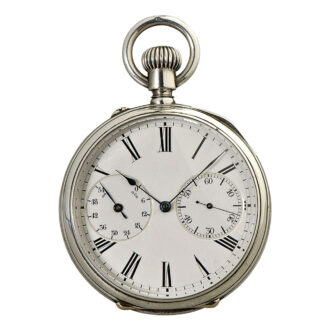
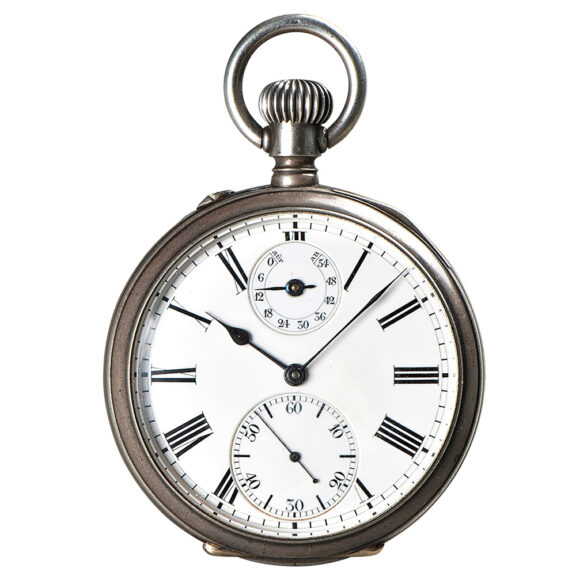
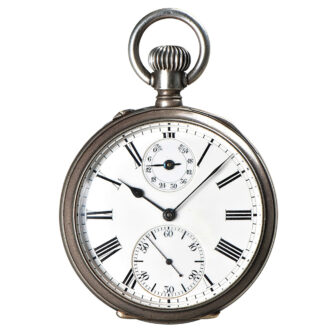
A German important, extremely rare deck chronometer with 54h power reserve indication, circa 1890.
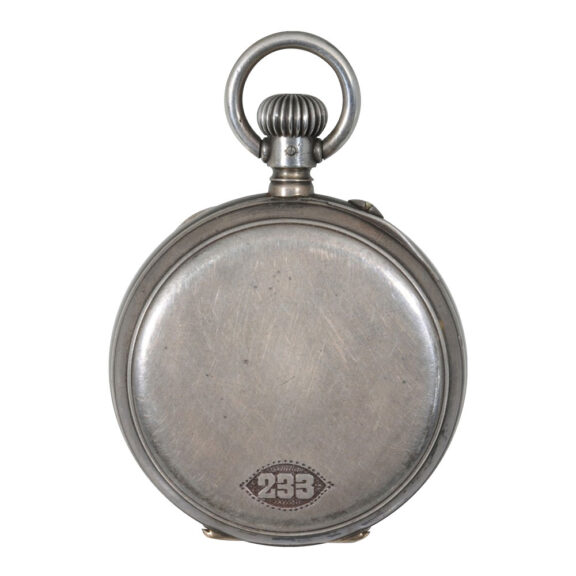
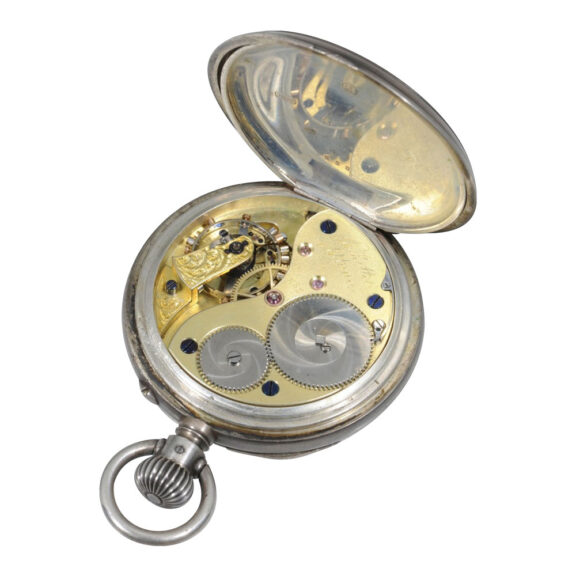
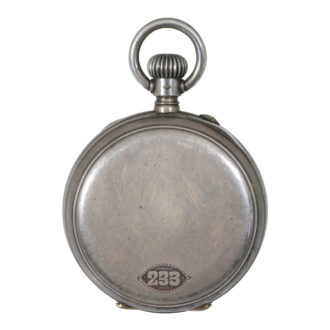
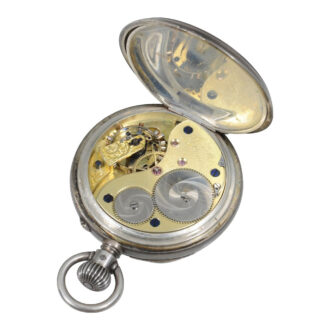
A silver case, glazed movement. Enamel dial and a ¾ plate movement. Stübner’s pivoted detent escapement with short Glashütte detent, free sprung helical balance spring, heavy chronometer balance with gold and platinum screws. Case and movement number 233 engraved on case.
–
Diameter: 57 mm
–
Weight: 165 g.
–
Signed: Adolf Kittel, Altona
–
Two chronometers made by Adolf Kittel with pivoted detent escapement are being presented in one auction! This chronometer with the lower number 233 is even more similar to the movement of watch no. 303, thus the same design features used by Fridolin Stübner of Glashütte. Both chronometers probably came from the property of Adolf Kittel’s grandson.
Adolf Kittel was born 1845 in Aurich and later went to Altona. In 1877 several of his clocks had already been awarded prizes in Hamburg and Altona; they also regularly took part in the naval observatory’s chronometer tests. Kittel’s specialities were for example chronometers without fusee, a new chronometer escapement and an auxiliary mechanism to balance temperature variations; for pendulum clocks Kittel designed his own free escapement and a barometer compensation for air pressure changes, which was fitted to the pendulum.
Kittel also delivered a number of astronomical pendulum clocks to German and foreign observatories. At the industrial exhibition 1889 in Hamburg he exhibited an astronomical pendulum clock which was later owned by the Hamburg observatory (Kittel no. 25).
Kittel closed his workshop in Altona in 1911 and sold his remaining chronometers with help from Schorr. However, during the war and the recession afterwards his savings were soon eaten up and in 1919 he moved to Aurich to live with his family. Kittel’s economic situation as well as his health kept deteriorating and he died on October 4, 1921.
Fridolin Stübner was the most important maker of chronometers in Glashütte. Herkner remarks: “Lang’s continued success at the important chronometer tests of the Hamburg observatory began with the marine chronometers regulated by Fridolin Stübner “.
Signed: Adolf Kittel, Altona
Share this page: