Historic English pair cased pocket chronometer Circa 1806
- Kenmerk
- SA0076
- Diameter
- 62 mm
- Estimate
- € 7.500 - 15.000
- Price sold
- -
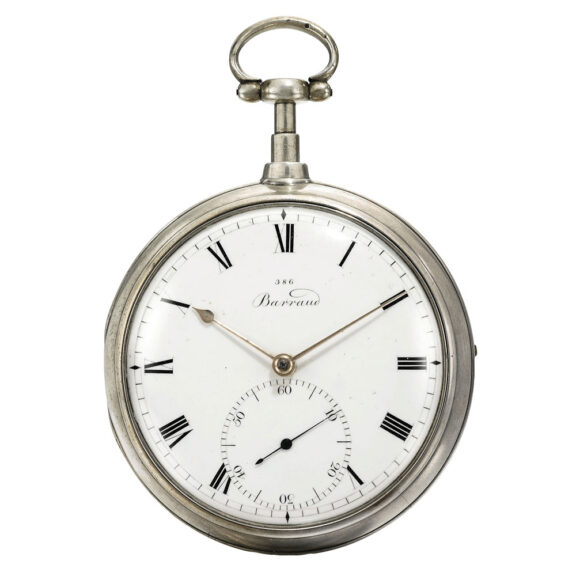
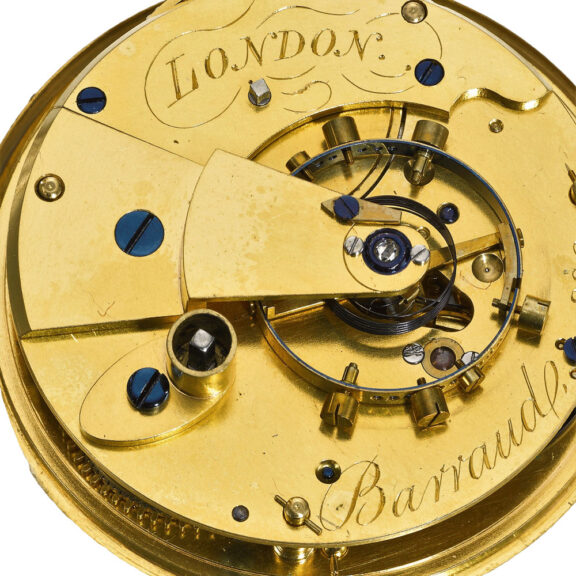
Silver pocket chronometer in pair cases by Barraud
–
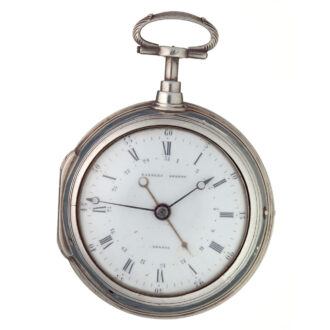
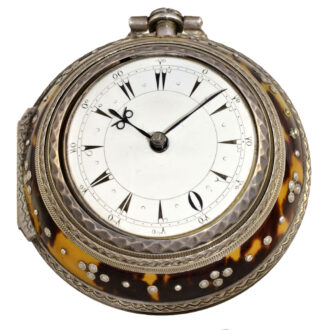
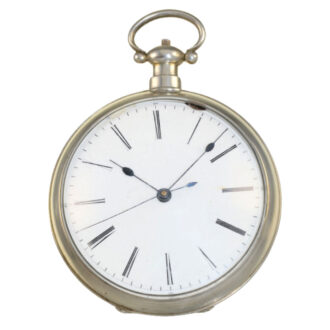
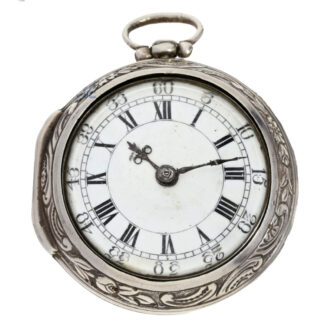
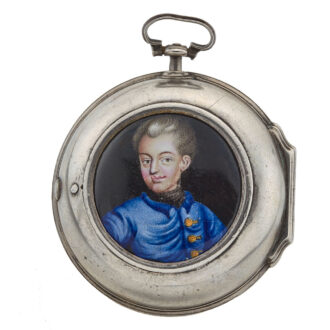
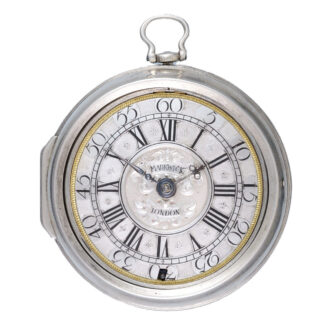
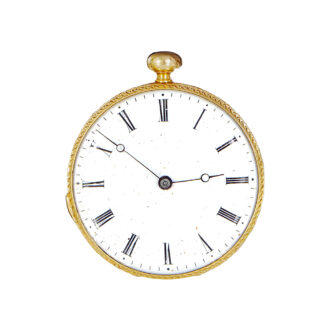
A historic English silver pair cased pocket chronometer, circa 1806. Gilt full plate movement, Earnshaw type spring detent escapement with Harrison’s maintaining power, free-sprung Pennington double L balance, blued steel helical spring, plain balance cock with diamond endstone, fusee and chain. White enamel dial, Roman numerals, large subsidiary seconds dial, gold spade hands, and blued steel seconds hand. Plain cases, the outer case with Barraud’s watch paper, both with maker’s mark TG for Thomas Gibbard, dial signed and numbered, movement signed Barraud London.
–
Diameter: 62 mm
–
Signed: Barraud London
–
In his book on Paul Philip Barraud, Cedric Jagger notes the following taken from the Barraud testimonials: No 6 Tenterden Street, February 20th 1816. “Captain Cramer sends Mr Barraud his Chronometer, this watch, which he thinks will want cleaning, it being ten years since it has been touched. Capt. C. begs to inform Mr. B. that that watch does him the greatest credit possible, as, during the whole time he has used it, it has never once failed, and in bringing home the West-India Convoy, it made the Scilly Islands to a mile”. Josiah Cramer (1773-1850) was appointed Lieutenant in 1800, Commander in 1802, Captain in 1806, Rear Admiral in 1841 and Vice-Admiral in 1849.
–
The outer case contains a Barraud’s watch paper. In 1971, the watch was seen in Rhodesia, and at that time, it was also noted that Barraud’s watch paper was present. To the reverse of the paper is a handwritten inscription: “Captain Jorsell Leigh – Rh – Broadwell House, Gloucestershire 1841”. Jorsell Leigh was born February 1790, was made a Captain in June 1829, and a Rear Admiral in July 1855.
–
Paul Philip Barraud was born in London on December 5th, 1752, of Huguenot lineage. He was admitted to the Clockmakers’ Company in 1796 and elected master in 1810 and 1811. According to Tony Mercer, Chronometer Makers of the World, he and his sons made over one thousand chronometers before his death in 1820. Once they were introduced, he used Arnold and Earnshaw type detent escapements and Pennington type balances. With the help of William Howells and George Jamison, he could offer a simplified version of the Mudge chronometers, Green and Blue, to the Admiralty at 90 guineas. His firm was supplied by outside specialists such as Thomas Earnshaw.
Signed: Barraud London
Share this page: