Rare English gold and enamel pair cased verge Circa 1763
- Kenmerk
- SA0055
- Diameter
- 48 mm
- Estimate
- € 8.000 - 16.000
- Price sold
- -
Gold and enamel verge in pair cases
–
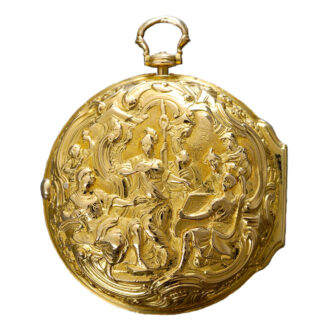
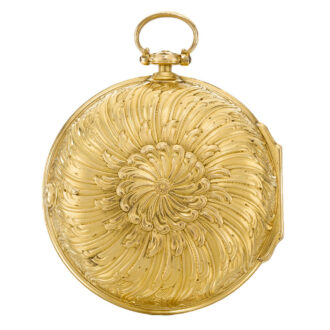
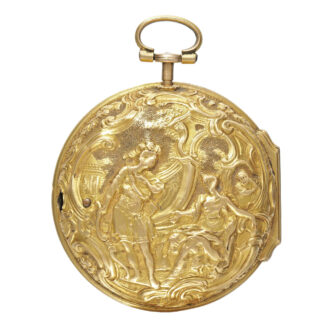
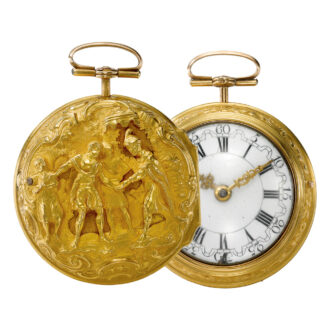
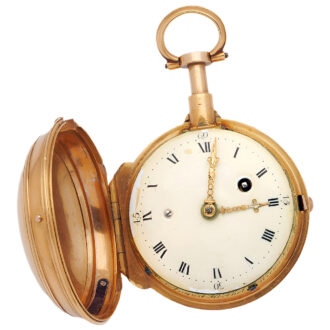
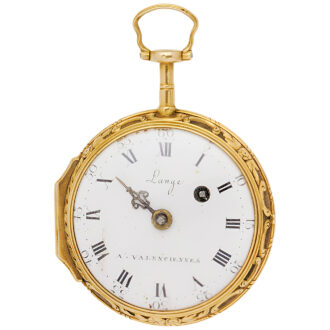
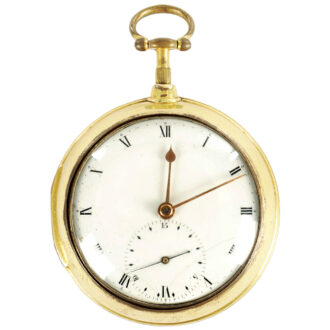
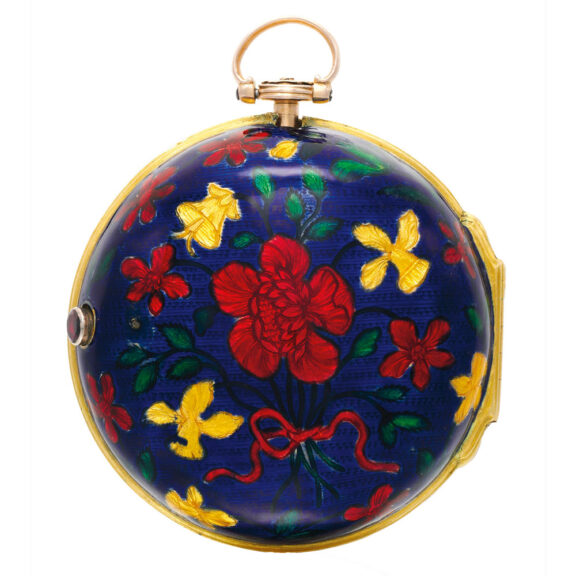
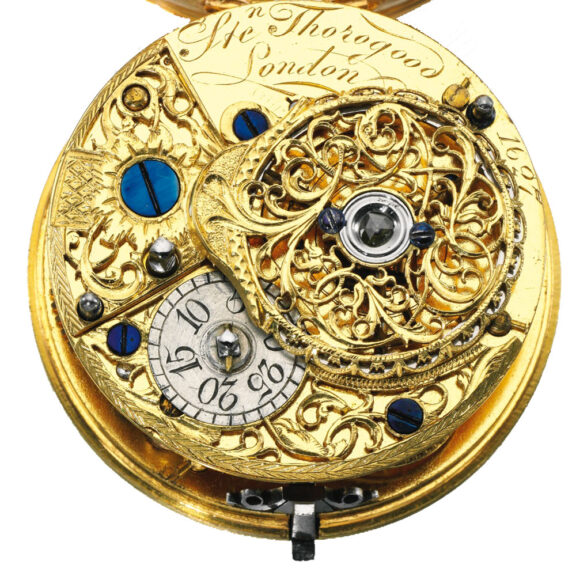
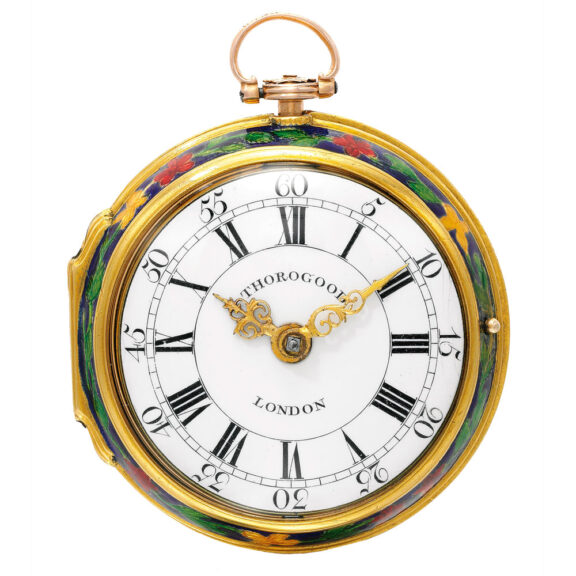
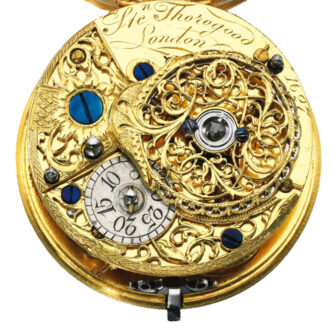
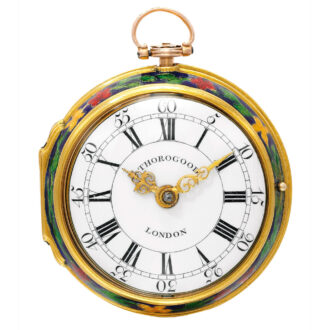
A very rare English gold and enamel pair cased verge pocket watch, circa 1763. Fire gilt full plate movement, verge escapement, decoratively pierced and engraved balance cock, diamond endstone, fusee and chain, cylindrical pillars. White enamel dial, Roman hours, outer Arabic minute track and gold Louis style hands. Gilt metal dust cap, gold inner case, winding aperture to back, the outer case also gold, the back is decorated with daffodils, peonies and foliage tied together with a ribbon, the flowers in red and yellow basse taille enamel all on a ground of lateral lines, the bezel decorated to match the back, both cased punched R.P. for Richard Payne, dial signed, movement and dust cap signed Ste Thorogood London.
–
.Diameter: 48 mm
–
Signed: Ste Thorogood London
–
Stefano Thorogood was registered at 9 Burrows Buildings, Blackfriars Bridge.|
–
Exceptionally for an English watch, the back of the outer case, together with the front bezel are decorated in basse taille enamel. This technique involves the application of translucent enamels over a decoratively engraved ground which adds considerable depth and vibrancy to the decoration. It is an extremely challenging procedure, requiring different metal oxides for each of the colours (in this instance a total of four). These oxides will fuse into their glass like stage at different temperatures, requiring several firings, the colour with the highest melting point being applied first. Most unusually, the inner case has no bezel but a flange to secure it in the outer and the glass is fitted to the outer.
–
Basse taille is an enamelling technique in which the artist creates a low relief pattern in metal, usually silver or gold, by engraving or chasing. The entire pattern is created in such a way that its highest point is lower than the surrounding metal. A translucent enamel is then applied to the metal, allowing light to reflect from the relief and creating an artistic effect. It was used in the late Middle Ages, and then again in the 17th century.
Signed: Ste Thorogood London
Share this page: