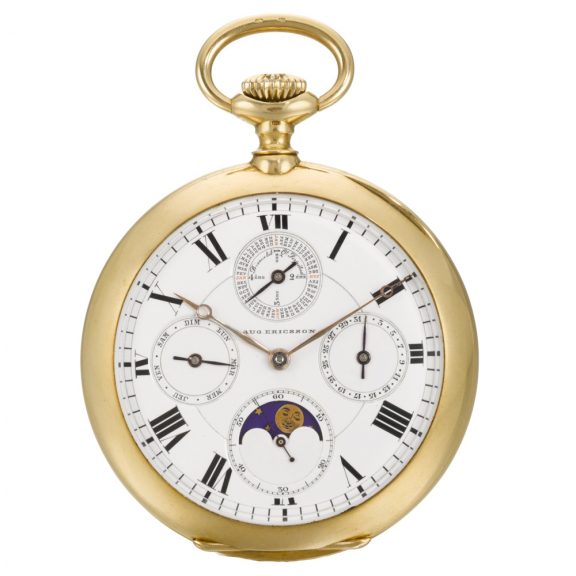
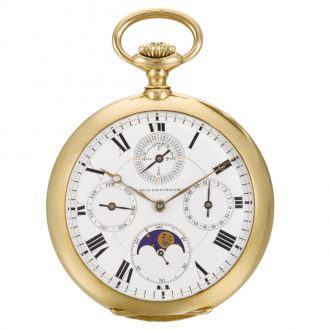
Russian perpetual calendar lever watch with moon phases Circa 1910
- Kenmerk
- AS1876
- Diameter
- 53 mm
- Estimate
- € 7.500 - 15.000
- Price sold
- € 11.150
Gold open faced keyless pocket watch by Augustus Ericsson
–
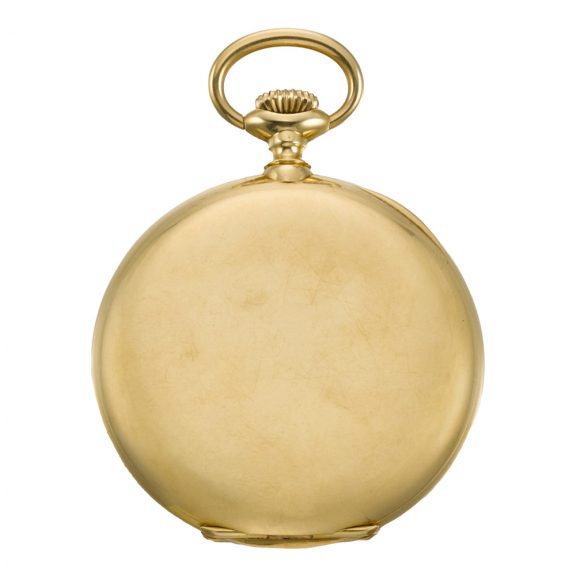
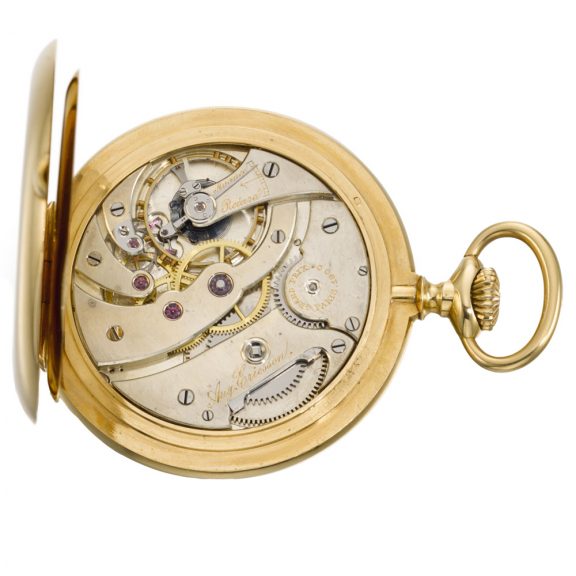
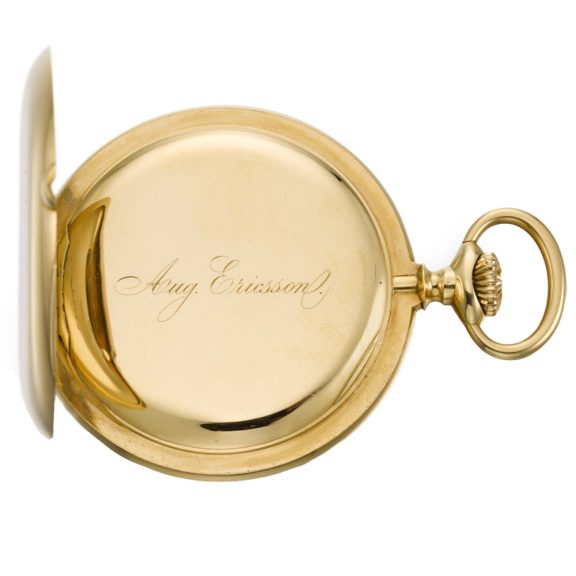
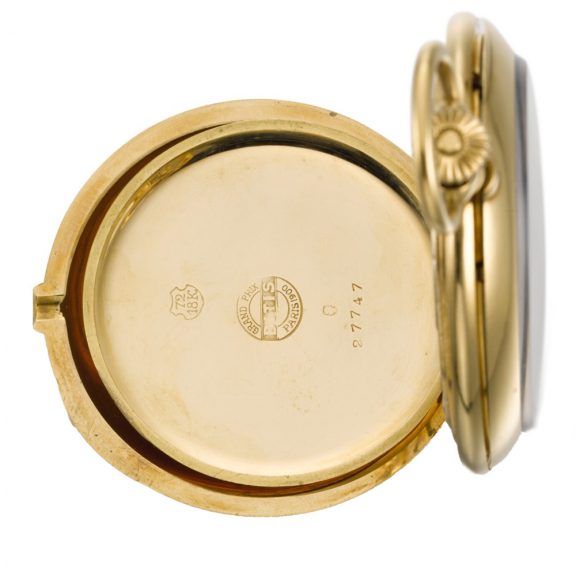
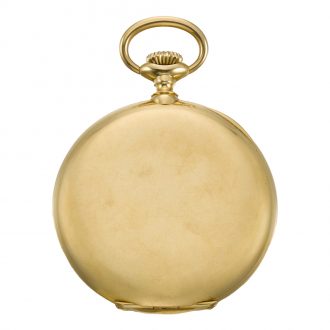
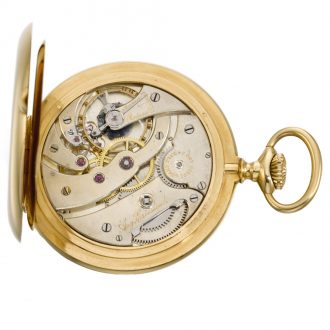
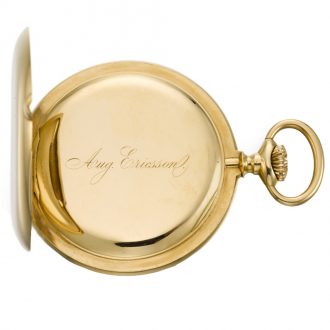
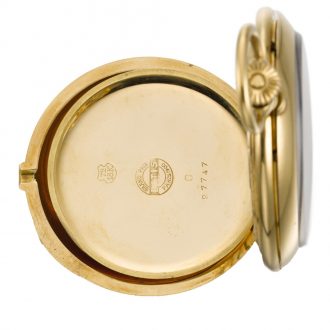
A Russian gold open faced perpetual calendar keyless lever watch with moon phases, circa 1910. The movement features a lever escapement, jewelled at the centre, a bimetallic compensation balance, and is signed by Aug. Ericsson with additional engraving indicating Grand Prix Paris 1900. The white enamel dial displays Roman numerals, an outer minute track, a sunken centre, and four recessed subsidiary dials with blued steel hands for the day, the month with leap year cycle, date, and subsidiary seconds combined with an aperture for moon phases, signed by Aug. Ericsson. The 18 carat yellow gold case is plain polished, with adjusters beneath the bezel for day, month, and date. The plain gold cuvette is signed Aug. Ericsson, and the cuvette and case back are numbered 27747, each bearing a medallion stamped Grand Prix Paris 1900 and a central banner marked Ditis.
–
Diameter: 53 mm
–
Signed: Aug. Ericsson
–
The movement runs smoothly, and the hands adjust correctly. The day of the week, date, and moon phases are all functioning properly. The adjusters beneath the bezel for the day, month, and date are operational. There is a light hairline within the date dial and a very faint hairline running to the top edge of the subsidiary seconds dial. The case has light scuffs and a couple of minor, very light depressions on the back.
–
August Ericsson was a renowned Swedish watchmaker born in Kristeneham in 1842. After completing his apprenticeship in watchmaking in Sweden in 1865, he moved to St. Petersburg, Russia, where he took over the workshop from Gustav Victor Pihl in 1873. In 1885, he became a master chronometer maker and in 1889, he joined the Pulkova Observatory in St. Petersburg as an employee.
Ericsson was highly respected in his time, and his reputation as a skilled watchmaker and dealer was largely due to his use of only the highest quality movements, such as those from Ulysse Nardin, IWC, Longines and Victor Kullberg for his pocket watches and marine chronometers. He supplied clocks to the Tsar’s family and the Russian Navy and was appointed clockmaker to the Swedish court.
His brother, Bror Ericsson, founded the Stockholm Watchmakers Association in 1884, while Ericsson’s son, Alexander Ericsson, also became a chronometer maker. Carl Ericsson was probably a younger brother and was a watchmaker too. A. Ericsson & Söhne was recorded in St. Petersburg. Ericsson passed away in 1915, leaving behind a legacy of excellence in the world of watchmaking.
Signed: Aug. Ericsson
Share this page: