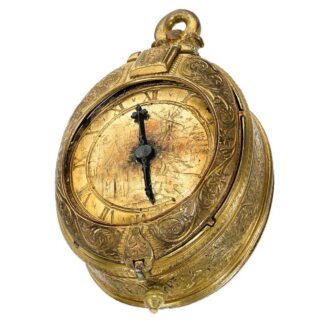
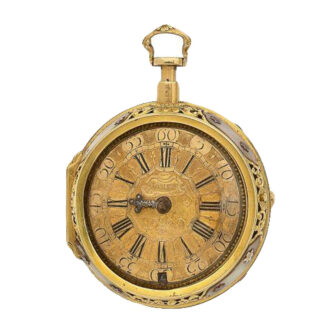
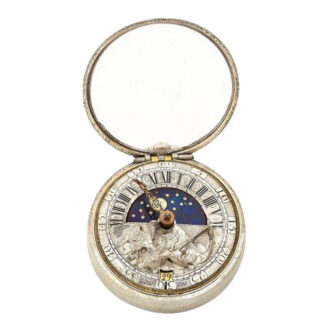
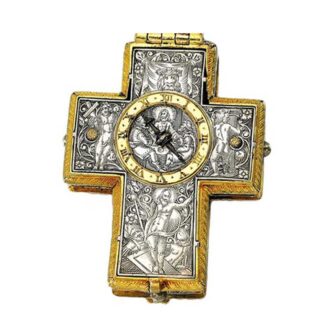
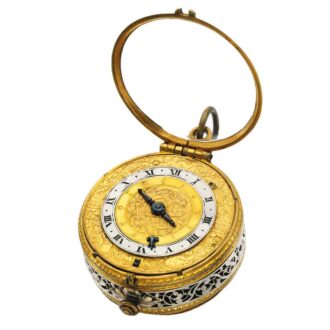
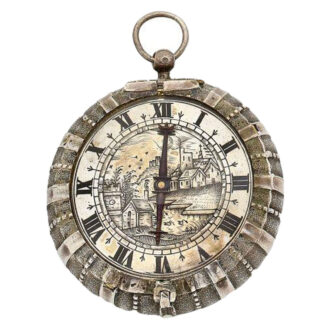
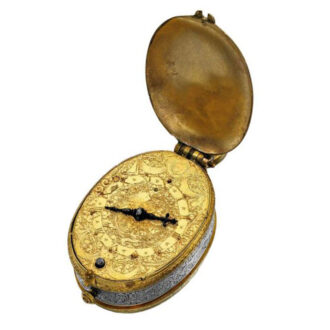
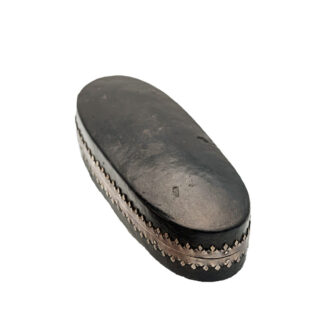
Silver Italian oblong-shaped revival watch with cover Circa 1970
- Kenmerk
- AA0464
- Diameter
- 34 mm
- Estimate
- € 1.750 - 3.000
- Price sold
- € 2.350
Silver pocket watch with engraved dial by Dino Falcone
–
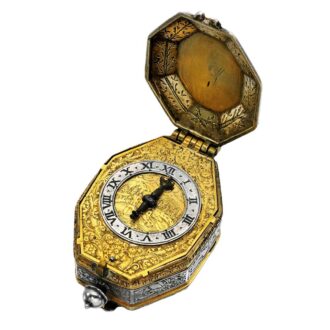
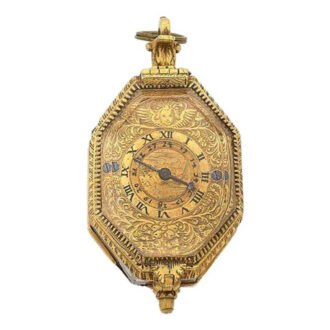
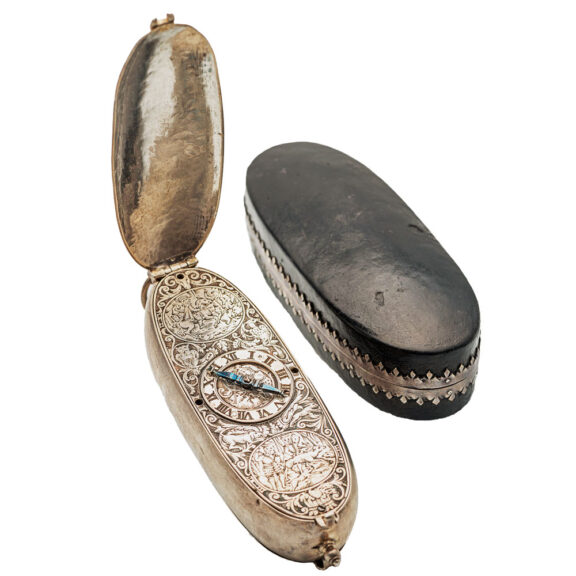
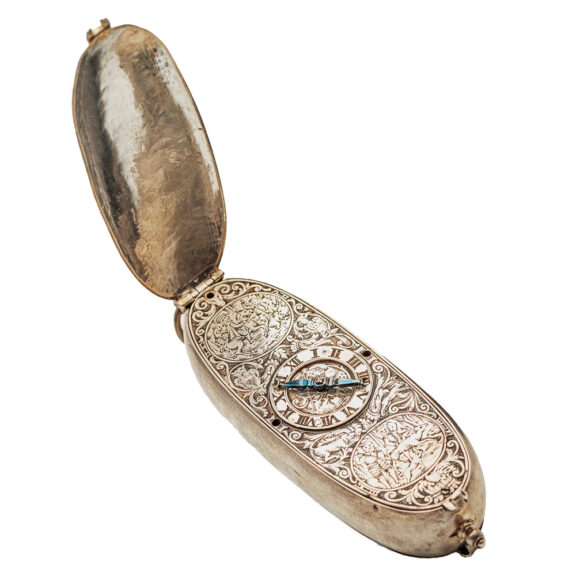
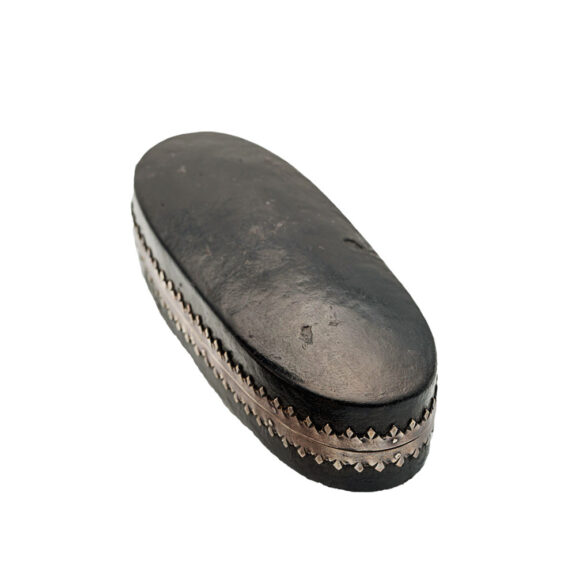
An Italian, silver key-winding oblong-shaped revival pocket watch with cover, circa 1970.
Signed movement (83 x 29.3 mm.) with fusee, gut, and verge escapement; model: apocryphal signature, made by Dino Falcone, Milan (Italy), origin from Jacq. Jolly. Dial engraved in taille-douce (fine-cut) with hunting scenes, Roman numerals, and original blued steel hands. Silver polished case. Accompanied by original fitted box.
–
Dimensions: 102.9 x 34.2 mm
–
Signed: Apocryphal signature
–
Revival watch
After the revival of the Medieval and Renaissance styles, initiated in France by Prosper Mérimée (1803-1870) and Eugène Violet-le-Duc (1814-1879), objects of vertu (or virtue) inspired by works of art from the 16th and 17th centuries were much in favour in most European countries in the second half of the 19th century.
This kind of watch in the style of the 17th century may have come from the workshops of Kirks & Schwartz in Munich, Bavaria (Germany), active between c.1875 and c.1920, which is a speciality to recreate from ancient elements, including movements with verge escapement of the 18th century.
Such watches were sold as exhibition pieces, were not intended to be used, and were sometimes not fitted with working trains. As often, these reconstructed objects are later offered for sale as originals.
In the 1960s and 1980s, a few watchmakers re-created watches of this kind while the antique piece’s market was in vogue; Dino Falcone from Milan (Italy) is one of them. Other counterfeiters, more specialised in medium-volume watchmaking, were active in the Netherlands in particular.
–
Apocrypha are usually written works of unknown authorship or doubtful origin. The word apocryphal (ἀπόκρυφος) was first applied to writings which were kept secret because they were the vehicles of esoteric knowledge considered too profound or too sacred to be disclosed to anyone other than the initiated. Apocrypha was later applied to writings that were hidden not because of their divinity but because of their questionable value to the church. The word Apocrypha has come to mean “false, spurious, bad, or heretical”.
–
Biblical Apocrypha are a set of texts included in the Septuagint and the Latin Vulgate but not in the Hebrew Bible. While Catholic tradition considers some of these texts deuterocanonical, and the Orthodox Churches consider them all canonical, Protestants consider them apocryphal, that is, non-canonical books that are useful for instruction. Luther’s Bible placed them in a separate section between the Old Testament and New Testament called the Apocrypha, a convention followed by subsequent Protestant Bibles. Other non-canonical apocryphal texts are generally called pseudepigrapha, a term that means false.
Signed: Apocryphal signature
Share this page: