Spanish gold heraldic coat of arms shaped watch Circa 1850
- Kenmerk
- DB1063
- Diameter
- -
- Estimate
- € 50.000 - 100.000
- Price sold
- -
Gold and enamel cylinder watch
–
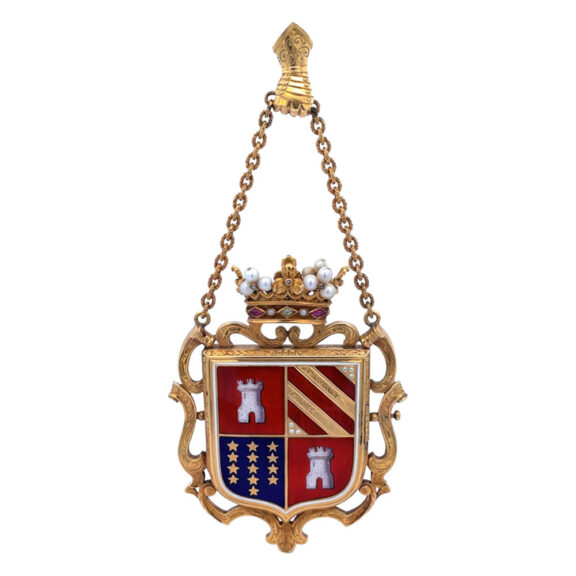
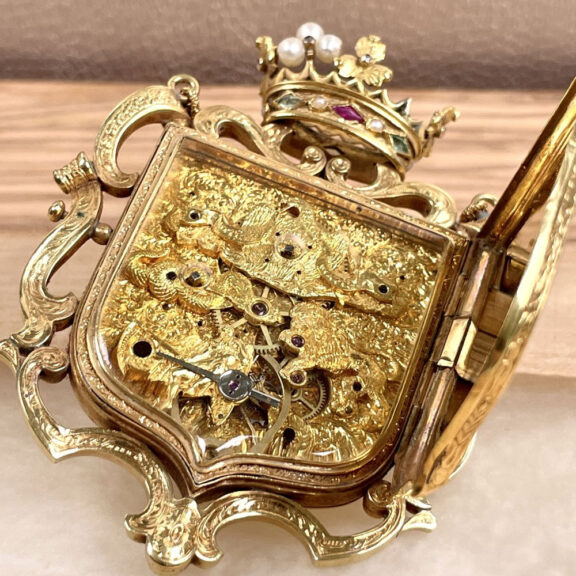
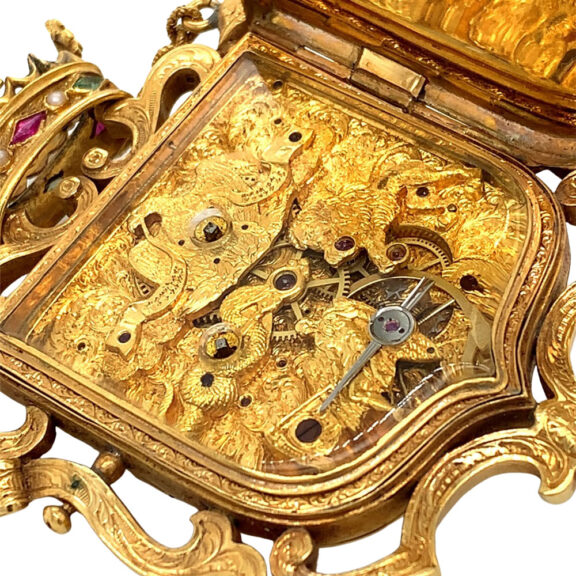
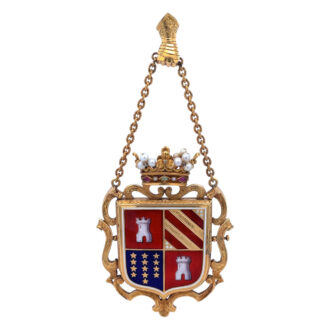
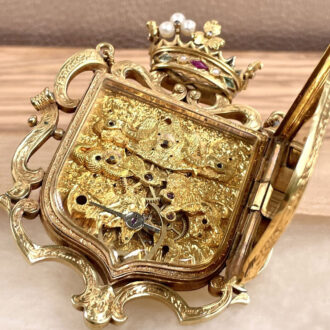
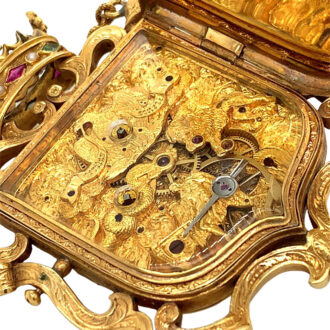
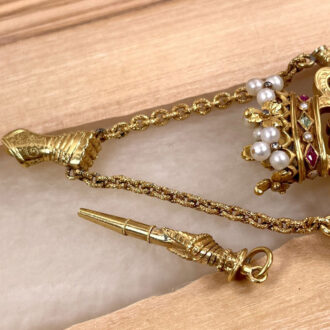
An impressive and extremely fine, unusual Spanish 18 carat gold and enamel pendant watch in the shape of a heraldic coat of arms, circa 1850. The glazed key wind elaborately florally engraved bridge movement with a cylinder escapement and three arm brass balance. The clockwork is florally engraved and decorated with four punched figures. An eagle with a banner reading the motto Veritas Vincit (The Truth Wins in English) covers the barrel, while a snake and a lion cover the gear train and the figure of the chronos leaves only part of the balance wheel visible.
–
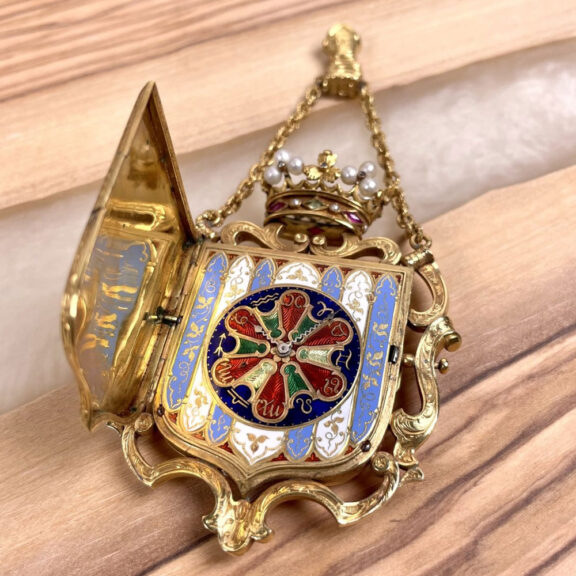
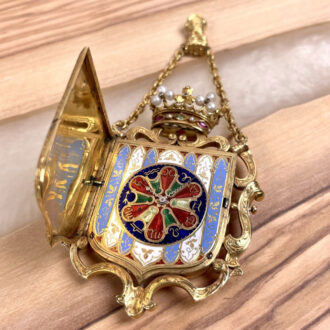
A translucent enamel dial reminiscent of a Gothic rose window. It has six red and six green segments on a circular background made of dark blue enamel. The fields are decorated with 12 zodiac symbols. The background is of opaque white and light blue lancet shaped enamel plates.
–
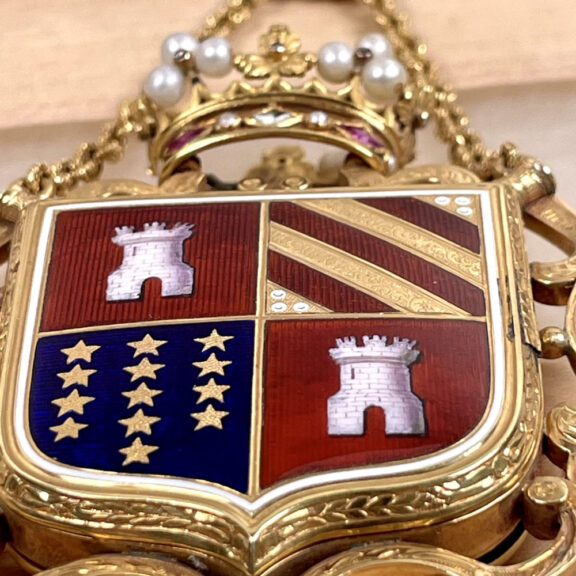
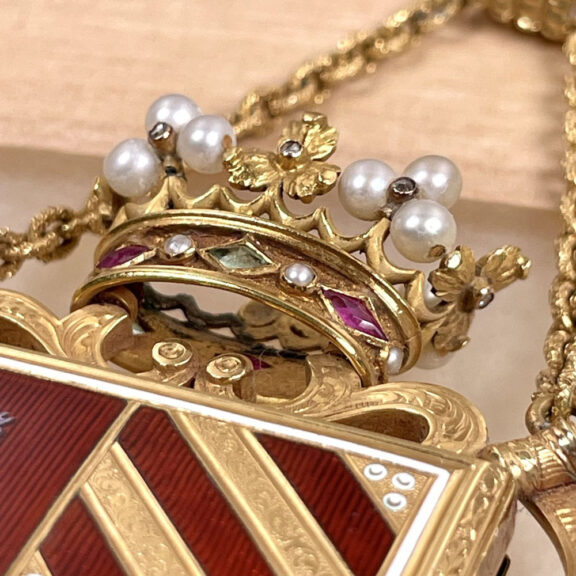
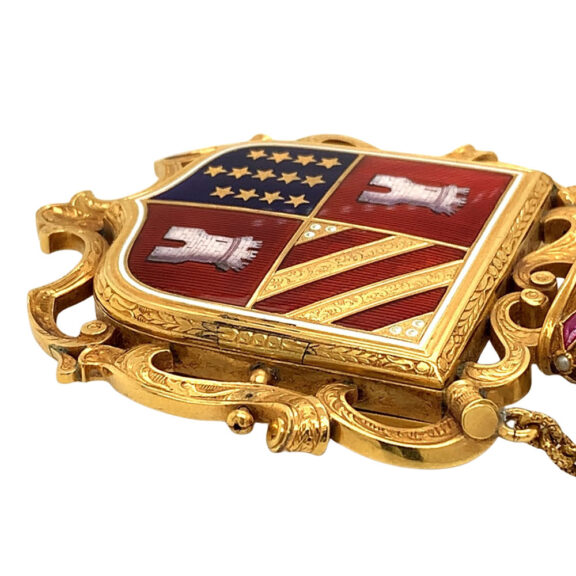
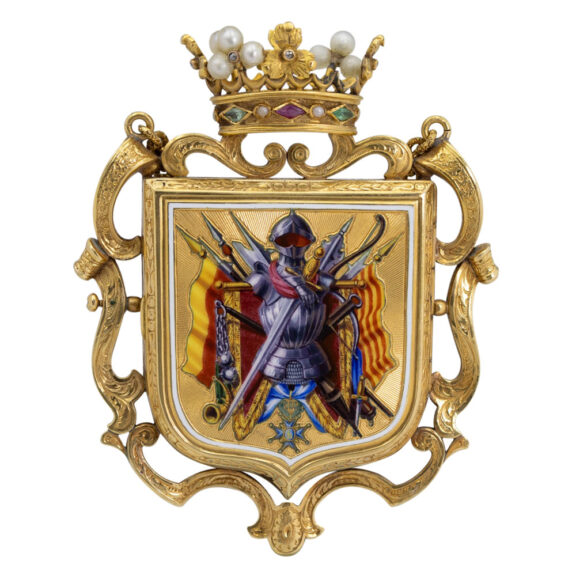
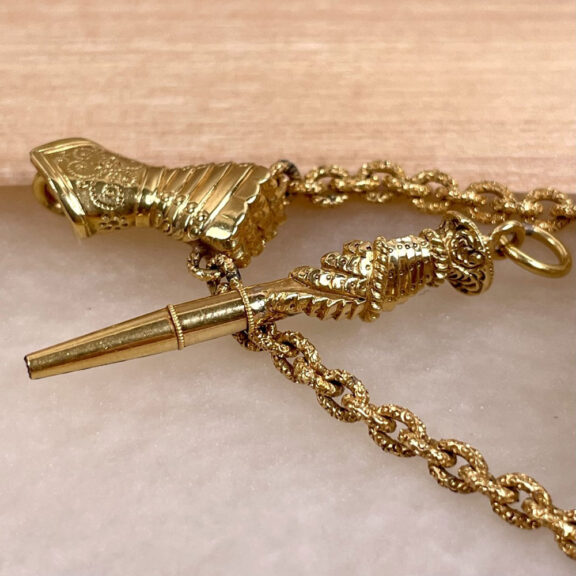
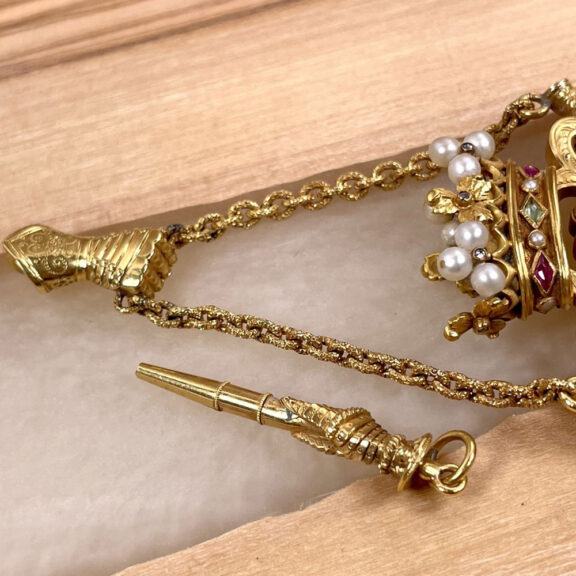
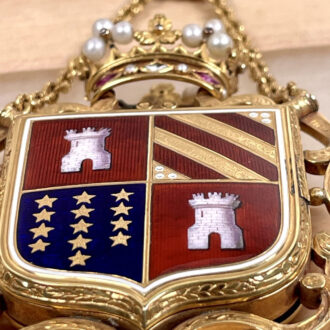
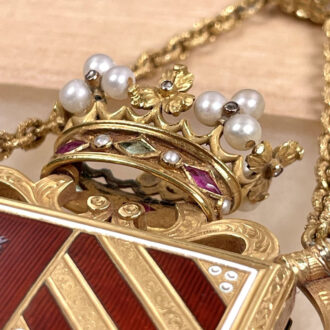
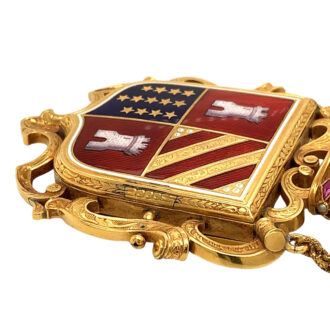
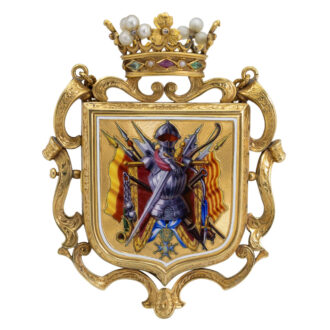
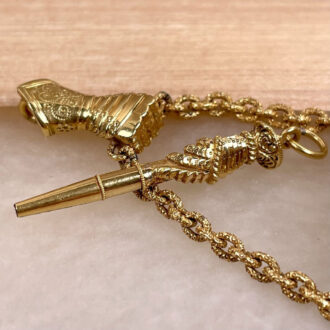
The coat of arms shaped case is surrounded by a decorative frame of curly bands topped by the Spanish ruby, emerald and pearl set heraldic crown of a marquis. It hangs from a chain held by a golden iron glove. The hinged front is decorated with translucent red and blue enamel, the four segments of the coat of arms showing two white towers on a red ground, 13 gold stars on a blue ground, and red and gold diagonal stripes. The polychrome enamelled image of a knight’s armour on the reverse, surrounded by various stabbing and cutting weapons, a yellow and red flag on the left, and the flag of Catalonia on the right. At the bottom of the armour hangs the Real y Distinguida Orden Española de Carlos III, which has been awarded since 1771 to people who have rendered services to Spain and the crown.
–
Dimensions: 57 x 71 mm
–
Weight: 98 g
–
Signed: No name
–
There are references to Louisiana (today’s USA), which was a Spanish province from 1762 to 1803, and whose coat of arms of the capital New Orleans at that time must be related to the present one. Furthermore, the armour portrait on the back is similar to a noble patent issued in 1783 to Colonel Bernardo de Gálvez, commander of the Louisiana Infantry Regiment of the Spanish Army of Carlos III. He was awarded by Spain in recognition of its victories over England.
Share this page: