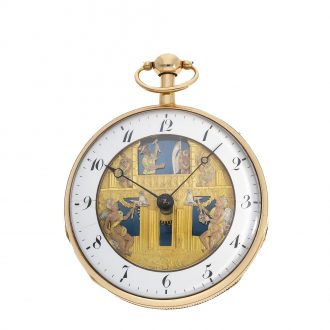
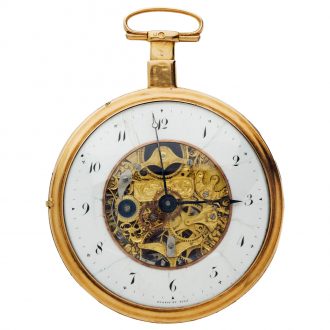
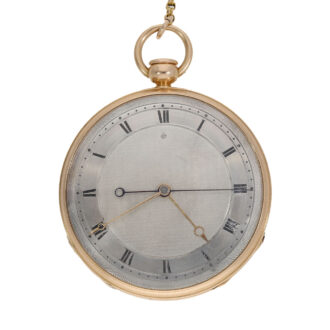
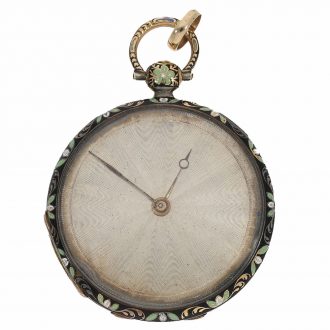
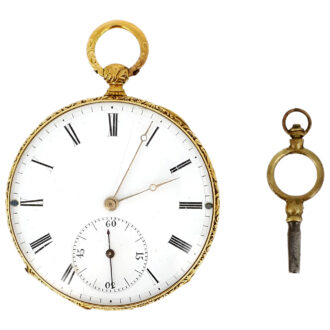
Swiss 18K gold repeating Breguet type Lépine watch Circa 1820
- Kenmerk
- HC1310
- Diameter
- 55 mm
- Estimate
- € 3.500 - 7.000
- Price sold
- € 4.350
Gold verge repeater with seconde morte
–
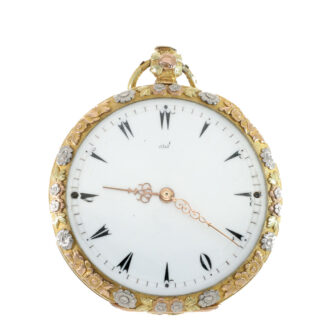
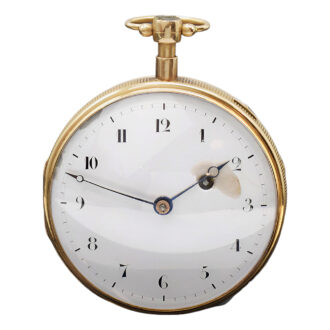
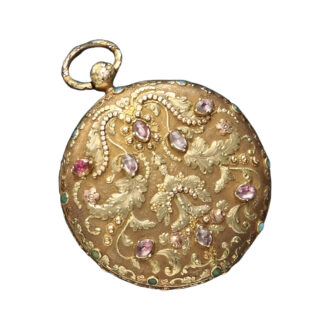
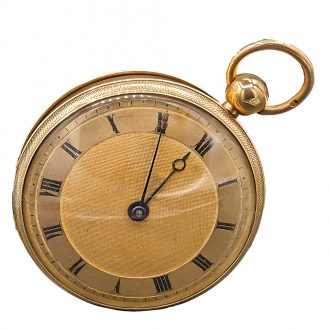
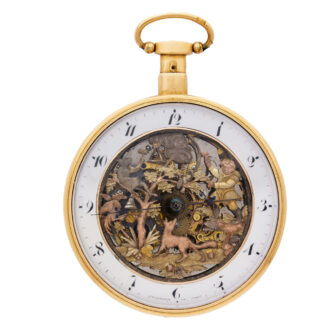
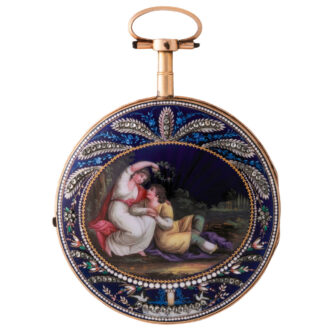
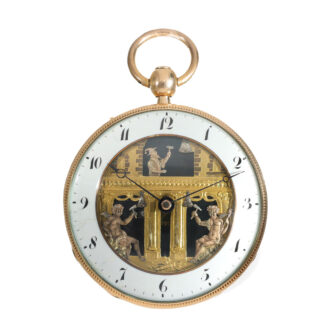
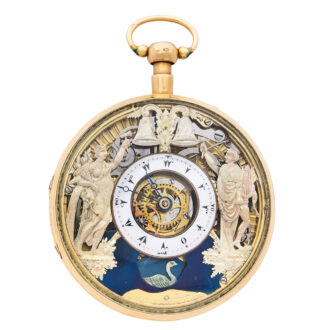
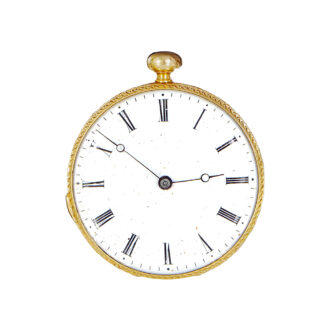
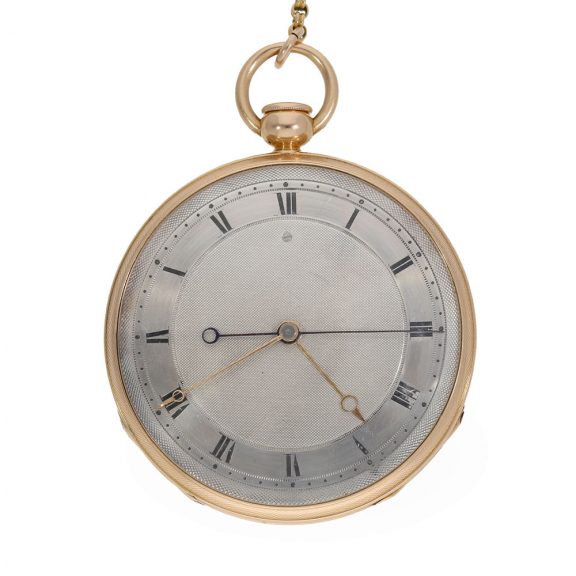
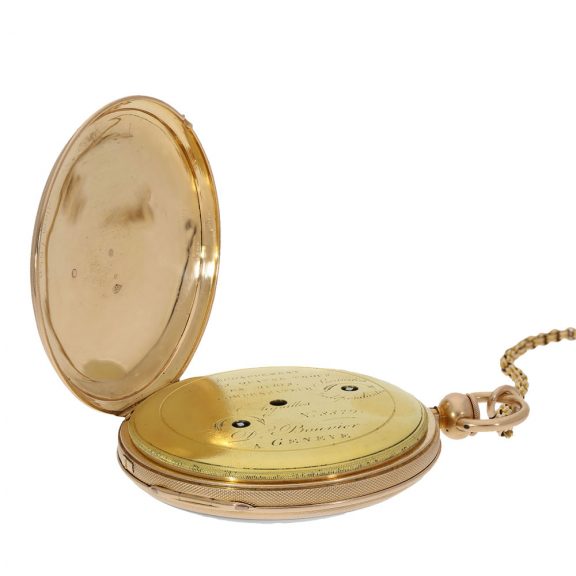
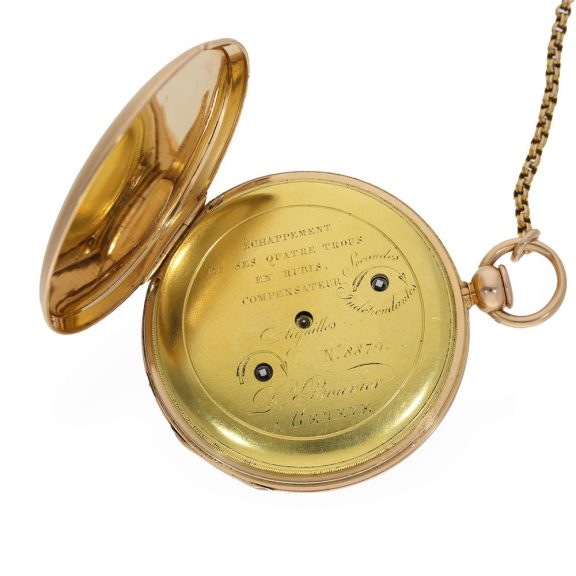
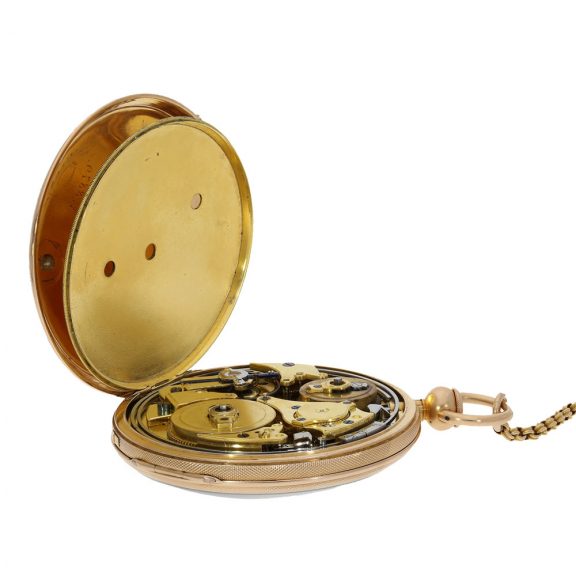
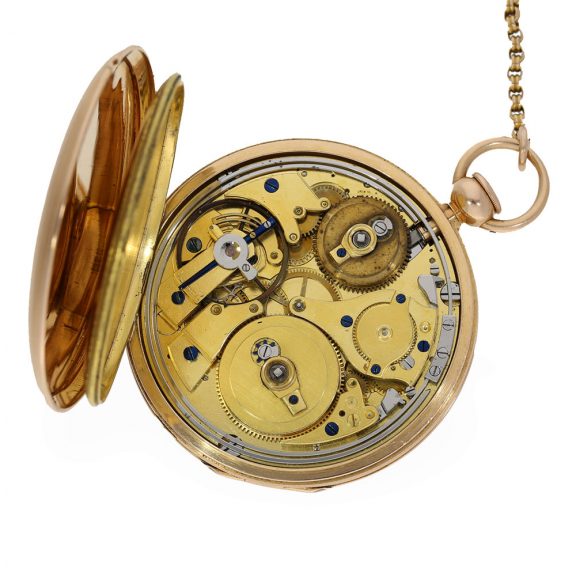
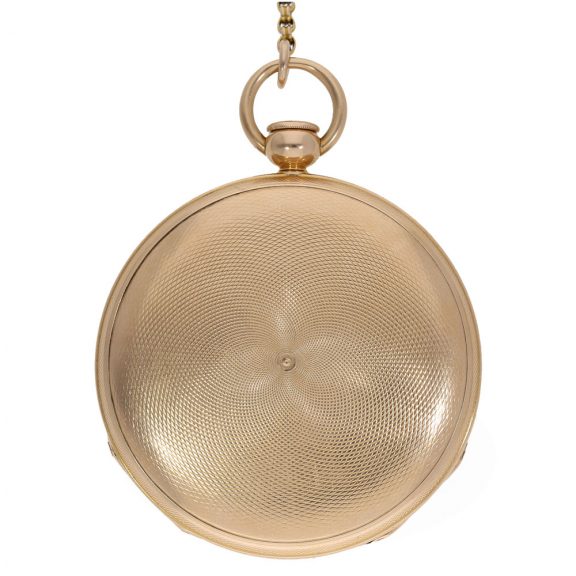
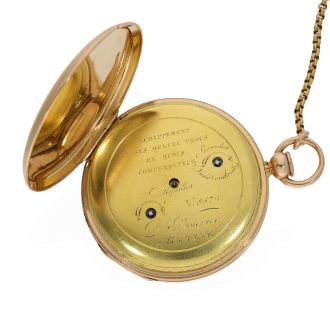
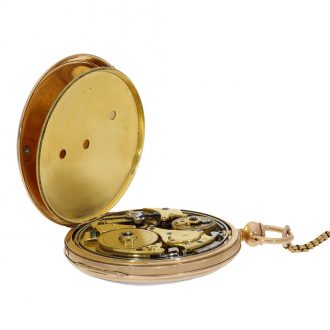
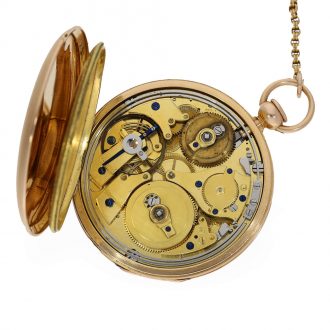
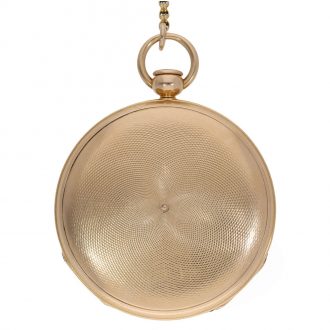
An excellently preserved Breguet type Lépine pocket watch with repeater, seconde morte and gold ratchet key made by David Bouvier in Genéve, Switzerland, circa 1820. The open faced case of this watch, which was crafted from 18 carat gold, is numbered, finely engine turned, has a slide in the band for the start/stop function of the jumping center seconds and a button after Breguet design to activate the repeater. The screwed silver engine turned dial has champlevé Roman hour numerals on a brushed chapter ring, outer minute dots, gold Breguet hands and a blued steel center second hand. The movement has two separate barrels for the escapement and the seconde morte, a special form ruby cylinder escapement and temperature compensation, repeating the quarters on square gongs. The cuvette is signed, numbered and engraved with technical details.
The movement and cuvette have matching numbers.
–
Diameter: 55 mm
–
Weight: 123 g
–
Signed: D. Bouvier à Genève
–
Even though this timepiece was not made in one of Breguet’s workshops, it is of excellent quality with several features also found on Breguet’s watches. Several well known Geneva watchmakers were inspired by Breguet’s masterpieces and adopted many of his details for their watches.
–
Bouvier
A family of watchmakers and watch dealers, renowned for their high quality automaton clocks, which were primarily produced for the English and French markets.
–
The seconde morte, also known as dead-beat seconds, is a complication of a mechanical movement in which the second hand moves every second. This is in contrast to the usual ‘running’ of the second hand. This complication is rare and was seen in the years before the quartz revolution, the 1970s and 1980s, but died a silent death because of the same quartz revolution. The reason for this was that the second hand moves per second in almost the same way as quartz watches, which ultimately also use a frequency of 1Hz. With that, the ‘running’ second hand became the distinction between mechanical and quartz watches. Incidentally, that external similarity only applies to the second hand jumping per second, the underlying mechanism of the dead seconds complication is of course of a completely different order.
Signed: D. Bouvier à Genève
Share this page: