Swiss/German extremely rare spring detent pocket watch Circa 1925
- Kenmerk
- AS1879
- Diameter
- 68 mm
- Estimate
- € 12.500 - 25.000
- Price sold
- € 12.900
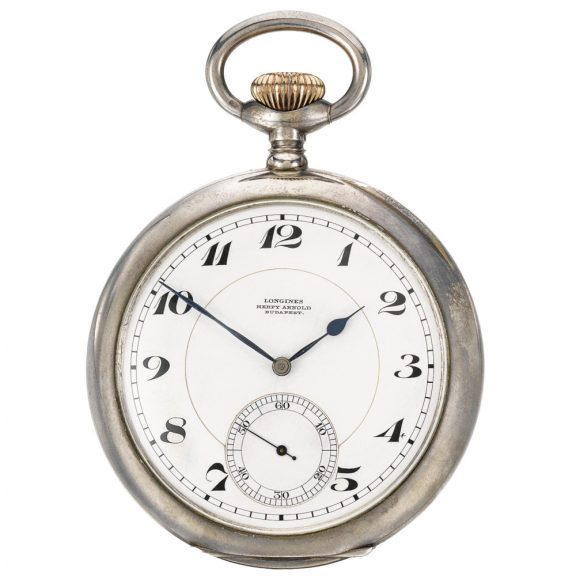
Silver open faced pocket watch by Longines
–
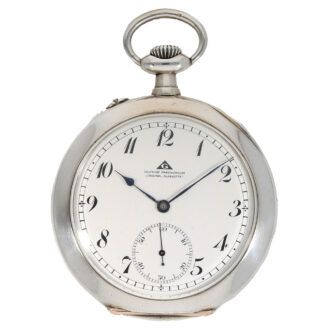
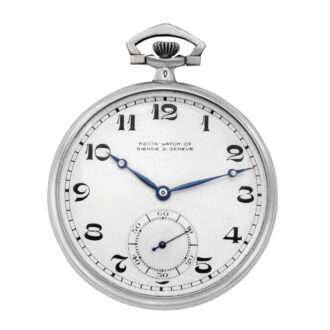
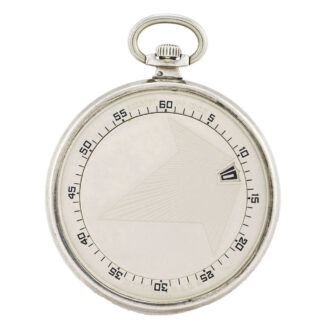
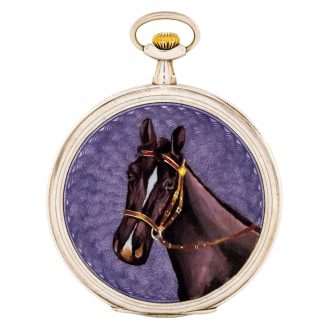
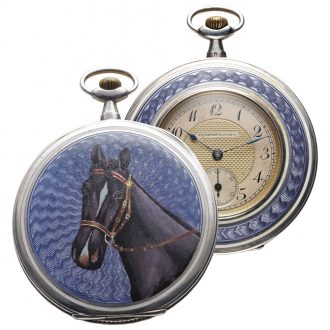
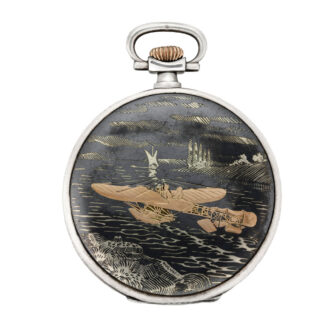
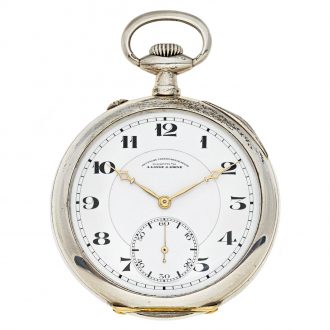
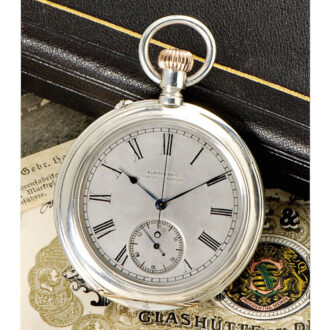
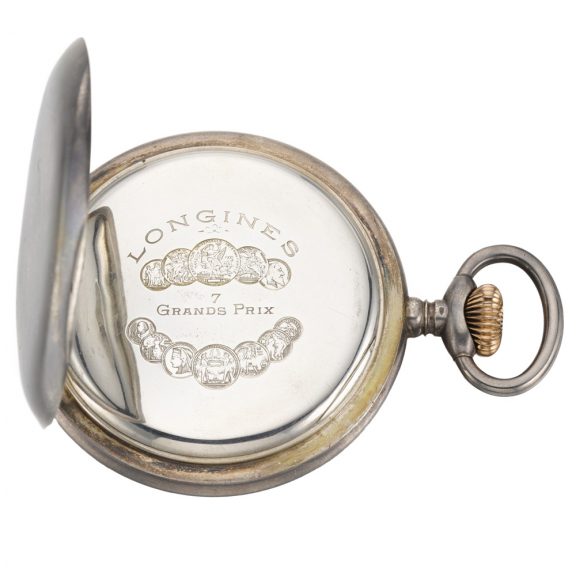
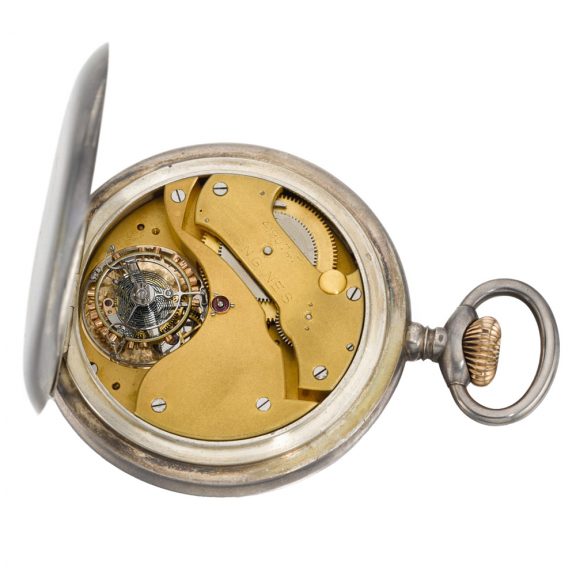
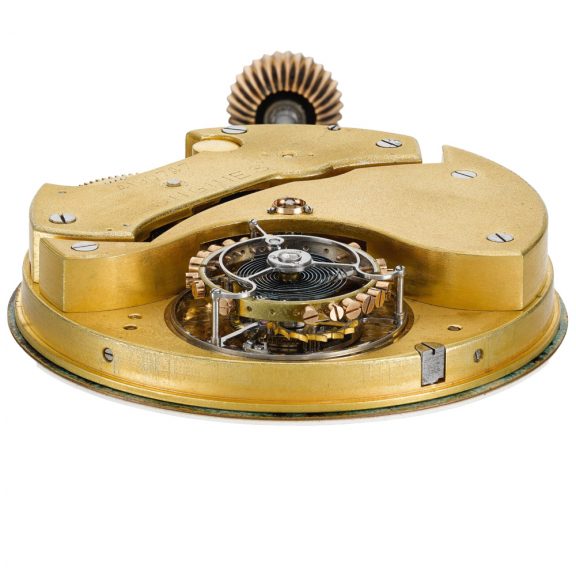
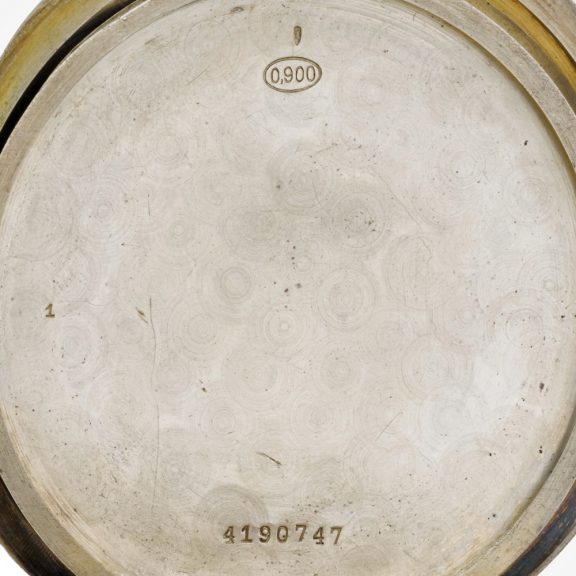
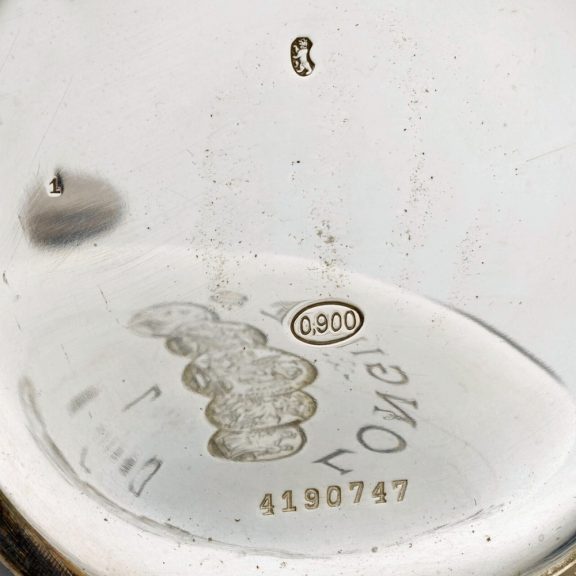
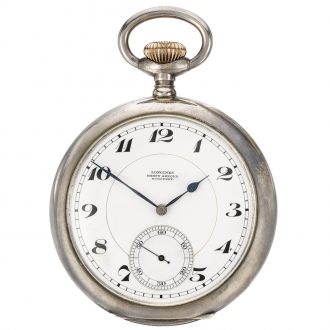
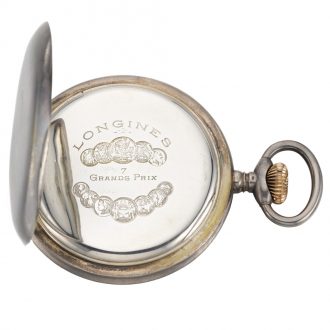
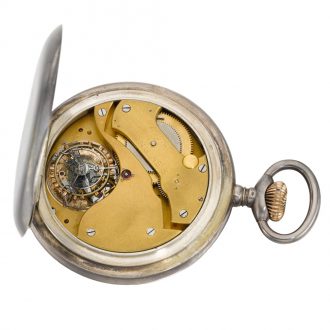
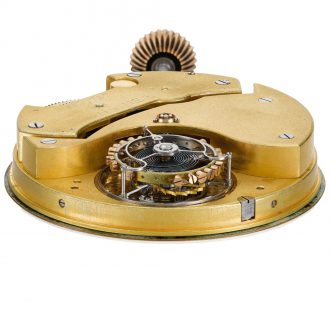
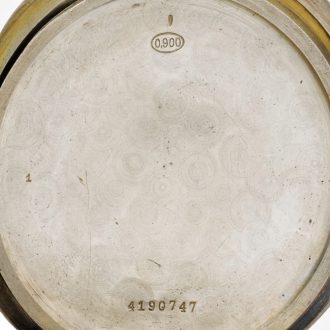
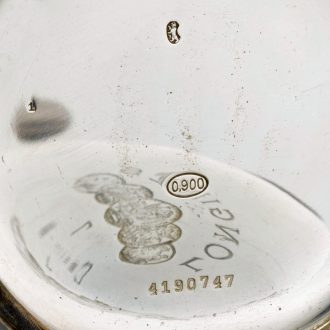
A large and exceptionally rare Swiss/German silver open faced keyless watch, circa 1925. Retailed by Herpy Arnold, Budapest. The Movement is a frosted gilded modified Longines calibre 24.99 with the Earnshaw-type spring detent chronometer escapement mounted within a one-minute flying tourbillon carriage, large Guillaume balance, diamond endstone, signed and numbered Longines 4190747. It features a white enamel dial with Arabic numerals, a black outer minute ring, a sunken dial centre, subsidiary seconds dial, blued steel hands, and is signed Longines Herpy Arnold Budapest. The plain polished silver case has a pink gold capped crown, the cuvette is signed Longines, has commemorative exhibition medallions, and is engraved 7 Grand Prix. The case and cuvette are both numbered 4190747.
–
The Longines movement was later modified to incorporate a one minute flying tourbillon with a spring detent chronometer escapement.
–
Diameter: 68 mm
–
Signed: Longines, Herpy Arnold Budapest
–
Movement is functioning, but it is recommended to clean and service it. The dial has a faint hairline to the centre and a light scratch to the edge between 7 and 8 o’clock. The case shows tarnishing and some small, light marks and scratches. The glass is slightly loose.
–
The Longines archives indicate that this watch was delivered to Herpy Arnold in Budapest and invoiced on June 22, 1925. Initially manufactured by Longines with a lever escapement, the calibre 24.99 movement was later expertly modified by an unknown but highly skilled watchmaker to incorporate a flying tourbillon with a spring detent escapement. Although the individual who carried out the transformation is not known, Richard Meis notes in his authoritative book, “Das Tourbillon,” that the tourbillon’s style suggests a German origin. Meis writes, “Certainly many of the excitements of the German watchmaking school in Glashütte have been realised here; possibly it is the work of a former DUS student or master who made their Tourbillon outside the DUS.”
–
Gyula Herpy, originally from Budapest, was a successful retailer who started his business in 1817 by importing and selling mainly Swiss clocks and watches to Hungarian customers. The business was nationalised after the Second World War.
Signed: Longines, Herpy Arnold Budapest
Share this page: