Swiss heavy complicated repeating chronograph Circa 1900
- Kenmerk
- AD1564
- Diameter
- 60 mm
- Estimate
- € 100.000 - 200.000
- Price sold
- € 203.300
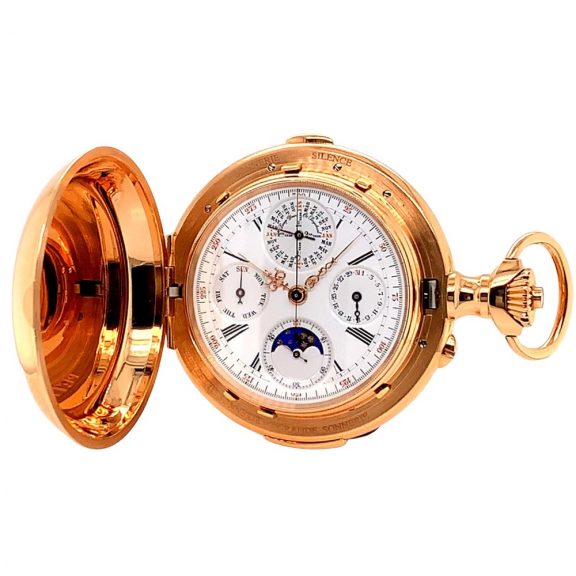
Gold Grande Complication watch attributed to Louis Elisée Piguet
–
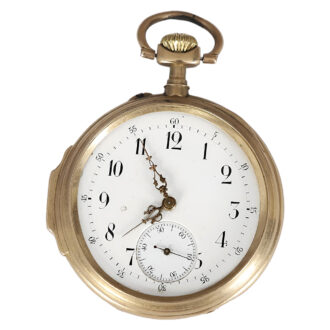
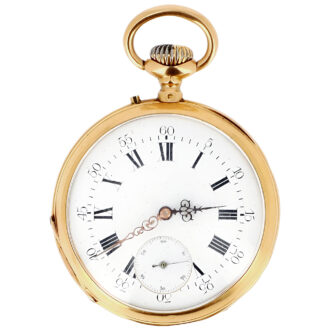
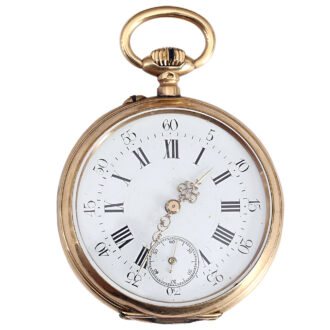
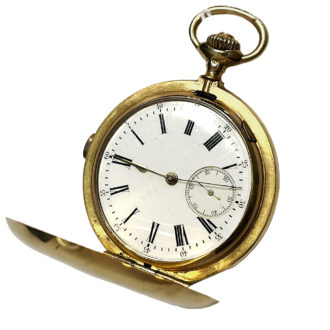
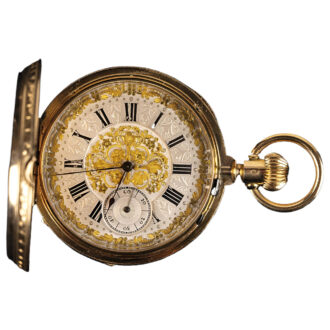
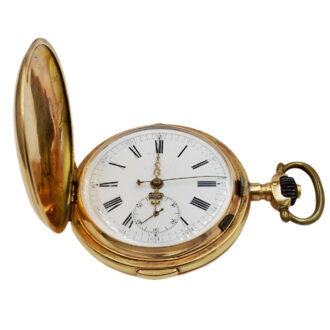
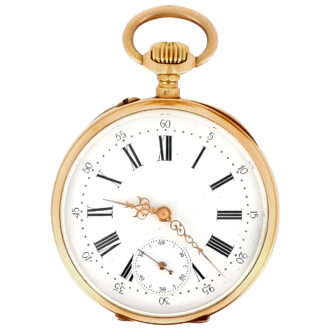
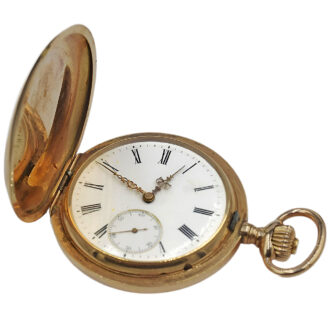
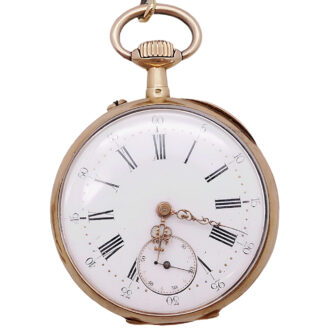
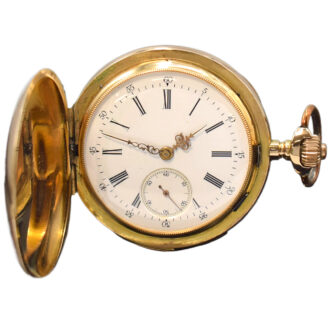
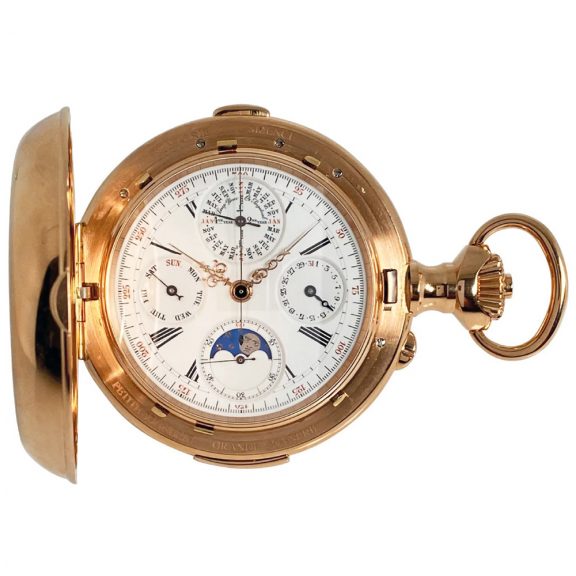
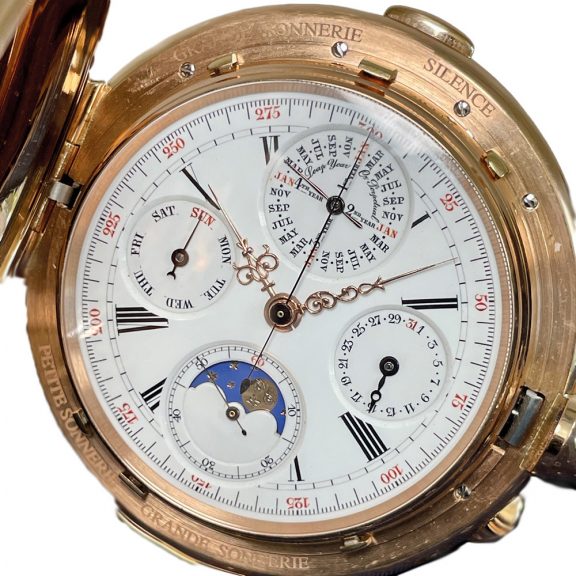
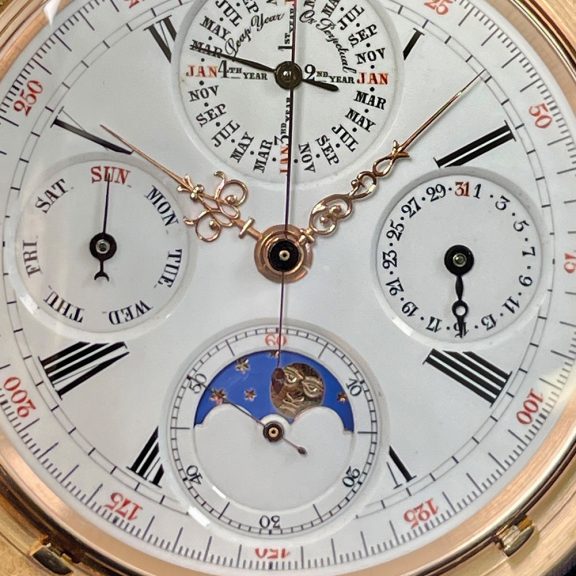
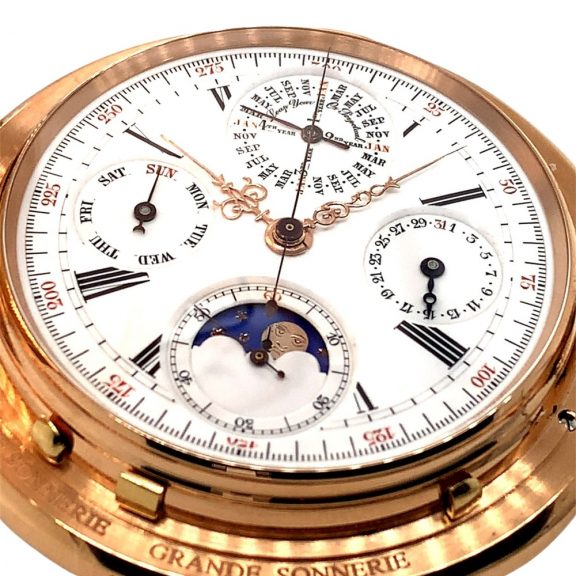
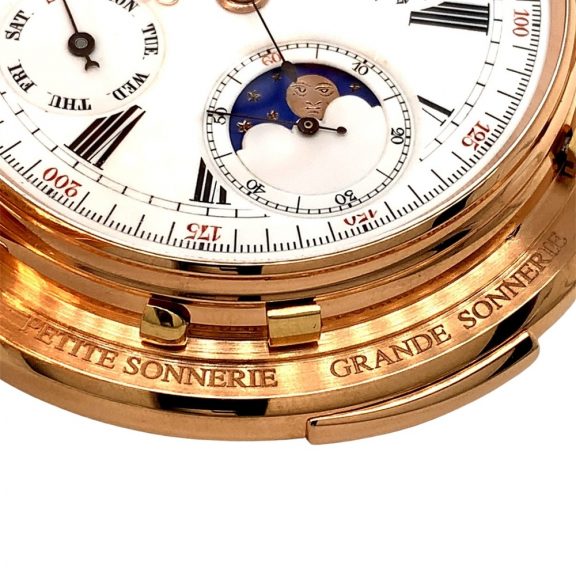
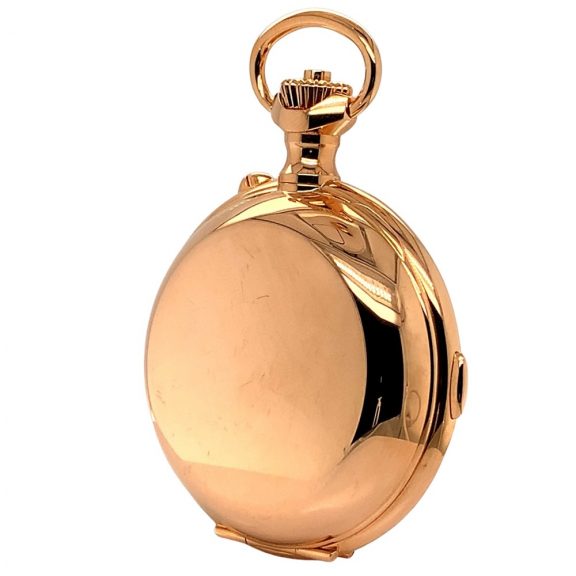
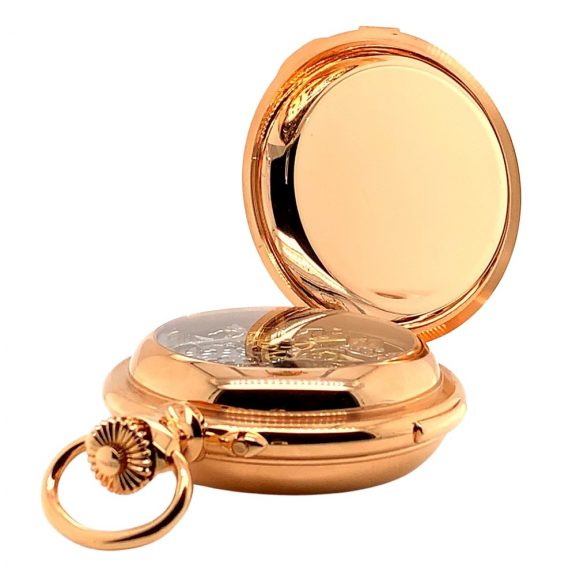
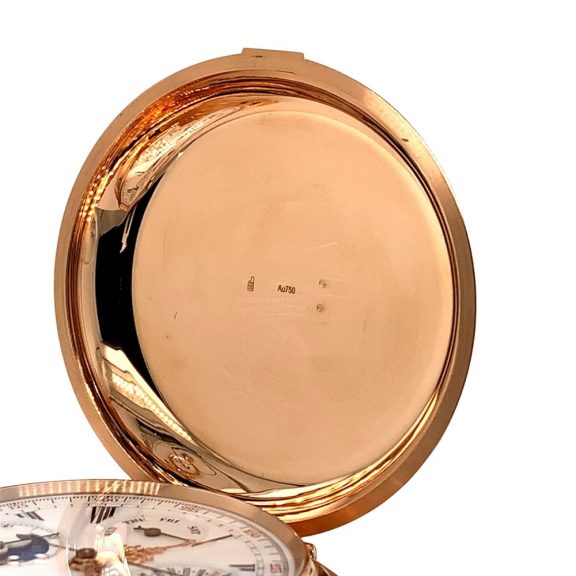
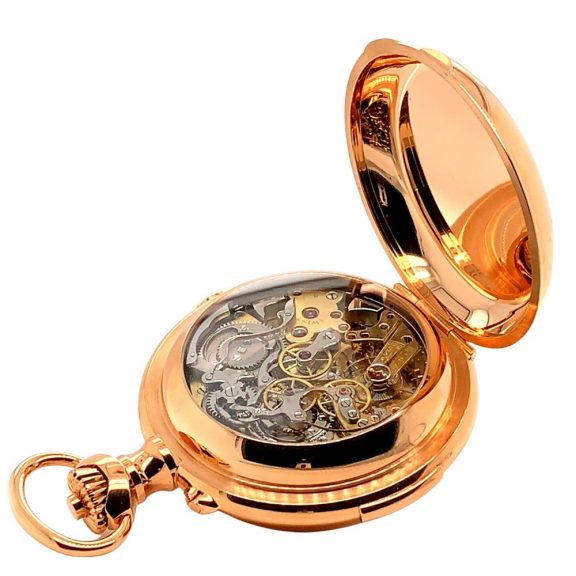
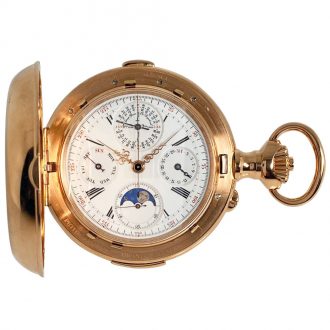
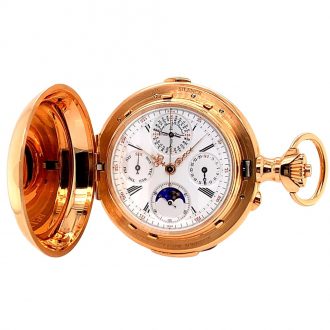
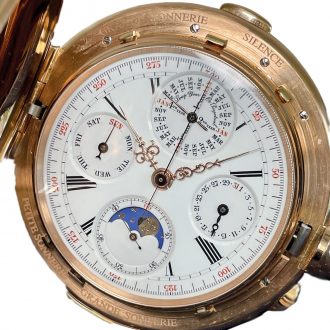
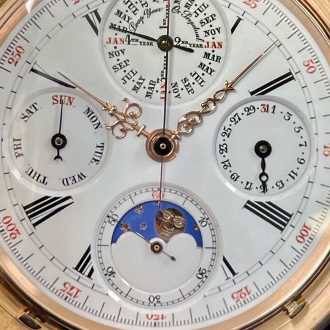
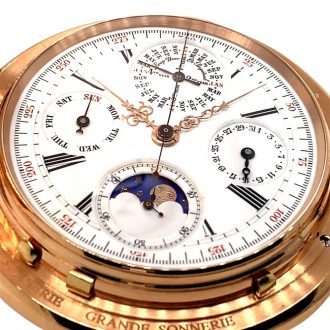
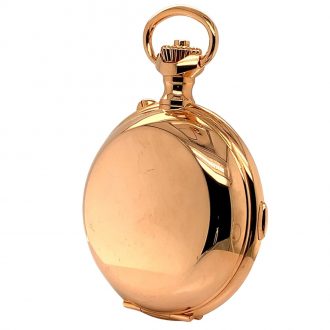
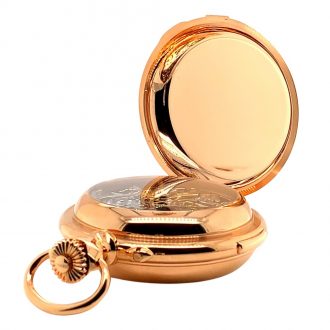
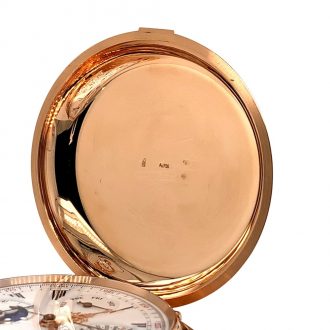
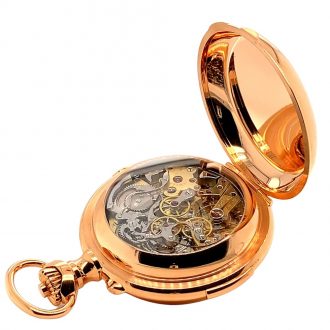
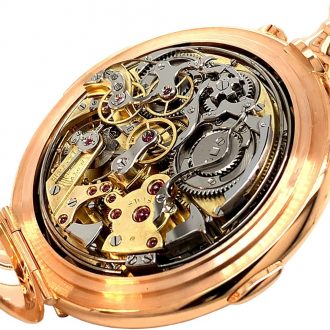
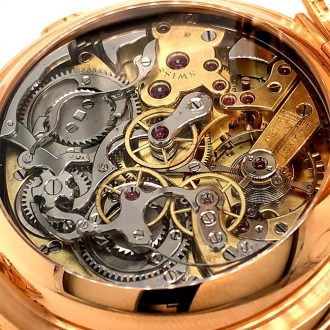
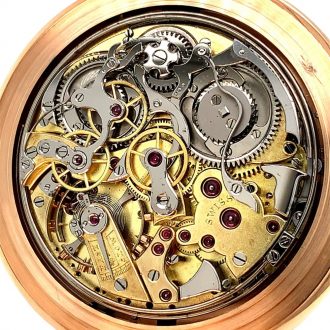
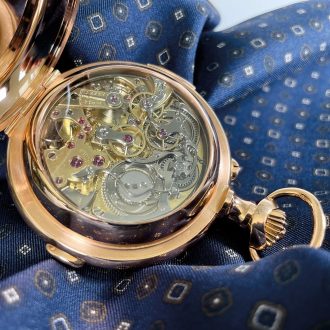
An important, large and very heavy Swiss Grande Complication watch with perpetual calendar, moon phase, chronograph, minute repeater and quarter hour self strike Petite Sonnerie and Grande Sonnerie, circa 1900. This exceptional timepiece boasts an 18 carat polished gold case and an enamel dial. The dial features radial Roman numerals, an outer minutes and seconds track with Arabic five minutes- and seconds numerals, along with four subsidiary dials for days of the week, date, and months concentric with leap year cycle, an aperture at six o’clock for phases of the moon with constant seconds, center seconds hands, and Louis XV style hands made of gold. Additionally, the watch is equipped with a bridge movement with two hammers and gongs, lever escapement and gold screw compensation balance.
–
Diameter: 60 mm
–
Weight: 286 g
–
Signed: No name attributed to Louis Elisée Piguet.
–
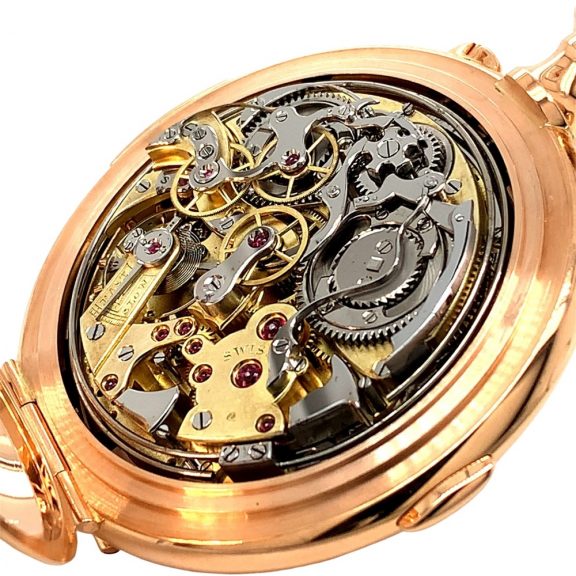
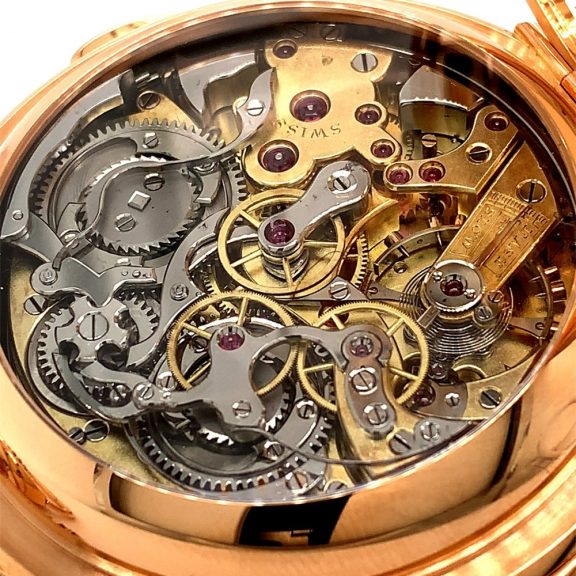
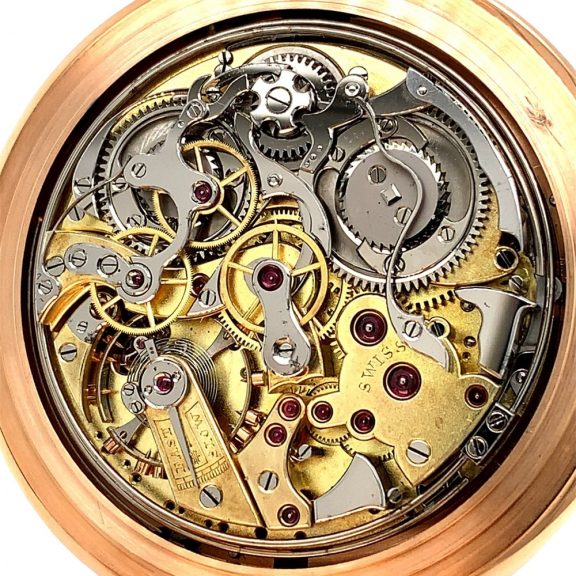
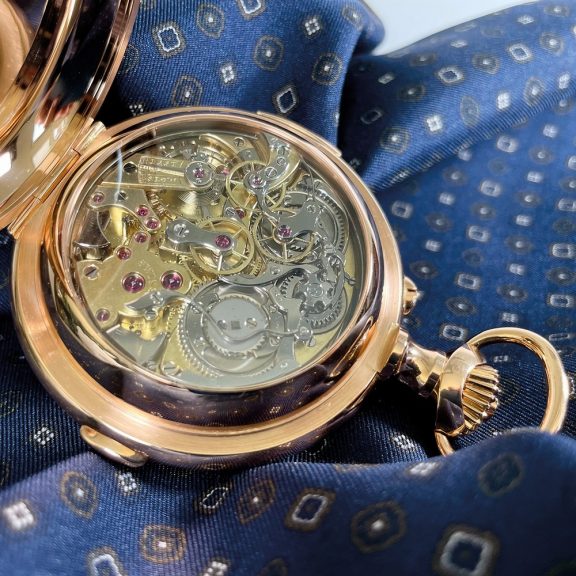
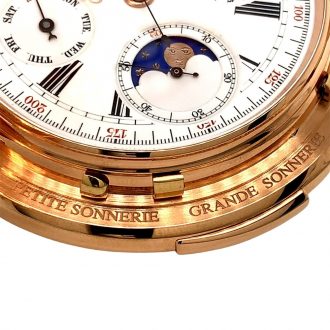
This Grande Complication is an extraordinary timepiece that boasts impressive features. It weighs 286 grams and has a diameter of 60 mm and a height of 23 mm. The case, dial, and movement are in excellent condition. The steel lever is finely mirror polished and bevelled, with an outstanding processing quality. A rocker ensures the winding of both barrels. The watch has a minute repeater, quarter hour self strike “Petite Sonnerie” and “Grande Sonnerie” that produce two different sounding gongs with two hammers. This watch has 11 complications, making it one of the most complex pocket watches available. The movement is immaculate and like new; it was likely never installed in a case.
–
Louis Elisée Piguet (1836-1924) from Le Brassus created a series of exceptional timepieces, including a “Grande Sonnerie” with seven hammers. Some of the most complicated watches sold in Glashütte used movements by Louis Elisée Piguet. Patek Philippe, Vacheron & Constantin, and Breguet occasionally used his movements. He refined chronographs and the keyless winding mechanism and invented the “Fixed Star” repeater mechanism. When Ami LeCoultre Piguet was commissioned to build the so called “Merveilleuse” – a watch with 24 functions and complications – he chose Louis Elisée Piguet as his partner. As one of the most talented and prolific watchmakers of the late 19th century, he was highly esteemed by his colleagues and was elected to numerous horological associations. His company, later renamed “Frédéric Piguet SA,” still exists today and continues the tradition of producing high quality and complicated watches.
Signed: No name attributed to Louis Elisée Piguet
Share this page: