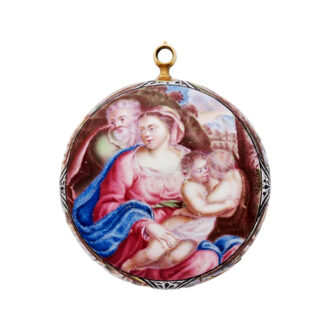
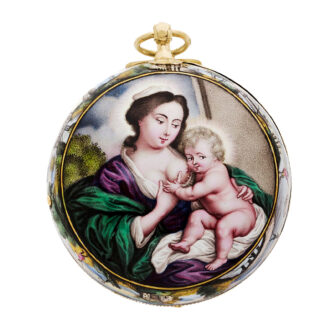
Very Unique Dutch gold and enamel verge watch Circa 1640
- Kenmerk
- TV0101
- Diameter
- -
- Estimate
- € 20.000 - 60.000
- Price sold
- -
Gold verge watch by Jan Bernardus Vrythoff
–
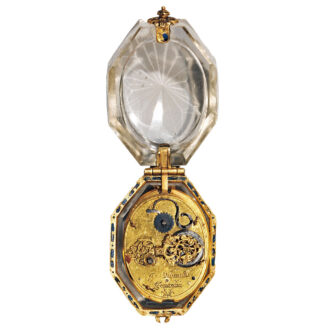
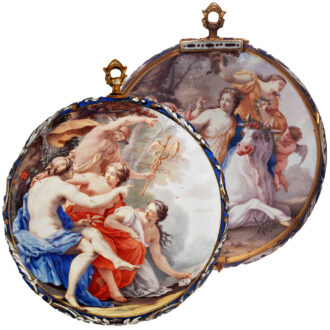
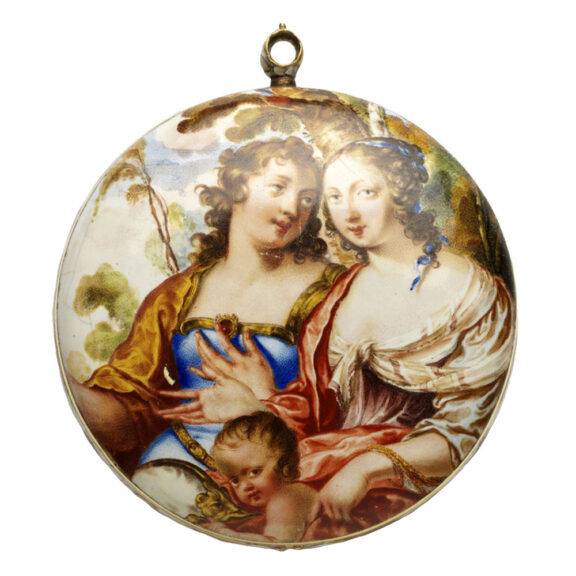
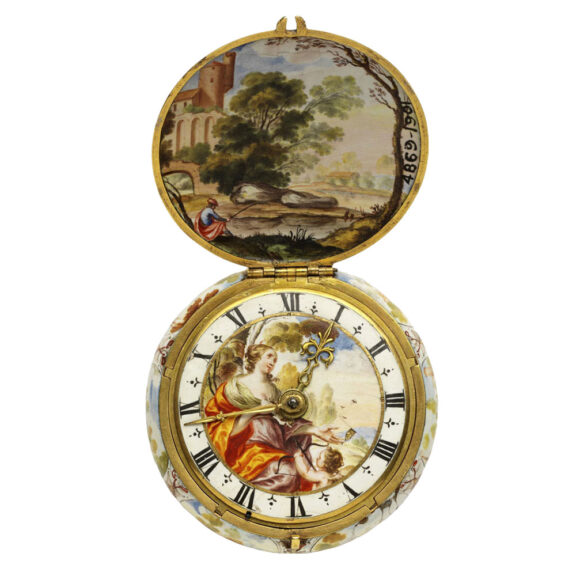
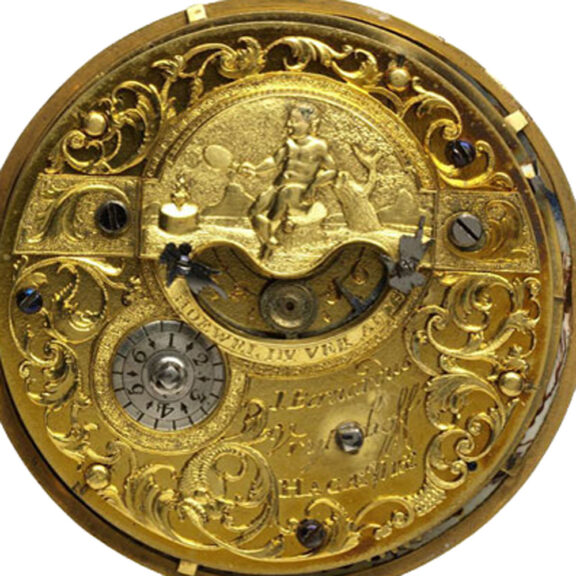
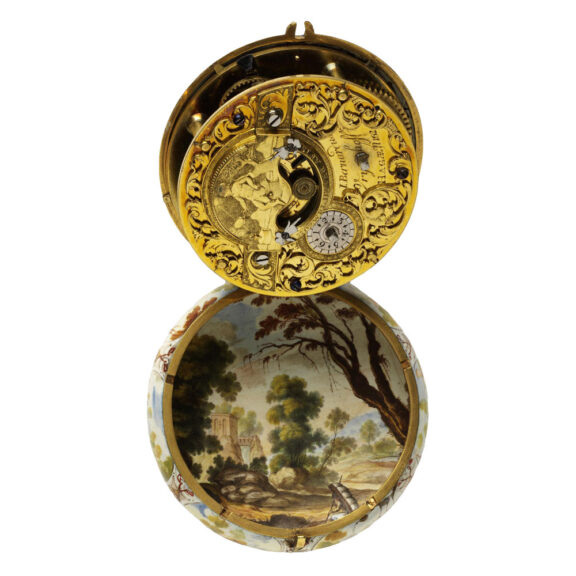
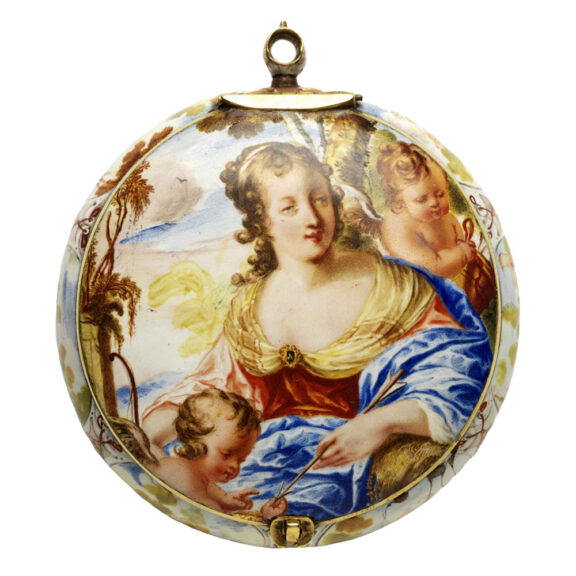
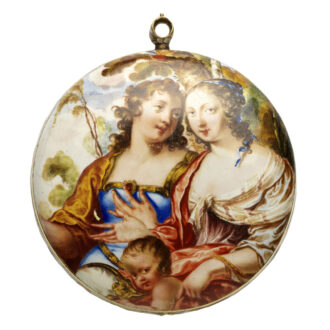
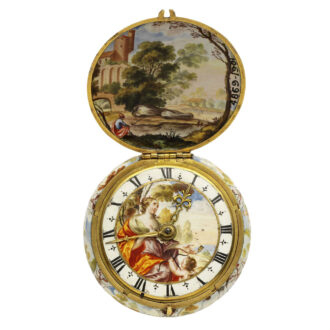
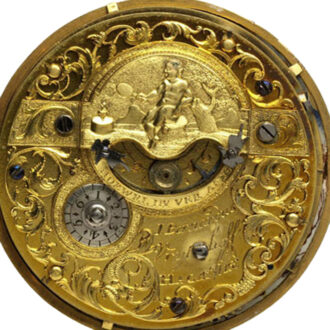
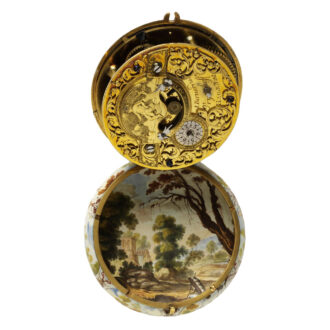
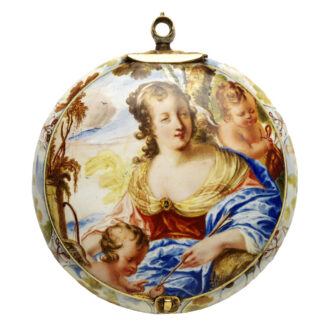
Unique Dutch gold verge watch with an enamel portrait of a young woman on the front, signed by Jan Bernardus Vrythoff, The Hague Holland, watch circa 1640-1660, movement circa 1740. Typically decorated Dutch verge movement around 1740, signed plate, extensively decorated, beautifully pillars. The case is enamelled in polychrome on the back with figures who can reasonably be identified as Mars wearing a breastplate. Venus and Cupid, who holds Mars’s helment. On the front are two cupids and a female figure, presumably Venus, holding an arrow towards a heart. Around the side of the case are landscape vignettes. Inside the back of the case is a landscape with a seated man with a large burden on his back. On the reverse of the lid is a man fishing in a landscape.
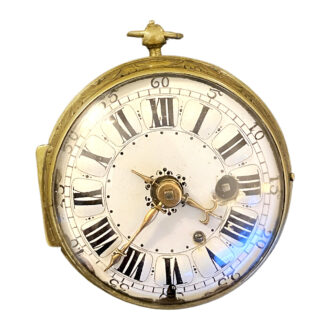
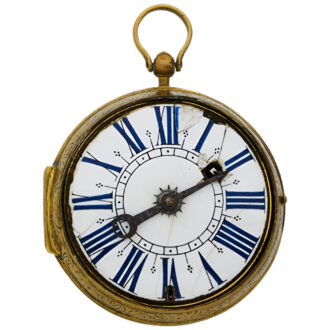
The dial’s centre is painted in enamel with a seated woman with her left hand extended. A cupid in the foreground holds a drawn bow with an arrow pointing towards her heart. White enamel chapter ring with Roman numerals and half-hour marks. Gilt metal hands. Brass movement plates. Cylindrical pillars. Fusee and chain. Verge escapement. The balance wheel and spring, with a Tompion type regulator and rotating silvered dial, numbered 1 to 6. Bridge balance-cock with mock pendulum aperture: engraved numerals 1 to 6 visible through the aperture. Two steel hands are screwed on the cock at the ends of the mock pendulum aperture. The cock is cast with a naked cupid setting fire to a heart by concentrating the sun’s rays with a magnifying glass. The rim of the cock outside the pendulum aperture is engraved ‘HOWELL HY VER AF IS’. Pierced and engraved scrollwork applied to the top plate and the maker’s name as below.
–
Signed: Jan Bernardus Vrythoff The Hague Holland
–
Enamelled watch cases continued to be valued in the eighteenth century. Some were turned into gold boxes. Others, like this one, had more movement inserted. In about 1630, improved techniques made it possible to execute a miniature painting in enamel in a wide range of colours. The metal was covered with an enamel ground and fired in the kiln. It was then painted with metal oxides mixed with oil. Each colour had to be fired to fuse it onto the enamel ground. Such was the potential of the new technique that some watch cases, like this one, became wider and flatter to provide an extensive surface for enamelling. The technique was used to decorate watchcases and other goldsmiths’ work and paint portraits in miniature. The key figures in this development, among whom the leading role is given to Jean Toutin (1578-1644), were enamellers and goldsmiths in Paris, Blois and Châteaudun, who had close links with watchmakers.
There has been considerable discussion about how the techniques employed in the newly painted enamels differed from those previously. Still, it is apparent that the effect was different: previously, it had not been possible to create enamel paintings in such a wide range of colours as to rival or copy an oil painting.
Signed: Jan Bernardus Vrythoff The Hague Holland
Share this page: