The Lever Escapement

The lever escapement is one of the most common types of escapements used in antique pocket watches. Developed in the mid 18th century, the lever escapement revolutionized timekeeping and made it possible to create watches that were more accurate and reliable than ever before.

History of the Lever Escapement

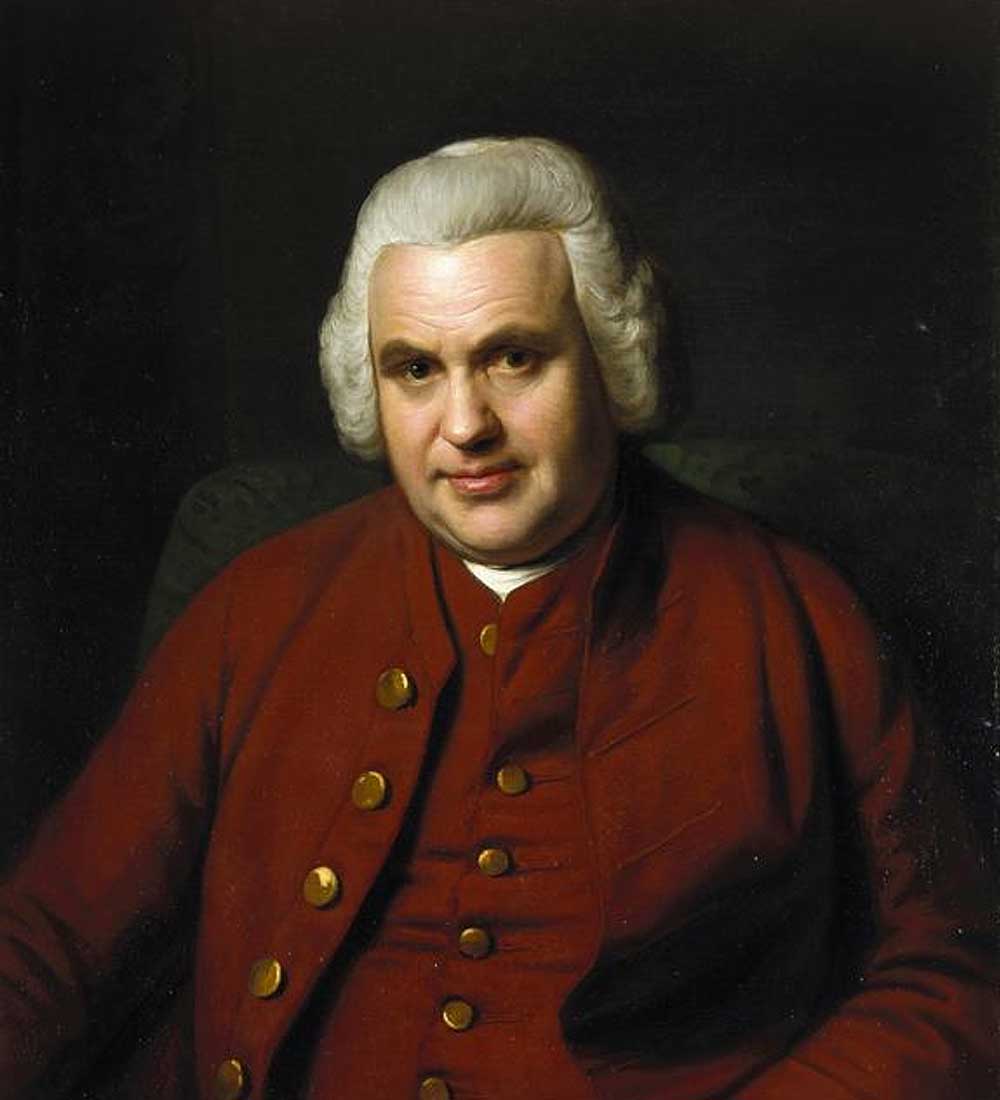
The lever escapement was invented by British watchmaker Thomas Mudge in 1755, and was first used in a watch he created for King George III of England. Prior to the lever escapement, the most common type of escapement used in clocks and watches was the verge escapement.

The verge escapement had been in use for centuries, but it had significant drawbacks. The verge escapement was prone to inaccuracies due to its design, which caused the pallets to “bounce” and lose contact with the gear wheel as the balance wheel or pendulum oscillated back and forth. This made it difficult to create timepieces that were accurate to within a few seconds per day, which was a major goal of watchmakers of the time. To address this issue, Mudge developed the lever escapement.

British watchmaker Thomas Mudge
Mechanics of the lever escapement

Mechanics of the Lever Escapement

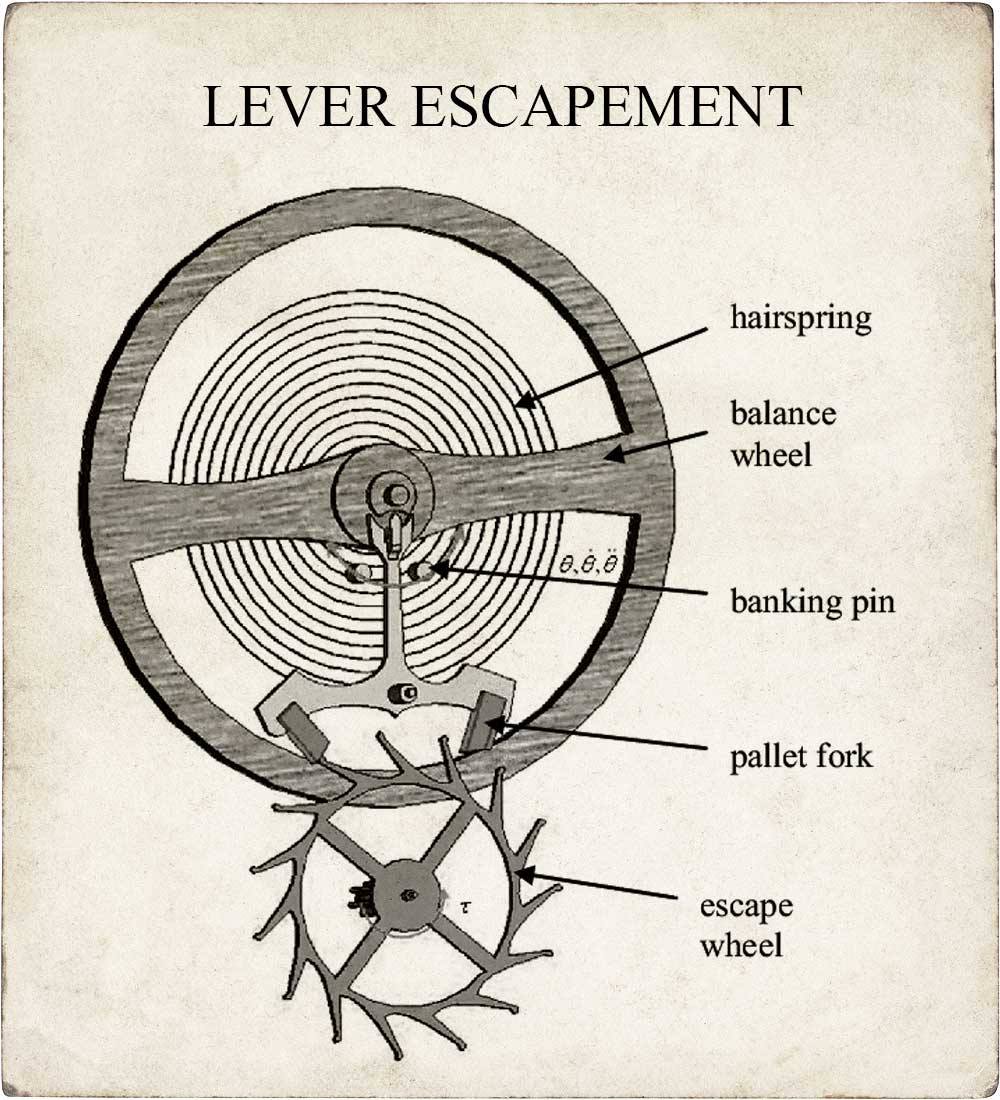
The lever escapement consists of a lever, which is mounted on a pivot and moves back and forth between two pallets that engage with the teeth of a gear wheel. As the balance wheel oscillates, the lever alternately engages with one pallet and then the other, allowing the gear wheel to turn in a controlled manner. The lever is connected to a hairspring, which provides a restoring force to keep the balance wheel oscillating at a constant rate.

In more detail, the lever escapement in antique pocket watches worked as follows:

  1. The balance wheel: The balance wheel is a wheel with a weighted rim that oscillates back and forth at a constant rate. The balance wheel is driven by a mainspring, which is wound up by turning the winding crown on the watch.
  2. The hairspring: The balance wheel is connected to a hairspring, which provides a restoring force to keep the balance wheel oscillating at a constant rate. The hairspring is a thin spring that is coiled around the balance staff, which supports the balance wheel.
  3. The escape wheel: The escape wheel is a gear wheel with pointed teeth. The escape wheel is connected to the mainspring, and rotates as the mainspring unwinds.
  4. The pallet fork: The pallet fork is a component that is mounted on a pivot, and moves back and forth between the escape wheel teeth. The pallet fork is connected to the lever, and is controlled by the balance wheel and hairspring.
  5. The lever: The lever is a component that is mounted on a pivot, and moves back and forth between the pallets. The lever is connected to the pallet fork and hairspring, and is controlled by the balance wheel and hairspring.
  6. The pallets: The pallets are two small components that engage with the escape wheel teeth, and control the rotation of the escape wheel. The pallets are mounted on the pallet fork, and are controlled by the lever.

As the balance wheel oscillates back and forth, it controls the movement of the pallet fork, which in turn controls the movement of the pallets. The pallets engage with the escape wheel teeth, causing the escape wheel to rotate by a small amount with each oscillation of the balance wheel. As the escape wheel rotates, it drives the gear train of the watch, which turns the watch hands.

Advantages of the Lever Escapement

One of the key advantages of the lever escapement is its accuracy. Unlike the earlier verge escapement, which was prone to inaccuracies and errors due to its design, the lever escapement is much more consistent and reliable. This made it possible to create watches that were accurate to within a few seconds per day, a major improvement over earlier timepieces.

Another advantage of the lever escapement is its durability. The lever and pallets are designed to be very robust, and can withstand the constant motion and wear that comes with regular use. This made the lever escapement ideal for use in pocket watches, which were often carried and used daily.

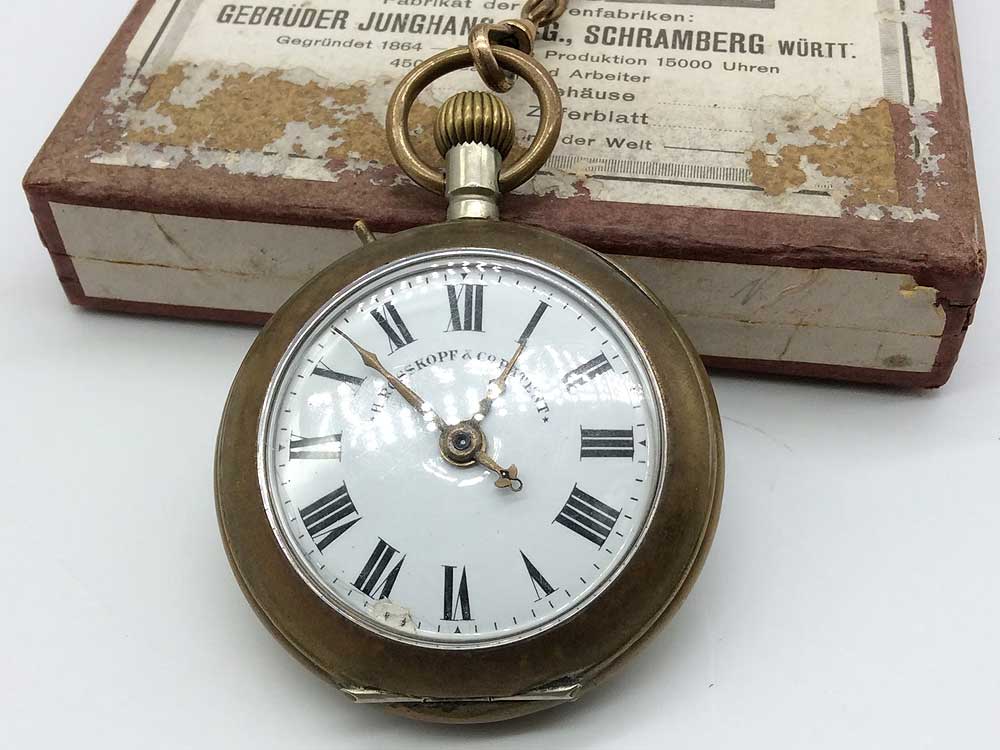
Over time, watchmakers continued to refine and improve the lever escapement. For example, in the mid-19th century, Swiss watchmaker Georges Frederic Roskopf developed a simplified version of the lever escapement known as the Roskopf escapement, which was cheaper to produce and easier to maintain than earlier versions.

19th century pocket watch Georges Frédéric Roskopf
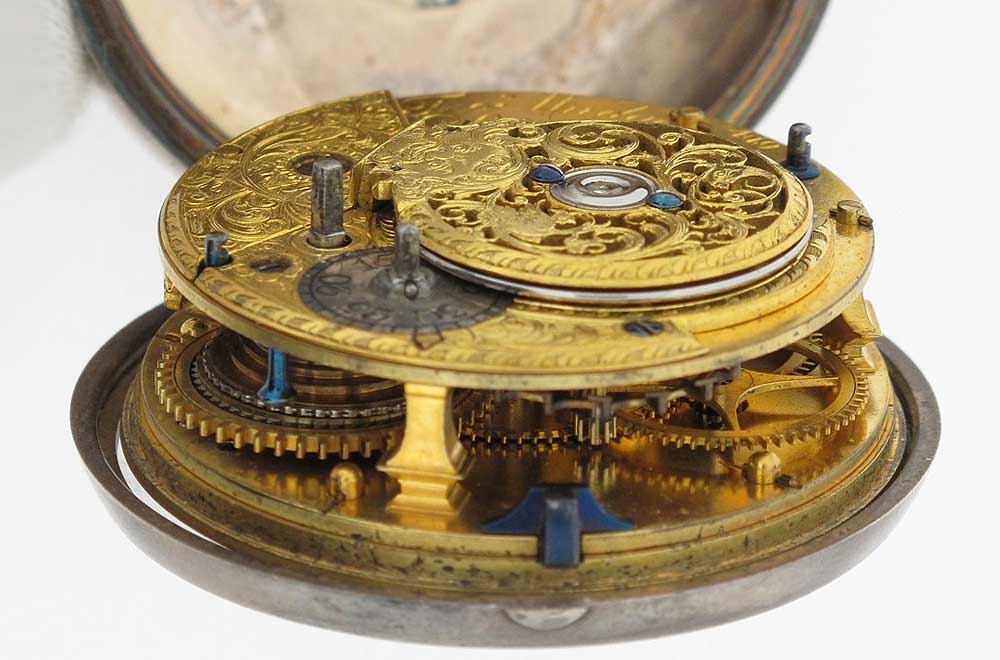
An 18th century pocket watch by the well-known London horologist Thomas Mudge.

Significance of the Lever Escapement

The lever escapement had a significant impact on the development of horology, or the science of timekeeping. With the increased accuracy and reliability provided by the lever escapement, watchmakers were able to create more precise and reliable timepieces than ever before. This paved the way for the development of increasingly sophisticated and complex watches, including chronometers and other high-precision timepieces.

Today, the lever escapement remains an important part of the history of horology, and is still used in many high-end mechanical watches. While other types of escapements, such as the co-axial escapement developed by watchmaker George Daniels in the 1970s, have been developed in more recent years, the lever escapement continues to be highly regarded for its accuracy, reliability, and durability. For collectors and enthusiasts of antique pocket watches, the lever escapement is an important part of the history of timekeeping, and a testament to the ingenuity and skill of early watchmakers.

To top