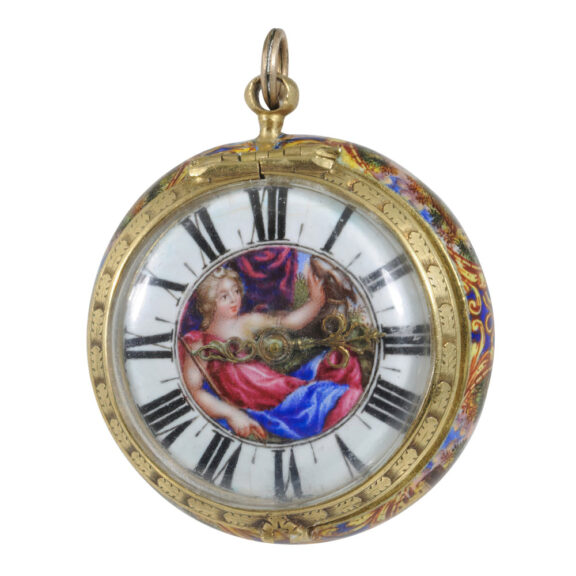
Important Swiss 22K gold and enamel verge watch Circa 1680
- Kenmerk
- DB0246
- Diameter
- 35 mm
- Estimate
- € 12.000 - 30.000
- Price sold
- € 16.900
Gold and enamel open faced verge watch by Abraham DeChoudens
–
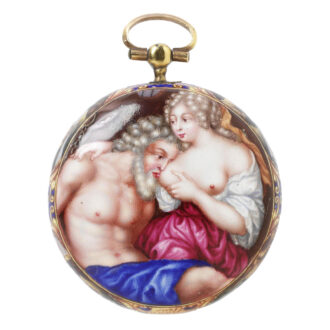
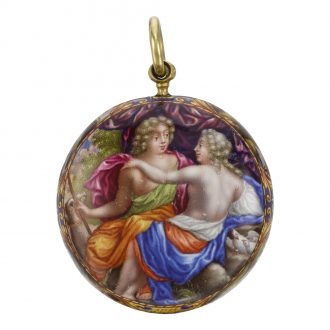
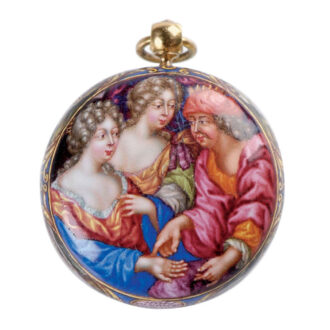
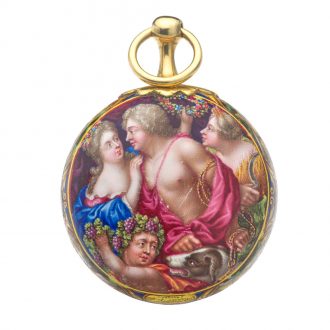
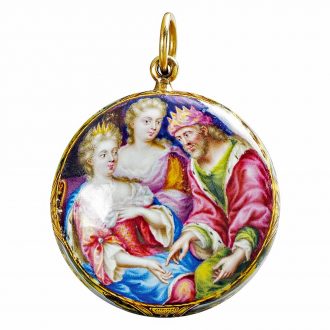
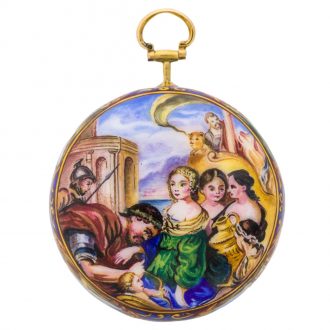
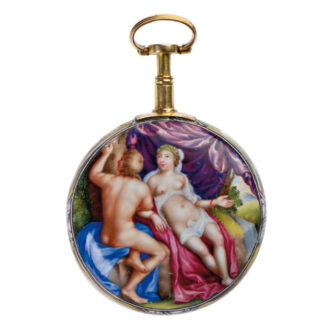
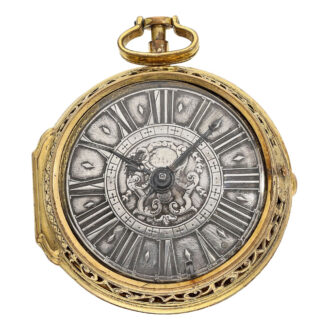
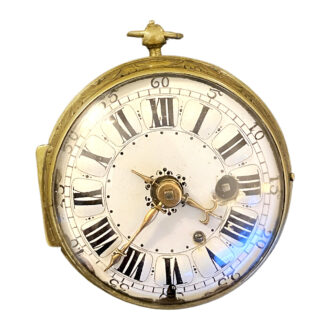
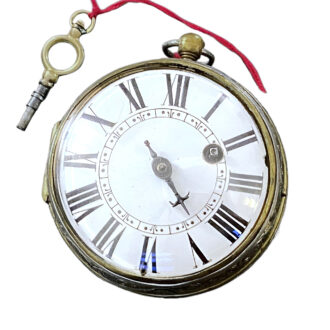
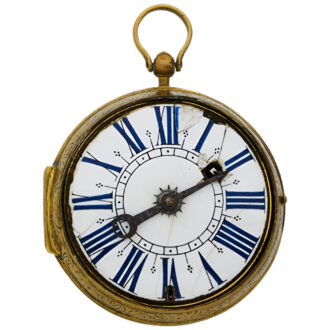
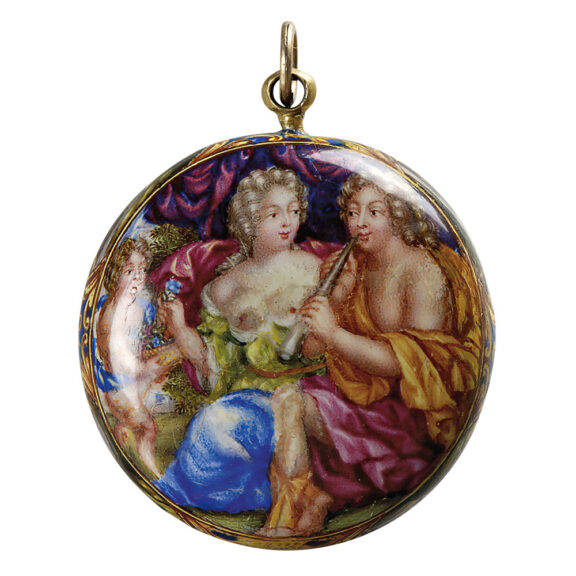
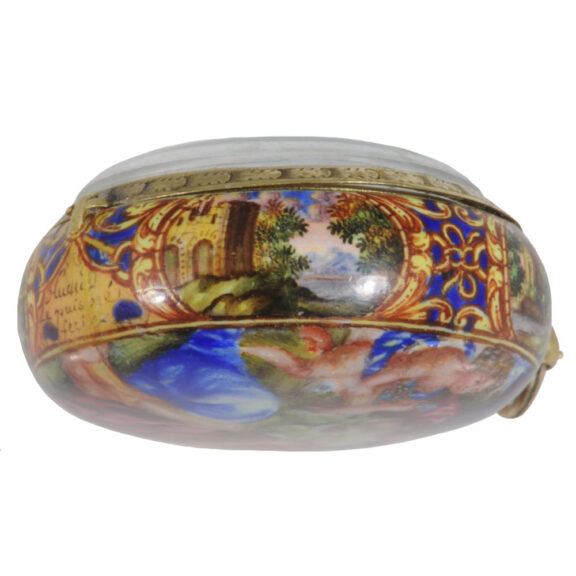
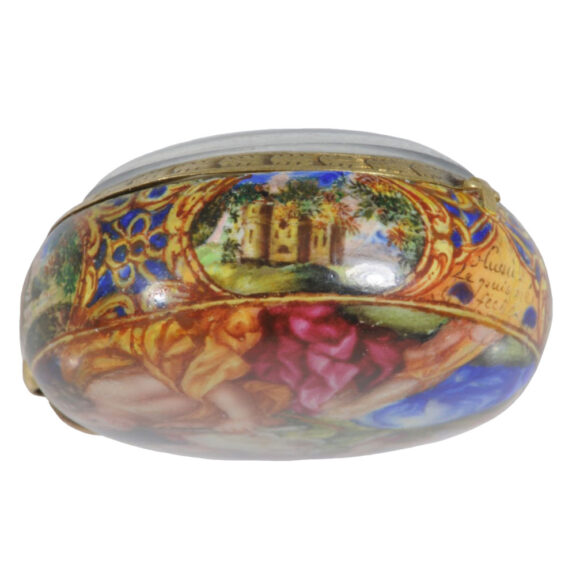
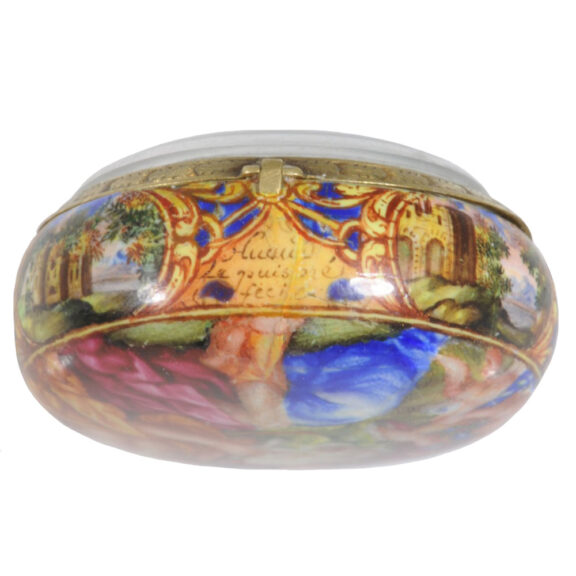
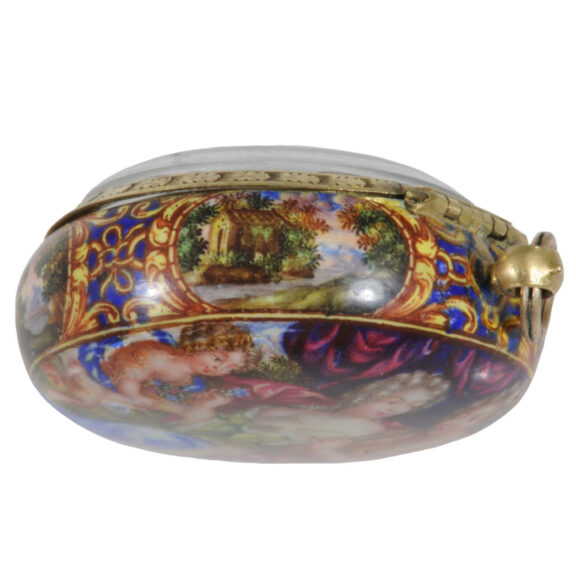
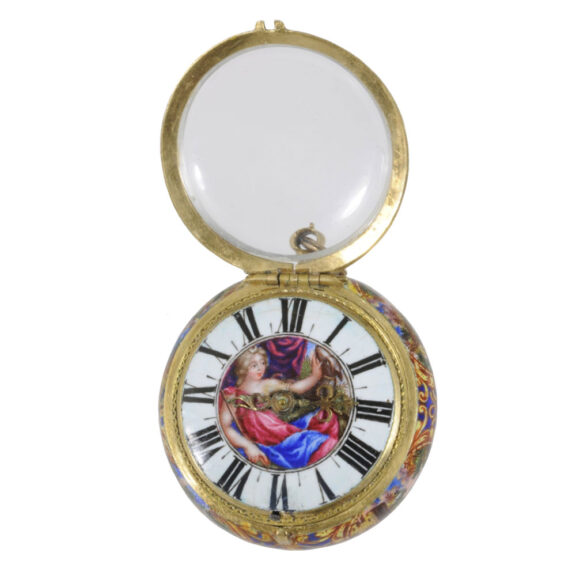
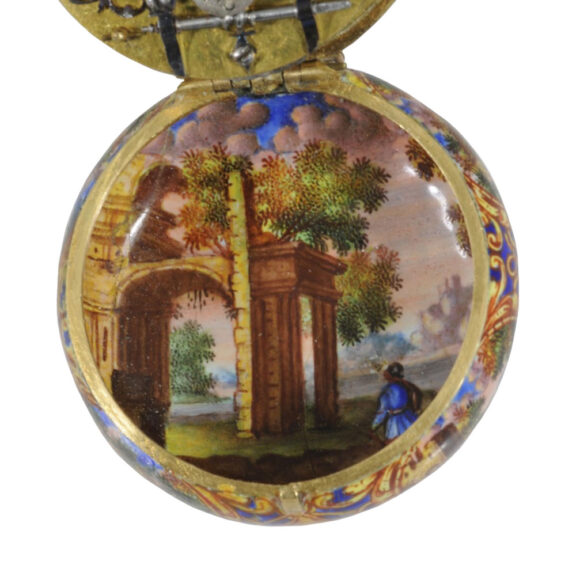
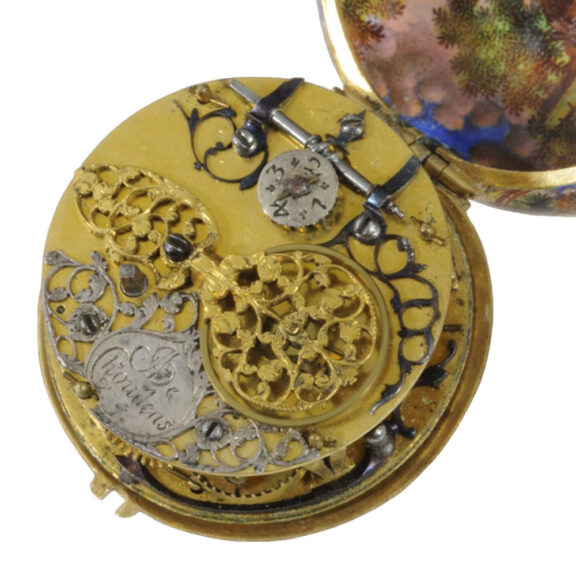
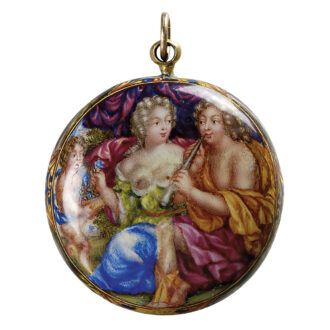
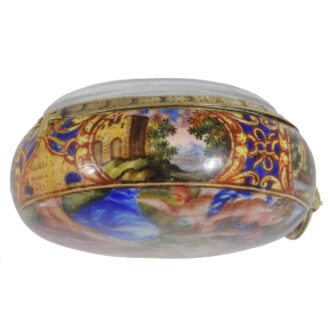
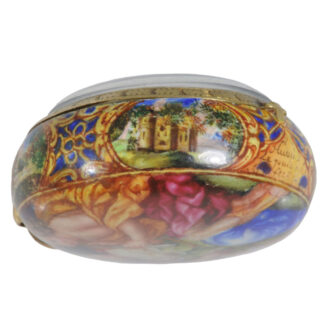
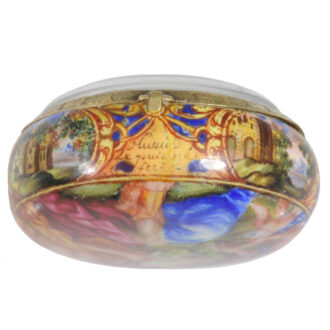
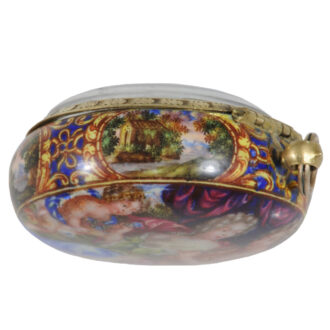
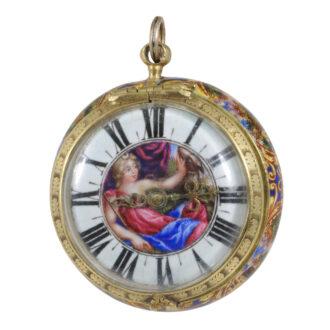
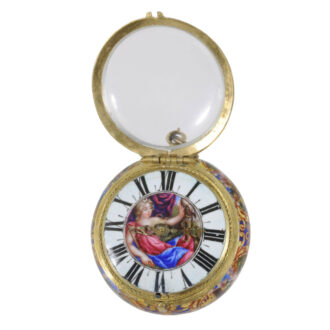
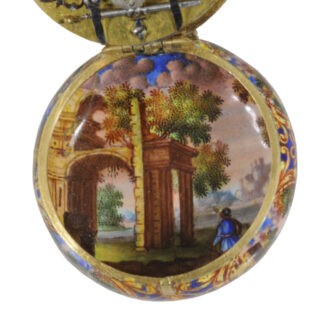
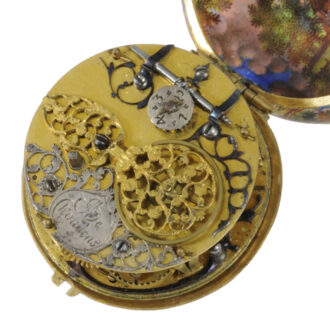
An important Swiss 22 carat gold and enamel open faced verge pocket watch, circa 1680. Full plate movement, chain and fusee, Egyptian movement pillars, applied click work for the mainspring, three arm brass balance. White enamel dial with Roman hours and a central polychrome enamel scene depicting Diana, goddess of the hunt. The case back with a polychrome enamel painting showing the scantily clad Venus, to her left, Adonis playing the flute, the band is ornamented with four vignettes showing castles and farm buildings in alpine lake settings separated by yellow scrolls on blue ground, a signature plaque at 6 o’clock, the inside is painted with the figure of a hiker dressed in blue near the ruin of a temple surrounded by leafy trees, a fortress on a riverbank in the background probably after a painting by the Dutch painter Paul Bril or Gabriel Perelle.
Movement signed by the watchmaker, the enamel signed by Jean-Pierre Huaud – Huaud Le puisné fecit.
–
Diameter: 35 mm
–
Weight: 37 g
–
Signed: DeChoudens
–
Abraham Dechoudens was a master watchmaker in Geneva in the first half of the 17th century. He trained a great number of apprentices such as Jean Ficher in 1623 and Huguin Duverney in 1631.
–
Les Frères Huaut (or Huaud). The cases painted on enamel by ‘Les deux Frères Huaut’ were among the finest examples of their kind from the Geneva School and were not only highly valued when originally made, but remained as art treasures in the centuries that followed. Pierre I was the founder of the Huaud dynasty. He was born in 1612 in Geneva as the son of a French goldsmith Jean Huaud. He settled in Geneva in 1630 and three of his 11 children became famous enamellers like their father: Pierre II (1647-1698), Jean-Pierre (1655-1723) and Ami (1657-1724). The brothers were most likely trained by their father and worked with him. Pierre II started his own business around 1680. Jean-Pierre and Ami became partners in 1682 and were appointed painters to the Prussian court in 1686 when they moved to Berlin and started working for Elector Frederick William of Brandenburg (1620-1688). Among their most well-known works are Diana and Actaeon, The Judgement of Paris, The Holy Family, St. John the Baptist, The Nativity and The Adoration of the Shepherds.
–
Jean-Pierre Huaud was Pierre Huaud’s second son, born in Geneva in 1655. Only very few watches that bear his signature with the additional ‘puisné’ have survived the years. Most of his work was done in collaboration with his brother Ami, with whom he entered a partnership in 1682. In 1686 the brothers were appointed painters to the Prussian court of Elector Frederick William of Brandenburg (1620-1688).
–
Paul Bril, born in Antwerp in 1554 and died in Rome, on October 7, 1626, was a Southern Netherlandish painter of landscapes from the Baroque period.
–
Gabriel Perelle was born in 1604 in Vernon, Eure and died in 1677 in Paris. He was a French draftsman and printmaker of topographic views and landscapes. Perelle specialized in classical landscapes. He founded an etching workshop, and his sons Nicolas and Adam assisted him. Perelle produced several hundred engravings both from his own drawings and from those of other artists. These engravings in the etching and intaglio (a technique in which the image is incised into a surface and the incised line or sunken area holds the ink) mainly depict landscapes of the Paris region, including views of castles, where he introduced variety by adding ruins and various accessories.
Signed: DeChoudens – Huaud Le puisné fecit
Share this page: