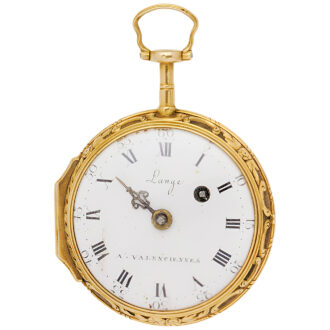
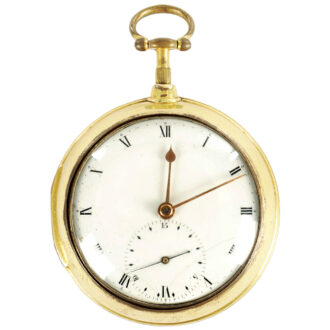
Remarkable Swiss Dutch pair cased repoussé watch Circa 1770
- Kenmerk
- DB0258
- Diameter
- 51 mm
- Estimate
- € 3.000 - 6.000
- Price sold
- € 3.500
Silver cylinder with date and bidirectional winding system by Abraham Tappy
–
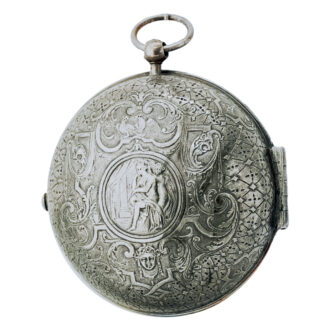
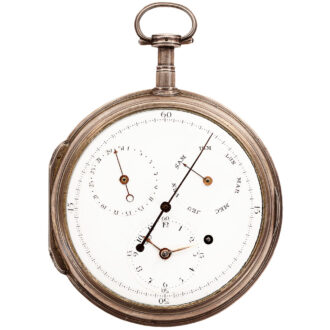
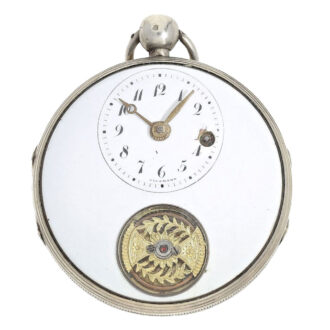
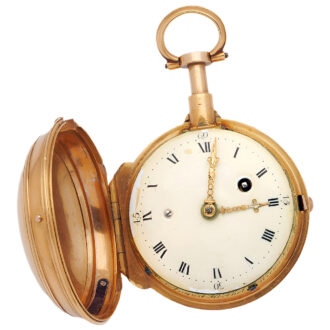
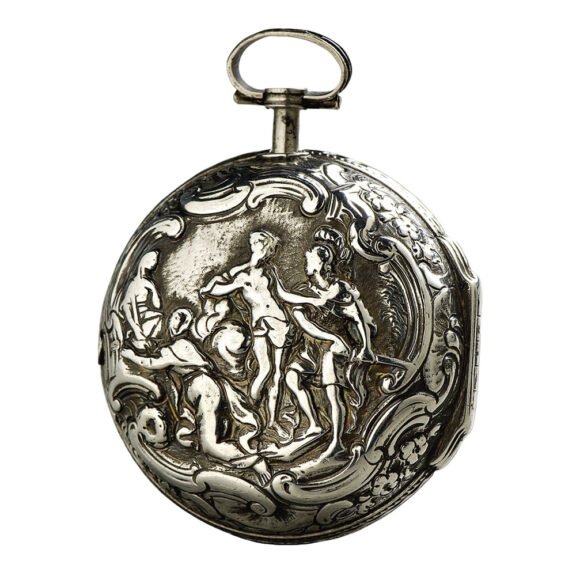
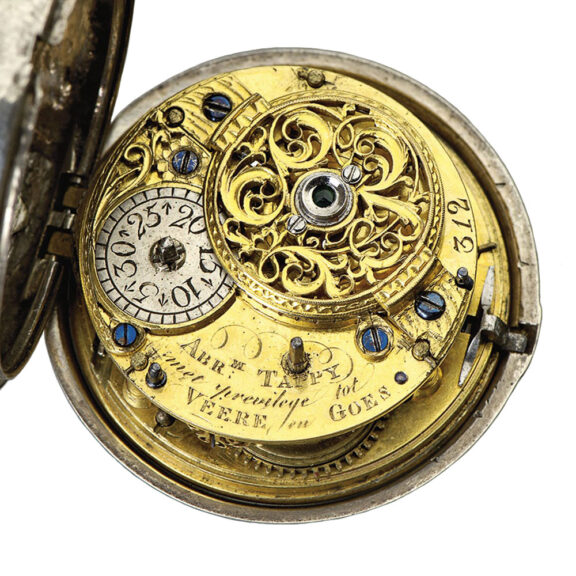
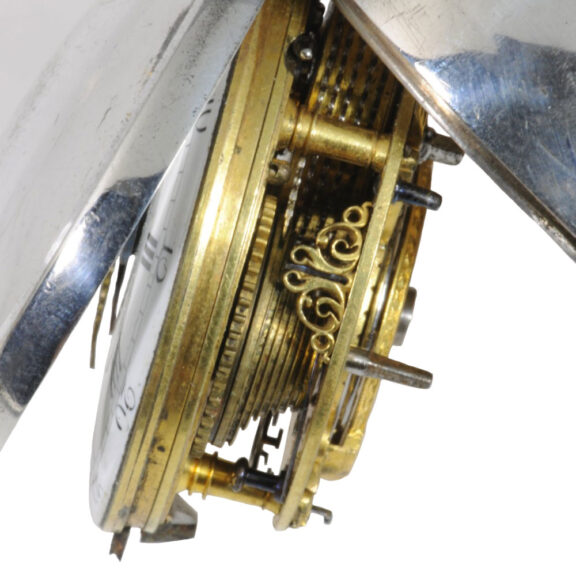
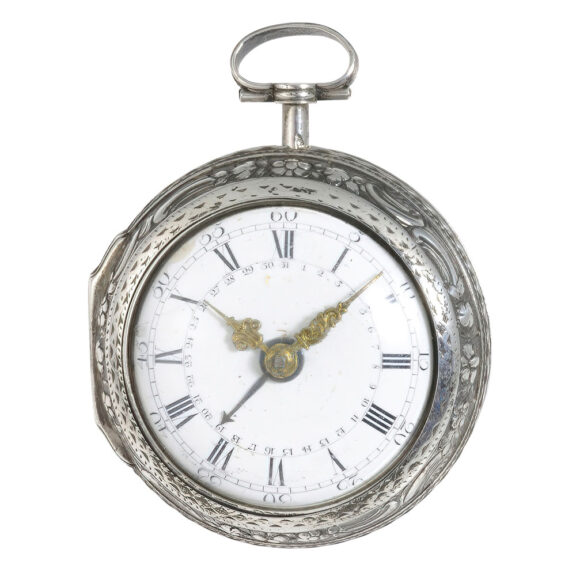
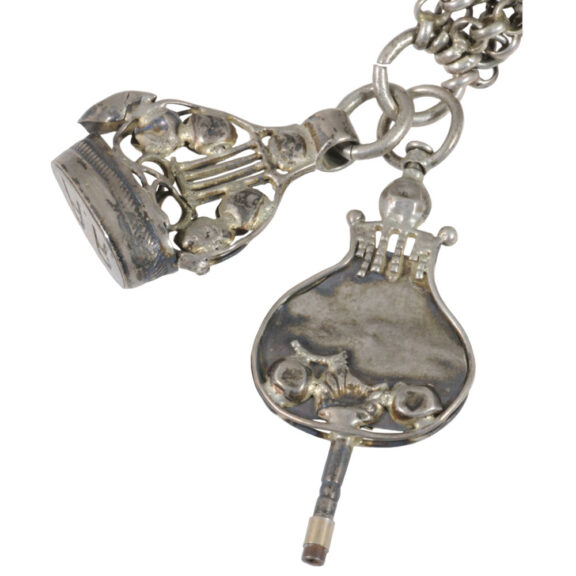
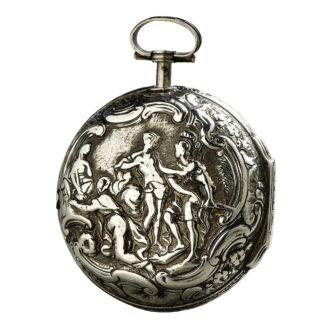
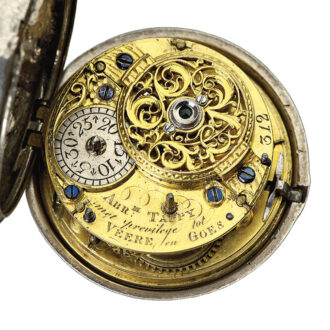
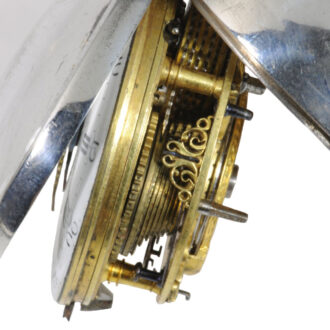
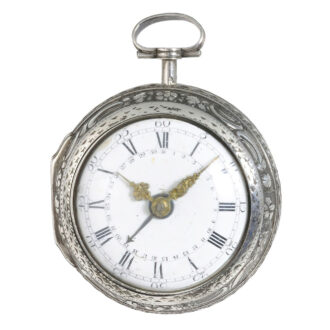
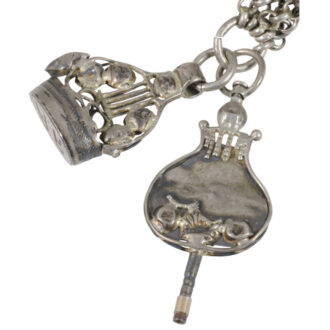
A remarkable Swiss Dutch silver pair cased repoussé cylinder pocket watch with date, bidirectional winding system and chatelaine, circa 1770. Full plate movement, early cylinder escapement, chain and fusee, the fusee with planetary gearing for winding in both directions, three arm steel balance. White enamel dial with Roman hours, outer five minute track and inner Arabic numerals for indication of the date. Repoussé outer case with a scene depicting Aeneas and Venus, a polished inner case. Case numbered, movement signed and numbered, signed movement protection cap, case and movement with matching numbers. Accompanied by a matching chatelaine with wax seal stamp and a key as well as a custom made model of a fusee with planetary gearing.
–
Diameter: 51 mm
–
Weight: 105 g
–
Signed: Abrm Tappy met privilege tot Veere en Goes
–
Only very few timepieces created by Abraham Tappy (1735-1773) remain. He was a native of the Canton Vaud in Switzerland who spent the last 10 years of his life in the Netherlands. Tappy’s watches display several remarkable technical solutions, one of the most interesting being the winding mechanism with a key that works clockwise as well as anti clockwise. Tappy trained as a watchmaker in London and kept in close contact with England all his life, he had most of his ebauches and some individual components delivered from England. He was acquainted with the bidirectional winding system first used by English maker Thomas Moore, which ensured that the watch would not be damaged if the key was turned the wrong way. Rumour has it though that the mechanism was invented to protect the watches from improper use by owners who were too drunk to tell left from right. At the time the pocket watches were traditionally fitted with verge escapements. Attempts to update this escapement proceeded only slowly and the production of the required parts was difficult and expensive.
The present watch No. 312 was originally designed to use a verge escapement but then he decided to use an early version of the cylinder escapement and modified the movement accordingly. This had the advantage of higher accuracy but came at the price of an increased level of wear. Tappy also employed some new ways of constructing the gearing by attempting to use as many wheels with identical numbers of teeth as possible, this was a way of reducing the production costs. The pocket watches made by Abraham Tappy are important witnesses of technical innovation. Their commercial success, however, was unfortunately very poor.
Signed: Abrm Tappy met previlege tot Veere en Goes
Share this page: