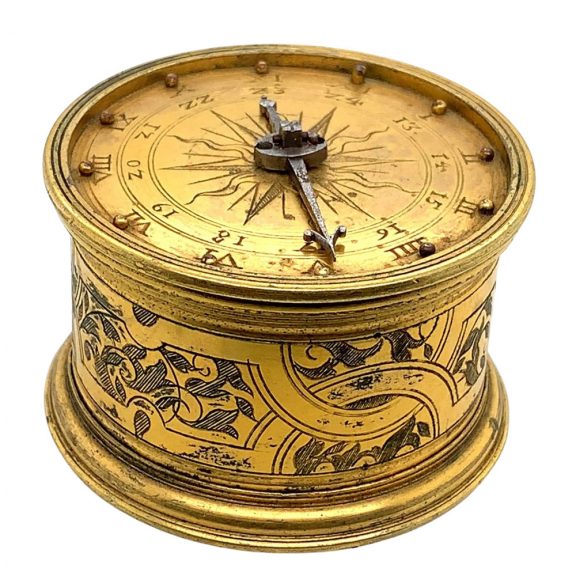
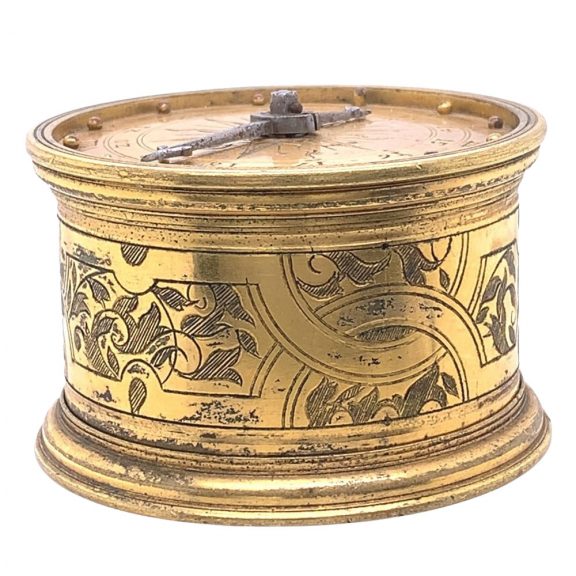
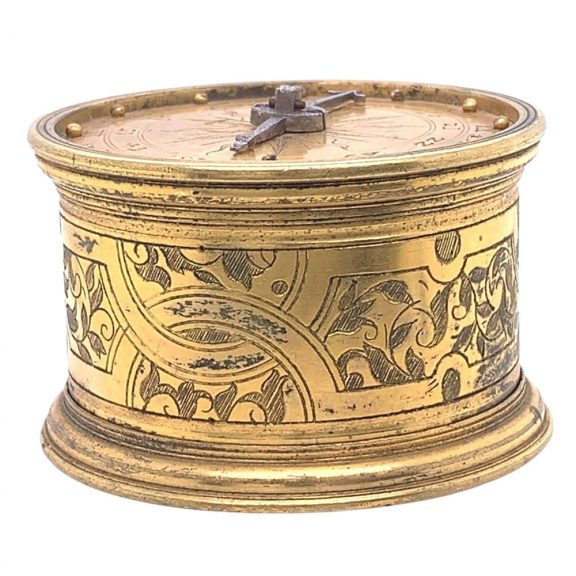
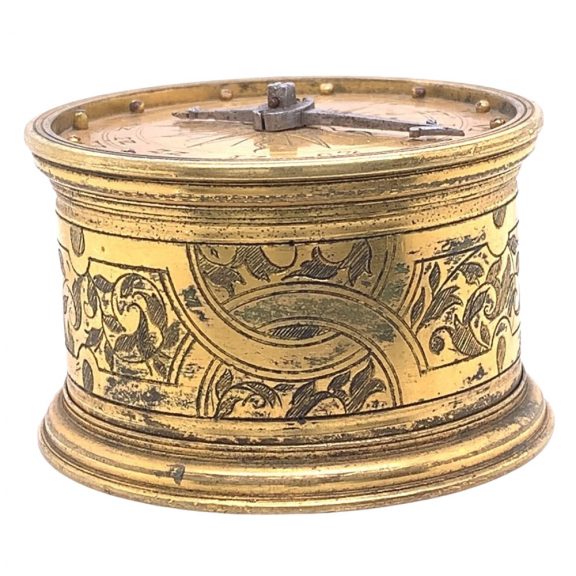
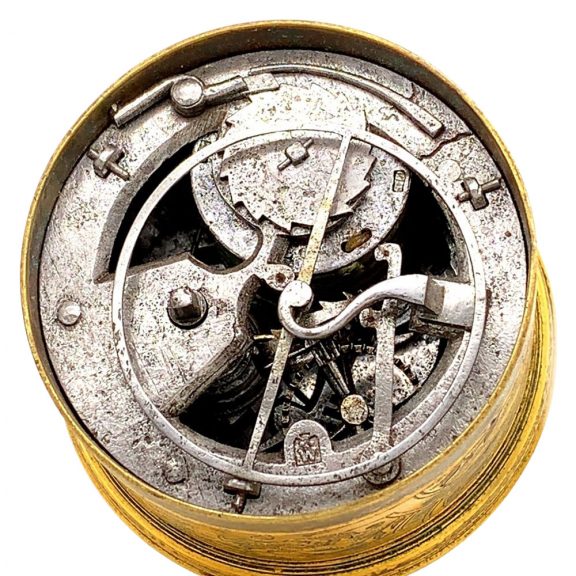
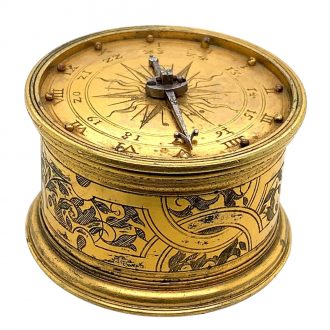
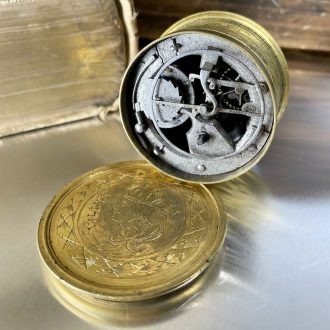
Very interesting Swiss reproduction of a verge clock Circa 1980


- Kenmerk
- DB0922
- Diameter
- -
- Estimate
- € 5.000 - 10.000
- Price sold
- € 6.300
Fire gilded brass portable clock
–
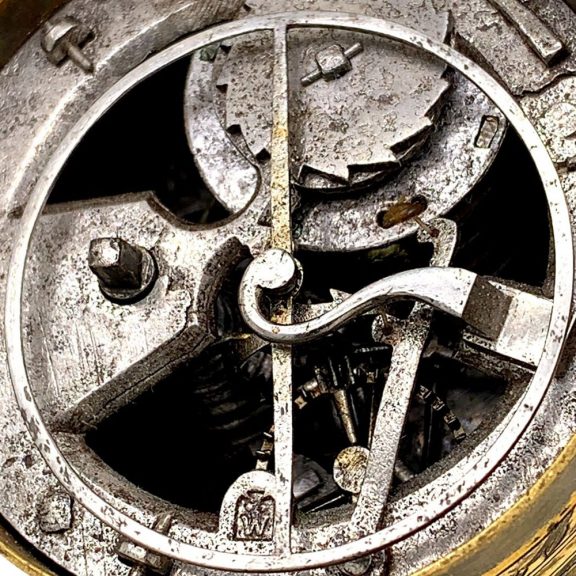
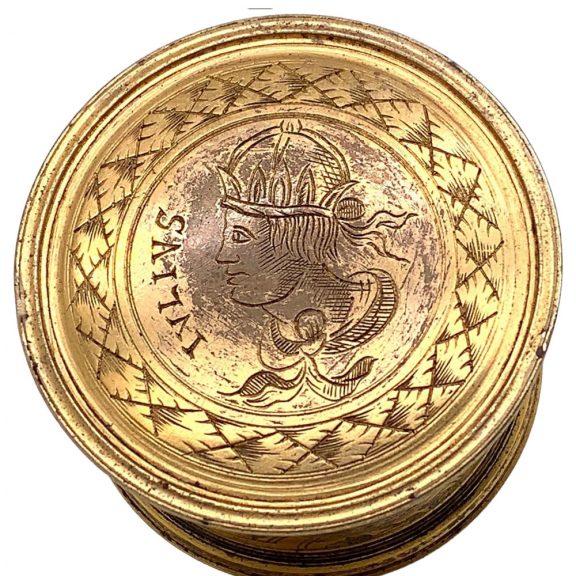
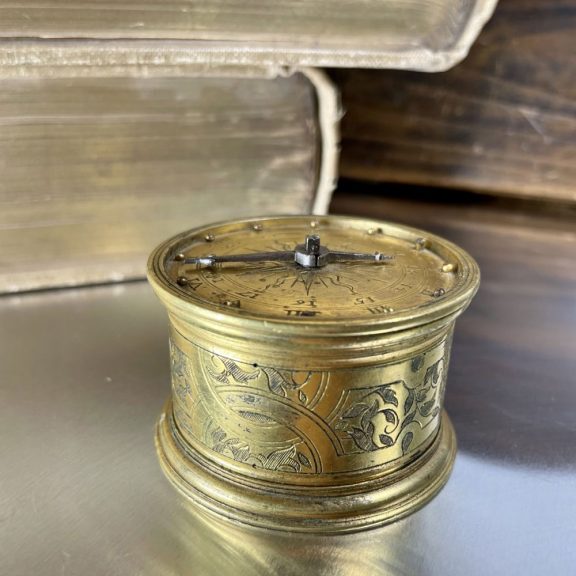
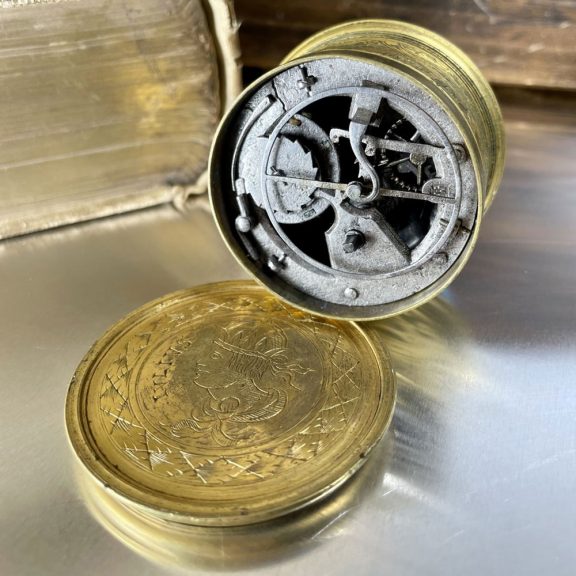
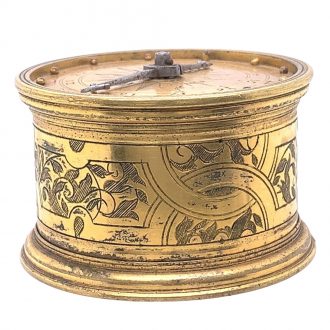
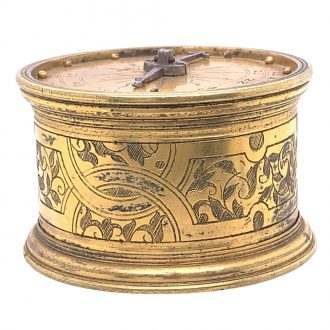
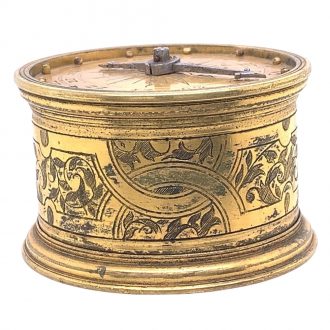
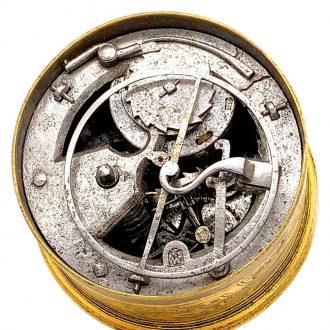
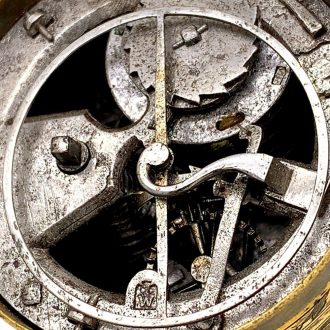
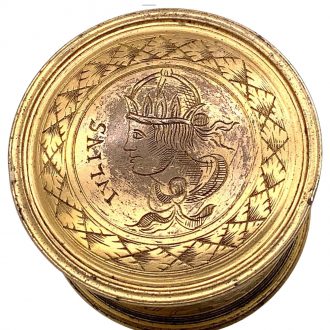
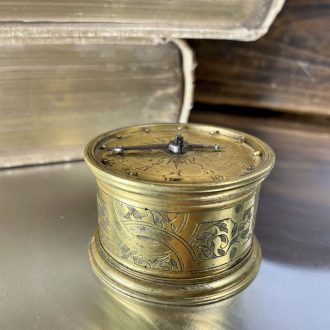
A very interesting Swiss reproduction of the 16th century portable one handed Renaissance clock from the famous Lord Sandberg collection, circa 1980. Iron movement, a cartouche with monogram M and three dots, gut and fusee, a verge escapement, hog bristle regulation and wheel rest. A brass dial with remnants of fire gilding, an outer engraved chapter ring with the Roman numerals I to XII and an inner chapter ring with Arabic numerals 13 to 24, twelve buttons for night reading, a central engraved compass rose and sunray motif, an iron hands. The cylindrical brass case shows remains of fire gilding, has a pressed base and is engraved with bandwork and foliage on all sides, the bottom shows a geometric pattern engraved on the edge with a central profile portrait of a man with a helmet and a kind of laurel wreath including the inscription IVLIVS.
–
Dimensions: 58 x 38 mm
–
Weight: 199 g
–
Signed: No name
–
The original clock, dating circa 1550, from the Lord Sandberg collection, was sold in auction at Antiquorum in 2001 as lot 64 for CHF 82,700. The present clock follows this piece in minute detail. It illustrates the skill of the anonymous watchmaker but also how difficult it is to identify counterfeits from Peter Henlein’s time as such.
Already at the time of historicism, in which the enthusiasm for everything historical, especially for the Middle Ages and the Renaissance, reached its peak, due to the mismatch between supply and demand, many copies, replicas and counterfeits were made and put on the market. This was made possible by clairvoyant traders who bought up the spare parts stores of various watchmakers and had the individual parts assembled so that they could be sold as period watches. Models can be found in numerous contemporary paintings of influential personalities who, with the first wearable watches, had themselves immortalized as status or vanitas symbols.
Probably the most well known reproduction of a portable Renaissance clock is a tin watch purchased around 1890 by the important watch collector Carl Marfels and later by the financial magnate John Pierpont Morgan, which Marfels bought and made famous as the oldest pocket watch in the world. Later it turned out that it was a marriage from a case that was made around 1550/1560 and a much younger work from 1680. Today the clock is in the New York Metropolitan Museum.
Share this page: