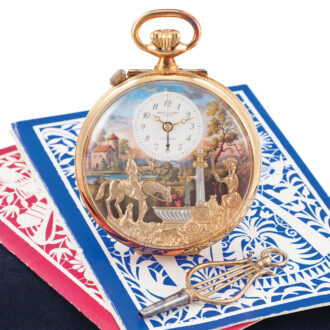
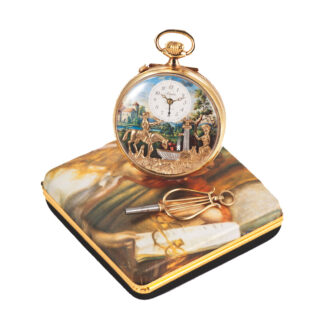
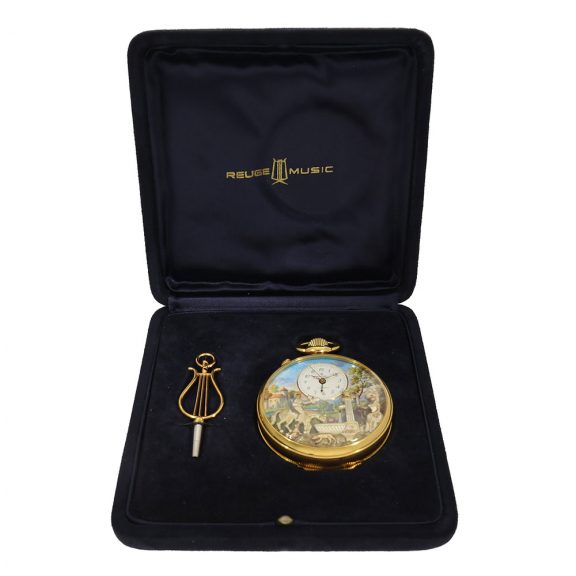
Swiss automatic music clock with original box Circa 1980
- Kenmerk
- HC0600
- Diameter
- 57 mm
- Estimate
- € 2.000 - 3.500
- Price sold
- € 2.300
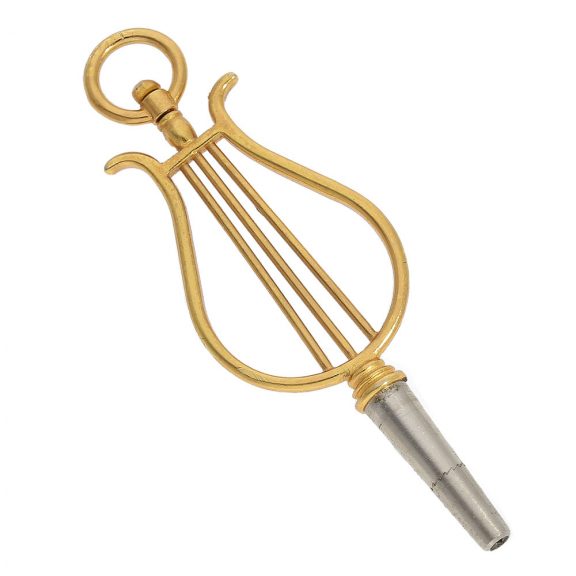
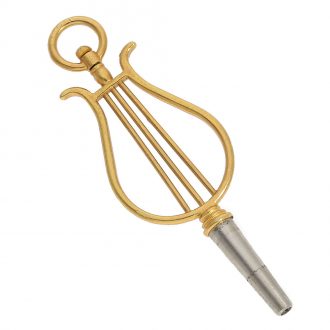
Automatic music clock with original key
–
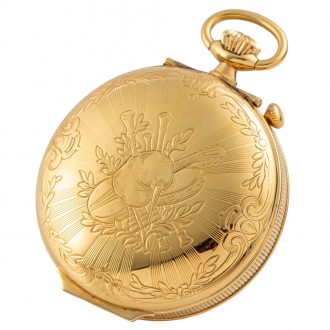
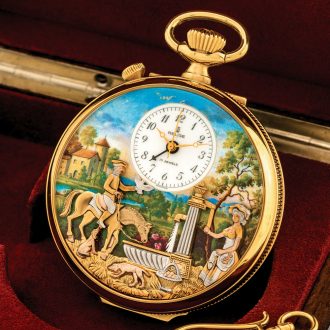
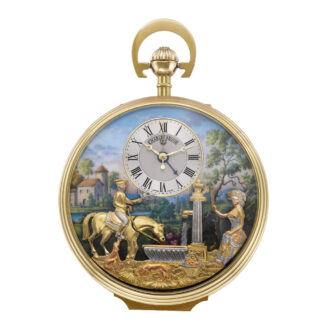
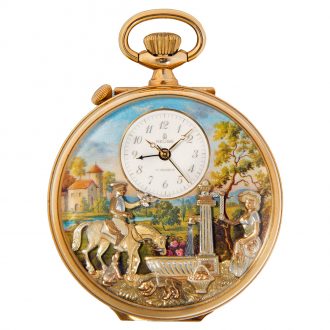
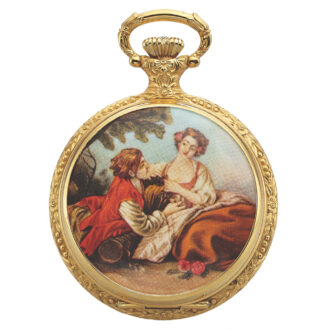
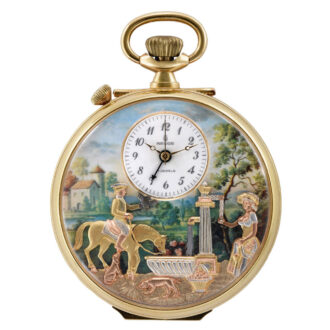
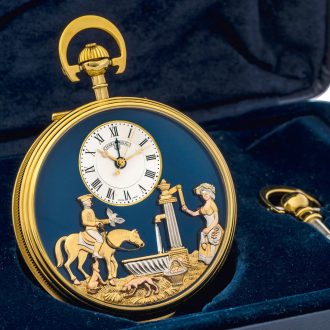
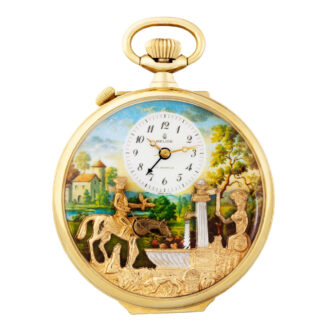
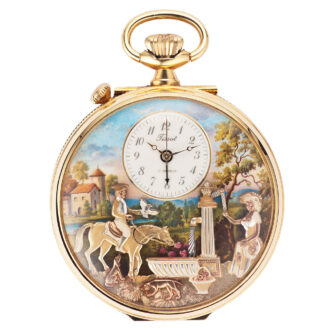
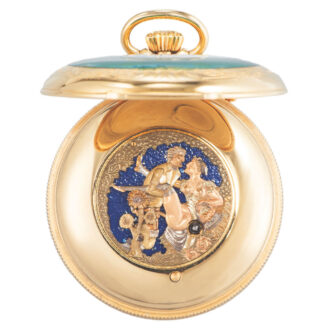
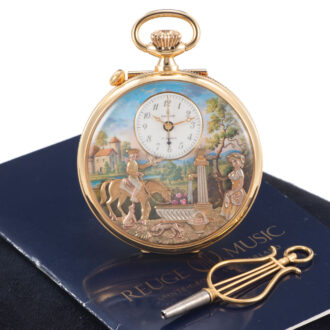
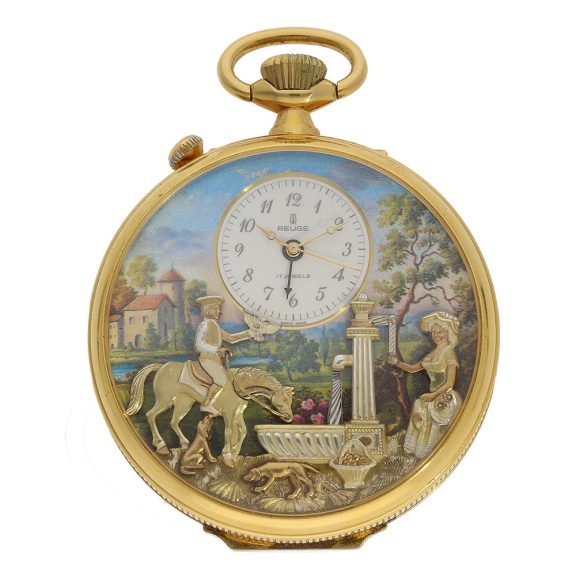
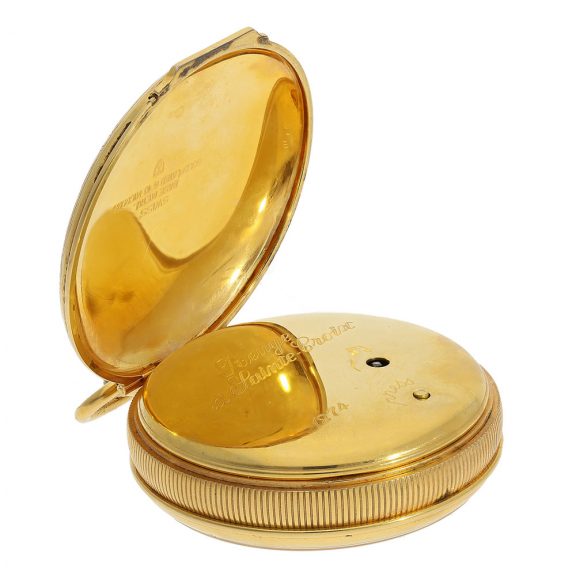
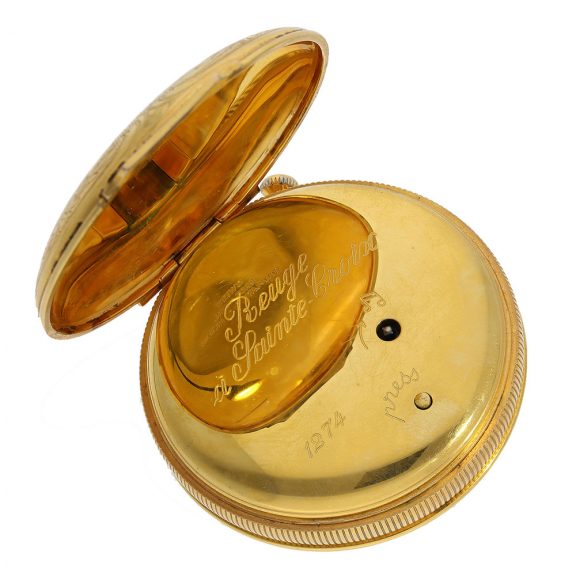
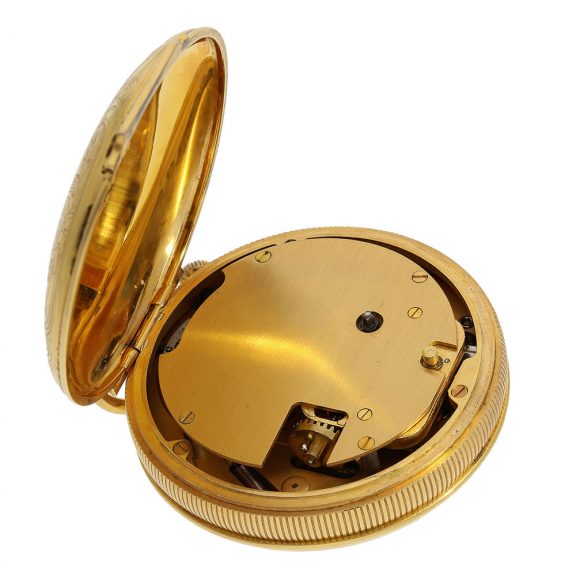
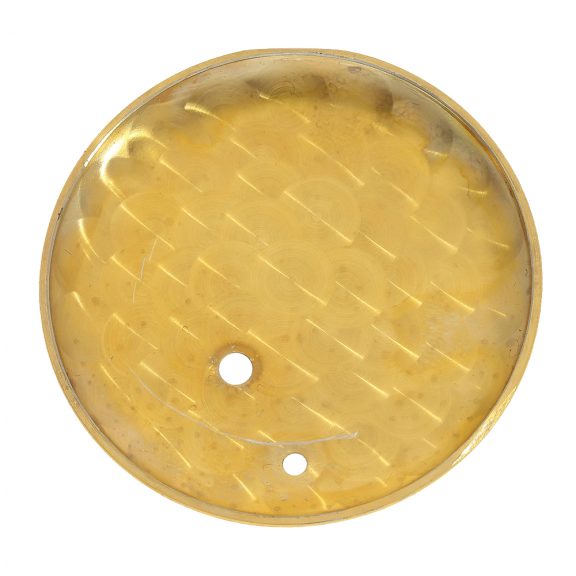
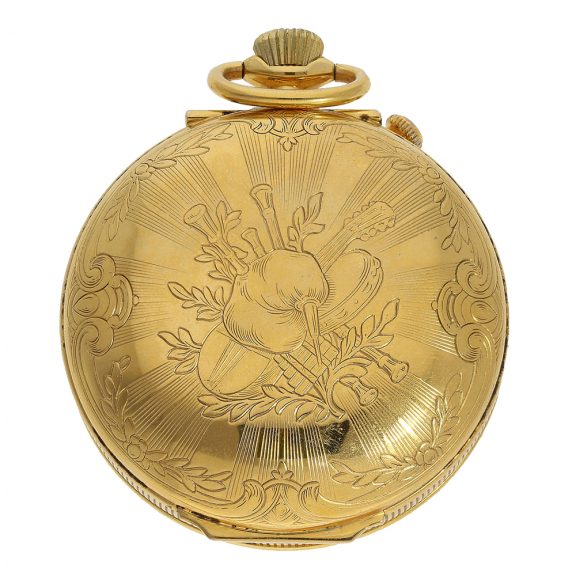
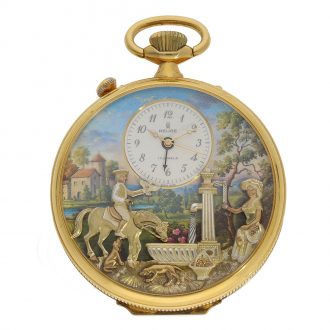
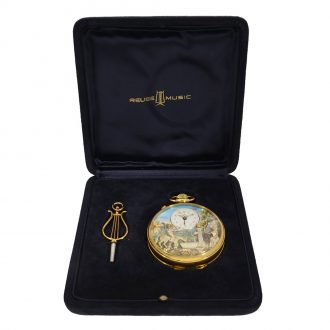
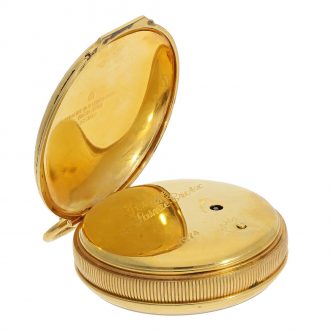
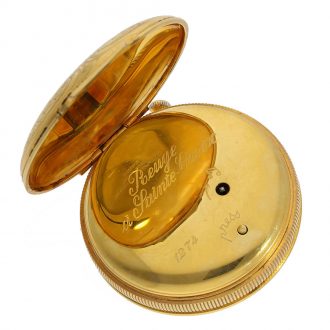
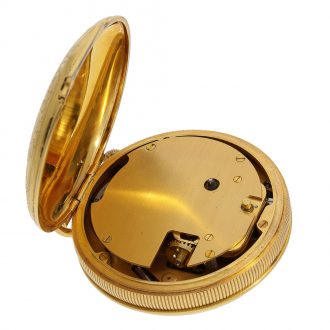
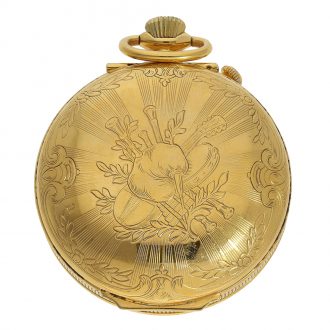
An automatic music clock numbered and with original box and key, made by Reuge in Sainte-Croix, Switzerland, circa 1980. The magnificent gold plated open faced case is numbered, has a front with a polychrome painted view of a country landscape with an applied gilt metal automaton of a lady operating a water pump with moving water, a gentleman on horseback with a hawk on his moving arm and the horse with an animated head drinking from the fountain, gilt metal foliage with two dogs and a basket in the foreground. Furthermore, the case has a polished bezel and reeded band, a hinged back engraved with a musical trophy on a sunray background and an alarm setting button at eleven o’clock. The off centre and off white enamel dial has Arabic numerals for the hours, centre seconds and golden hands for the hours, minutes and seconds and a black hand for the alarm. The movement is hand wound, has a separate musical mechanism that triggers the alarm and at the same time sets the automaton with four movements in motion, a straight line lever escapement, 17 jewels, monometallic balance, flat balance spring, shock absorber and an index regulator.
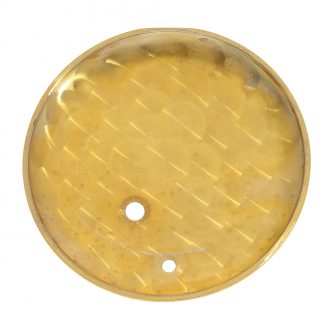
The dust cover and box are signed.
–
Diameter: 57 mm
–
Weight: 128 g
–
Signed: Reuge, Sainte-Croix
–
Reuge
The origins of Reuge date back to 1865 when Charles Reuge set up a musical pocket watch shop in the Swiss Mountain town of Sainte-Croix. By 1886 his son, Albert Reuge opened a music box workshop, the company experienced success and their mechanisms were to be found in a range of products such as powder compacts and cigarette lighters. By 1930 Guido Reuge had built the Reuge factory and he guided the company for over 60 years. Today Reuge retains its historical elements still producing singing birds but moving with the times, their music boxes today come in traditional but also modern and innovative designs.
–
Gold plating and gilding
Gold gilding and plating are both techniques used to apply a layer of gold to another surface, but they differ in their methods and the thickness of the gold layer.
Gilding: Gold gilding involves applying thin sheets of gold, known as gold leaf, onto a surface. The gold leaf is typically incredibly thin, often less than 0.0001 inches (2.5 micrometres) thick. Gilding can be done on various materials, including wood, metal, and glass. It’s an ancient and delicate art form often used in intricate decorative work, picture frames and traditional sign making. The thinness of the gold leaf allows it to be shaped and moulded onto the surface with precision.
Plating: Gold plating, on the other hand, involves depositing a layer of gold onto a surface through an electrochemical process. This process creates a thicker layer of gold compared to gilding. Gold plating is commonly used in the manufacturing of jewelry, electronics, and even in the automotive industry for decorative trim. It offers a more uniform and durable layer of gold, making it suitable for items that will undergo regular wear and tear.
In summary, gilding uses extremely thin gold leaf applied by hand, while gold plating involves depositing a thicker layer of gold onto a surface through an electrochemical process. The choice between these techniques depends on the specific application and desired appearance.
Signed: Reuge, Sainte-Croix
Share this page: