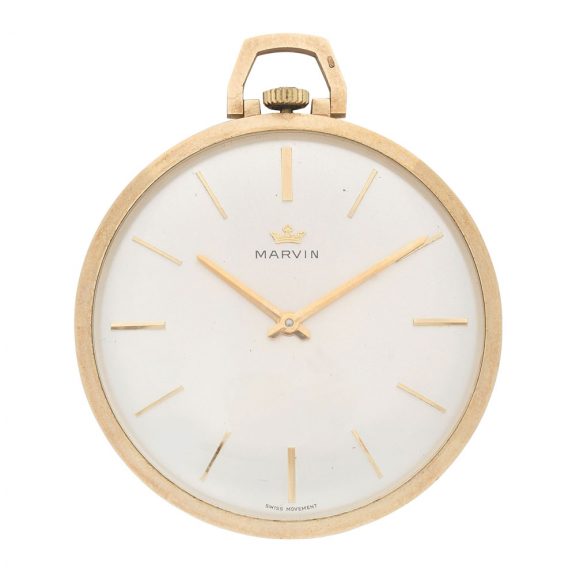
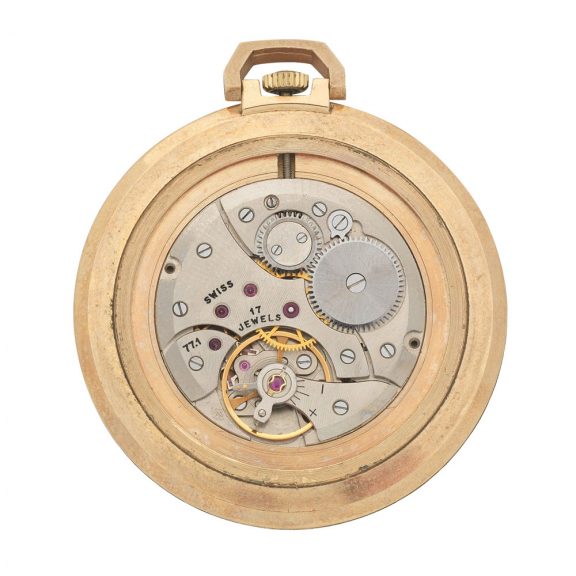
Swiss 9 carat gold open faced keyless lever watch Circa 1976
- Kenmerk
- BB1005
- Diameter
- 41 mm
- Estimate
- € 500 - 1.000
- Price sold
- -
Gold pocket watch
–
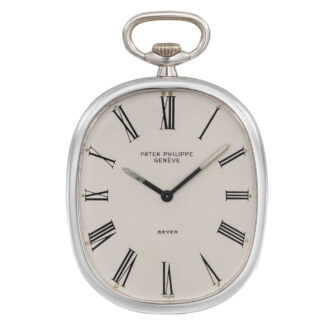
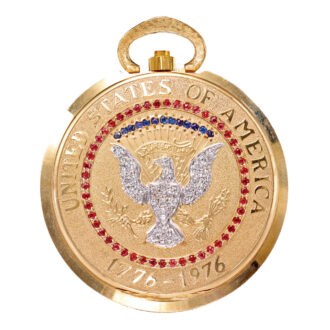
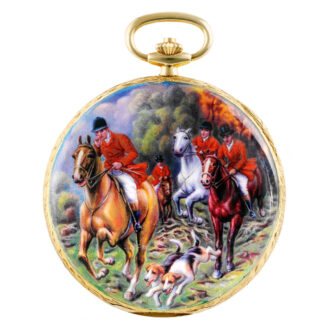
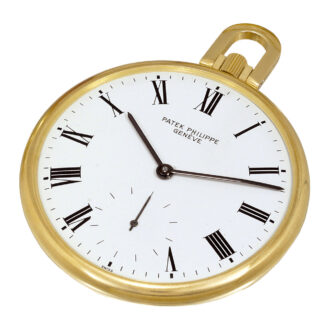
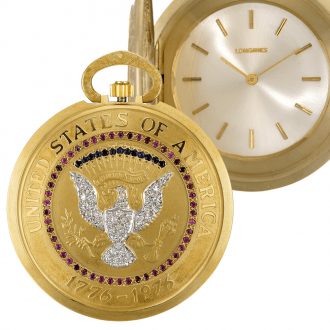
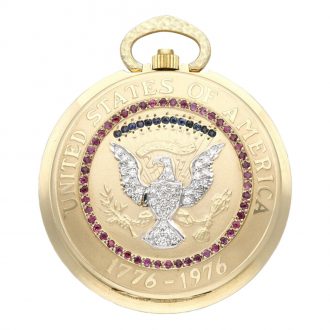
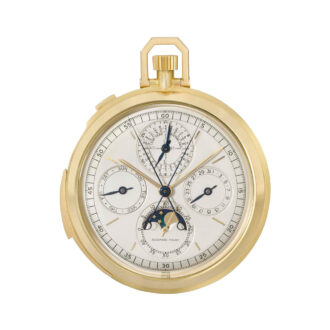
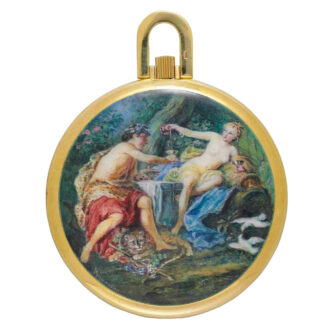
A Swiss 9 carat gold open faced keyless pocket watch made by the Marvin Watch Company in La Chaux-de-Fonds, London Hallmarked for 1976. The movement with a Swiss lever escapement and 17 jewels. Sunburst silvered dial with applied baton hour markers and dauphine hands. A polished case. Dial and movement signed, case signed and numbered. Comes with the original presentation box.
–
–
A Swiss 9 carat gold open faced keyless pocket watch made by the Marvin Watch Company in La Chaux-de-Fonds, London Hallmarked for 1976. The movement with a Swiss lever escapement and 17 jewels. Sunburst silvered dial with applied baton hour markers and dauphine hands. A polished case. Dial and movement signed, case signed and numbered. Comes with the original presentation box.
–
Diameter: 41 mm
–
Signed: Marvin Swiss movement
–
The Marvin Watch Company was founded in 1850 by Marc and Emmanuel Didisheim in Saint-Imier, Switzerland.
–
In 1854, the company moved to new premises and in 1891/1892, the three sons of Marc Didisheim, Henri-Albert, Edgar and Charles, took over management of the firm, which then changed its name to Albert Didisheim et Frères.
–
In 1894, the company moved to La Chaux-de-Fonds, and when, in 1895, Henri-Albert became sole head of the company, the American market became the focus. Export to America was organized by the general agency in New York, headed by Hippolyte Didisheim. With the establishment of the new factory building in 1912, the company name was modified to Marvin.
–
In 1917, another management change was performed when the three sons of Henri-Albert took over. Despite reorientation towards wristwatches, the production of fine manufacture movements was maintained. Besides its own movements, Marvin also used Rolex movements for a short period.
–
In the 1930s, Marvin brought the model La Gauche to the market. Its development was probably because Henri-Albert Didisheim himself was left handed.
–
The trade mark Nivrel was introduced in 1936, and after the acquisition of the company Election, Marvin kept this name as a factory brand. From 1940, the company began alliances with KLM Royal Dutch Airlines, Ferrari, Mercedes, Jaguar, Fiat, MG, Rover and Chevrolet.
–
In 1950, on its 100th anniversary, Marvin could refer to a global distribution network across 70 countries. One product during this period was the “Flying Dutchman”, a wrist or pendant watch worn by KLM pilots and flight staff.
–
By 1976, the firm became part of the MSR Group, along with Revue Thommen and Vulcain. But Marvin did not succeed in making a transition to quartz and the brand was abandoned by the 1980s. It was produced under license by various firms, chiefly in Italy, before being acquired in 2002 by Time Avenue.
–
The brand was re-launched in 2007 as a maker of mid range luxury watches powered by ETA and Valjoux movements. The new Marvin retained the historic crown logo and red double marker at 8 o’clock that had been featured on previous models. Since 2015, the brand has been focused on Asian markets, especially China.
–
Signed: Marvin Swiss movement
–
The Marvin Watch Company was founded in 1850 by Marc and Emmanuel Didisheim in Saint-Imier, Switzerland.
–
In 1854, the company moved to new premises and in 1891/1892, the three sons of Marc Didisheim, Henri-Albert, Edgar and Charles, took over management of the firm, which then changed its name to Albert Didisheim et Frères.
–
In 1894, the company moved to La Chaux-de-Fonds, and when, in 1895, Henri-Albert became sole head of the company, the American market became the focus. Export to America was organized by the general agency in New York, headed by Hippolyte Didisheim. With the establishment of the new factory building in 1912, the company name was modified to Marvin.
–
In 1917, another management change was performed when the three sons of Henri-Albert took over. Despite reorientation towards wristwatches, the production of fine manufacture movements was maintained. Besides its own movements, Marvin also used Rolex movements for a short period.
–
In the 1930s, Marvin brought the model La Gauche to the market. Its development was probably because Henri-Albert Didisheim himself was left handed.
–
The trade mark Nivrel was introduced in 1936, and after the acquisition of the company Election, Marvin kept this name as a factory brand. From 1940, the company began alliances with KLM Royal Dutch Airlines, Ferrari, Mercedes, Jaguar, Fiat, MG, Rover and Chevrolet.
–
In 1950, on its 100th anniversary, Marvin could refer to a global distribution network across 70 countries. One product during this period was the “Flying Dutchman”, a wrist or pendant watch worn by KLM pilots and flight staff.
–
By 1976, the firm became part of the MSR Group, along with Revue Thommen and Vulcain. But Marvin did not succeed in making a transition to quartz and the brand was abandoned by the 1980s. It was produced under license by various firms, chiefly in Italy, before being acquired in 2002 by Time Avenue.
–
The brand was re-launched in 2007 as a maker of mid range luxury watches powered by ETA and Valjoux movements. The new Marvin retained the historic crown logo and red double marker at 8 o’clock that had been featured on previous models. Since 2015, the brand has been focused on Asian markets, especially China.
Signed: Marvin Swiss movement
Share this page: