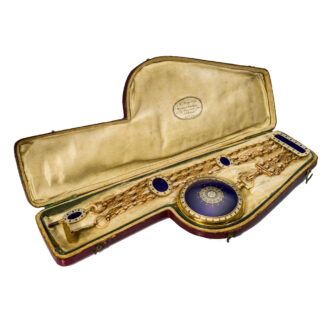
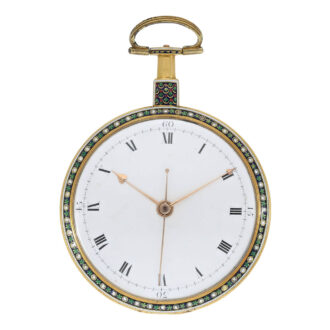
Important English pocket watch for the Chinese market Circa 1785
- Kenmerk
- BC0784
- Diameter
- 55 mm
- Estimate
- € 35.000 - 70.000
- Price sold
- -
Gold and enamel centre seconds cylinder watch
–
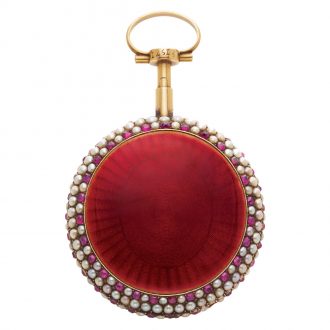
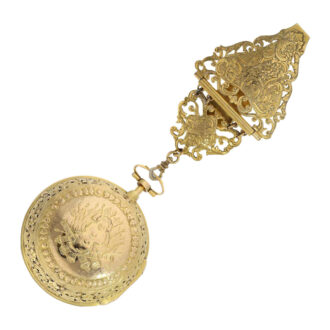
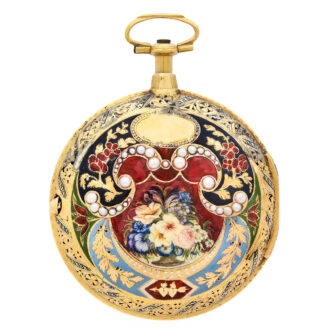
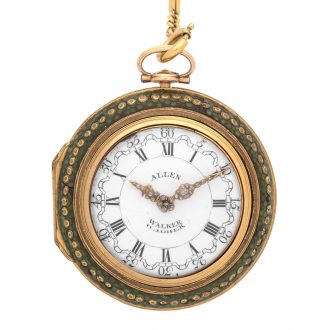
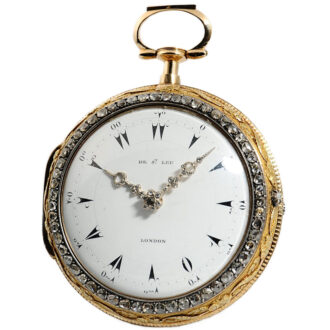
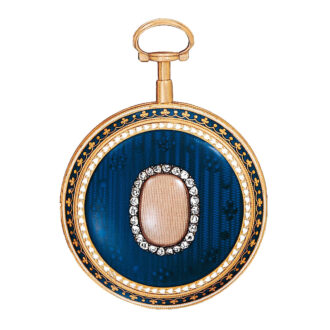
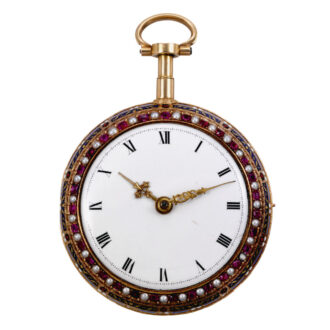
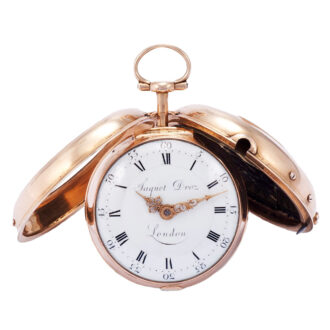
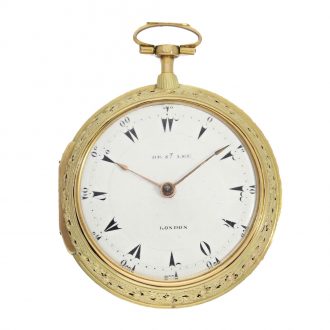
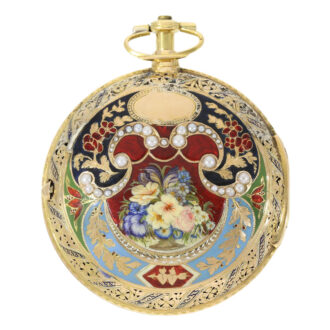
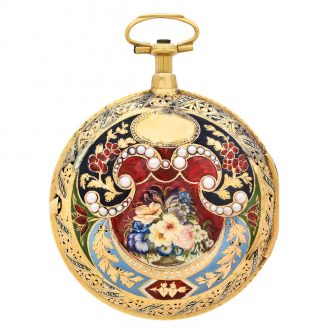
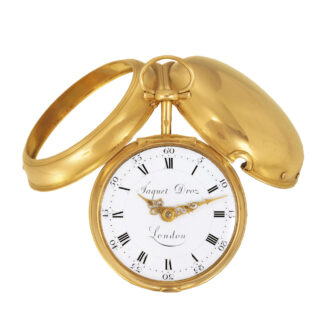
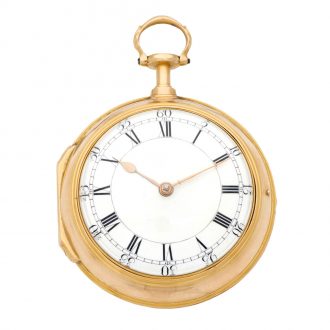
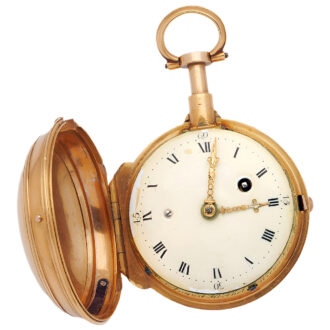
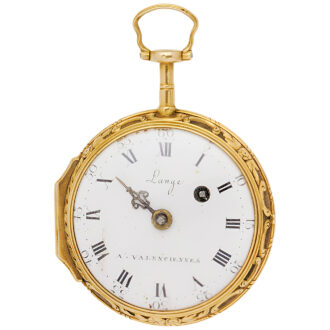
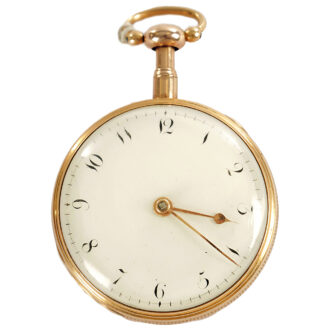
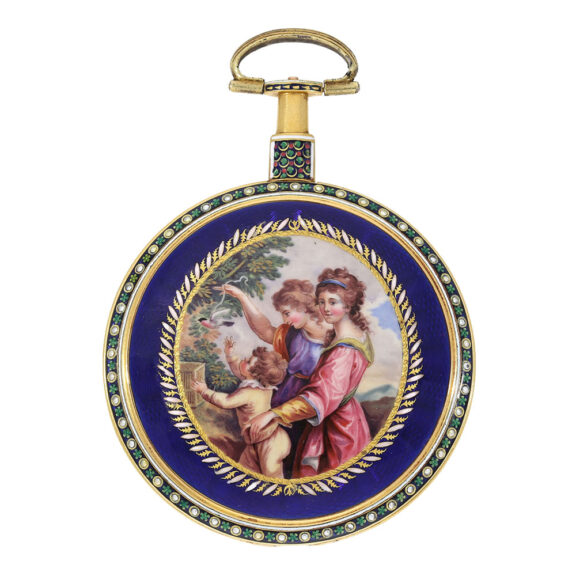
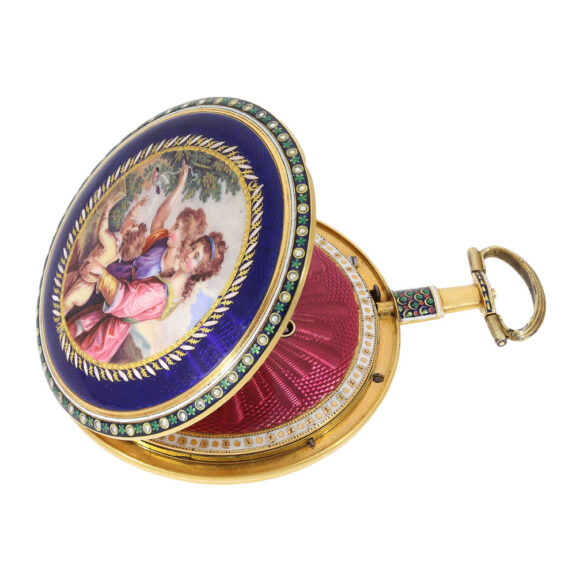
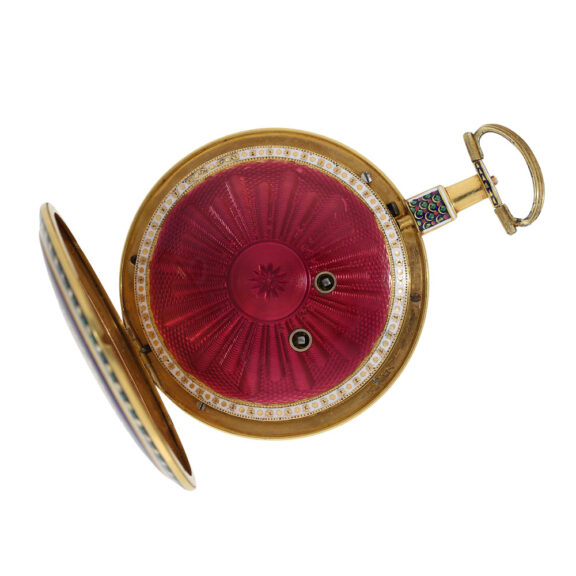
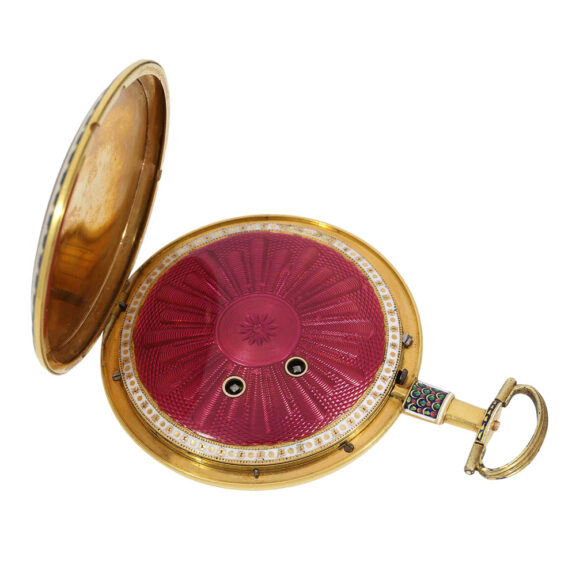
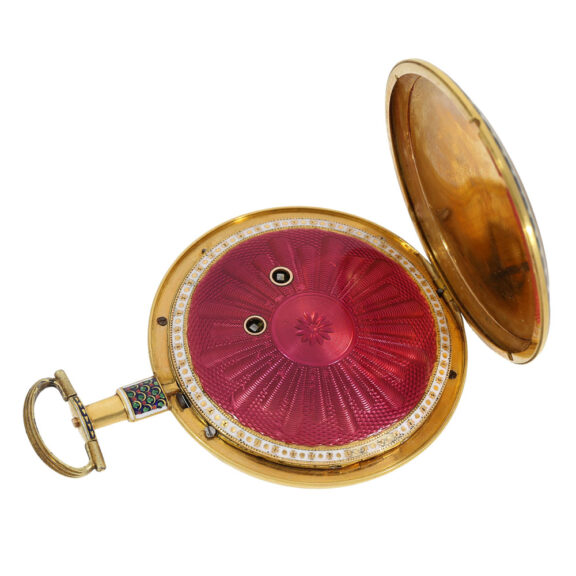
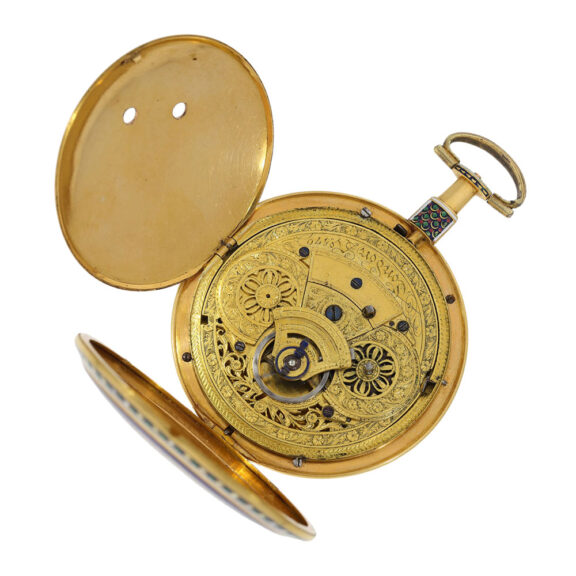
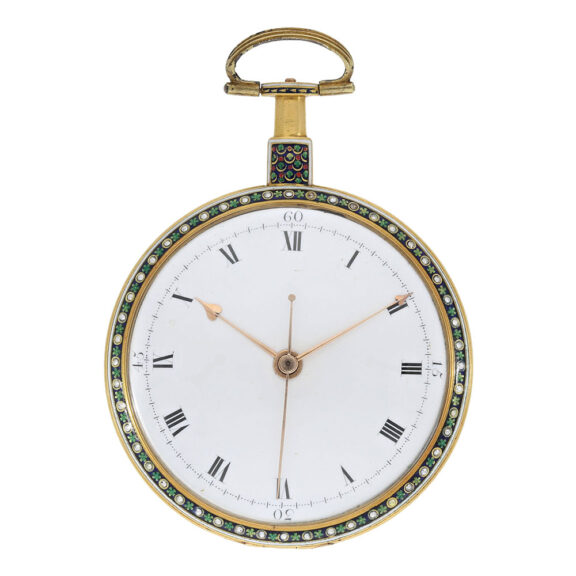
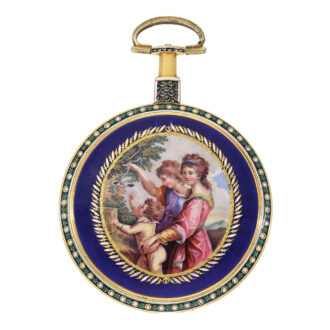
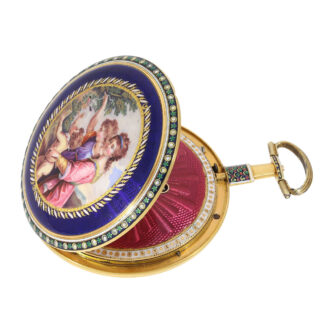
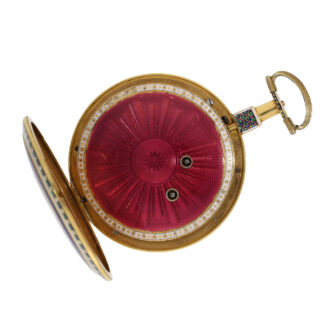
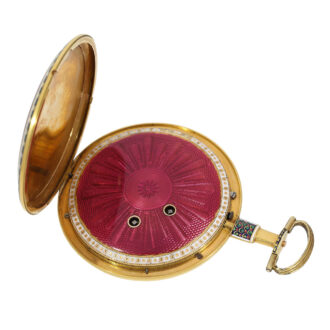
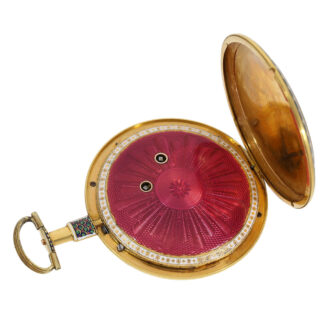
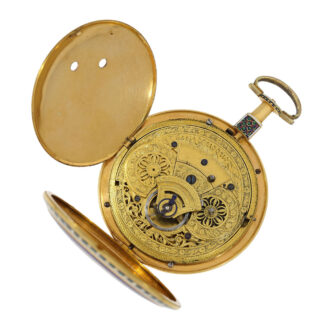
An important and large English 18 carat gold and enamel open faced centre seconds cylinder pocket watch made for the Chinese market, Affection and Innocence, circa 1785. The movement is absolutely identical to movements signed by John Kenebel, gilt calibre, cylinder escapement, diamond endstone. An engine-turned cuvette overlaid with red translucent enamel. White enamel dial with Roman hours, Arabic quarter-hours, centre seconds and very fine gold heart-shaped hands. The case back is engine-turned overlaid with blue translucent enamel, a central polychrome enamel scene after a painting by Angelika Kauffmann and a copper engraving by Francesco Bartolozzi, pendant and rims with paillon decor on both sides, rims with enamel pearls.
Case numbered.
–
Diameter: 55 mm
–
Weight: 103 g
–
Signed: No name
–
This piece belongs to a small group of watches decorated with enamel scenes after engravings by Francesco Bartolozzi. The engravings were made after paintings by contemporary artists like Angelika Kauffmann and William Hamilton. At least six watches are known to have John Kenebel‘s signature on Frith Street in Soho, London. Three of them have oval cases, another three have round cases. All are relatively large and exceptionally flat. It is certain that the movements were made in Switzerland and are comparable to those from the workshop of Jaquet-Droz. The enamels were attributed to the famous Jean Abraham Lissignol with reservations.
–
Francesco Bartolozzi was born on September 21st, 1727 in Florence, Italy and died on March 7th, 1815 in Lissabon, Portugal. He was a painter and engraver who mainly worked in England.
–
Angelika Kauffmann or Maria Anna Angelica Kauffmann was born on 30 October 1741 in Chur, Switzerland and died on 5 November 1807 in Rome, Italy. She originally was a Swiss or Austrian painter who also worked in England and Italy.
–
William Hamilton painted a sequence of paintings, depicting the four parts of the day. This watch is superbly executed and decorated. It is among the best examples made for the Oriental market. Due to the artistic value of the object, a later owner, during the second half of the 19th century, must have decided to improve the timekeeping of the watch by changing the original lever escapement to a more advanced type, so well executed as to leave no visible signs of the conversion.
William Hamilton (1751–1801) was an English painter and illustrator. Hamilton was born in Chelsea, London, but travelled and worked in Italy with Antonio Zucchi for several years. He trained first as an architectural draftsman but soon moved to theatrical portraits and scenes from plays. Hamilton became an associate member of the Royal Academy in 1784 and was made a full member in 1789.
–
John Kenebel (also Knobel, Kenable or Kenabel), Frith Street, Soho, London is not recorded in any of the standard lists of watchmakers’ names which is unsurprising on account of the fact that watches bearing his signature are rare and he was technically a jeweller as is stated in his will: “This is the last will and testament of Mr Jean Louis Knobel at times called John Kenebel of Frith Street in the parish of St. Anne, Soho…..Jeweller…..”. The bequests to his sister in Nyon and others in his will would point to him having been born in Switzerland. Most, if not all of his known work is clearly made for export to the Chinese Market. Kenebel died in July 1810.
–
Jean Abraham Lissignol was a Swiss painter, revolutionary and one of the finest enamellers of his time. He was born in Geneva on May 7th, 1749 and died in Plainpalais on June 28th, 1819. He was the pupil of Jean-Marc Roux and later became his partner. Specialized in snuff boxes and watch cases, he worked for Jaquet-Droz & Leschot, the Rochat Brothers and John Rich.
–
The original copper engraving of the painting from 1785 is part of the collection of the British Museum in London.
Share this page: