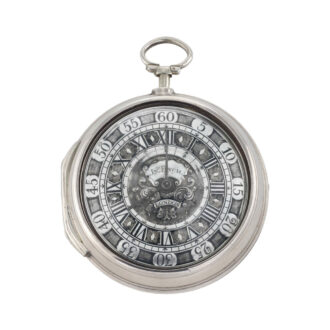
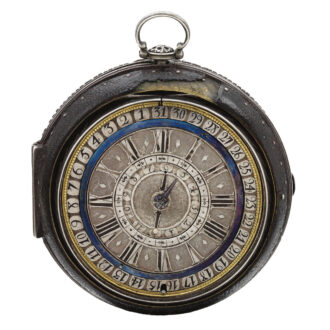
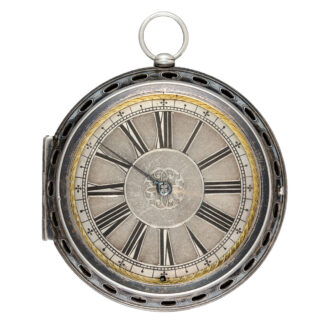
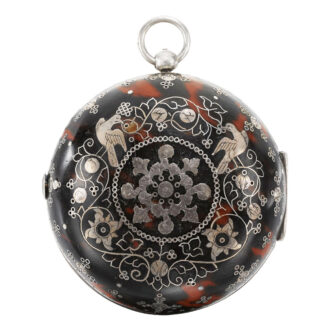
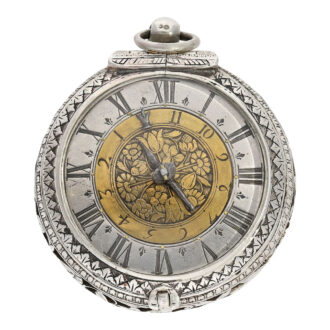
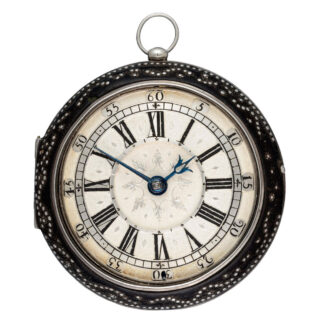
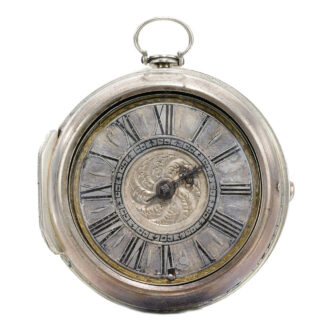
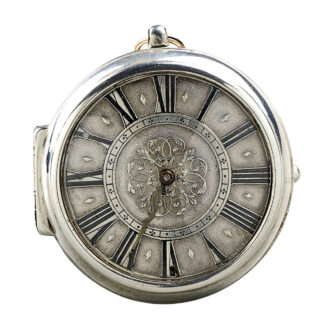
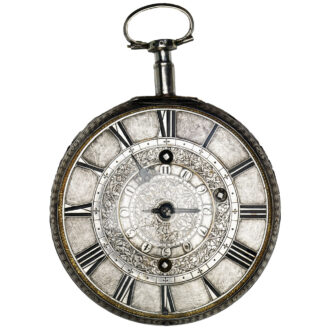
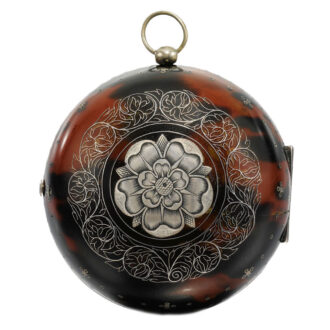
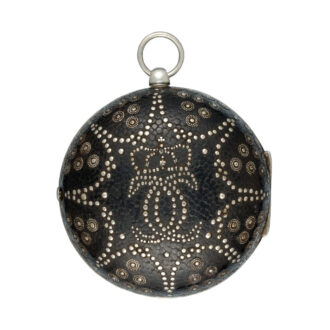
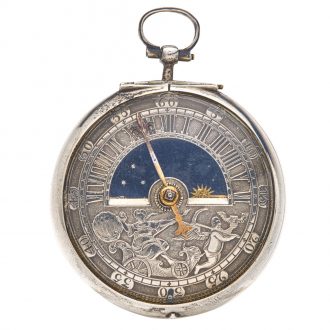
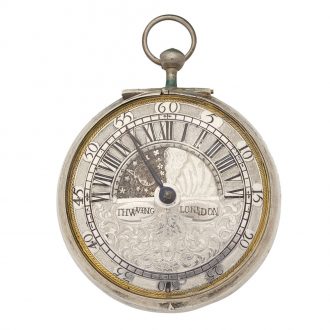
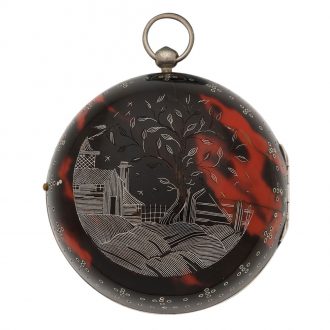
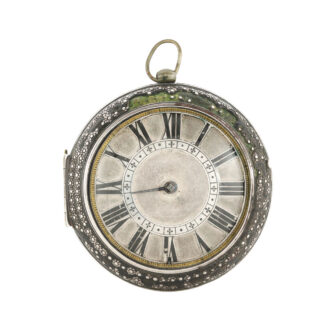
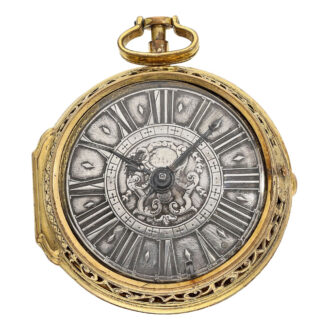
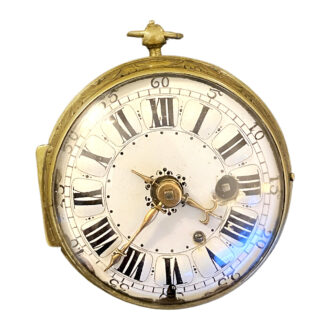
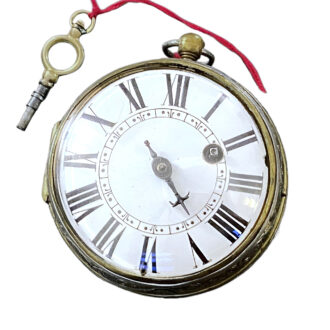
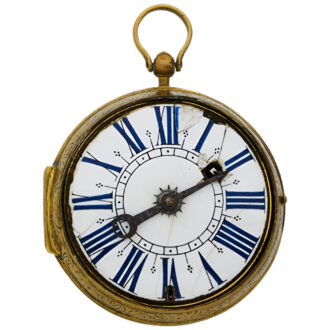
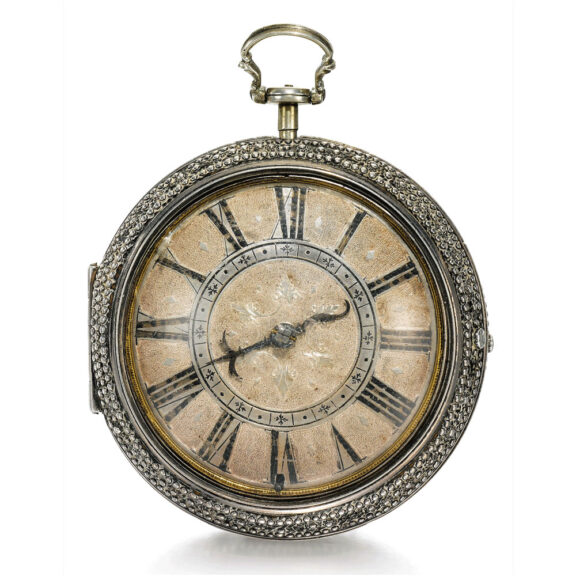
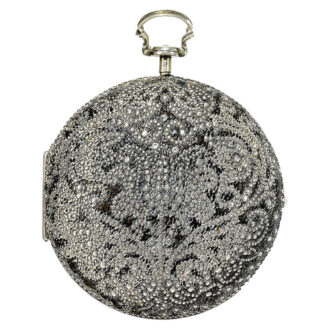
English silver and shagreen pair cased verge watch Circa 1680
- Kenmerk
- SA0023
- Diameter
- 51 mm
- Estimate
- € 12.000 - 20.000
- Price sold
- -
Silver verge with early balance spring in pair cases
–
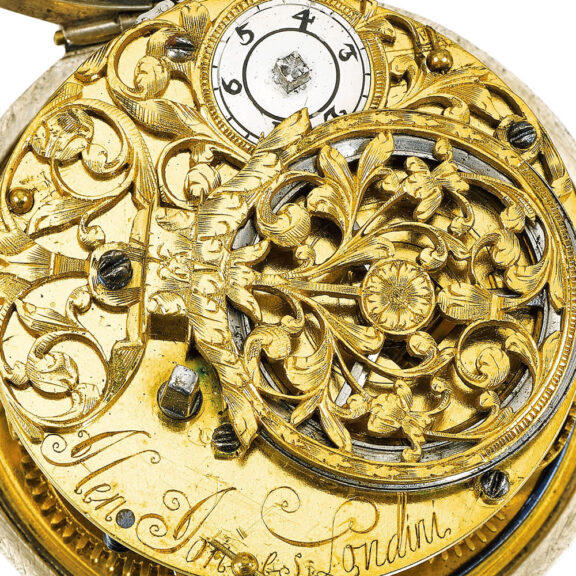
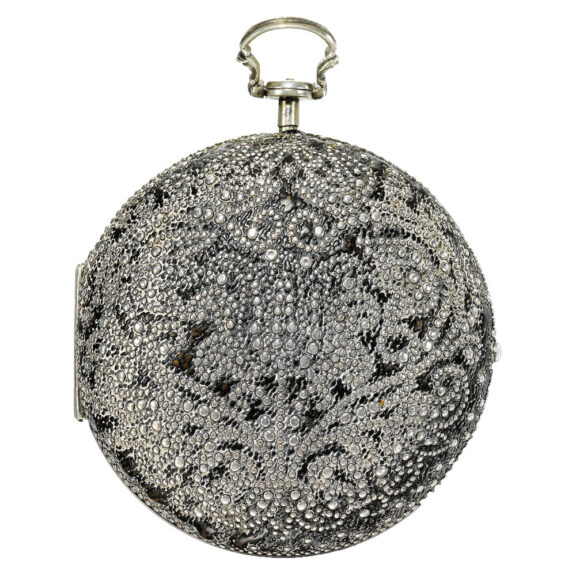
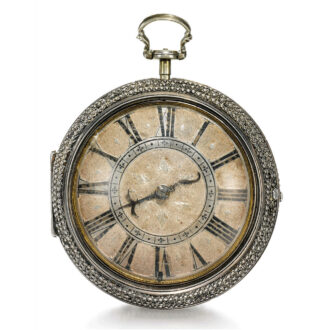
An important English silver and shagreen pair cased verge pocket watch, circa 1680. Fire gilt full plate movement, decorative pierced and floral engraved balance cock, plain three arm balance with spring, five wheel train, fusee and chain, tulip pillars. Silver champlevé dial with a rosette to the centre, large Roman numerals, chapter ring with quarter hour divisions, blued steel double ended tulip form hand. Plain silver inner case, shuttered winding aperture to back, case maker’s mark SB for Samuel Botwell below a crown, later stirrup pendant and bow (circa 1700), outer shagreen covered protective case finely decorated with piqué work of floral design.
–
Diameter incl. outer case: 51 mm
–
Signed: Hen Jones London
–
This watch is of the highest quality and an especially early example of a watch with a balance spring and the Tompion form of regulation. Most unusually, the train is of five wheels rather than the normal four, this is to aid the smooth transmission of power to the verge escapement.
–
Henry Jones, an outstanding watchmaker, flourished during the last quarter of the 17th century. He was born circa 1642 in Southampton, relocating to London in 1654 as an apprentice to Benjamin Hill and advantageously moving soon after, to the workshop of Edward East. He obtained his freedom from the Clockmakers’ Company in 1663 and served the company in a variety of capacities, becoming Master in 1691. After completing his apprenticeship, Jones continued to work with East until 1672, when he took premises in the City of London, off Fleet Street, in the area known as The Temple. It is clear that he took a keen interest in the introduction of the balance spring and there are two other early examples of his work, using an early form of balance spring, still in existence. It is interesting that Jones sought to make the present watch without a minute hand, despite the obvious timekeeping advantages bestowed by the use of a balance spring. Perhaps in this early application, Jones wished to avoid the potential interference that this and its motion work might have on the good going of the mechanism. Henry Jones died in 1695 and is buried in St. Dunstan in the West, Fleet Street, London.
Signed: Hen. Jones Londini
Share this page: