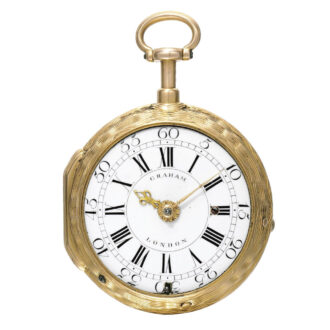
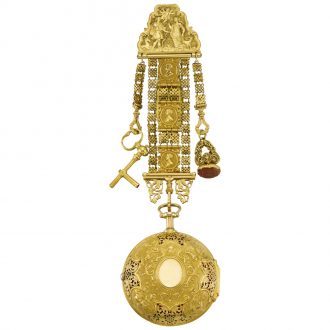
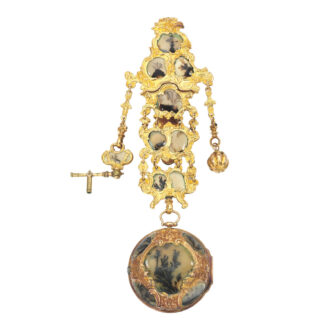
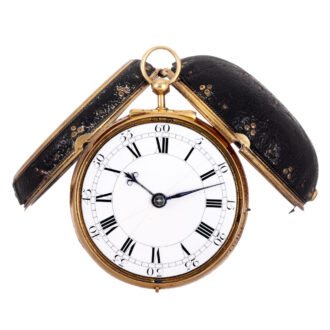
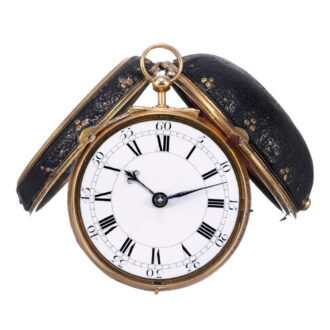
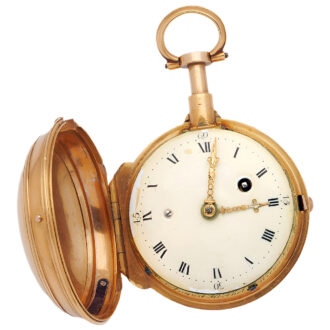
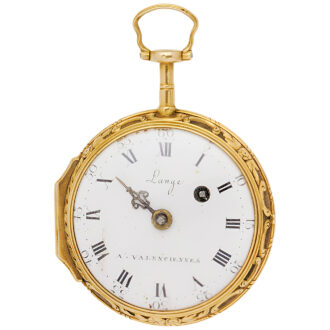
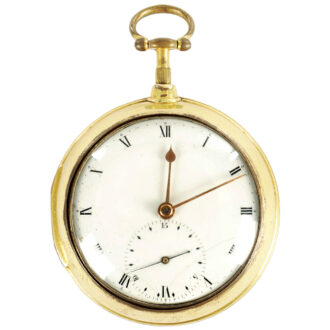
English gold quarter repeating verge by Quare Circa 1725
- Kenmerk
- SA0113
- Diameter
- 55 mm
- Estimate
- € 12.500 - 25.000
- Price sold
- € 22.000
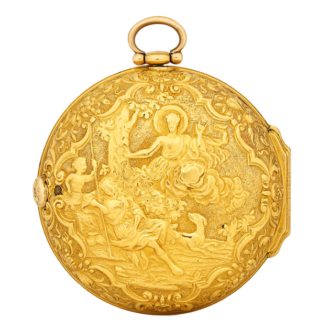
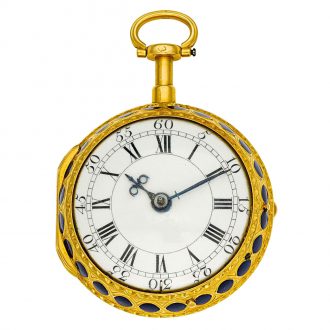
Early gold quarter repeating verge watch with repousse case
–
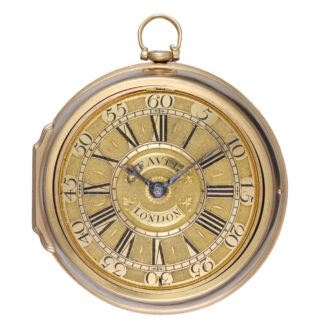
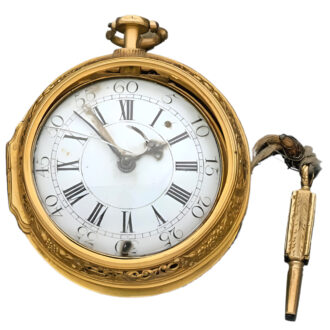
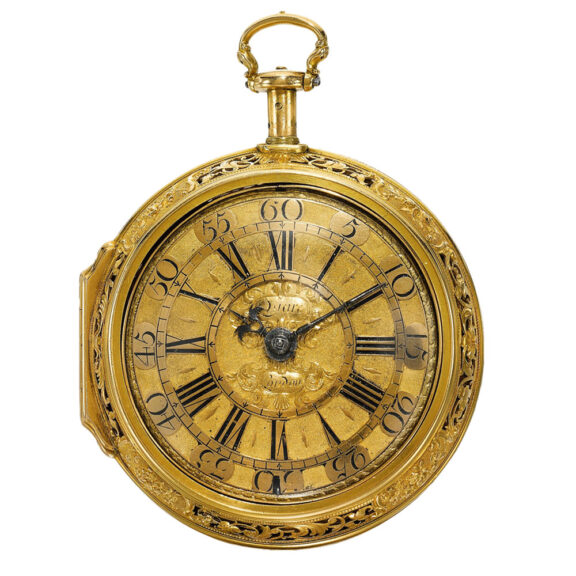
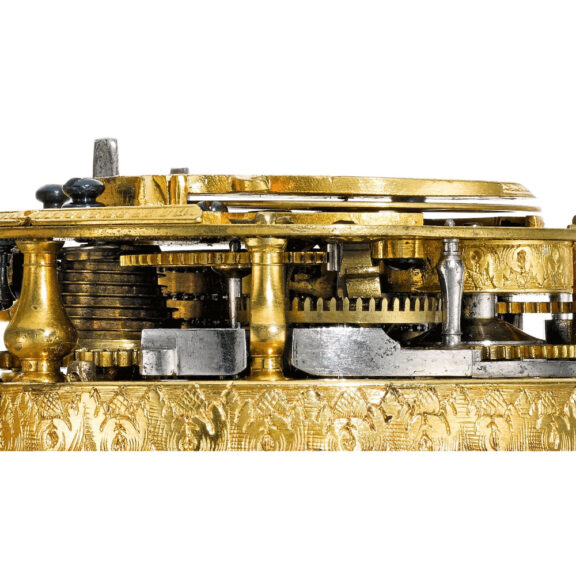
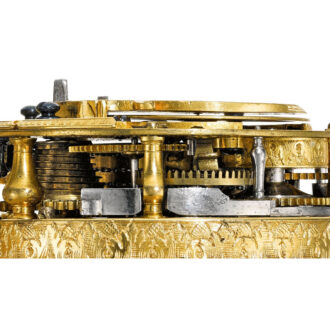
An English rare gold pair cased early quarter repeating verge watch with later specially made gold outer repousse case the scene signed by Robe, movement circa 1690, case circa 1725-1730, gilded full plate movement, verge escapement, the balance cock decoratively pierced and engraved with two cherubs holding aloft a crown above monogram EA, fusee and chain, round baluster pillars, repeating on a bell to the inside case back, signed D. Quare, London.
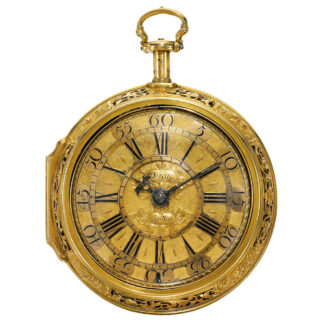
Gold champlevé dial, Roman numerals with half-hour divisions beneath, outer Arabic minute track, signature cartouches, blued steel beetle and poker hands.
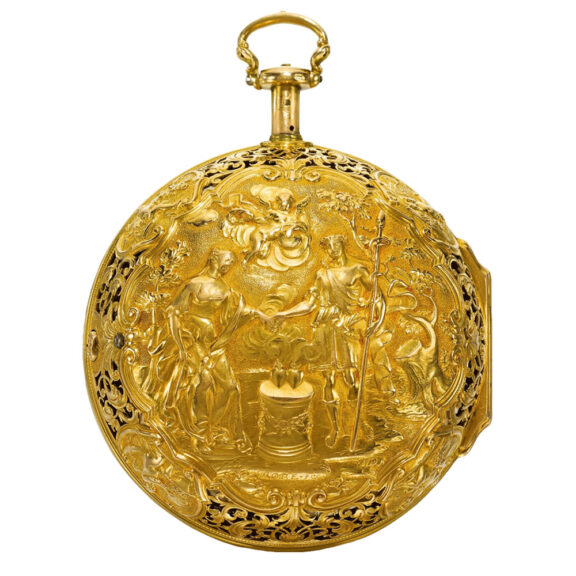
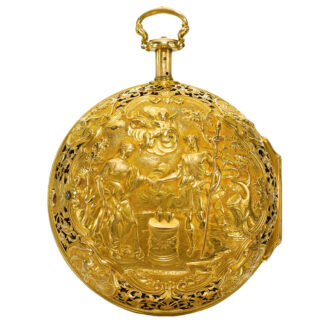
Gold inner case, decoratively pierced band with scrolling foliage inhabited by birds, a mask to the base, winding aperture to back, case maker’s mark WI incuse later specially made gold outer repoussé case (circa 1725-30) with a scene depicting a woman and a man (possibly Cephalus and Procris) before an altar on which two hearts are burning, outside the cartouche with pierced foliage panels, with figures of the four seasons between, signed beneath the altar, Robe fec. for the case chaser and inside case back with case maker’s mark TP incuse for Thomas Potts, bezel with pierced foliage interspersed by floral panels, movement and inner case numbered.
–
Diameter: 55 mm
–
Signed: D. Quare London
–
This early piece demonstrates the repeating work invented by Daniel Quare in 1680. Traditionally believed to have Royal Provenance, the cock of this watch is pierced and engraved with the monogram EA with a Royal coronet flanked by cherubs. The initials on the cock are those of Ernst Augustus, father of King George I, who died in 1698 and from whom the watch is said to have been a gift.
The especially made outer repoussé case dates to circa 1725- 30 and depicts a betrothal scene, a subject that was common on watch cases, and it seems reasonable to assume that the watches concerned were wedding gifts. Although it is difficult to firmly attribute the figures within the scene, if the watch was indeed originally intended as a wedding gift, the figures represented may be Bacchus and Ariadne rather than the tragic Cephalus and Procris. The maker of the outer case, Thomas Potts, registered his mark in 1728. Richard Edgcumbe in The Art of the Gold Chaser records the present outer case and a further case with the same scene on a watch signed by Thomas Potts, this latter watch was in the Atkinson Collection.
Signed: D. Quare London
Share this page: