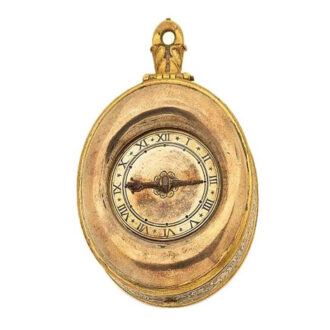
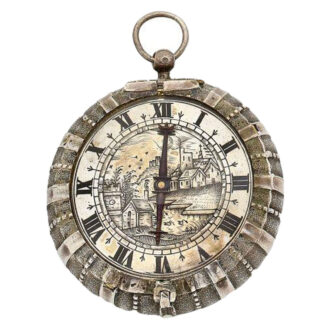
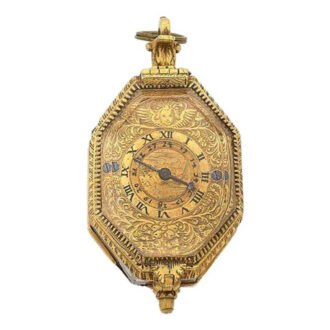
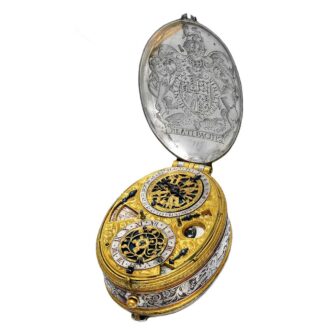
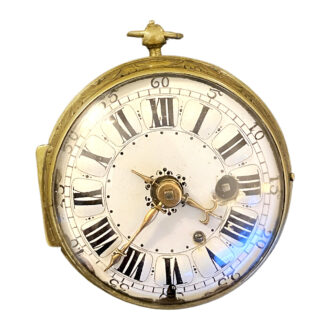
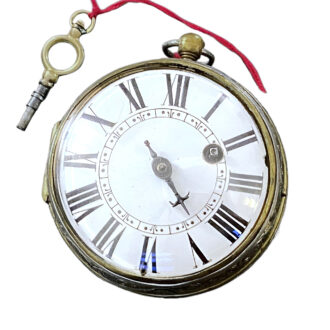
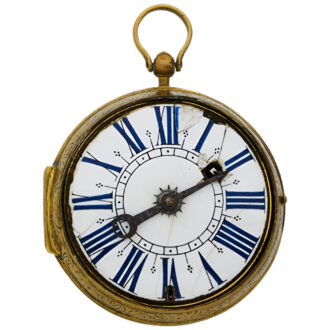
German gold and enamel verge in Huaud manner Circa 1700
- Kenmerk
- BC0750
- Diameter
- 48 mm
- Estimate
- € 12.500 - 25.000
- Price sold
- -
Gold and enamel verge watch by Petrus Sedlmair
–
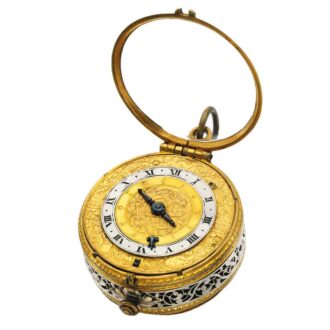
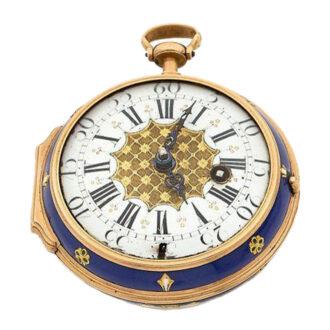
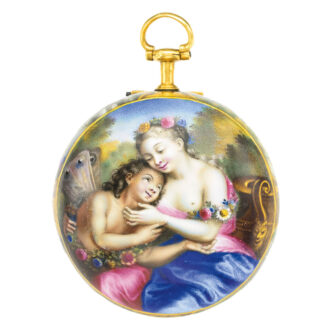
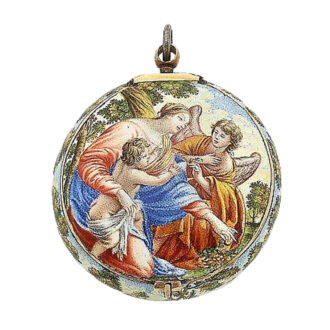
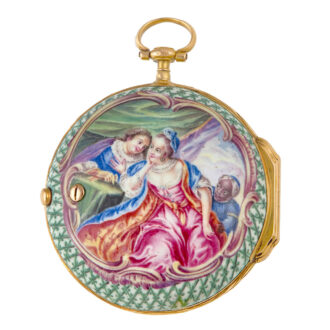
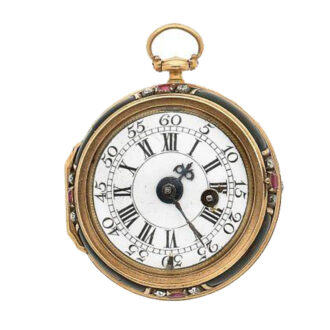
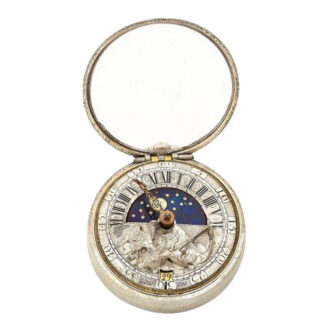
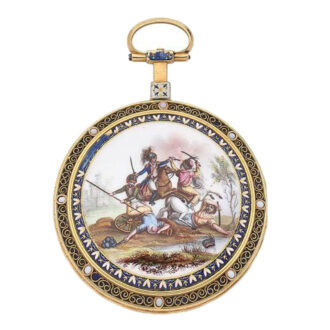
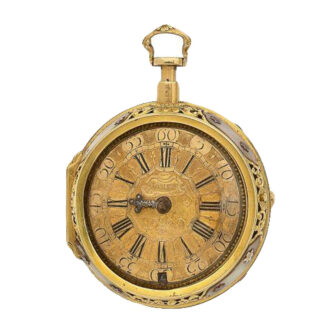
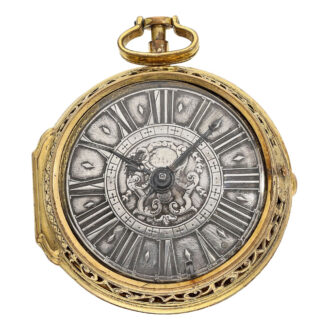
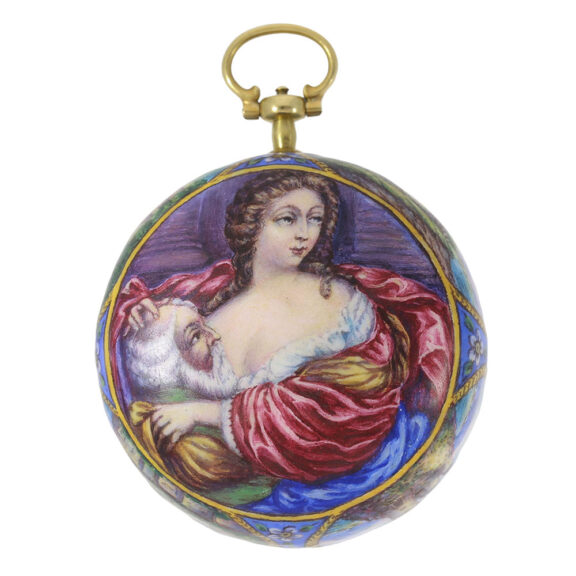
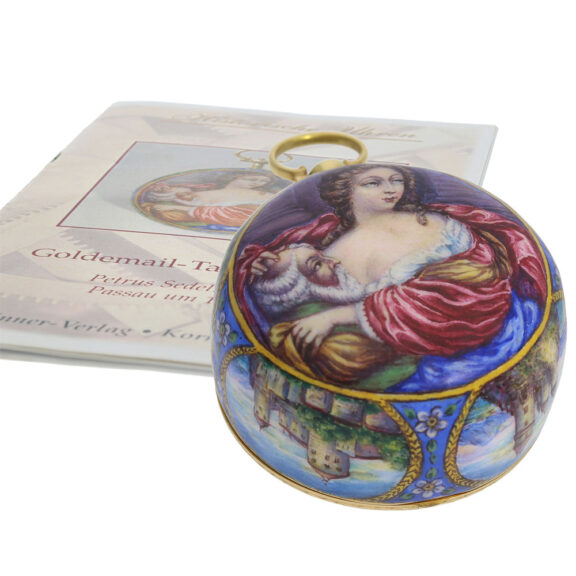
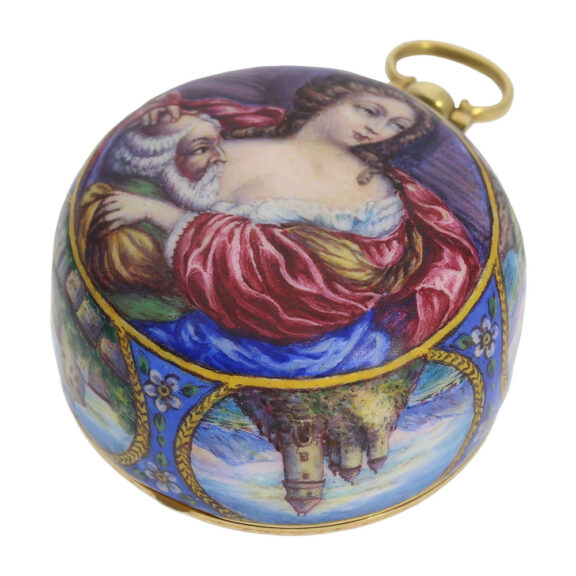
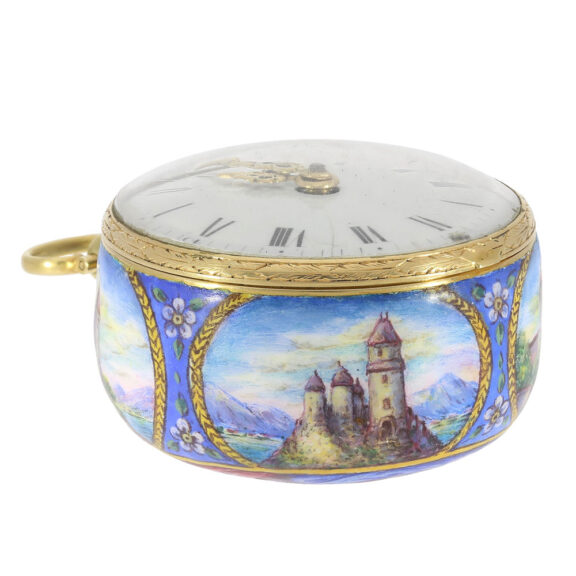
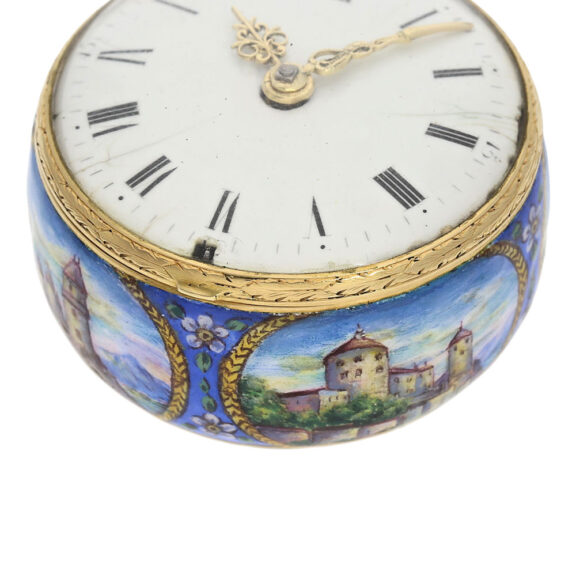
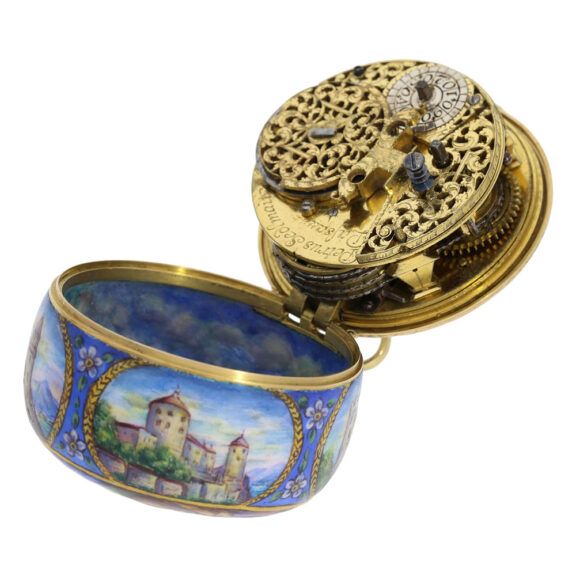
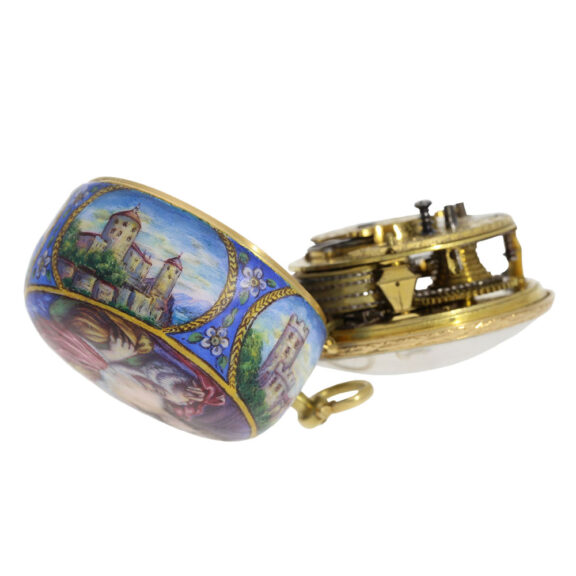
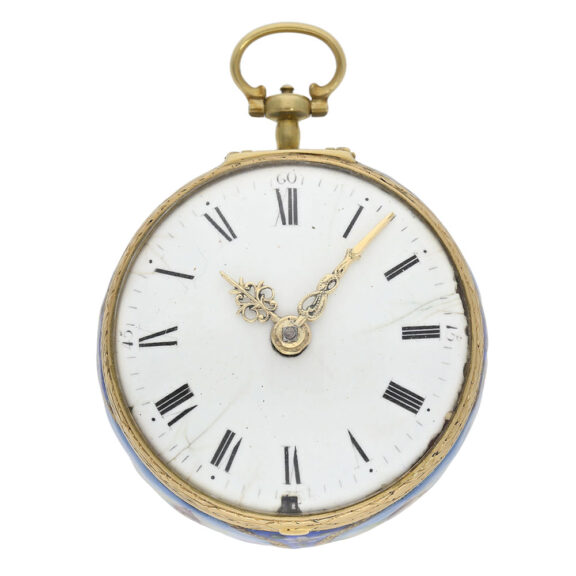
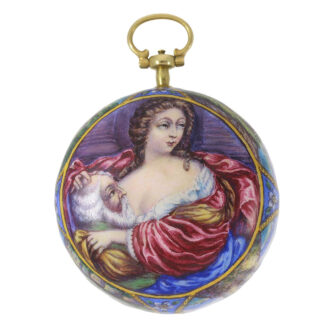
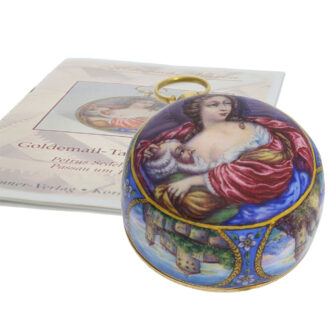
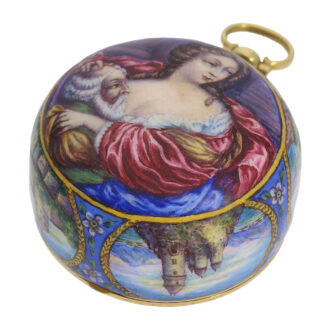
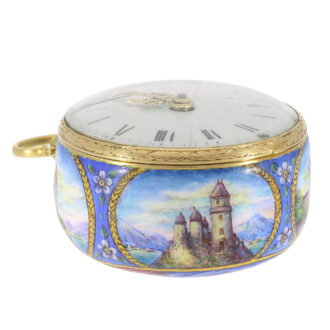
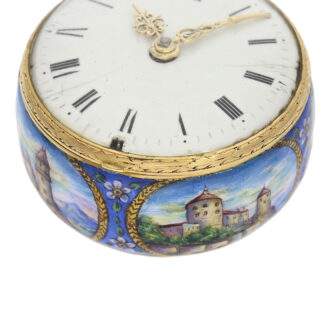
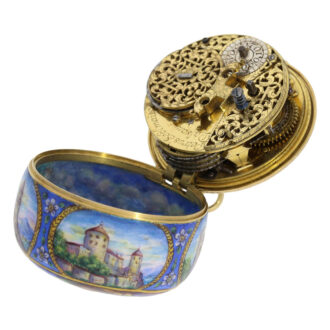
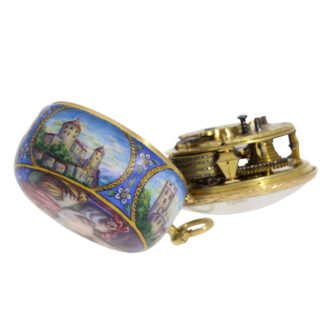
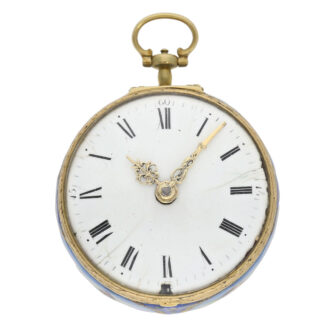
A rare southern German gold and enamel open faced verge pocket watch in the manner of Huaud, circa 1700. Fire-gilt verge movement. White enamel dial with Roman hours and Arabic five minutes, gilt hands. Enamelled case, the inside with an enamel painting depicting a mythological scene: Neptune oppresses the daughter of Coroneus, four oval cartouches with castle scenes on the sides, the back with an illustration of Virtus Romane, Cimon feeding on his daughter’s breast, the bezel engraved with acanthus leaves. Movement signed.
–
Diameter: 47.5 mm
–
Weight: 125 g
–
Signed: Petrus Sedlmair Passau
–
It is very rare to find these watches with a gold case, most of them are made of gilt. Equally rare and unusual is the type of enamel, which appears exceptionally matt. Looking through the magnifying glass, however, you can see that the original slightly shiny surface is only partially rubbed and in many places still shines brilliantly. Nevertheless, all scenes are wonderfully detailed and very well preserved. The author A. Leiter has dedicated a special edition to this watch, ‘Historische Uhren – Gold email – Taschenuhr Petrus Sedlmair Passau um 1700’. This watch has been known for a long time in the collector’s scene.
–
Les Frères Huaut (or Huaud). The cases painted on enamel by ‘Les deux Frères Huaut’ were among the finest examples of their kind from the Geneva School and were not only highly valued when originally made, but remained as art treasures in the centuries that followed. Pierre I was the founder of the Huaud dynasty. He was born in 1612 in Geneva as the son of a French goldsmith Jean Huaud. He settled in Geneva in 1630 and three of his 11 children became famous enamellists like their father: Pierre II (1647-1698), Jean-Pierre (1655-1723) and Ami (1657-1724). The brothers were most likely trained by their father and worked with him. Pierre II started his own business around 1680. Jean-Pierre and Ami became partners in 1682 and were appointed painters to the Prussian court in 1686 when they moved to Berlin and started working for Elector Frederick William of Brandenburg (1620-1688). Among their most well-known works are Diana and Actaeon, The Judgement of Paris, The Holy Family, St. John the Baptist, The Nativity and The Adoration of the Shepherds.
Signed: Petrus Sedlmair Passau
Share this page: