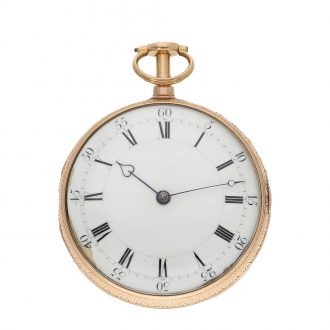
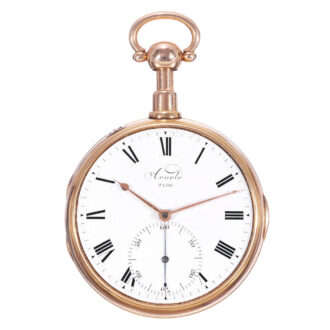
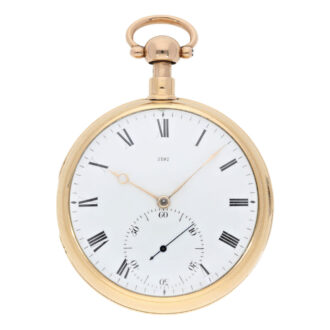
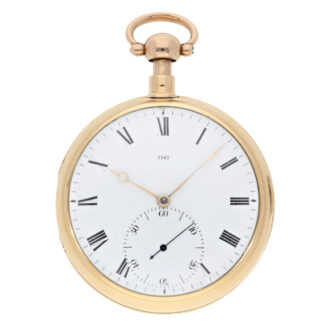
English 18 Carat gold precision watch duplex escapement Circa 1811
- Kenmerk
- HC1141
- Diameter
- 58 mm
- Estimate
- € 4.250 - 7.000
- Price sold
- € 4.350
Pocket watch with extremely heavy gold case
–
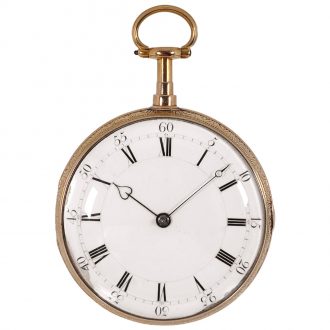
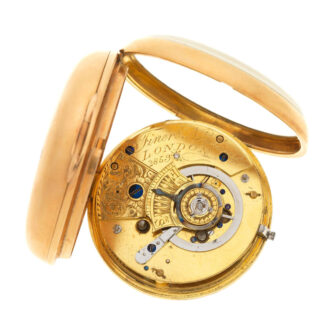
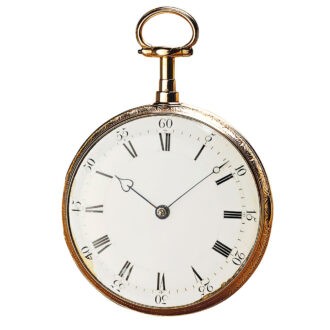
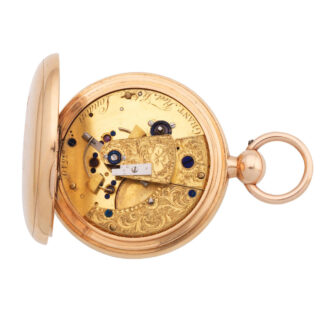
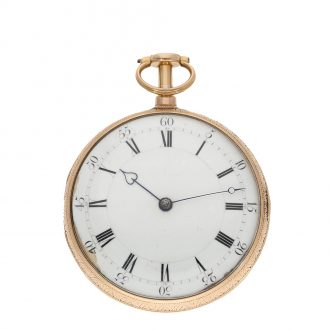
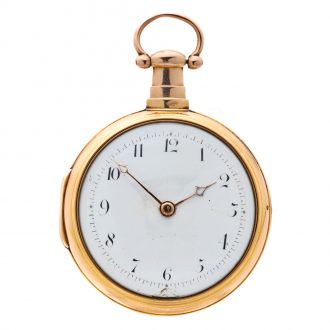
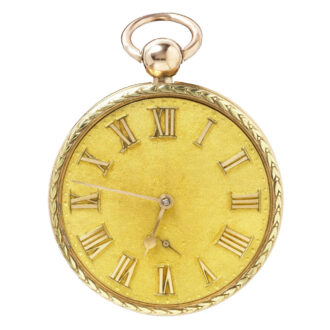
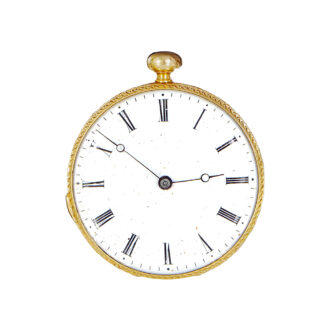
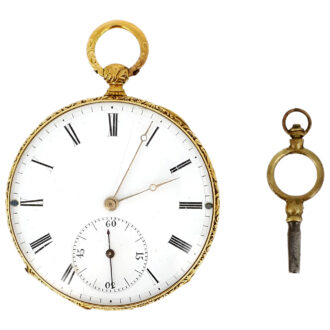
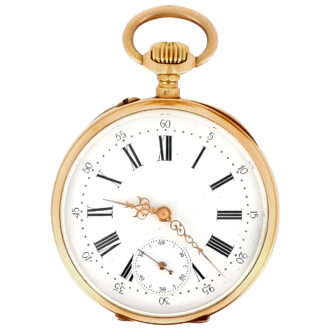
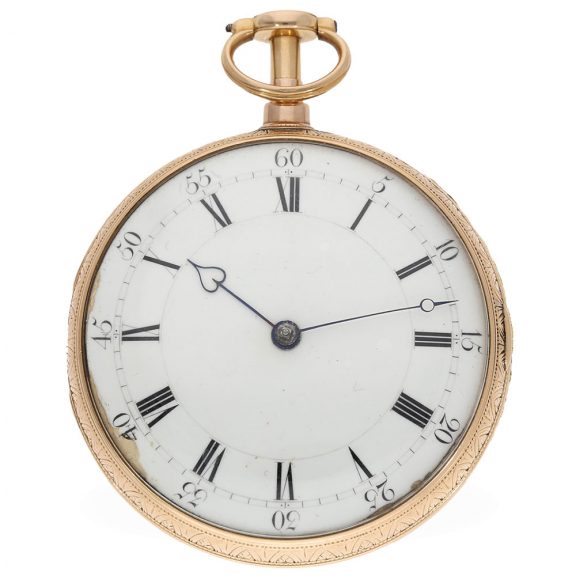
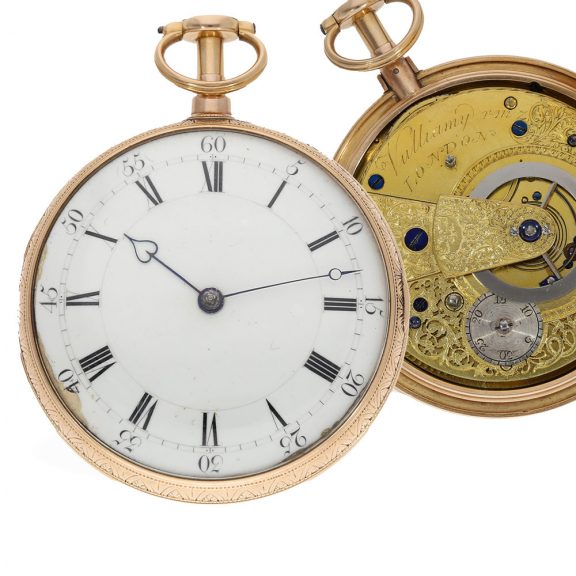
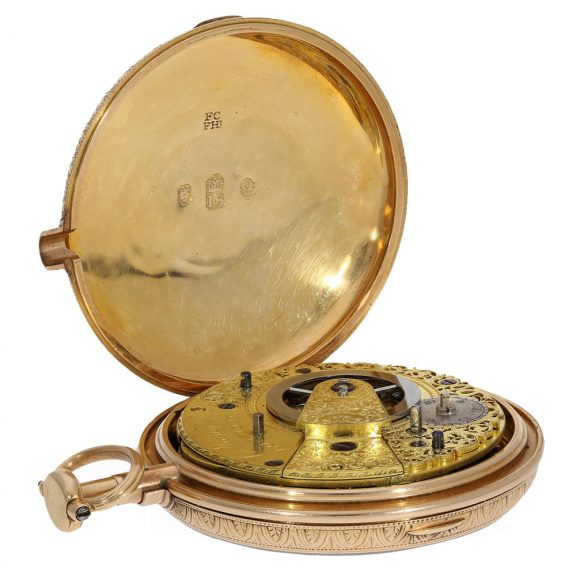
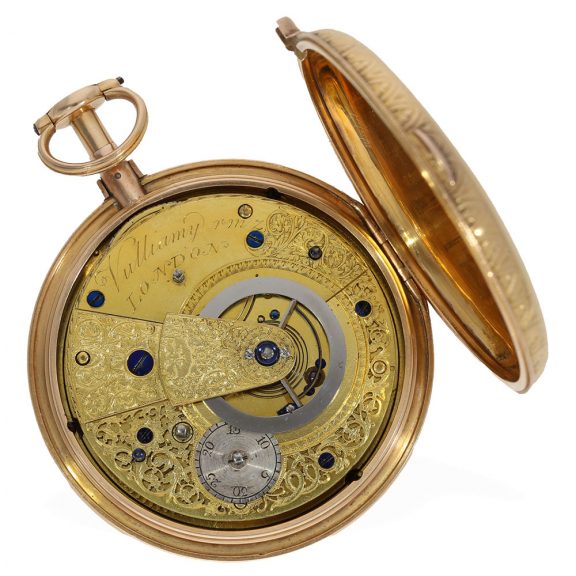
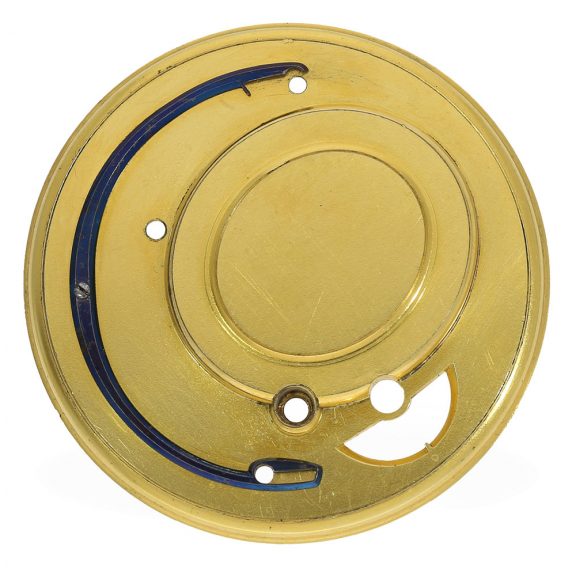
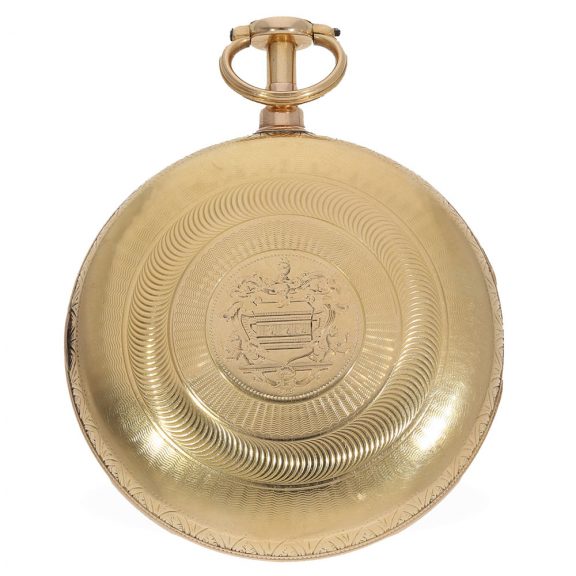
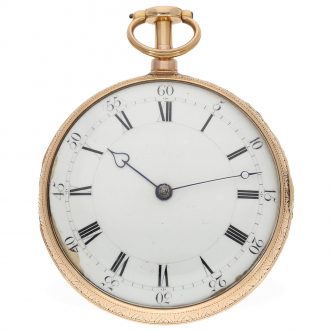
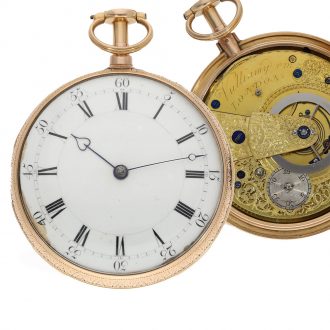
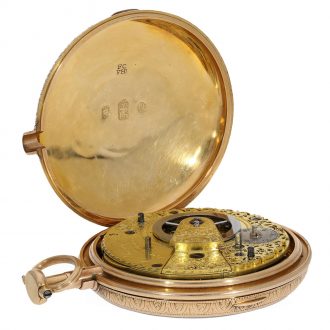
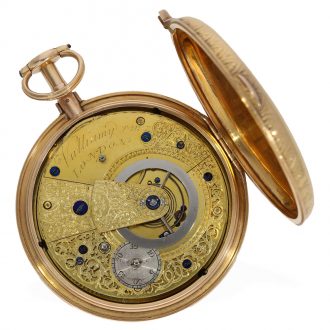
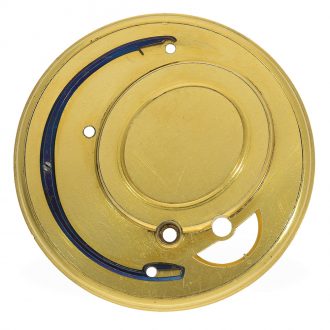
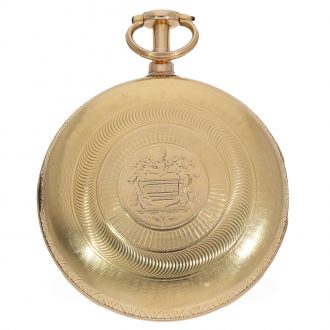
A very fine precision pocket watch with duplex escapement, made by Vulliamy in London, England, circa 1811. The open faced case of this extremely heavy designed watch was crafted from 18 Carat gold and has the London 1811 Hallmark, is splendidly engraved and engine turned, carries the case maker’s mark FC and FHB, has a noble coat of arms on the back and the original dust cover. The white enamel dial has Arabic five minute numerals, Roman hour numerals, the original, heart shaped, hour hand and a supplemented minute hand. The very rare and extremely fine movement has a duplex escapement, a large steel balance, a rare temperature compensation, a diamond end stone and magnificent factory engraving.
The movement is signed.
–
Diameter: 58 mm
–
Weight: 172 g
–
Signed: Vulliamy rmz, London
–
This is an early English precision watch of excellent quality with an extremely heavy gold case.
–
Vulliamy
Three successive generations of the Vulliamy family were active as clockmakers from 1735 until 1854; they were particularly famous for their regulator clocks but also created excellent and important pocket watches.
Around 1743 Benjamin Gray, who was about 66 at the time and had been pocket watchmaker to King George II since 1742 and Francois Justin Vulliamy (who had immigrated from Switzerland in the mid-30s) became partners; Vulliamy had married Gray’s daughter Mary two years before.
Gray was a watchmaker specializing in repeating verge pocket watches; during his partnership with Vulliamy these repeater watches were more often fitted with cylinder movements and the company also produced a number of clocks.
After Gray’s death in 1764 JustinVulliamy took over the shop at the west end of Pall Mall. In 1772 Justin’s son Benjamin Vulliamy was appointed clockmaker to the court of King George III; together with his father, he had already assisted the king in his observatory at Richmond in 1769 during the transit of Venus. Around 1780 he became a full partner in his father’s business.
In the early 80’s, the Vulliamy company had started to concentrate on the production of clocks (particularly valuable ornamental clocks) because the ever increasing number of cheap pocket watches imported from abroad had begun causing serious problems for the domestic makers; special value was laid on excellent quality control and dedication to quality.
Justin Vulliamy died in 1797 when he was nearly 86 years old; he had written his last will in French. Around 1801 Benjamin Vulliamy took his son Benjamin Lewis on as a partner. They carried on selling pocket watches with cylinder escapements but started using more and more duplex escapements for their high quality pieces. The company began including items such as candle holders and other gold and silver goods into their range; this increased their turnover considerably, however, the customers the habit of not paying their bills – especially where members of the royal family and the nobility were concerned – kept the profits comparatively low.
Benjamin Vulliamy died in 1811 and his second son came into the business; however, he left again in 1820 because he was unhappy with his brother Benjamin Lewis strict management style. The company was by now known for its outstanding turret clock movements and the well engineered clocks they supplied many public authorities with. Of course, they still produced pocket watches as well and soon to be famous makers such as Richard Pendleton, E.J.Dent and Sylvain Mairet worked for the Vulliamys around the end of the 18th century and in the 1820’s and 1830’s. Benjamin Lewis, unfortunately, did not manage to secure the commission for “Big Ben”, but he and his ancestors had been appointed clockmakers to the royal courts of four kings and queens and the family had had several masters in the Worshipful Company of Clockmakers.
The company ceased to exist with Benjamin Lewis death in 1854; goodwill and royal warrant changed over to Charles Frodsham, tools and equipment were mostly taken over by the Jumps, Vulliamy’s loyal workmen.
Signed: Vulliamy rmz, London
Share this page: