English brass early small eight day chronometer Circa 1795
- Kenmerk
- HC2251
- Diameter
- 90 mm
- Estimate
- € 4.000 - 8.000
- Price sold
- -
Marine spring detent chronometer escapement watch
–
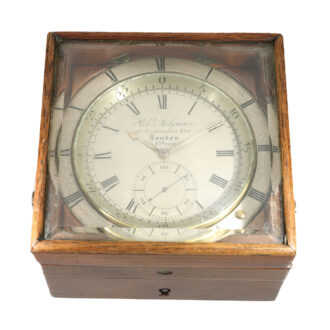
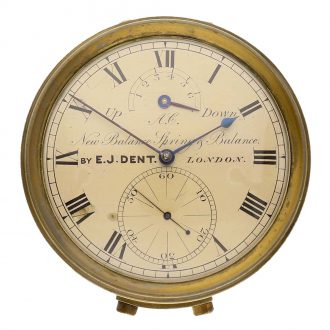
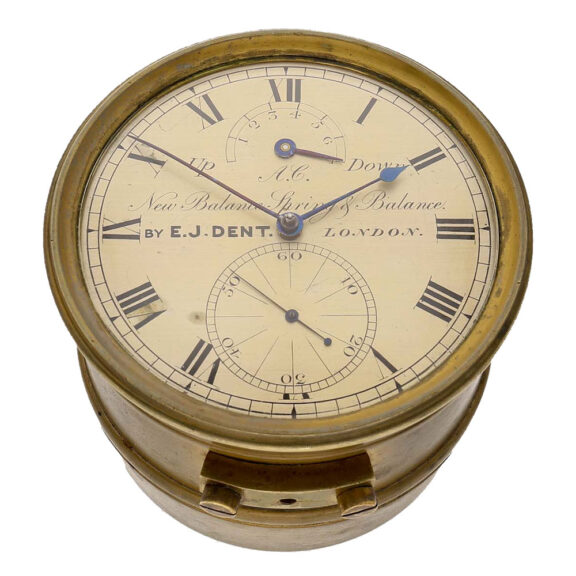
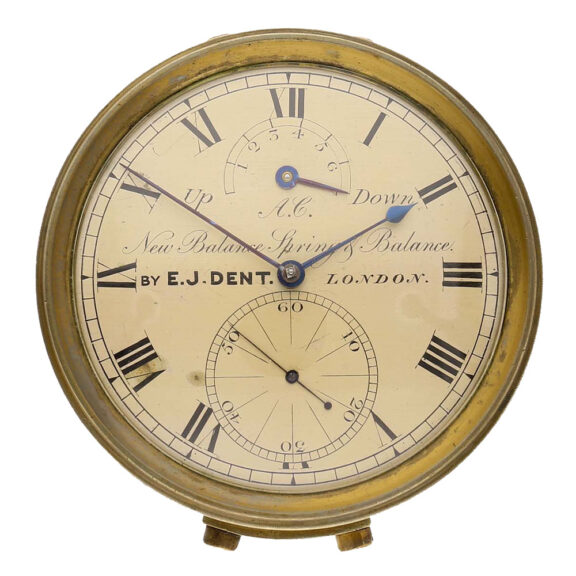
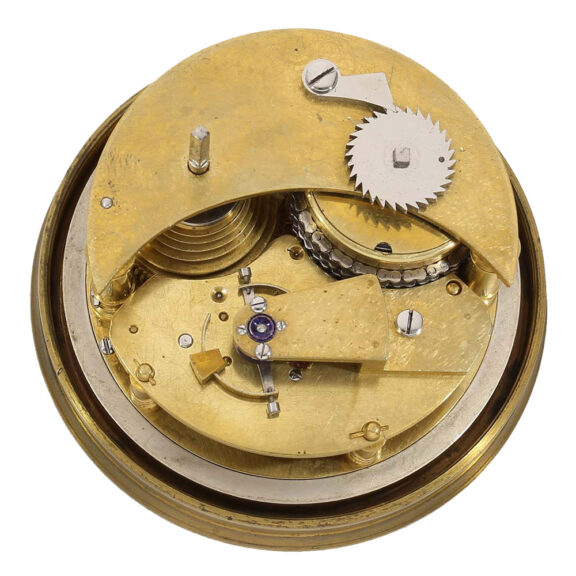
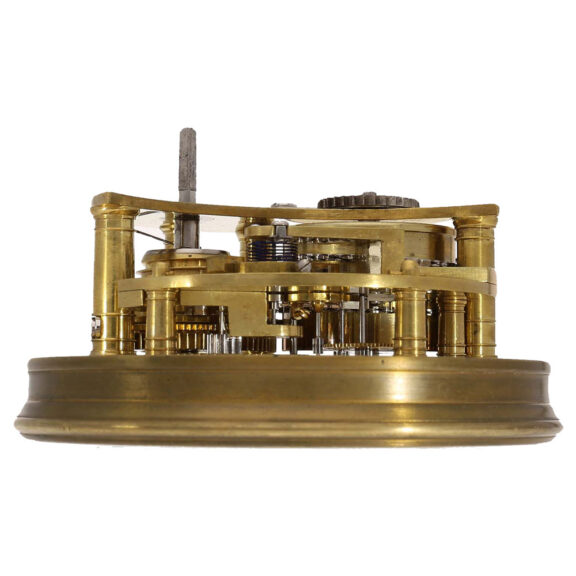
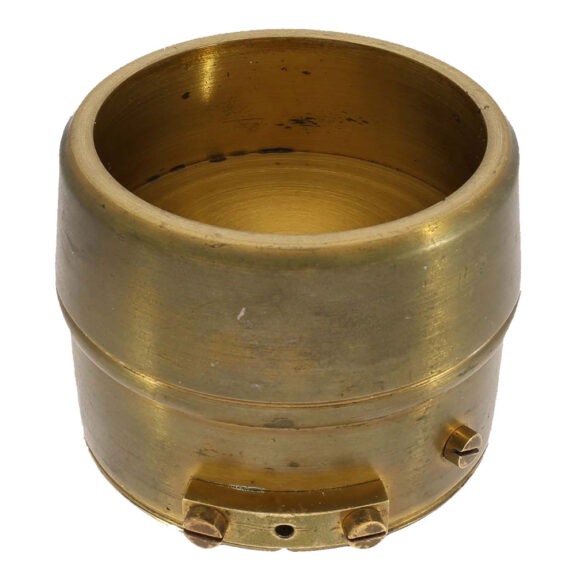
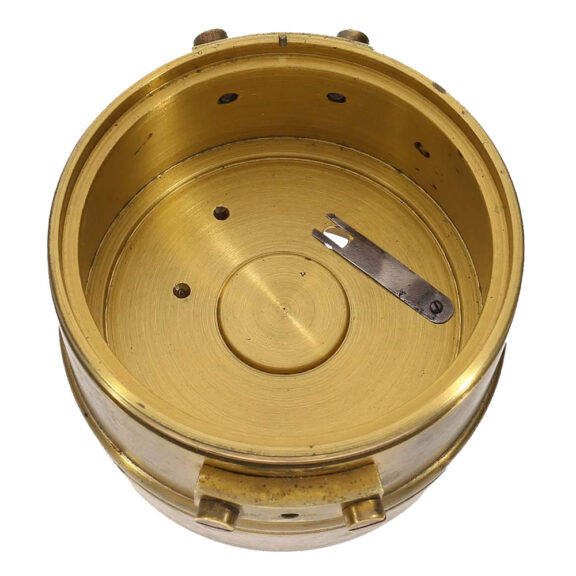
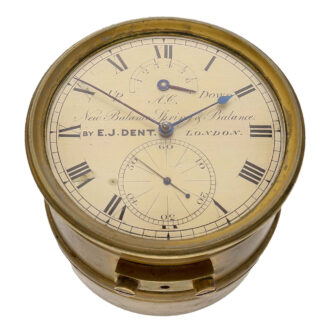
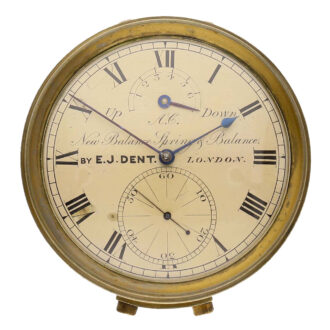
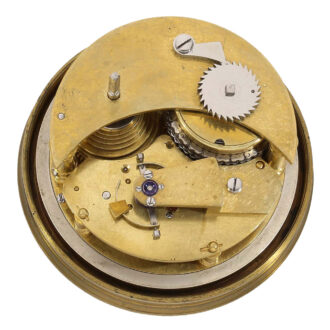
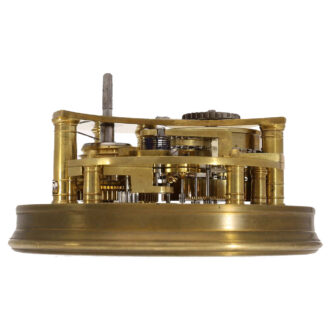
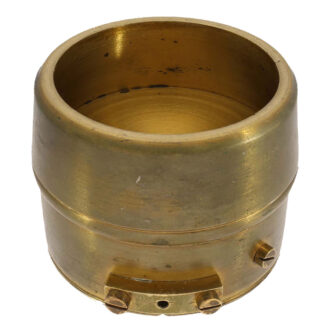
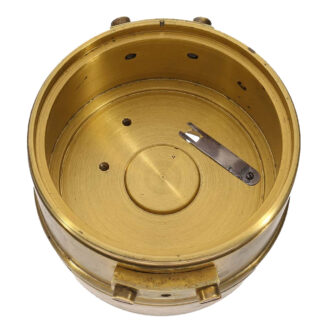
An early, extremely rare, small eight day Marine chronometer, made by Thomas Earnshaw, circa 1795 and upgraded by Edward John Dent in London, England, circa 1840. The brass case of this watch would have originally been gimbal suspended in a wooden box. The engraved and silvered brass dial features an outer minute and hour track with Roman hour numerals, a highly detailed seconds register, designed for precise navigation computations and timing checks at sea, at 6 o’clock, a power reserve indicator at 12 o’clock, steel hands and is engraved A.C. (Arnold’s Compensation) and New Balance Spring & Balance. The extremely rare Thomas Earnshaw chronometer movement is equipped with an eight day power reserve, a Thomas Earnshaw spring detent chronometer escapement and a diamond end stone.
The dial is signed.
–
Diameter: 90 mm (brass box)
–
Signed: By E.J. Dent London
–
The chronometer presented here is extremely rare and very early. This piece nicely illustrates the design of the suspension and the former wooden case.
A comparable one day Earnshaw chronometer of similar size is held in the Science Museum, while another is in the British Museum.
These small, early chronometers by Thomas Earnshaw hardly ever come up for sale and are highly sought after.
–
Edward John Dent’s upgrade
Over several decades of sea duty or ownership, original bimetallic balances and helical steel hairsprings often suffered from corrosion, damage, or mid 19th century thermal distortion errors. Edward John Dent – one of London’s most brilliant horologists and famous for his work on high-precision timekeeping – was hired to service and modernize this elite timepiece.
As engraved across the center of the dial, Dent installed his custom designed “New Balance Spring & Balance“. When prominent chronometer makers executed upgrades of this caliber, it was standard practice to resign or overlay text onto the dial to certify the precision improvements
–
Seven or eight days power reserve?
An eight day marine chronometer is engineered with a mainspring large enough to run safely for a full eight days. However, the dial is only marked up to seven days because it was standard naval protocol to wind the timepiece once a week on the same day (usually Sunday).
The 8th day represents a “buffer.” As a mechanical mainspring nears the absolute end of its power, the tension drops drastically, causing the clock to lose significant accuracy.
Because a slight timing error at sea could cause a ship to miscalculate its longitude by miles, the dial explicitly tracks up to 7 days to ensure that navigators would wind the mechanism before it entered that erratic 8th day “danger zone.”
Signed: By E.J. Dent London
Share this page: