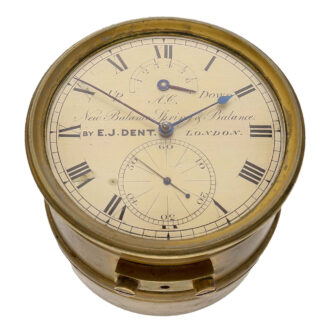
English brass rare expedition chronometer Circa 1841
- Kenmerk
- HC2213
- Diameter
- -
- Estimate
- € 3.500 - 10.000
- Price sold
- € 6.800
An important and extremely rare expedition chronometer
–
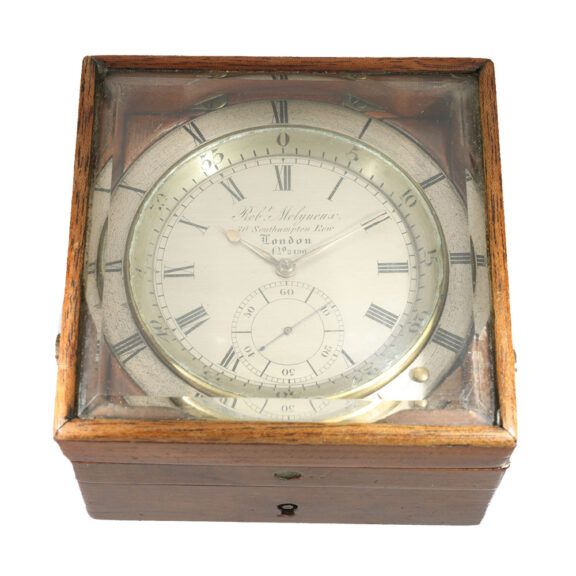
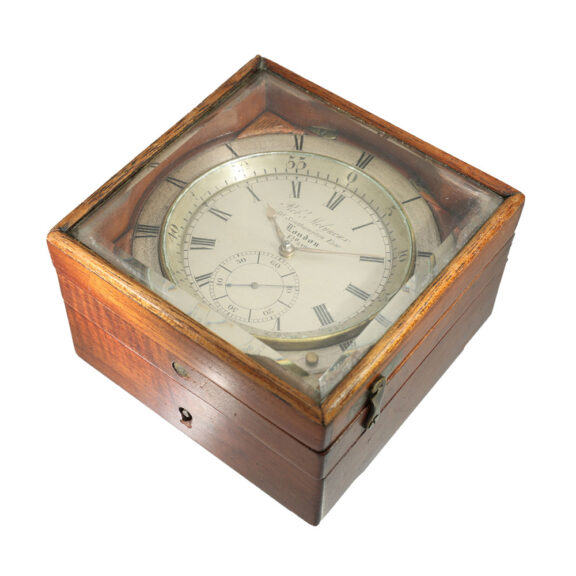
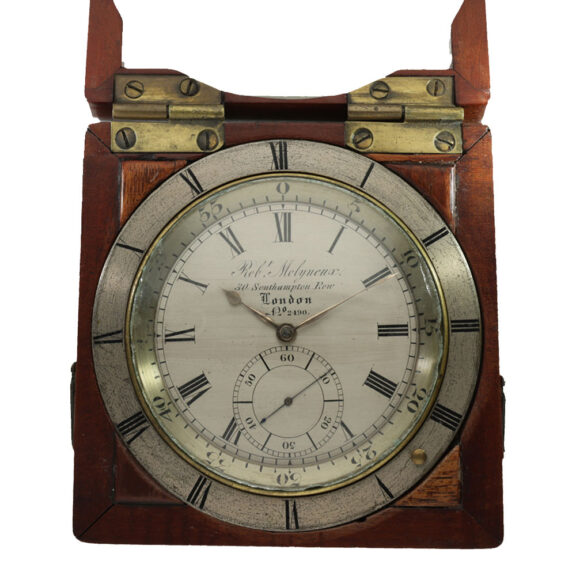
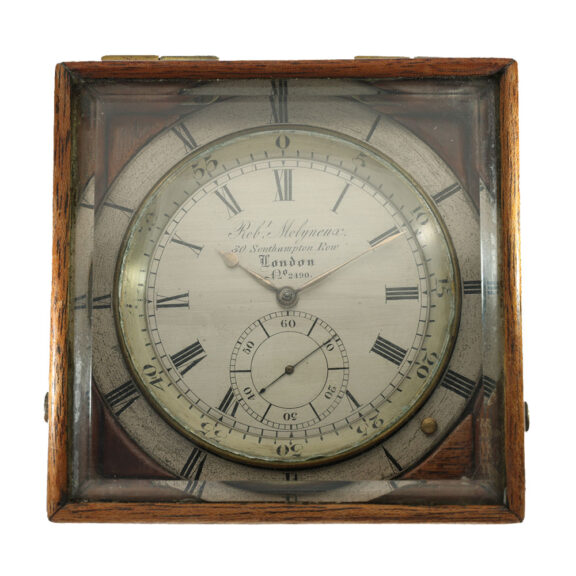
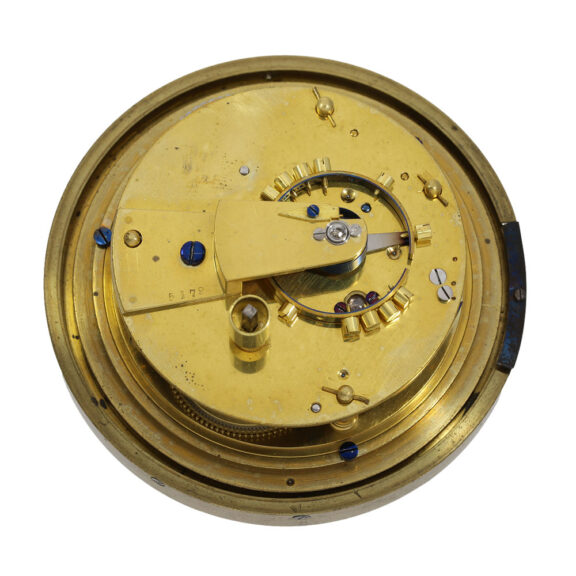
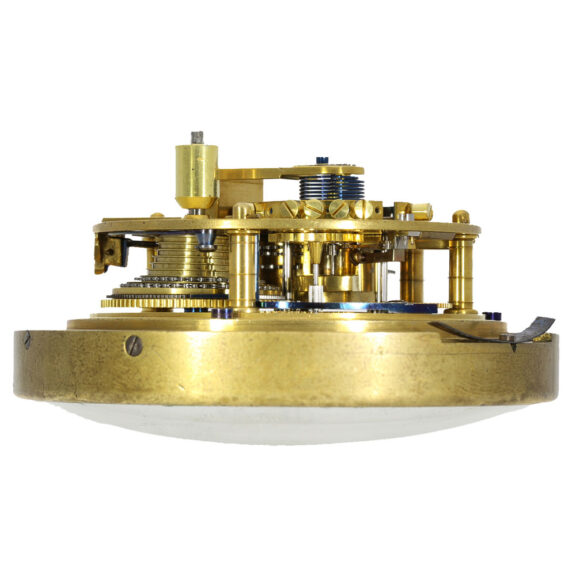
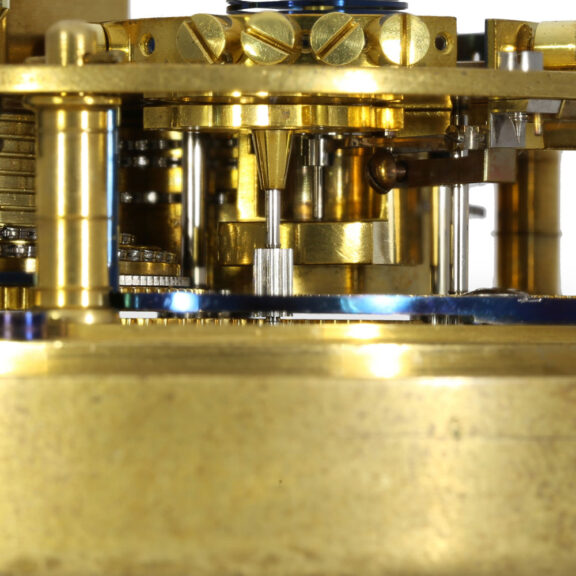
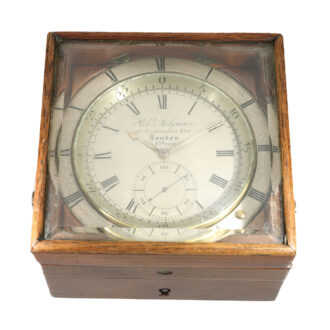
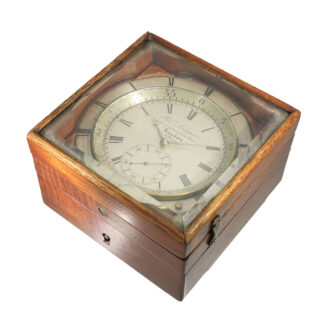
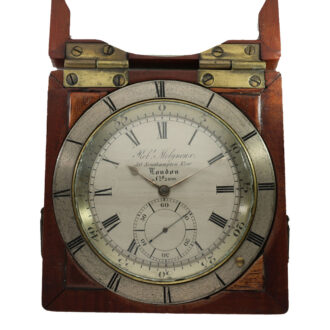
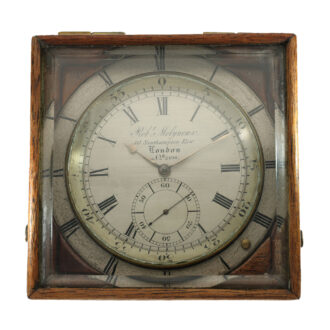
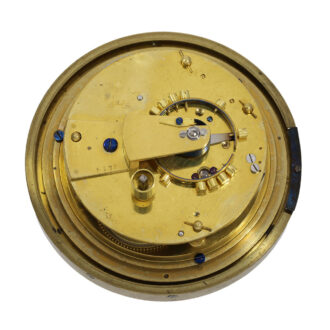
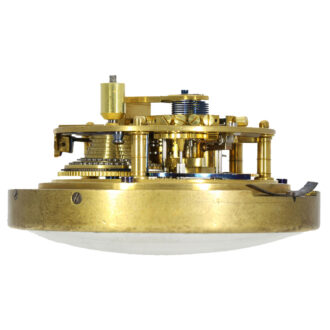
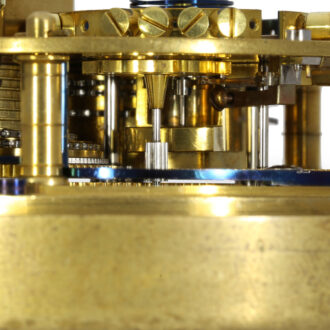
An important and extremely rare expedition chronometer with subsidiary seconds dial, made by Molyneux & Sons at 30 Southampton Row in London, England, circa 1841. This watch features a brass case with two rotating bezels for GMT setting and the numbered, engraved and silvered brass dial is equipped with an outer minute and hour track with Arabic minute and Roman hour numerals, a subsidiary seconds dial at 6 o’clock with large second hand, gold hour and minute hands and a blued steel seconds hand with a circular or elongated tail extension past its center pivot, which balances the weight of the pointer end. The movement is fitted with a spring detent chronometer movement with helical hairspring
The dial is signed.
–
Dimensions: 950 x 950 x 550 mm
–
Signed: Robt Molyneux 30 Southampton Row London
–
Marine chronometers with additional functions are extremely rare.
–
Molyneux
Robert Molyneux, a student of Thomas Earnshaw, initially worked with Charles John Cope, another student of Earnshaw. On their expedition with the ships “Hecla” and “Fury” in 1821, Parry and Lyon used, among other things, chronometer no. 405 from Molyneux & Cope. Molyneux later developed an effective auxiliary compensation for chronometer balance wheels at the same time as Eiffe. He was considered one of the best of his time. Molyneux’s chronometer No. 1326 was used as the captain’s marine chronometer during the Darwin expedition.
The partnership of Molyneux & Sons (also trading as R & H Molyneux) came to a conclusion in 1842, primarily due to the retirement of its principal founders and a strategic corporate takeover.
Signed: Robt Molyneux 30 Southampton Row London
Share this page: