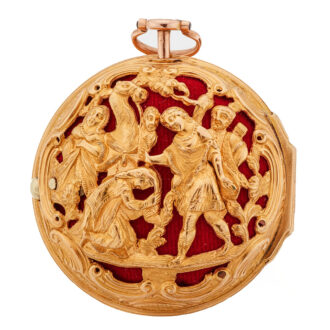
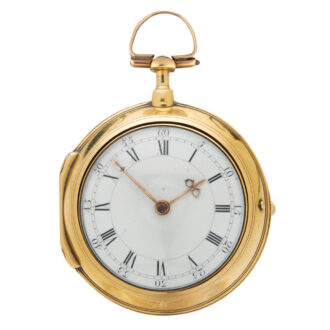
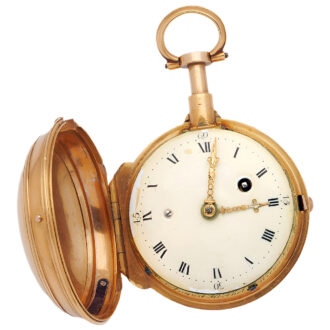
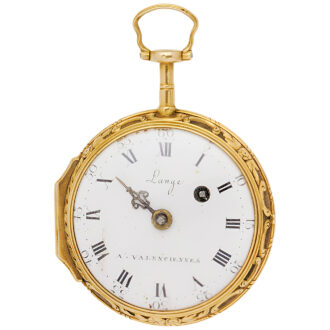
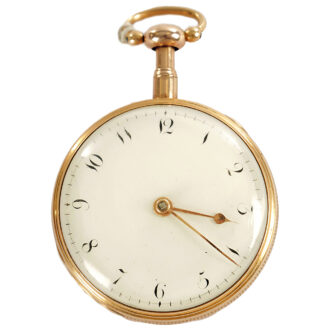
English early gold enamel pair cased pocket watch Circa 1782
- Kenmerk
- AD9532
- Diameter
- 48 mm
- Estimate
- € 9.000 - 16.000
- Price sold
- € 10.200
Gold cylinder watch with en grisaille scene and chatelaine
–
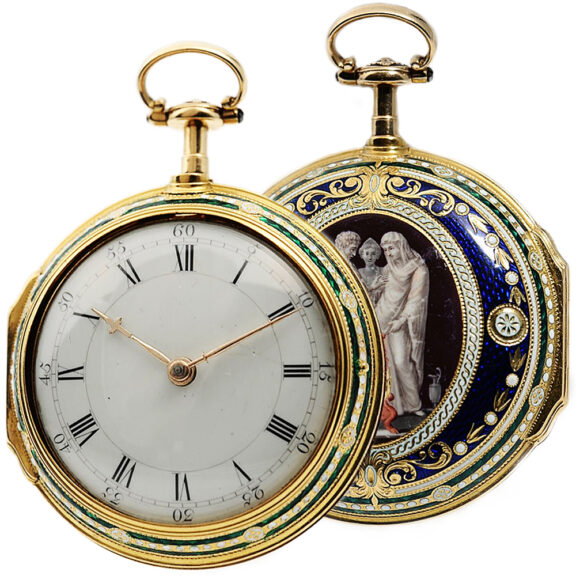
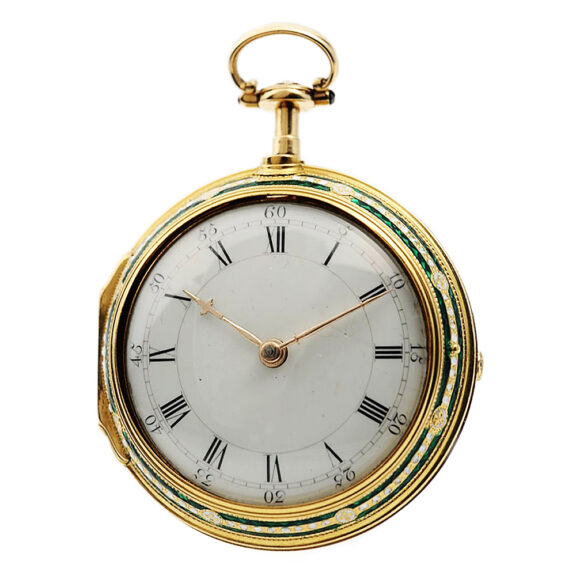
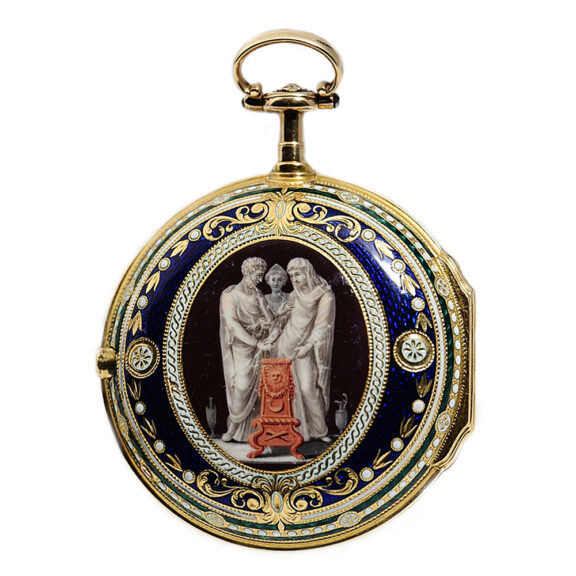
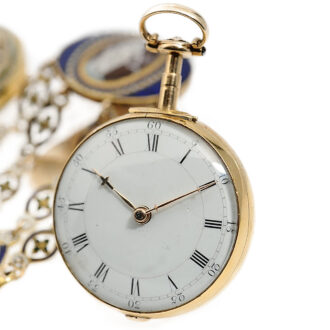
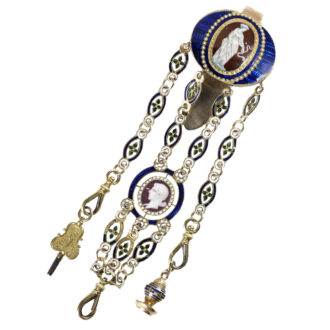
A decorative English 22K gold and enamel pair-cased cylinder pocket watch with the corresponding chatelaine, circa 1782.
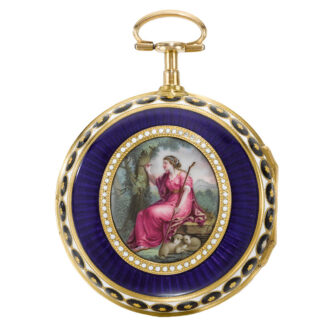
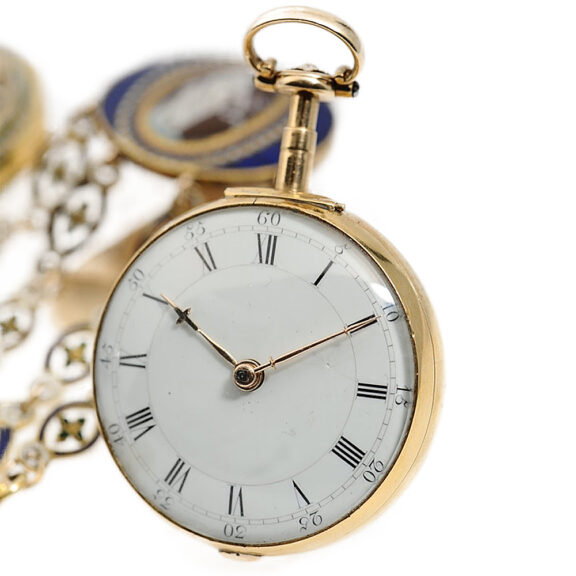
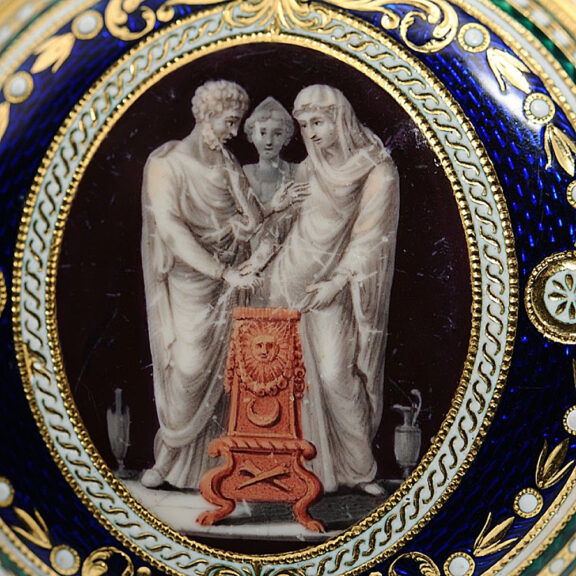
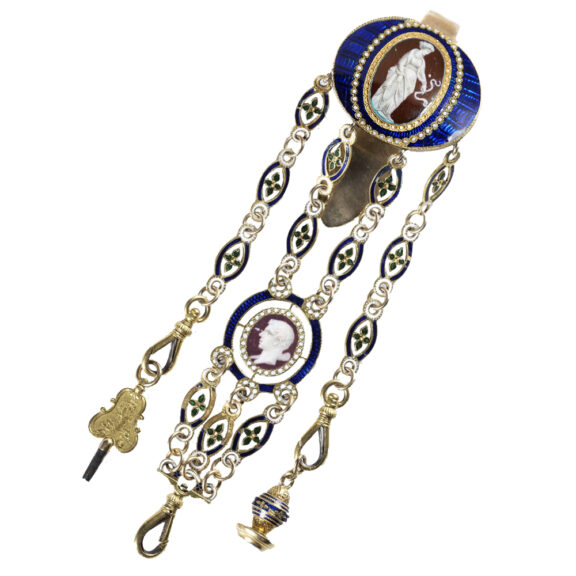
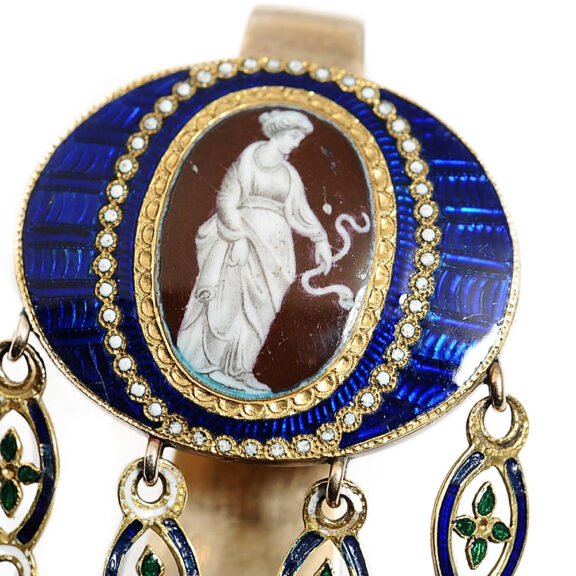
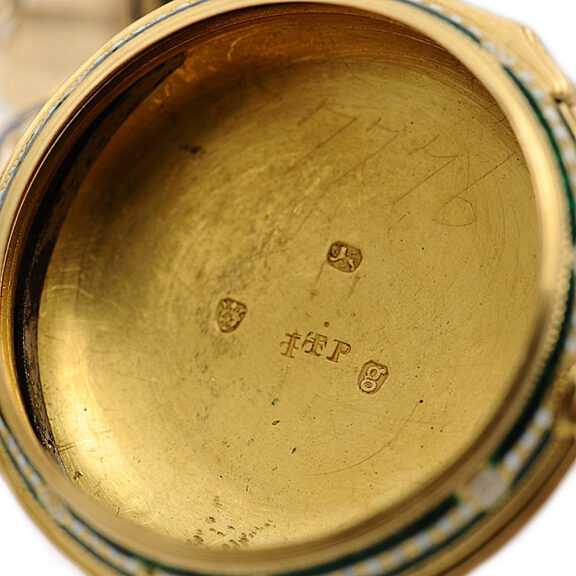
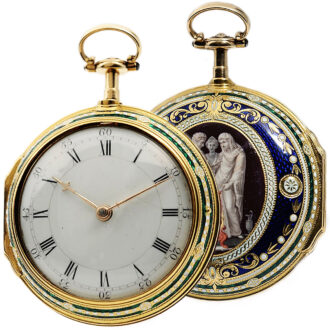
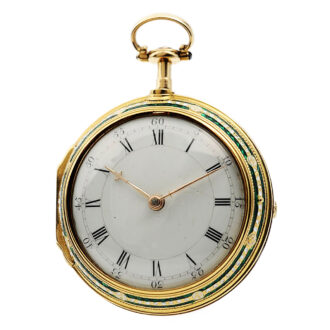
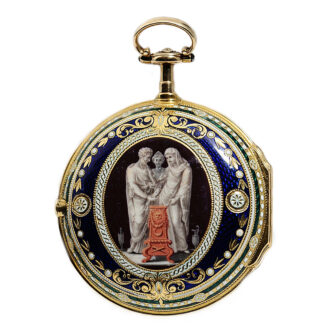
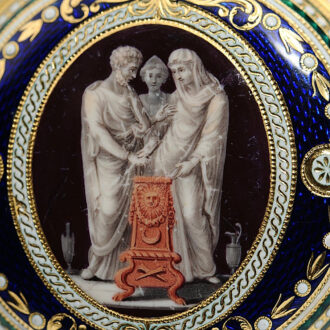
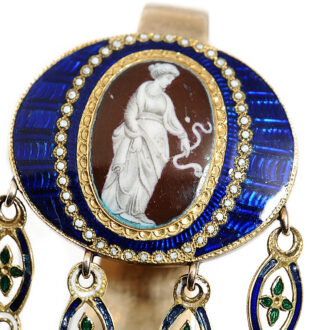
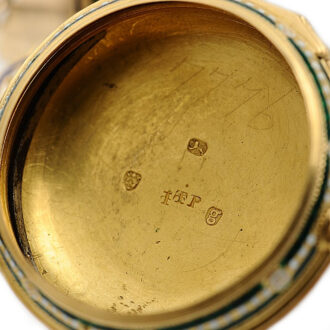
Two cases: À goutte outer case, very finely engraved and engine-turned, the case band on both sides with stylized white and gold champlevé enamel flowers against a translucent green enamelled ground, engraved translucent cobalt blue backside with foliage decoration, an oval enamel plaque in the centre depicting a classical en grisaille scene depicting the wedding of Sun and Moon, case maker’s mark ITP for John Terrill Pain, large lateral hinge, enamel in the manner of George Michael Moser and Augustin Toussaint, the inner case polished also punched ITP. Signed and numbered movement protection cap. It comes with a matching gold chatelaine with two enamel plaques with painted en grisaille figural scenes, a corresponding watch key and a signet.
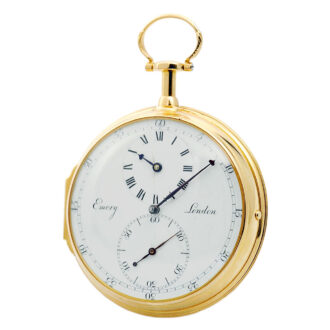
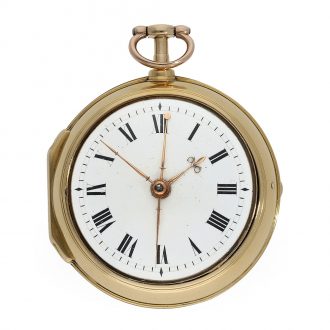
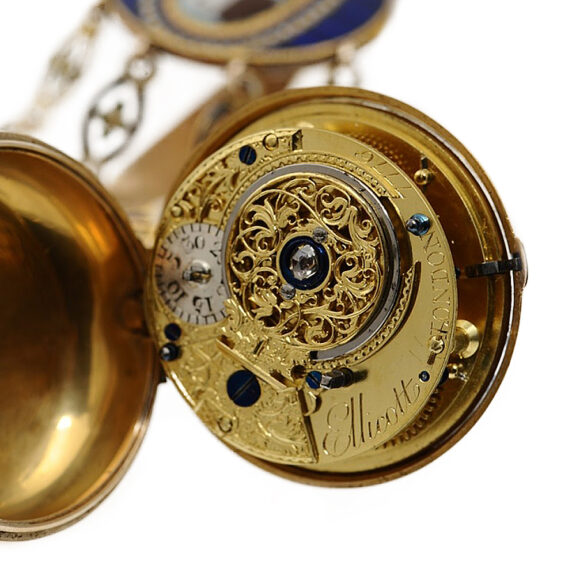
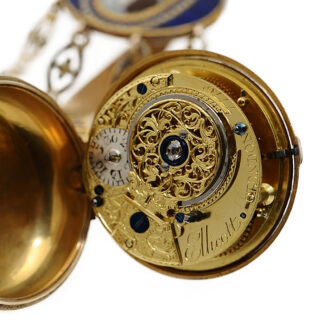
White enamel dial, radial Roman hours and filigree gold hands. Signed fire gilt full plate movement, applied florally engraved and pierced ornaments, early cylinder escapement, keywind, chain and fusee, round pillars, three-arm steel balance, florally engraved and pierced balance cock, a chatoned diamond endstone on balance.
–
Diameter: 48 mm
–
Weight: 117 g
–
Length chatelaine: 140 mm
–
Signed: Ellicott London
–
Edward Ellicott was the eldest son of John Ellicott, a Fellow of the Royal Society and one of the best English watchmakers. Edward carried on the family tradition of making fine cylinder watches. His father had a great share in their development and introduction in the market. Edward started working with his father in 1760 and, after his death in 1772, continued the business until his death in 1791.
–
Both cases were made by John Terrill Pain, who had his workshop at the time at 7 Dean Street, Fetter Lane, London. Pain had an excellent reputation. He had learned his craft with case maker Thomas Layton, who also worked in Dean Street. He was free from the Company on January 18, 1768, and had his first workshop at 67 Shoe Lane on November 16, 1775. It is thought that Pain took over his old master’s workshop about a year later after his retirement or death. The case mark on this piece was registered on October 16, 1776.
–
A grisaille (en grisaille), or grey painting, is a painting in which one does not apply natural colours but restricts oneself to depicting things in all possible shades of the same colour, usually grey or brown.
Signed: Ellicott London
Share this page: