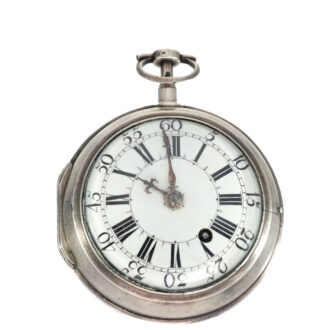
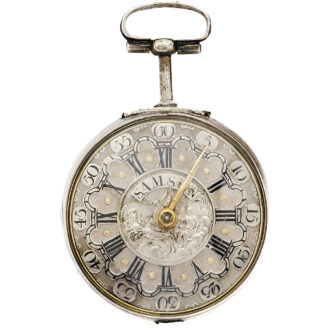
Important English gold repeating chronometer Circa 1782
- Kenmerk
- SA0067
- Diameter
- 75 mm
- Estimate
- € 125.000 - 250.000
- Price sold
- € 275.000
Half quarter dumb repeating chronometer by John Arnold
–
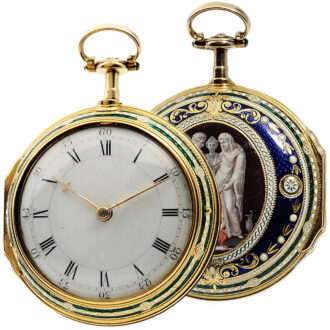
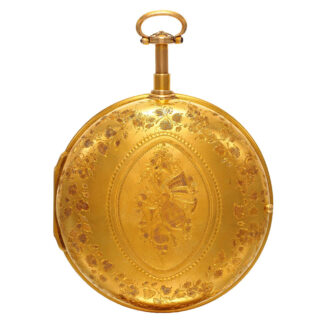
This is an extraordinary and important English gold pocket chronometer from around 1782, of the type John Arnold called “The Best Kind”. It is a half-quarter dumb repeater: on demand it sounds the hours, the quarters and each half-quarter (seven and a half minutes) This is an extraordinary and important English gold pocket chronometer from around 1782, of the type John Arnold called “The Best Kind”. It is a half-quarter dumb repeater: on demand it sounds the hours, the quarters and each half-quarter (seven and a half minutes) by striking a block inside the case, so the time is felt more than heard.
–
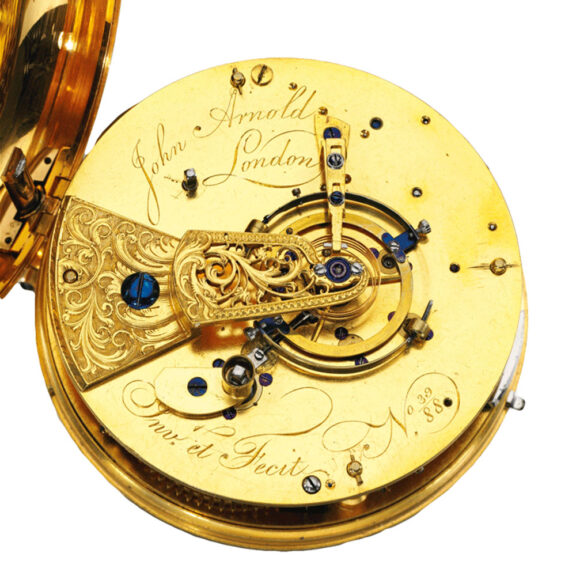
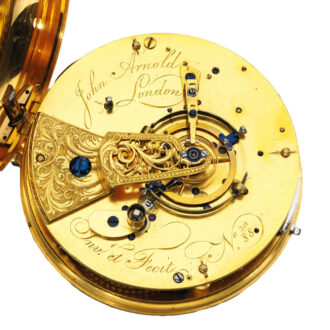
The gilt movement is built between two full plates held by turned pillars. It has Arnold’s short spring detent escapement and his OZ balance, which runs free-sprung with a gold helical balance spring. The balance cock is pierced and engraved.
–
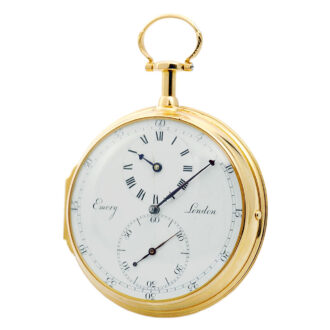
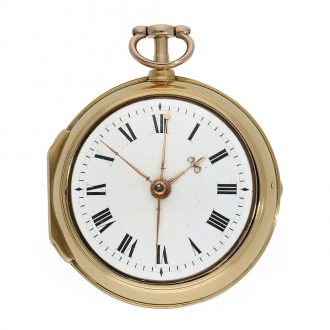
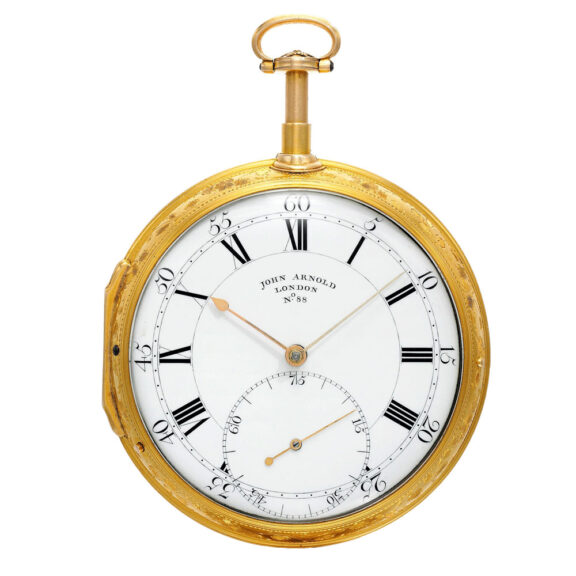
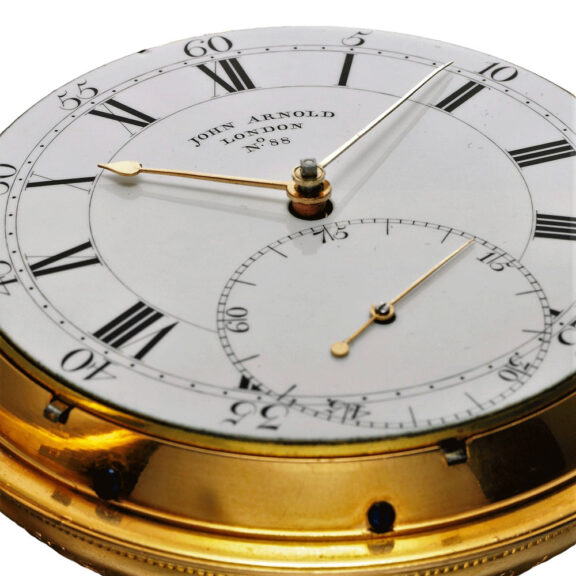
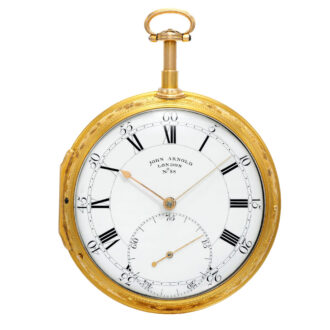
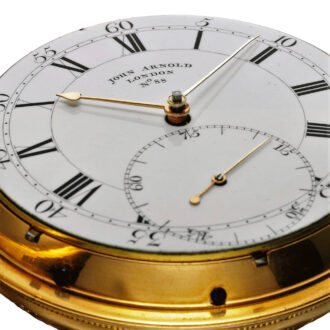
The white enamel dial has Roman numerals, an outer ring of Arabic minute numerals, and a small seconds dial divided into 75.
–
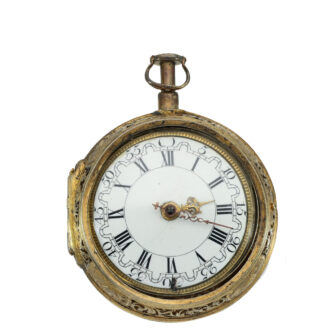
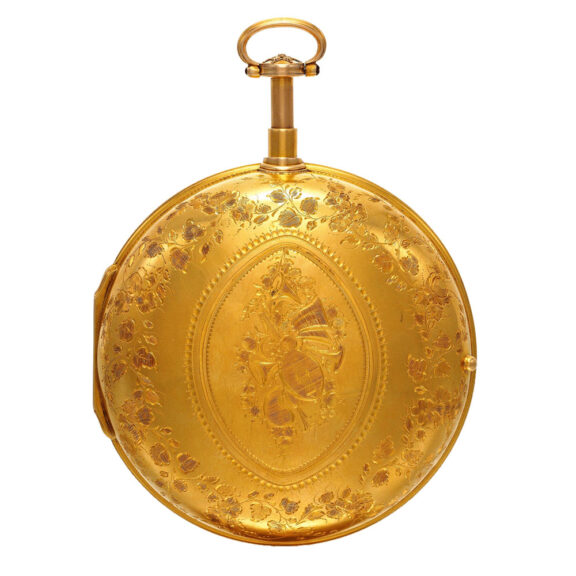
The consular-style case is engraved with flowers and leaves, and the back has musical instruments engraved inside an oval panel. A push piece on the side at 8 o’clock works the repeater. The back opens to show a plain, polished, fixed inner cover with a hole for winding. The case carries the maker’s mark “ITP”. The movement is signed “John Arnold London, Inv. et Fecit” (“invented and made it”) and numbered 39/88.
–
Diameter: 75 mm
–
Signed: John Arnold London Inv. et Fecit No. 39/88
–
John Arnold called number 39/88 “The Best Kind”. He kept this name for his large chronometers, while his smaller watches were called “The Second Kind” and had a completely separate series of numbers.
–
The movement is one of only a handful that still have their original short spring detent, the earliest form of spring detent that Arnold used. Number 39/88 is also the only Arnold chronometer with a short spring detent that still has its original case. Until 1782–83, Arnold also fitted a pivoted detent to a series of his chronometers.
–
The movement has an OZ balance, a type Arnold used from 1782 to 1791, although the watch may originally have had a “double S” balance. The dial has the traditional layout, but the seconds dial is divided into 75 instead of 60. The escapement releases on every second swing of the balance, so the seconds hand moves 75 times a minute and lands exactly on each mark every time. This makes the time easier to read precisely.
Signed: John Arnold London Inv. et Fecit
Share this page: