English verge with repousse scene John Ellicott Circa 1756
- Kenmerk
- SA0333
- Diameter
- 50 mm
- Estimate
- € 10.000 - 20.000
- Price sold
- € 22.000
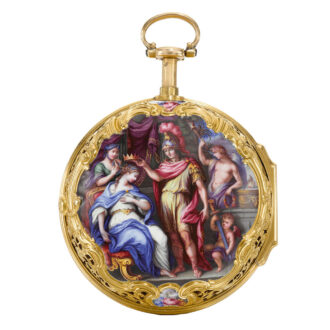
Very fine and rare verge watch with repousse scene
–
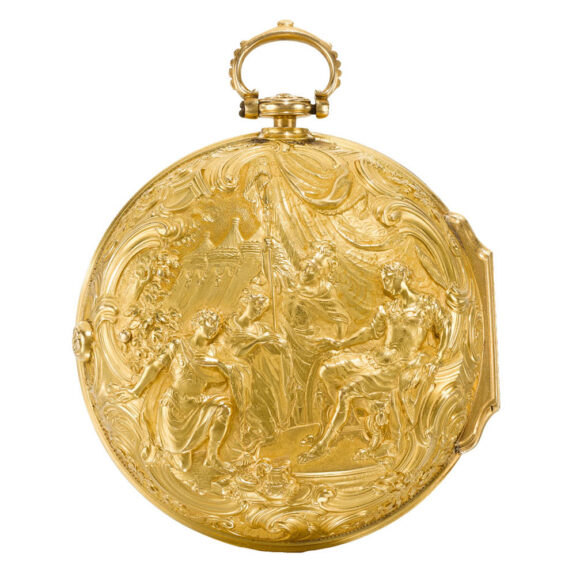
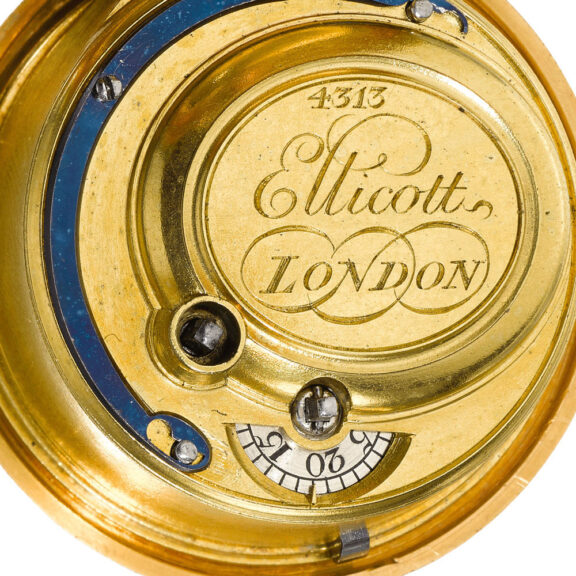
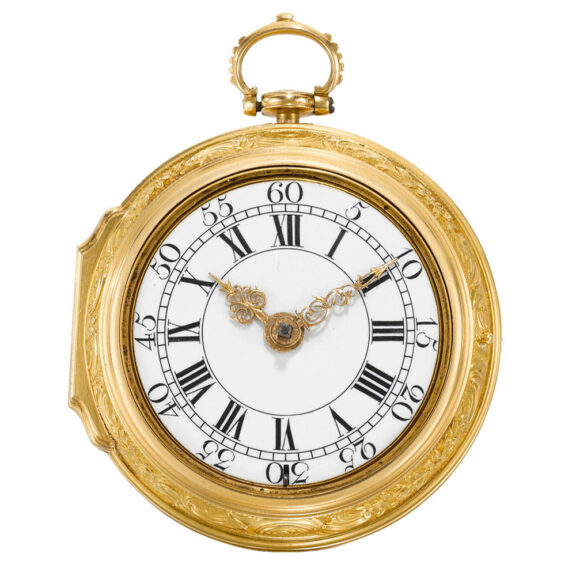
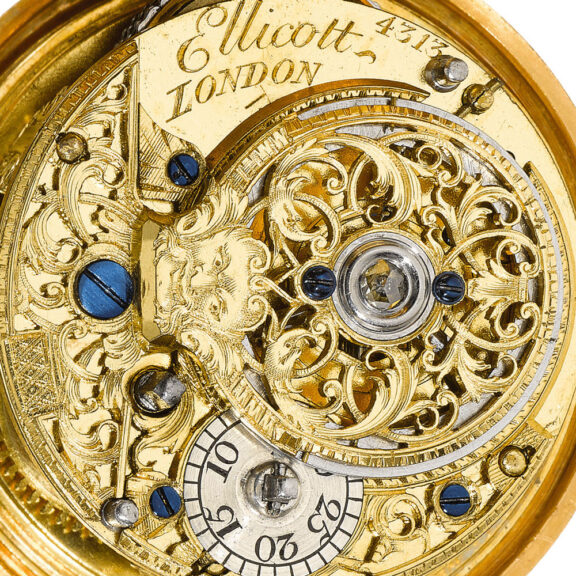
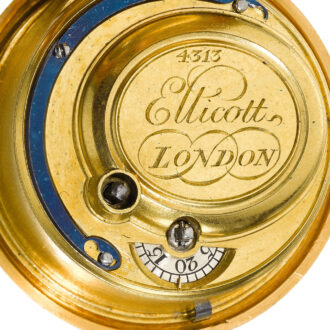
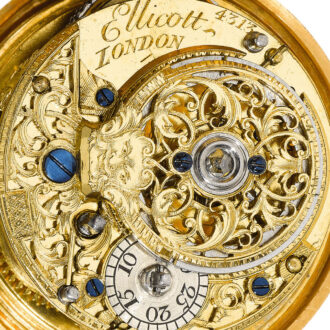
A very fine and rare English pair cased verge watch with repousse scene by Henry Manly, circa 1756, gilded full plate movement, verge escapement, decoratively pierced and engraved masked balance cock inhabited by dolphins’ heads, plain flat balance, diamond endstone, fusee and chain, regulation indicated by an engraved hand pointing to the regulator plate, square pillars flanked by scrollwork, gilt metal dust cap, movement and dust cap signed Ellicott, London.
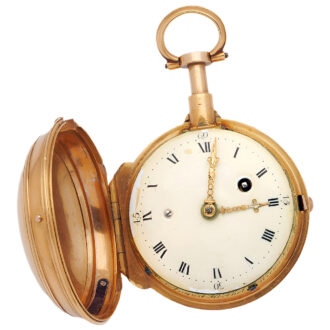
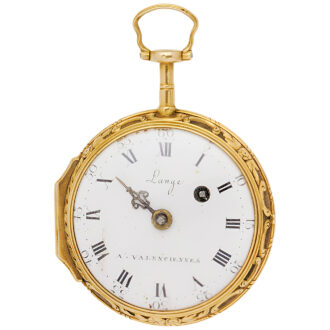
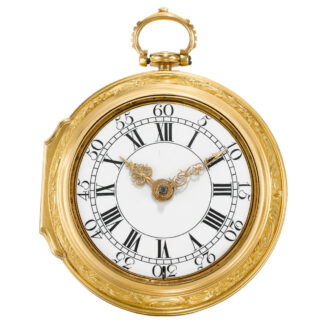
White enamel dial, Roman numerals, outer Arabic minute ring, gold filigree hands.
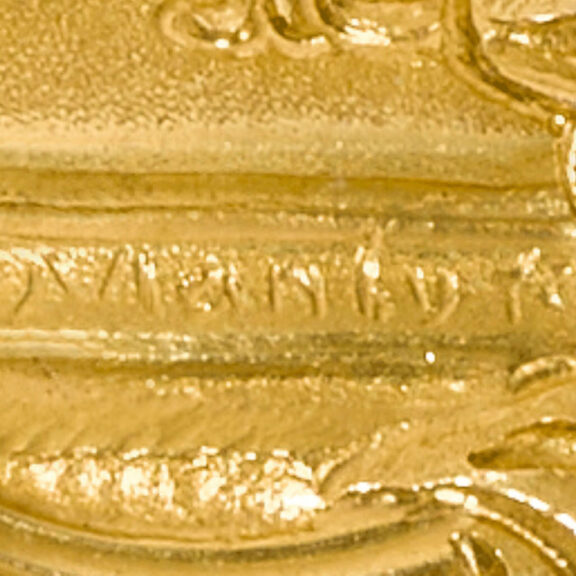
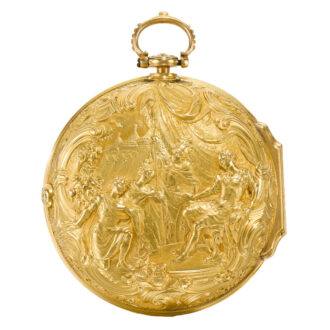
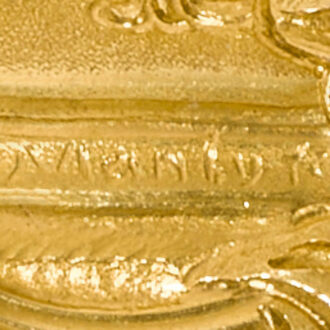
Plain gold inner case, the back with winding aperture, with maker’s mark JB incuse for possibly John Barrow or John Beesley, outer with repoussé scene depicting the Continence of Scipio within an asymmetric cartouche surrounded by shell and scroll work interspersed with flowers against a stippled ground, the bezel similarly decorated, repoussé signed Manly fec.
–
Diameter: 50 mm
–
Signed: Ellicott London
–
The scene of the Continence of Scipio is one that Manly returned to on a few occasions for John Ellicott, and Ellicott numbers 3033, 3822 and 4297 all bear the scene with similar scrollwork decoration. In his book, The Art of the Gold Chaser, Richard Edgcumbe notes that Manly may have been influenced by Pietro da Cortona’s decoration in the Sala di Venere of Florence’s Pitti Palace for the figures of Scipio and the bride. The Continence of Scipio is the story of clemency shown by the Roman General Scipio Africanus Major the Elder (c. 234-183 B.C.) Scipio received a beautiful maiden as a prize of war following his capture of the Spanish city of New Carthage. Upon learning that the maiden was betrothed, Scipio summoned her fiancé and reunited the pair unharmed. [See: James Hall, Dictionary of Subjects and Symbols in Art, 1993, p.275]. In the repoussé scene, Scipio is shown seated with the reunited bride and groom kneeling at his feet.
Henry Manly, active between 1730 and 1760, was a celebrated engraver and chaser. For a discussion of Manly’s work, see Richard Edgcumbe, The Art of the Gold Chaser.
John Ellicott, one of the most famous 18th century English clock and watch makers, was born in 1706 and succeeded his clockmaker father who died in 1733. He worked at 17 Sweetings Alley, Royal Exchange, London from 1728 to his death in 1772. In 1738 he was elected a Fellow of the Royal Society and served as a Councillor for three years. Later he became clockmaker to King George III and made many fine and unusual clocks. He is probably best known for the invention of a compensated pendulum in which the bob is raised or lowered, by means of levers, to counteract the expansion or contraction of the rod. John Ellicott took his son Edward into partnership in 1760 and the clocks and watches made after this time were signed Ellicott with no forename until circa 1769 when the signature was changed to John Ellicott and Son.
Signed: Ellicott London
Share this page: