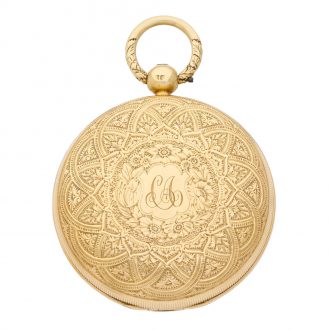
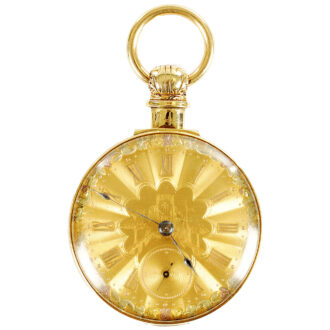
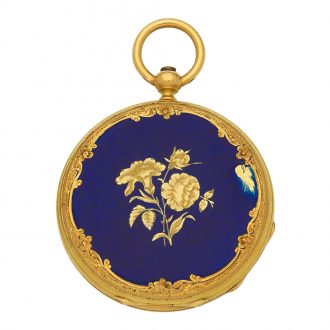
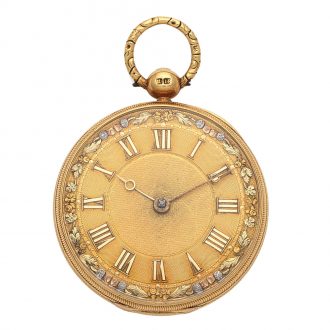
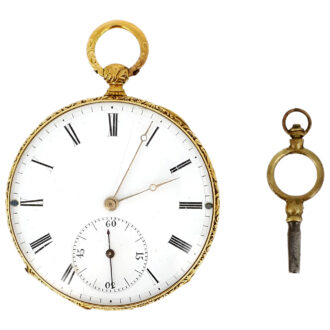
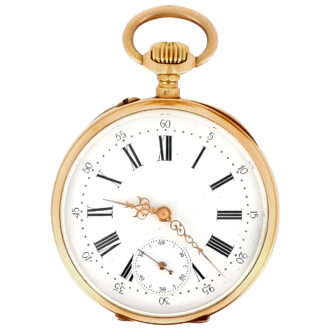
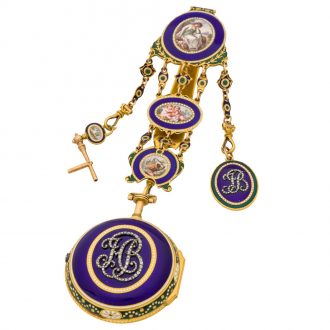
English gold duplex watch for the Chinese market Circa 1830
- Kenmerk
- AS1816
- Diameter
- 58 mm
- Estimate
- € 50.000 - 120.000
- Price sold
- € 258.800
Gold and enamel centre seconds watch by William Ilbery
–
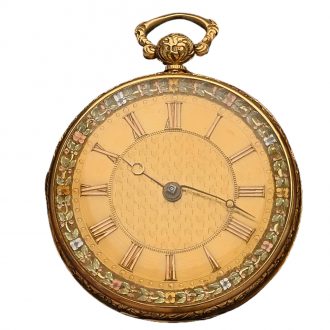
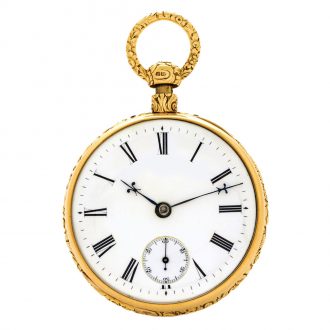
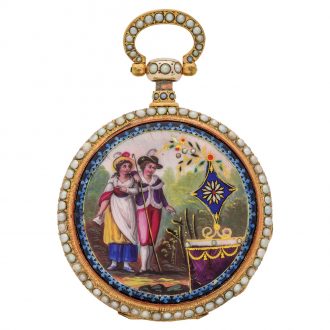
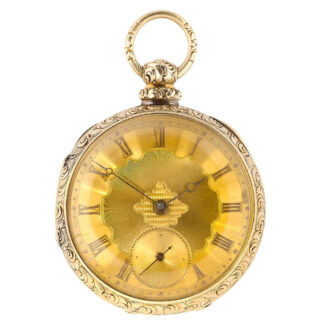
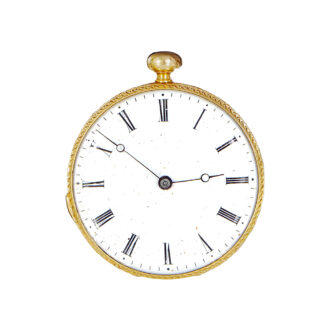
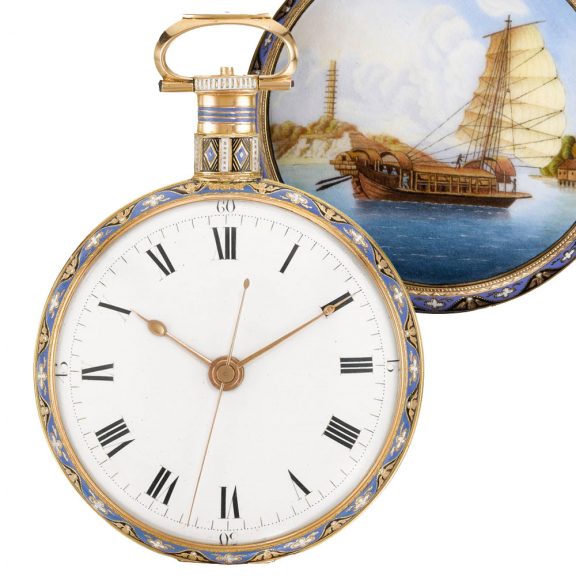
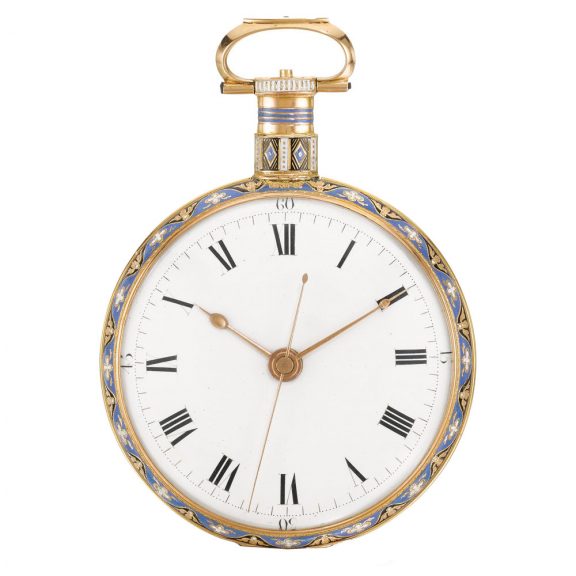
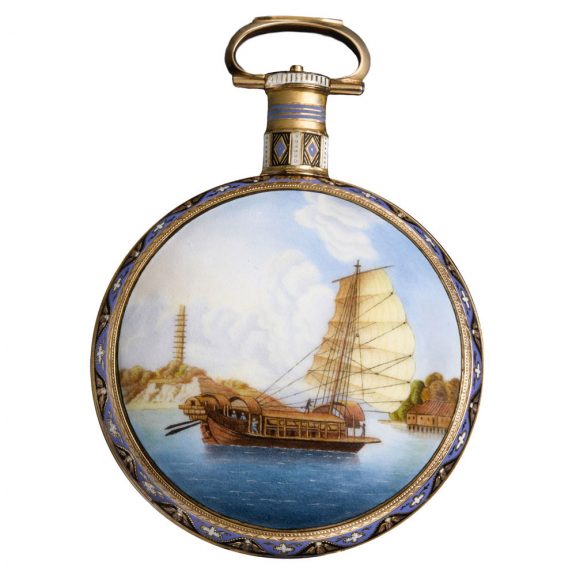
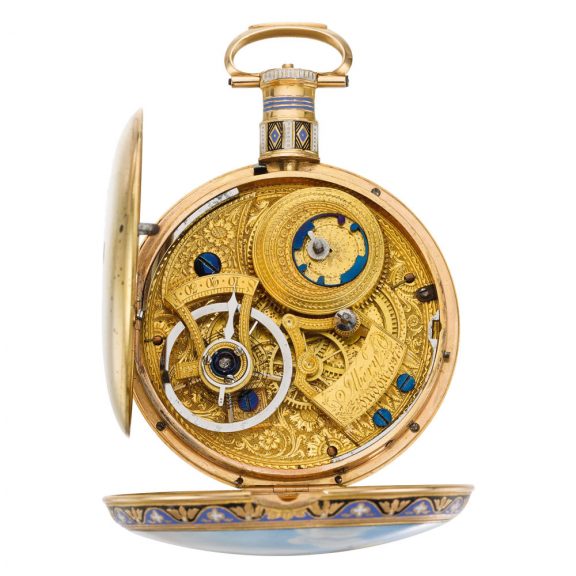
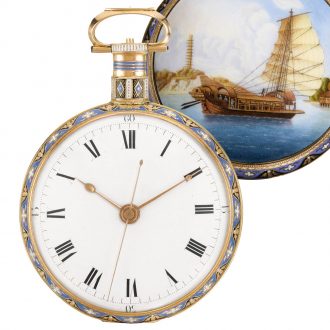
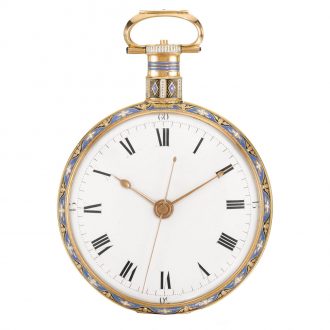
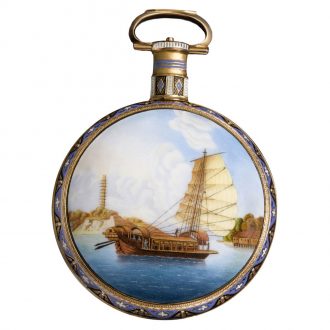
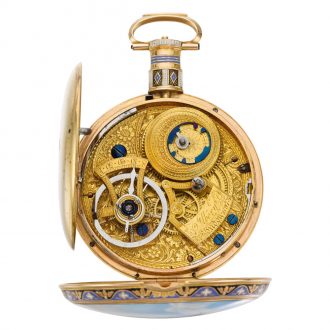
A rare and exquisite English gold and enamel centre seconds duplex watch created for the Chinese market, featuring a polychrome enamel painted scene portraying a Junk sailing by the Whampoa Reach Pagoda, circa 1830. The watch features a gilded Chinese movement with decorative engravings of scrolling flowers and foliage on stippled ground. It also includes a skeletonized balance cock and central bridge, duplex escapement, five-arm polished steel flat balance, diamond endstone, and is signed and numbered by Ilbery, London 6973. The white enamel dial displays Roman numerals, an outer minute ring with Arabic 15-minute divisions, gold hands, and a centre seconds hand.
–
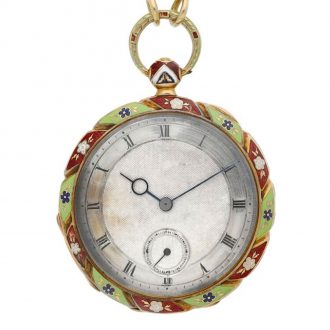
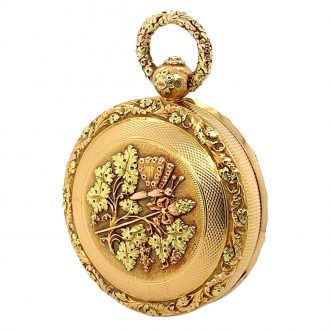
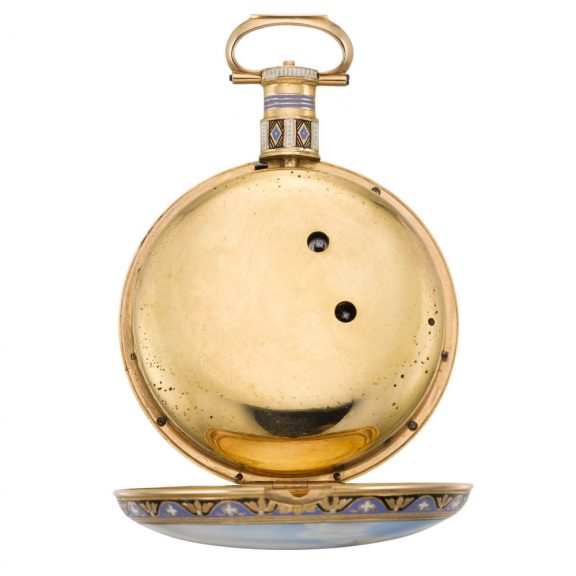
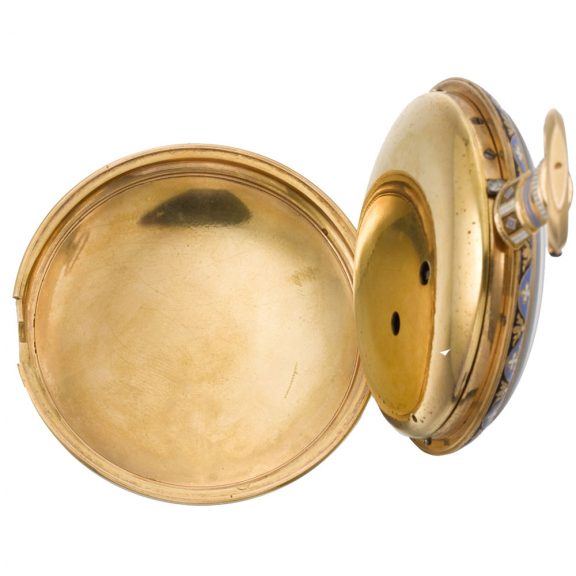
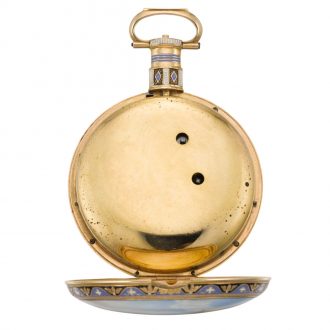
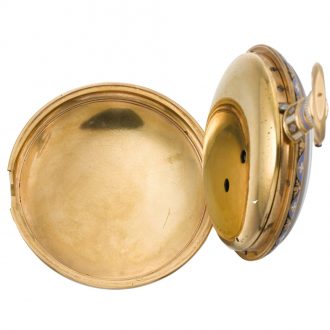
The gold case is adorned with a polychrome enamel painted scene depicting a Chinese Junk ship at Whampoa Reach, with the front and back bezels decorated with opaque light blue and black champlevé enamel. The pendant is similarly decorated, and there is a pusher through the pendant to release the case back. Additionally, it features a plain polished hinged gilt metal cuvette with apertures for winding and hand-setting.
–
Diameter: 58 mm
–
Signed: Ilbery, London
–
Movement appears to be in good condition, but when fully wound, it’s not running, possibly due to old oil. A slight impulse to the balance will briefly engage the escapement, and the centre seconds hand will momentarily advance as expected. The dial has a small scratch between 6 and 7 o’clock, which was only inspected through the glass. The enamel on the case back appears to be in good overall condition, but the bezels have been repaired in soft enamel, and the pendant enamel also has some small repairs. The cuvette has been re-gilded.
–
The scene to the case back depicts a Chinese Junk in front of the island of Whampoa (Huangpu) with the nine-story Pazhou or Whampoa Reach pagoda. Whampoa is situated on the Pearl River, about a dozen miles from Canton. Whampoa was a deep-water port, and it was at Whampoa that Western ships were required to drop anchor, pay their taxes, and arrange for Junk boats to transport their goods to shore. The buildings to the right of the scene are almost certainly trading warehouses.
–
In his book, La Montre Chinoise, Alfred Chapuis ascribes the origins of the Chinese calibre movement to William Ilbery, stating that it was a style that the Bovets would go on to copy. The movement in the present watch is an especially fine example of this genre, with its highly decoratively engraved plates, bridges, and barrel cover. With five spokes and a highly polished, broad, flat rim, the balance provides a dramatic visual display as the watch runs.
–
Chapuis also credits Ilbery with the distinctive style of the Chinese market watch case. Such cases were usually highly decorative, featuring elaborate and often intricately arranged enamel decoration. The most prized watches would feature polychrome enamel-painted panels depicting floral bouquets, classical or pastoral themes, landscapes, or harbour scenes, such as those found on the present watch. While some enamelling was completed in London, the majority, especially the finely painted panels, were executed in Geneva.
–
William Ilbery ran his watch business together with his brother James, the former being based predominantly at Doughty Street in London, the latter developing the firm’s activities in Canton. Together, the brothers led a highly successful export business, producing some of the finest Chinese market watches of the period.
Signed: Ilbery, London
Share this page: