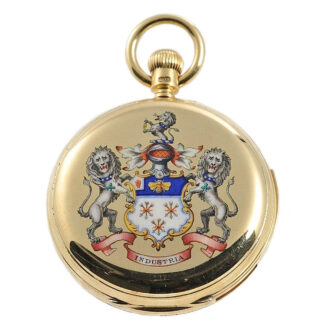
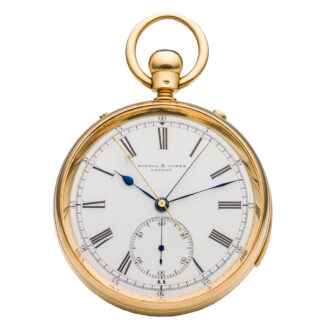
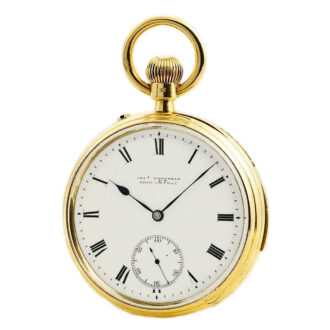
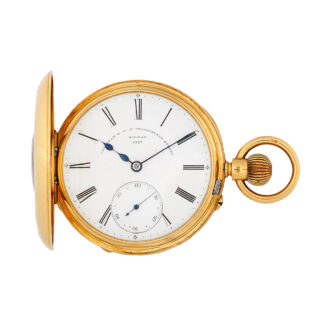
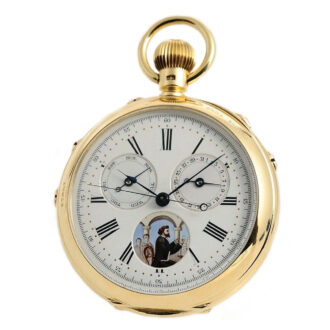
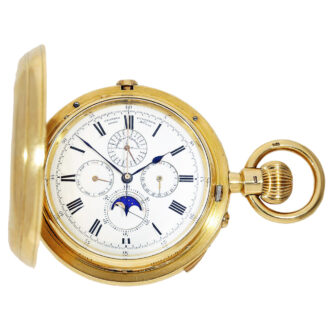
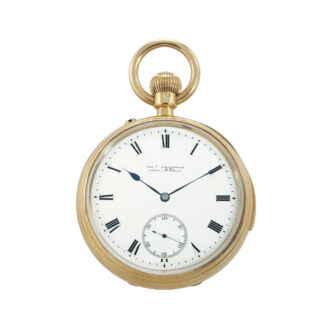
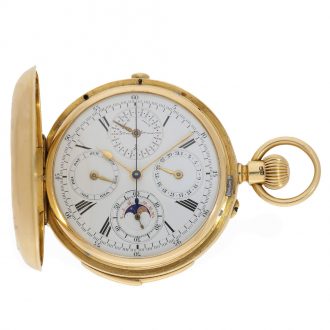
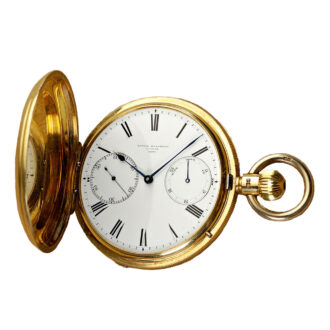
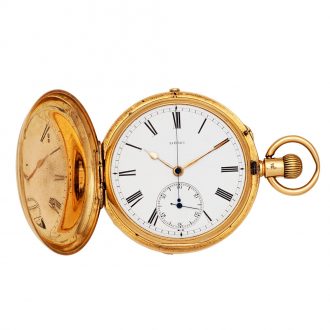
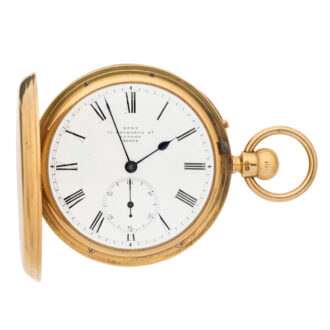
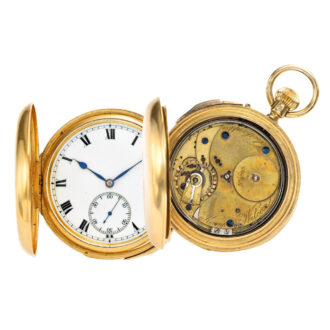
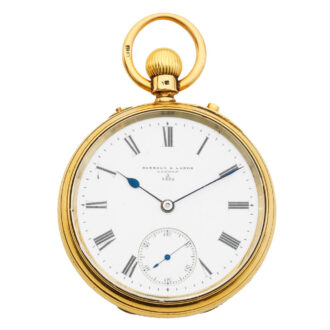
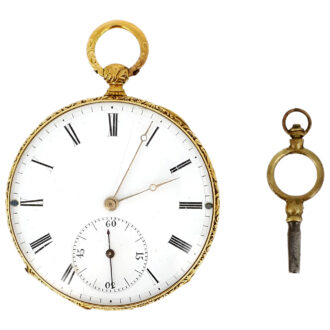
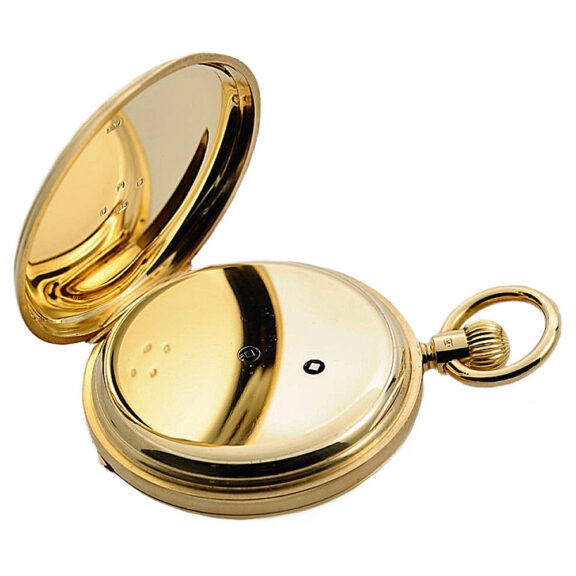
English gold lever with power reserve indicator Circa 1884
- Kenmerk
- AD8700
- Diameter
- 54 mm
- Estimate
- € 8.500 - 14.000
- Price sold
- € 10.450
Gold full hunter lever watch by Victor Kullberg
–
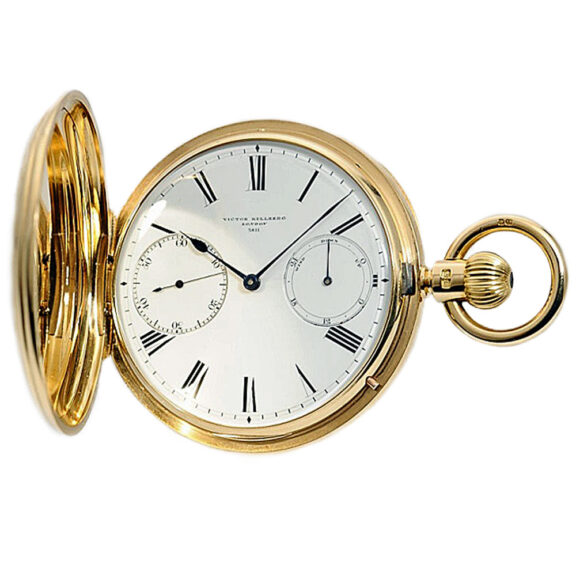
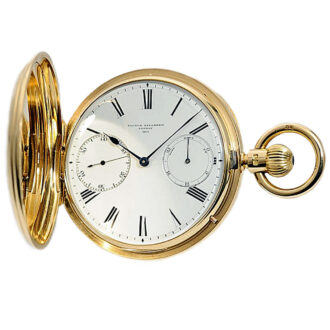
A very fine English deck watch with a 36-hour power reserve indicator, circa 1884.
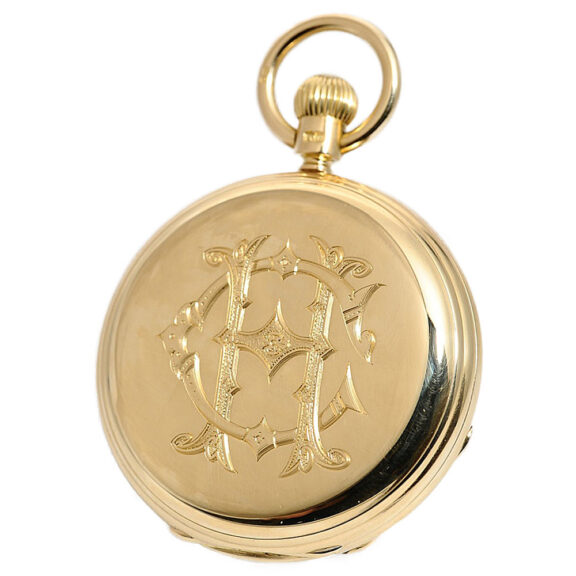
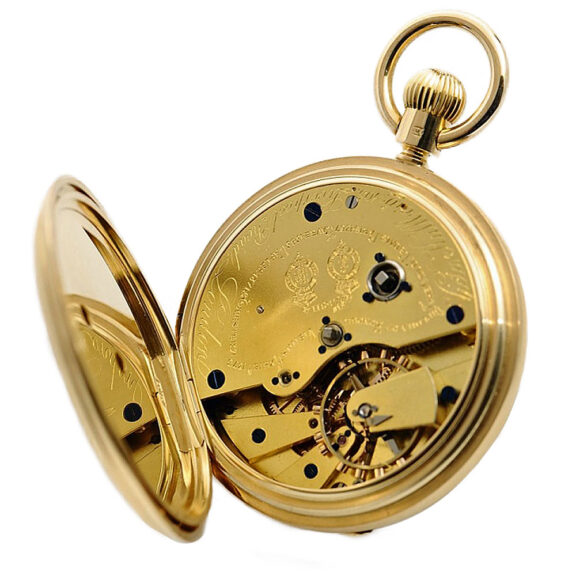
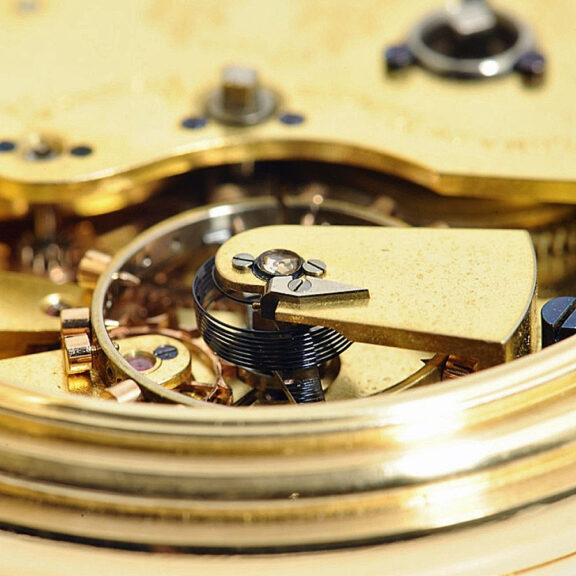
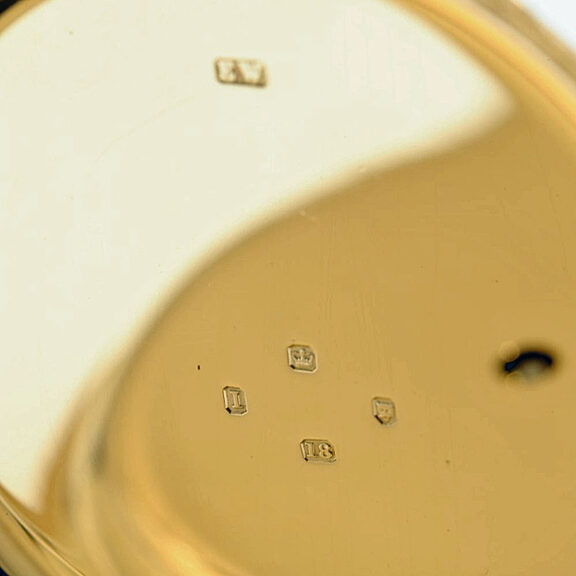
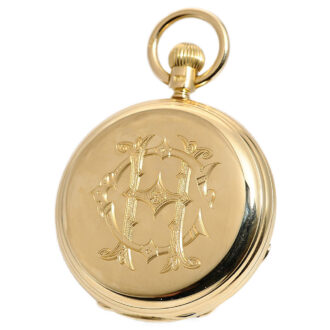
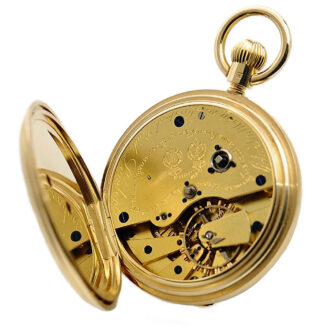
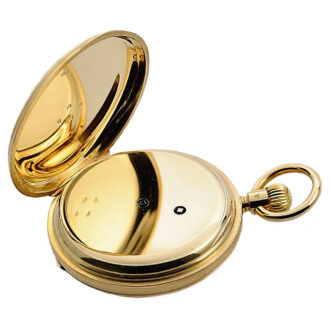
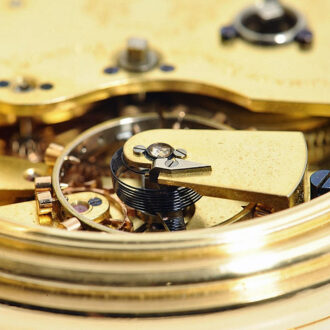
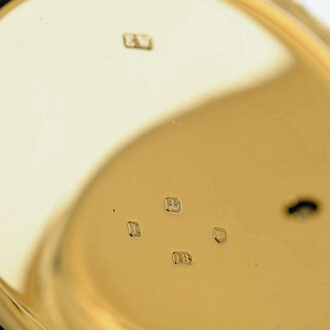
The tiered, polished case, with monogrammed CH, is made of 18 Carat gold and has an 18 Carat gold dome and case maker’s punch mark EW. It has an enamel dial with radial Roman hours, auxiliary seconds at 9, and blued spade hands. And the frosted, gilt 2/3 plate movement is optionally keywind or crown wind, has moulded pillars, two crowned punches for Maker to the Admiralty and medals 1860, 1862 and 1864, chain/fusee, spring detent escapement according to Thomas Earnshaw, gold escape wheel, gold train, gold screw compensation balance, free-sprung blued helical balance spring, diamond endstone on balance, chatoned ruby endstone on the escape wheel, and is signed: Diploma of Honour, Vienna Exhib. n 1873, The Gold Medals, Paris 1867, Havre 1868, Naples 1871 & Trieste 1871.
–
Diameter: 54 mm
–
Weight: 167 g
–
Signed: Victor Kullberg, 105 Liverpool Road, London
–
Victor Kullberg
Victor Kullberg was born Visby on the island of Gothland, Sweden in 1824 and was apprenticed to a chronometer maker in 1840. On the completion of his training, he was employed by Louis Urban Juergensen in Copenhagen but was attracted to Britain at the time of the 1851 Exhibition.
In Britain, he remained a maker of marine and pocket chronometers to which he brought several innovations. From 1860 onwards, thanks to the high quality of his machines and the efficiency of his new forms of auxiliary compensation, he consistently scored ratings in chronometrical competitions throughout the world and was awarded numerous gold and silver medals.
–
With international trade and reputation he was appointed chronometer maker to the Swedish and Norwegian navies in 1874 and, about a machine entered for the Greenwich trials of 1882, the Astronomer Royal reported that it was ‘the finest chronometer they had ever had on trial.
–
Although unmarried, Kullberg had two sons. On their father’s death, 7 July 1890, they jointly inherited the business with his nephew Peter John Wennerstrom. After the death of the nephews, Wennerstrom and his son bought out the other interests in the business. Subsequently, it was continued by Sanfrid Lindquist and survived until the 2nd World War during which its premises were destroyed.
–
The gold case was produced by case maker Edgar Wilkins, who registered his mark on October 8, 1883, and had his business at 3 Upper Charles Street, Northampton Square in Clerkenwell; he later moved to 17 President Street, King Square, Clerkenwell, where he was recorded as a case maker from 1897 until 1899.
Signed: Victor Kullberg
Share this page: