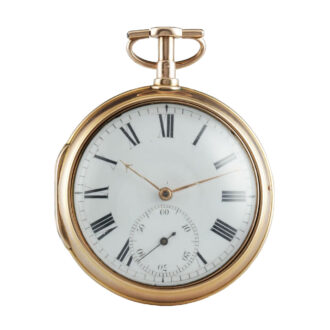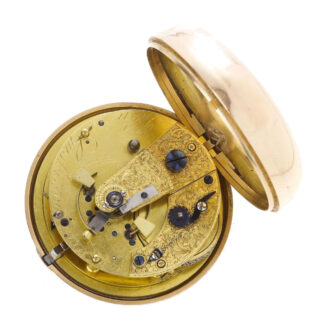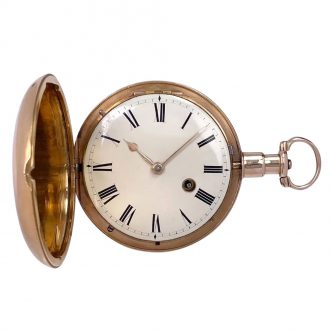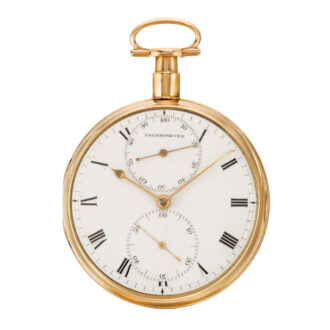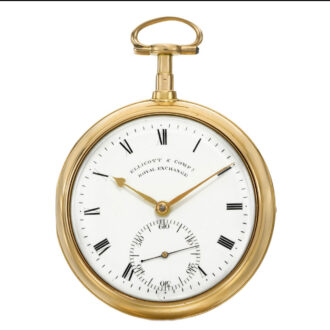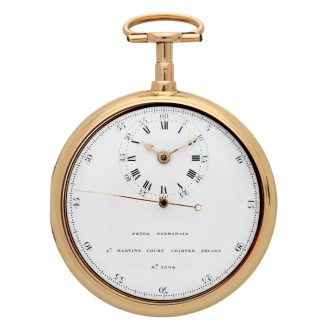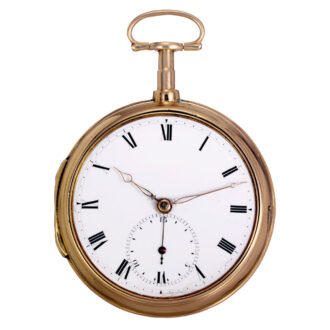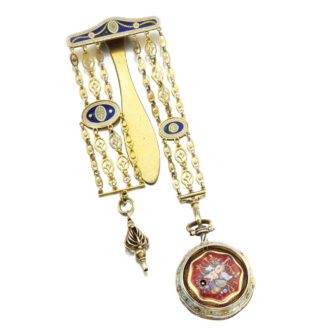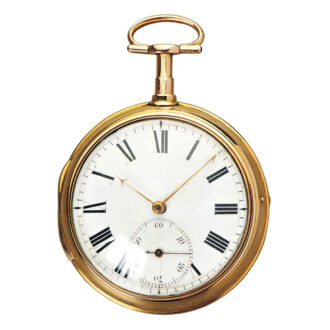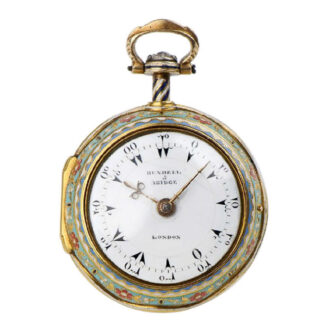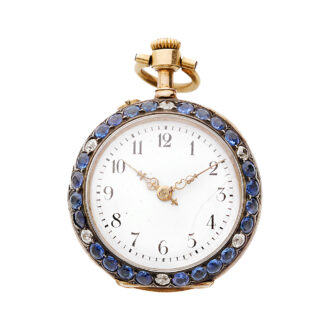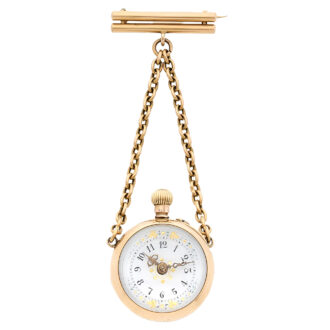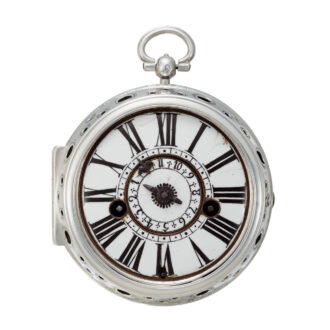
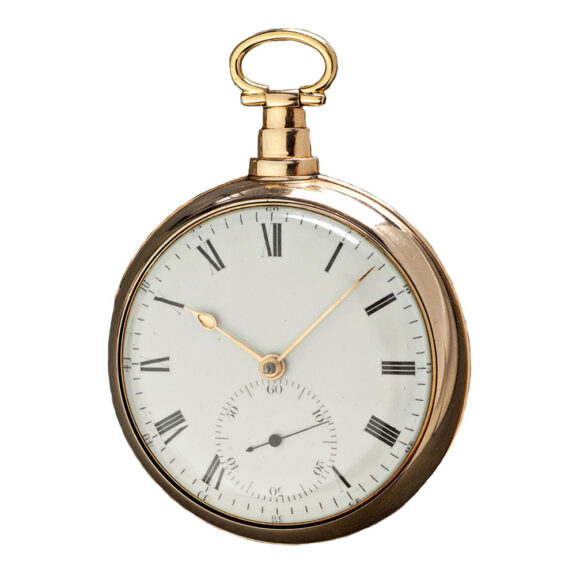
English 18K gold open faced chronometer watch Circa 1803
- Kenmerk
- TD0309
- Diameter
- 58 mm
- Estimate
- € 7.500 - 15.000
- Price sold
- -
Gold pair cased pocket chronometer
–
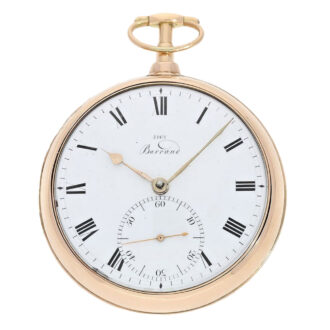
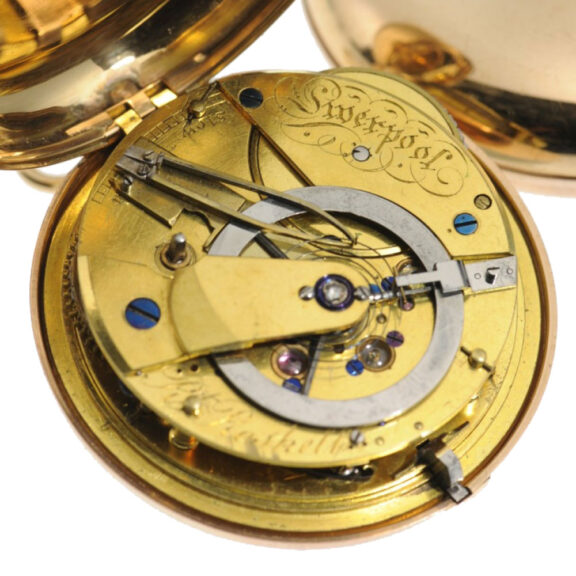
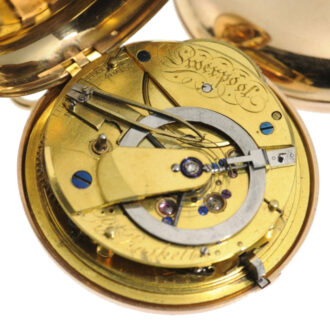
A very fine English 18 carat rose gold pair cased pocket chronometer made by
Robert Roskell in Liverpool, circa 1803. The full plate movement with chain and fusee,
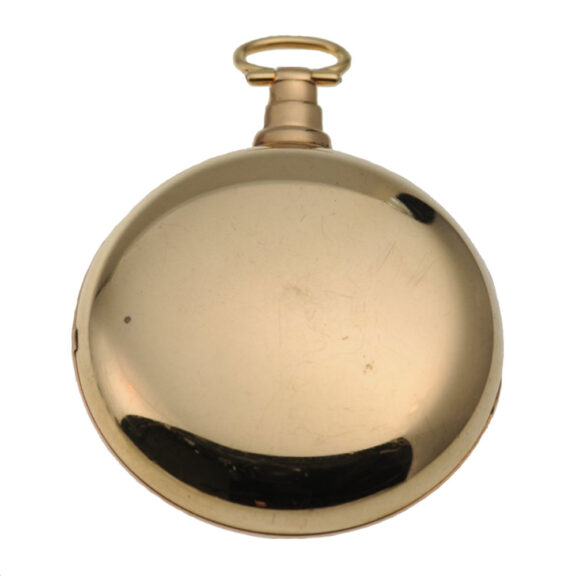
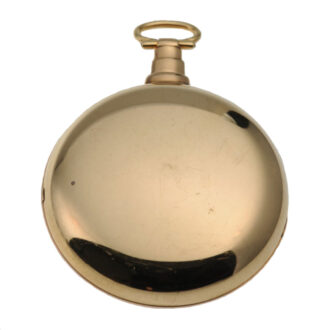
a polished steel escape wheel, steel three arm balance, spring detent escapement and sugar tongs temperature compensation. White enamel dial with Roman hour numerals, outer minute divisions, subsidiary seconds at 6 o’clock and spade hands. The plain case with maker’s punch mark HL. Movement signed.
–
Diameter: 58 mm
–
Weight: 162 g
–
Signed: Robert Roskell Liverpool
–
In 1803, brothers Robert & John Roskell took over the business of Robert Roskell’s father-in-law in Liverpool.
–
It is known that Thomas Earnshaw delivered movements to Roskell. The movement of this watch, with its characteristic sugar tong compensation curb and spring detent chronometer escapement, was also made in his workshop.
–
Thomas Earnshaw (1749-1829). Earnshaw began his training in watchmaking in 1763 and, from 1780 on, produced watches for Brockbanks. Around 1781 he invented the spring detent escapement in his workshop, which would be used essentially universally for more than 150 years. In 1794/1795 Earnshaw took over William Hughes’ company in High Holborn. For his enhancements of the escapement, Earnshaw is generally considered a pioneer in chronometer making. His company produced about 3000 pocket watches, and about 1500 marine and pocket chronometers of the highest quality.
Signed: Thomas Earnshaw & Robert Roskell London/ Liverpool
Share this page: