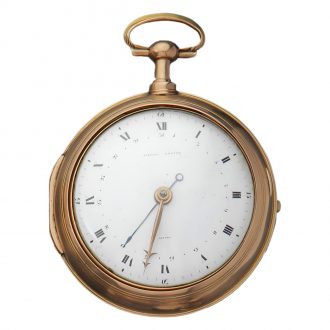
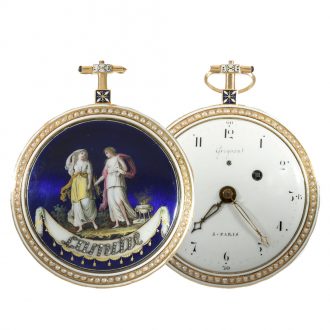
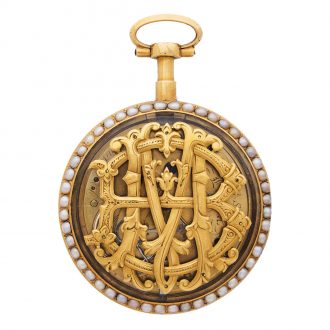
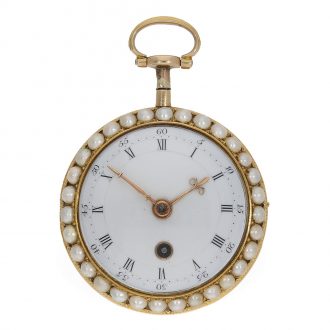
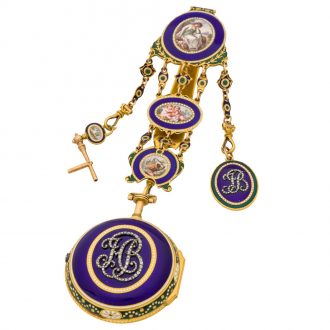
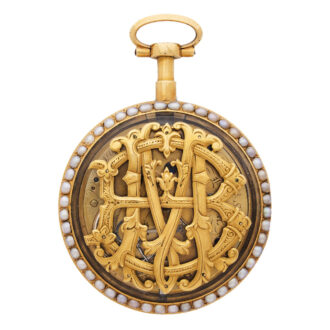
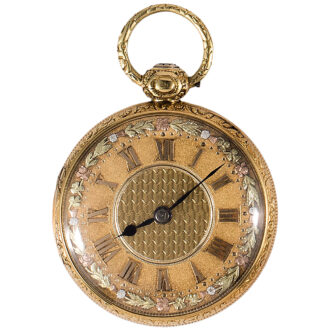
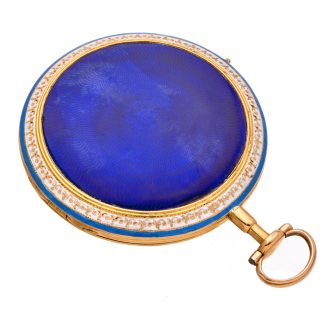
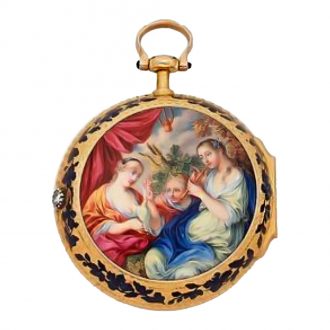
English astronomical pocket watch with centre seconds Circa 1790
- Kenmerk
- HC0498
- Diameter
- 59 mm
- Estimate
- € 2.750 - 6.000
- Price sold
- € 2.900
Gold pocket watch for the Chinese market
–
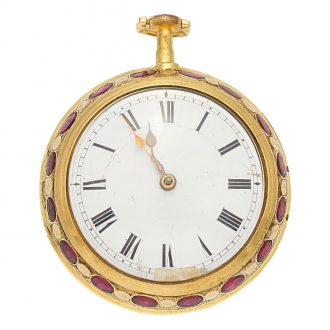
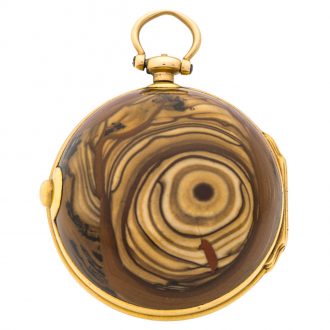
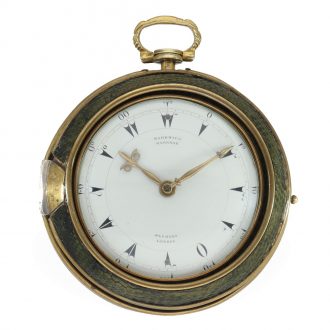
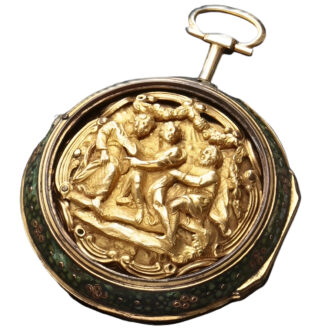
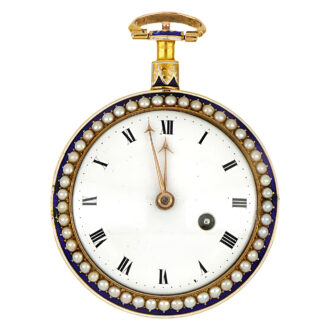
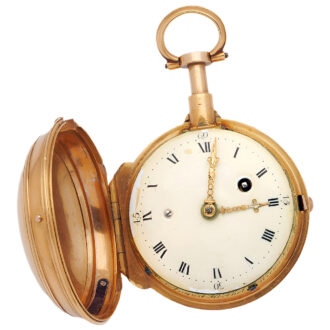
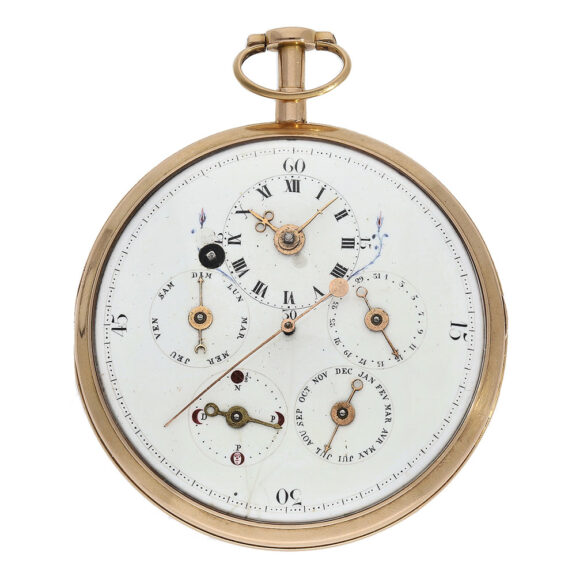
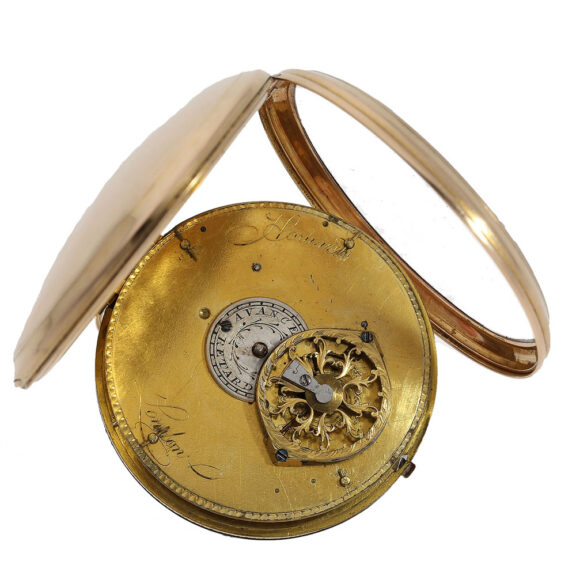
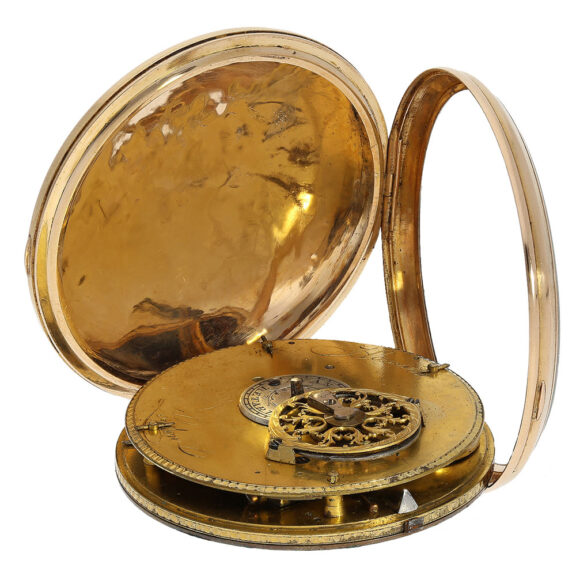
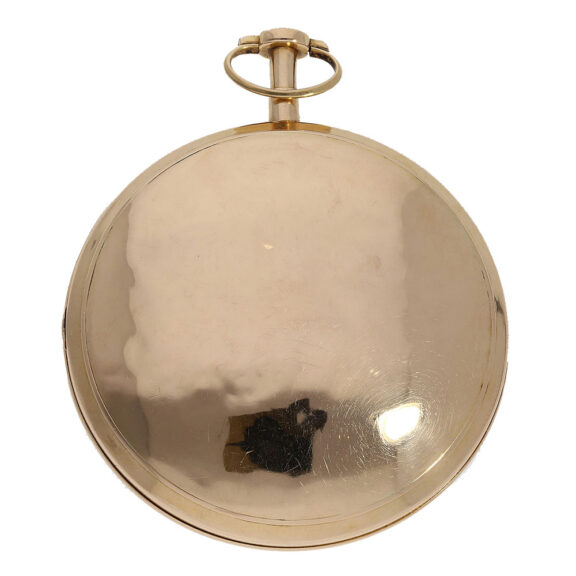
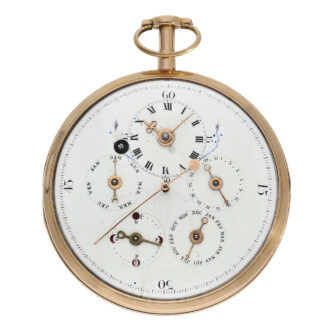
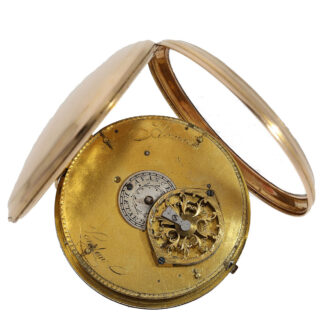
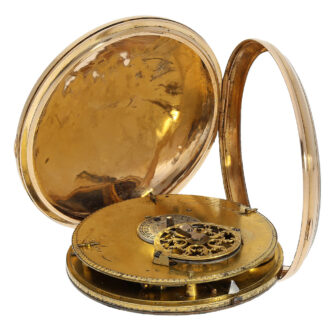
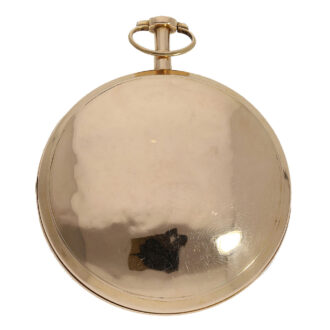
A very rare, large astronomical 18 Carat gold pocket watch with center seconds, made for the Chinese market by Edward Howard in London, England, circa 1780 – 1800. The pocket watch, of considerable size, boasts an open faced 18 Carat red gold plain case, which serves as a fitting frame for the intricate inner workings. The dial, adorned with a lustrous white enamel finish, a decentralized time display, center seconds, full calendar and moon phase, has an impressive array of complications that elevate this timepiece to the realm of astronomical marvels. The hands, fashioned from the same red gold as the case, harmoniously complement the dial’s elegance.
At the heart of this extraordinary creation lies a full plate movement, designed and executed with precision. The movement features a venerable verge escapement, a mechanism that was widely employed during the era due to its reliability and accuracy. This escapement, known for its simplicity and robustness, ensures the consistent and measured progression of time within this remarkable pocket watch.
As testament to the skill and artistry of its creator, this timepiece bears the signature of Edward Howard himself. A mark of distinction and authenticity, this signature further enhances the allure and desirability of an already exceptional horological masterpiece.
–
Diameter: 59 mm
–
Weight: 95 g
–
Signed: Howard, London
–
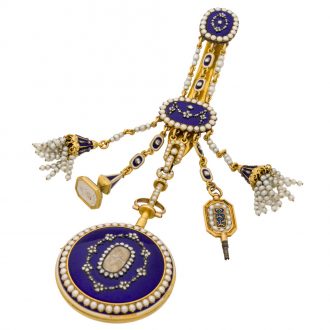
The watch comes with the original gold key in the shape of a basket filled with fruit. These early, complicated astronomical pocket watches from before 1800 are very rare, especially those with a gold case and the version with a sweep second.
–
Edward Howard was a watchmaker in London circa 1780 to 1804. He was a well-known and respected watchmaker, and his most notable accomplishment was the invention of the lever escapement. This invention greatly improved the accuracy of watches and made them more reliable. Howard also worked on developing chronometers, which were used for navigation at sea. In addition to his technical accomplishments, Howard was also known for his exquisite craftsmanship, attention to detail in the design of his watches and his contributions to the development of the marine chronometer. He was part of a team of watchmakers that included his brother, John Roger Arnold, and Abraham-Louis Breguet. Together, they worked on various watchmaking projects and inventions, including the marine chronometer.
As for his watchmaking style, it is believed that he was influenced by the work of other prominent watchmakers of his time, such as George Graham and Thomas Mudge. Howard worked for both Graham and Mudge before establishing his own shop in 1775. He is credited with inventing the lever escapement, which greatly improved the accuracy of watches. Howard’s watches were highly sought after and are considered some of the finest examples of English watchmaking.
Signed: Howard, London
Share this page: