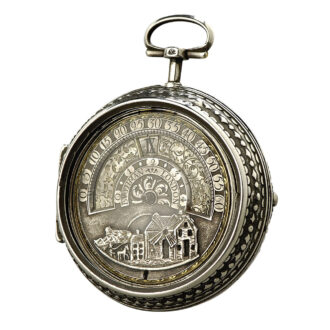
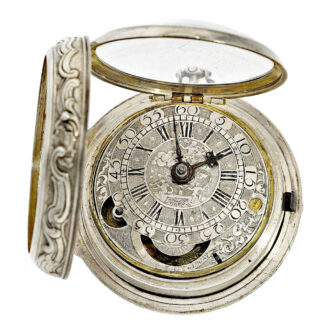
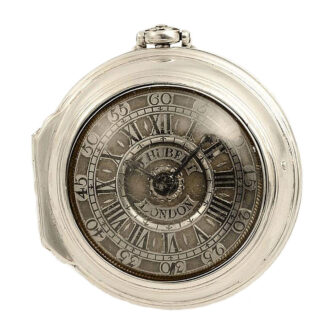
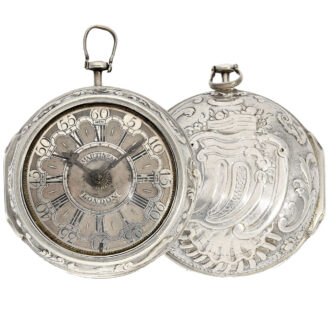
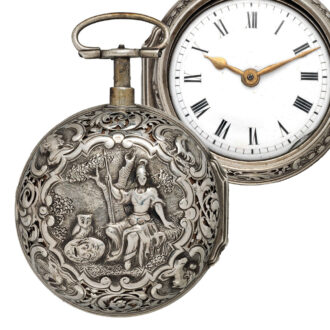
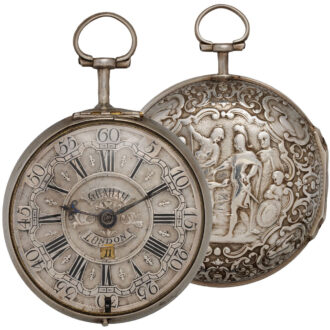
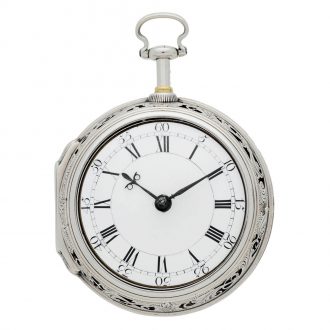
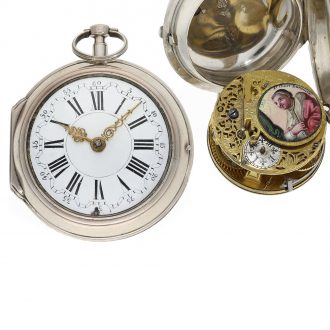
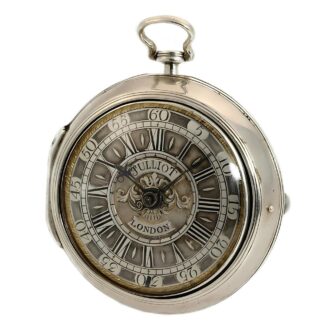
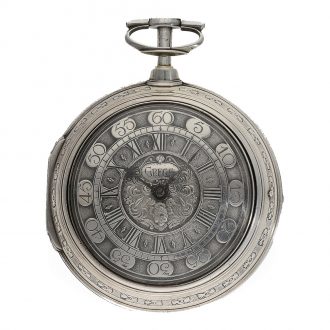
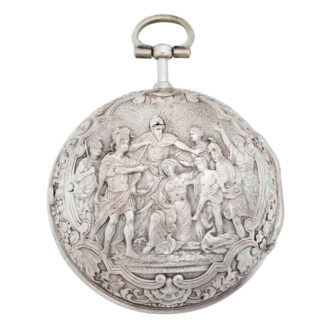
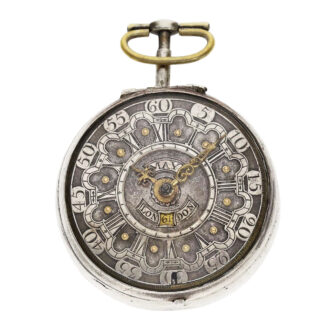
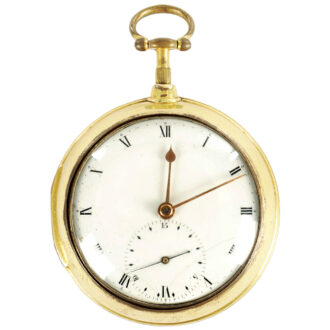
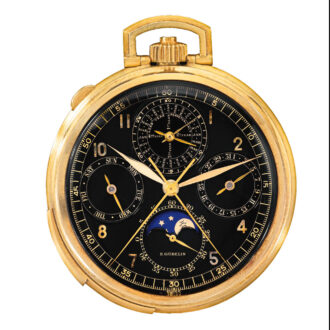
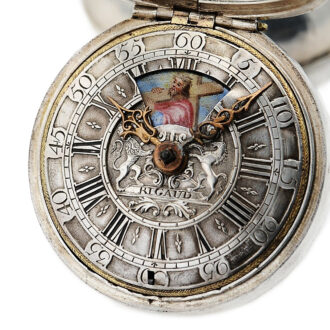
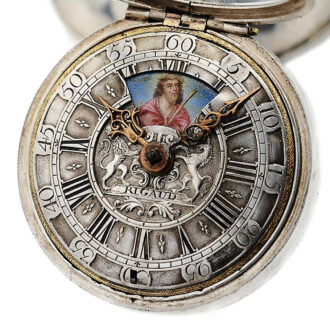
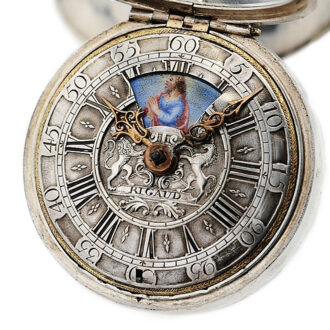
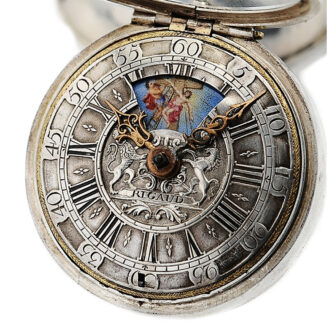
English pair-cased watch with simple rotating automaton Circa 1720
- Kenmerk
- AD9495
- Diameter
- 59 mm
- Estimate
- € 4.500 - 9.000
- Price sold
- € 5.600
Silver verge pocket watch with automaton by Gedeon Rigaud
–
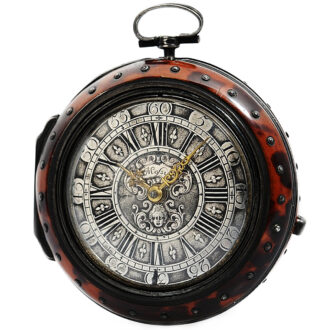
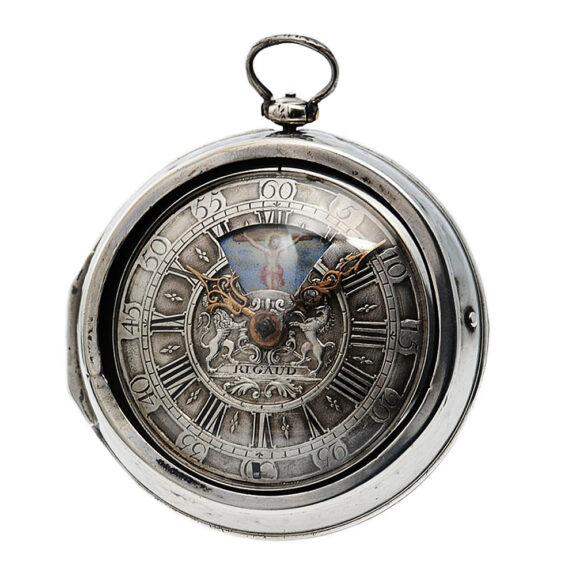
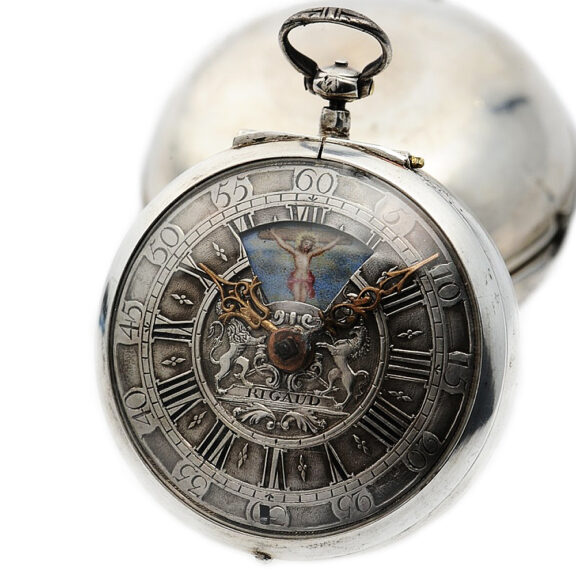
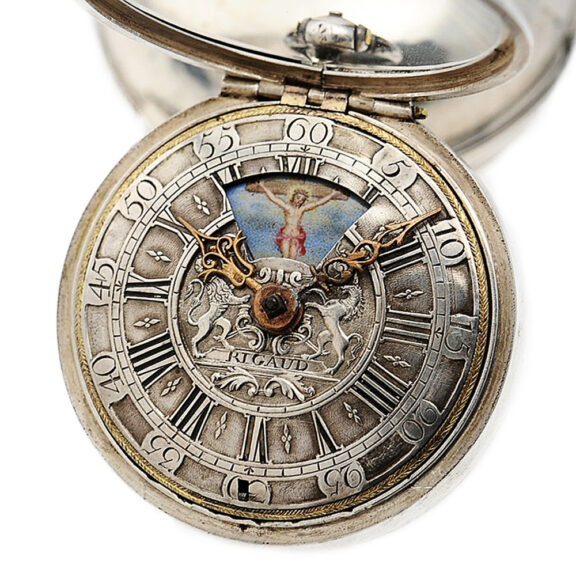
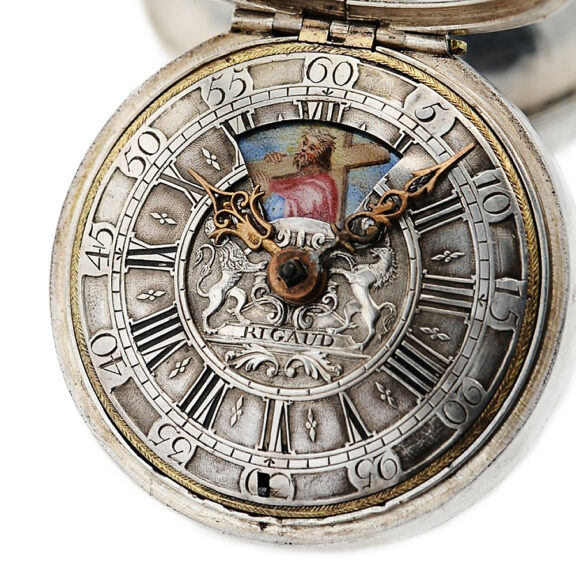
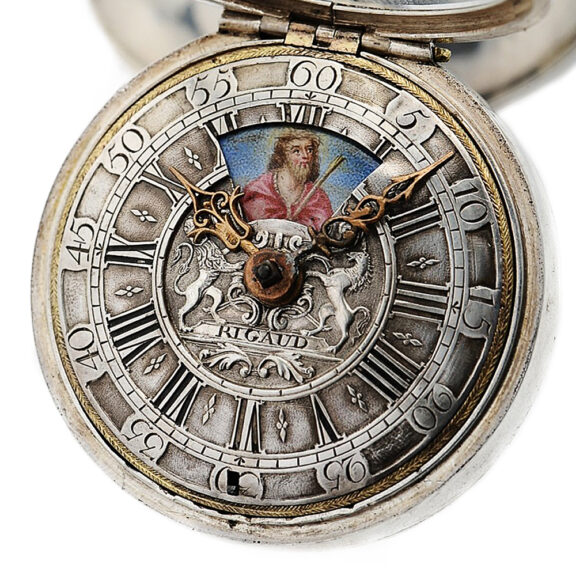
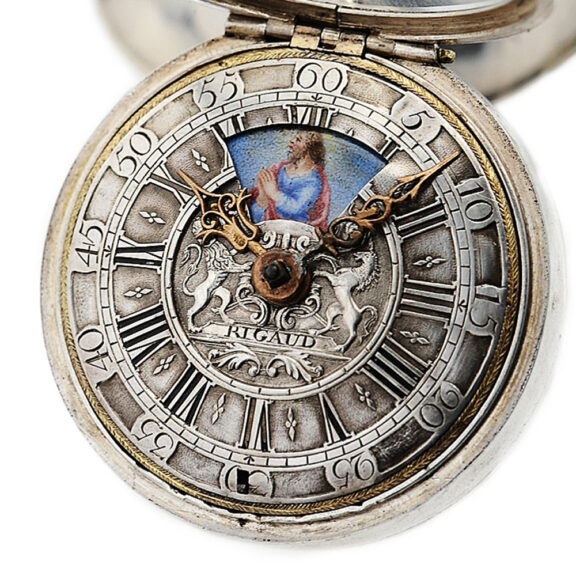
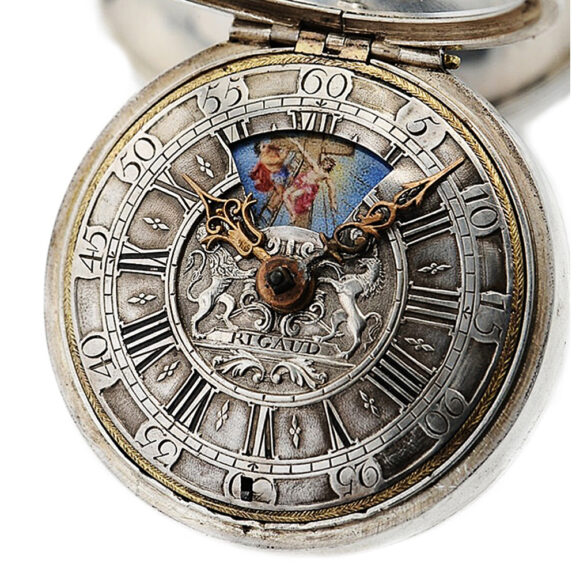
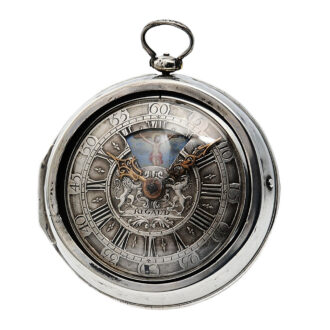
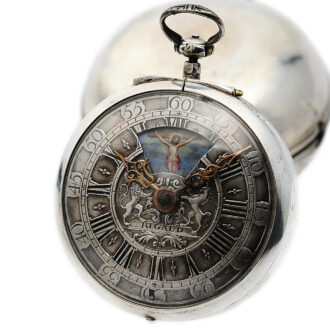
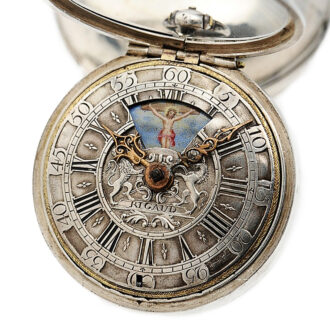
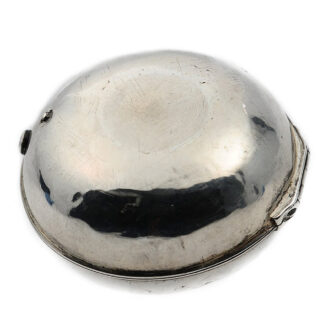
A rare, English pair-cased verge pocket watch with simple rotating automaton The Suffering of Christ, circa 1720.
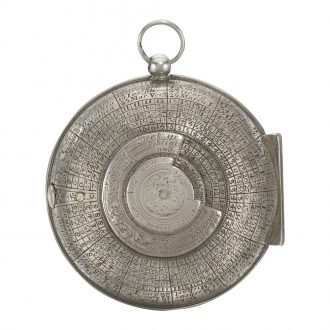
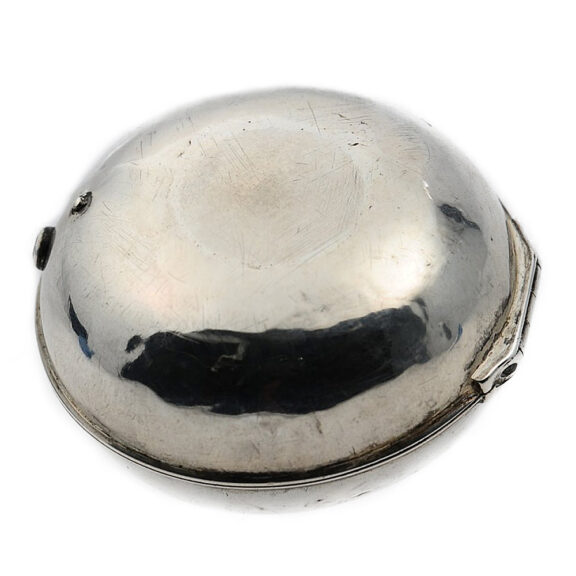
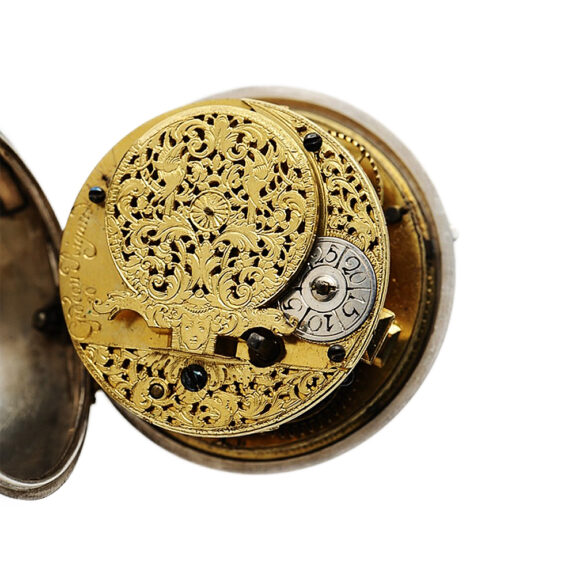
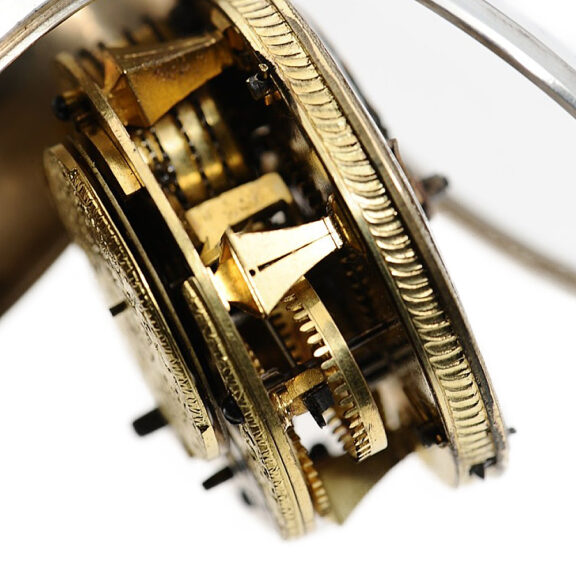
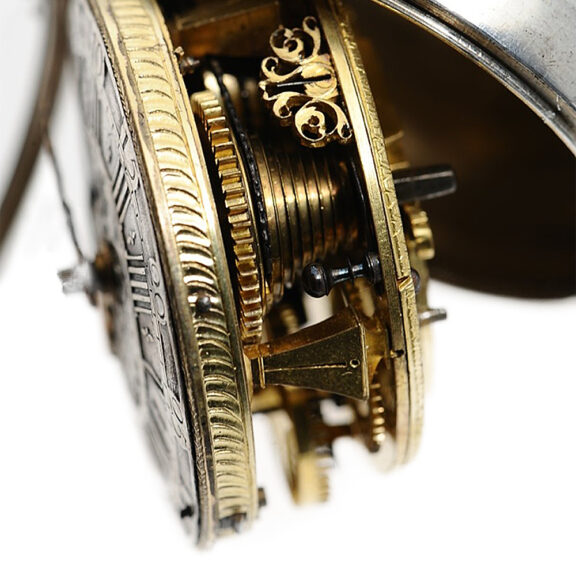
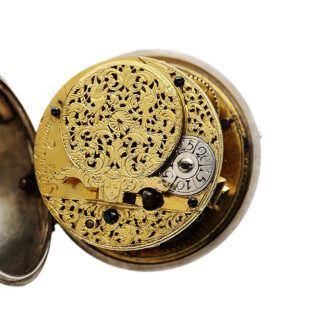
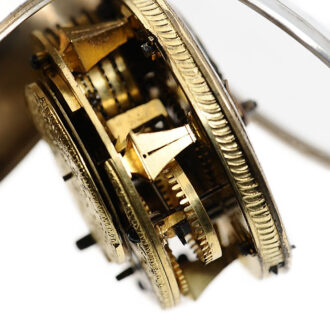
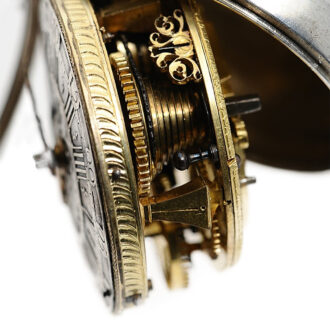
Two cases: an outer case – silver, polished, and with large lateral hinge: and an inner case – silver, polished, with case maker’s punch mark TR, and crown. Signed, silver, champlevé dial with inlaid radial Roman numerals, fan-shaped aperture showing the alternating automaton scenes activated by pressing the pendant: five polychrome enamel scenes relating to the suffering of Christ. Below in the centre a lion and a unicorn in high relief, and with Louis XV hands. Fine full plate movement, keywind, applied engraved and pierced ornaments, fire gilt, signed, chain/fusee, Egyptian movement pillars, three-arm brass balance, fine florally engraved, and pierced balance cock with exotic birds and mascaron.
–
Diameter: 59 mm
–
Weight: 146 g
–
Signed: Gedeon Rigaud
–
Gedeon Rigaud, English watchmaker
Gedeon Rigaud worked as a clockmaker in London from around 1700 to 1740. He probably came from Geneva or Paris as a Huguenot. He also signed his watches with Gede Rigaud. Several spindle pocket watches with rotating automate are known from him. There was also a clockmaker, Gedeon Rigaud (1686-1732) in Geneva. The pictured watch no. 680 by Gedeon Rigaud was once in the collection of Wilhelm Triebold.
Triebold was also a passionate watch collector – one of the greatest of his time. He also had good contacts with Carl Marfels (see UMV entry), the most famous watch collector at the beginning of the 20th century. Unfortunately, Triebold’s collection was almost destroyed in World War II. Jürgen Abelerwrites in Klassik Uhren 4/2006: A large part of his Renaissance clocks was housed in a heavy iron safe. In a major attack on Hanover, the Triebold House burned down completely. When the safe was opened later, the entire wooden inlays and floors were charred, and a tar substance had deposited on all clock parts made of brass and steel. This burned-in coating could no longer be removed with normal means. We, therefore, carried out experiments with rare acids, formic acid and bromic acid in our workshop. And eventually found a way to put the clocks back in order.
Signed: Gedeon Rigaud
Share this page: