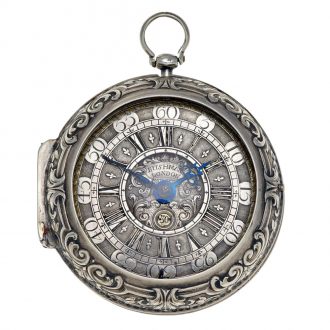
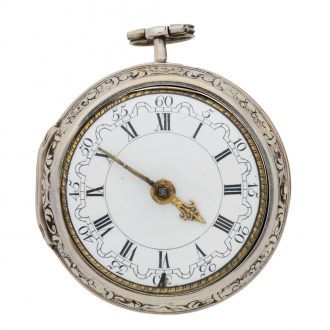
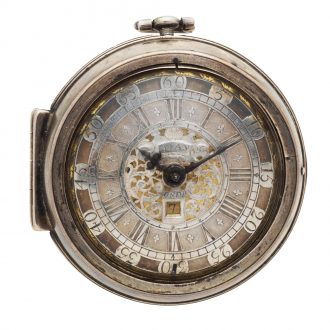
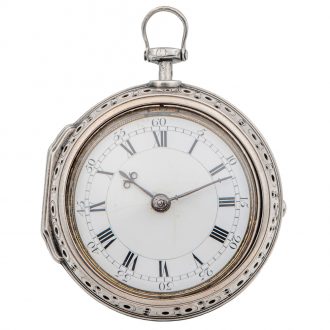
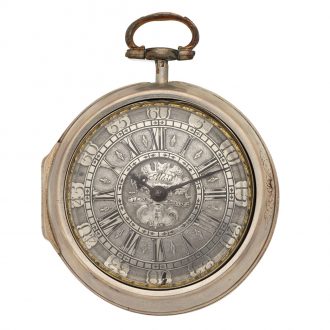
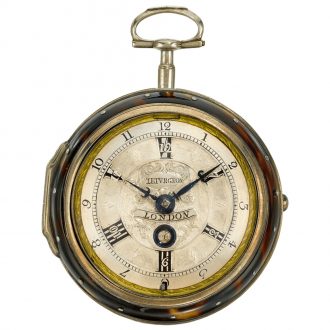
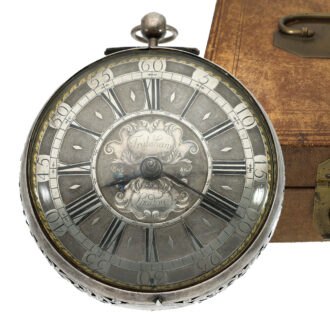
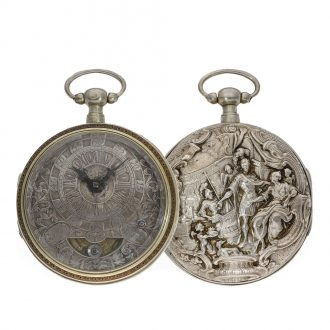
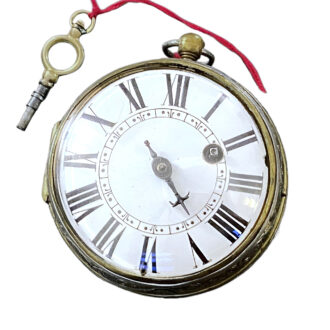
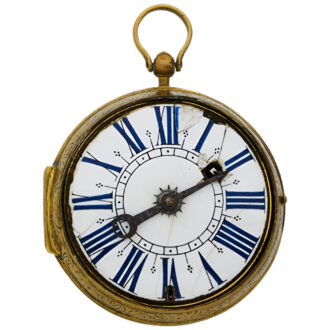
English pocket watch with rock crystal cock Circa 1700
- Kenmerk
- HC0881
- Diameter
- 58 mm
- Estimate
- € 2.250 - 4.500
- Price sold
- -
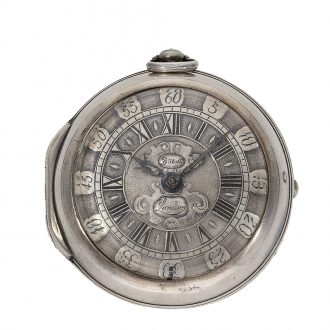
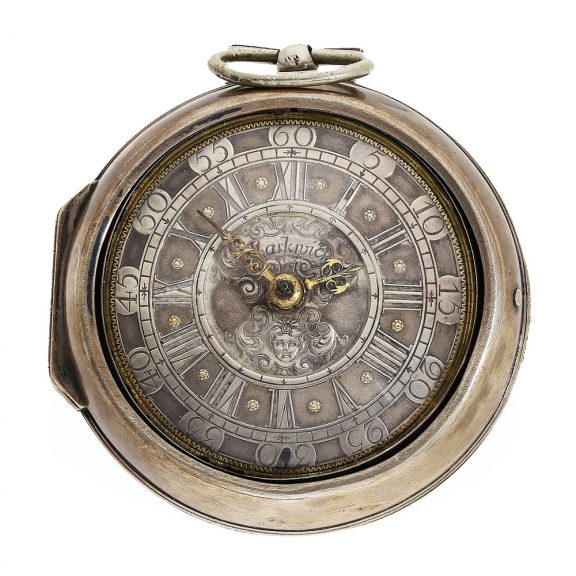
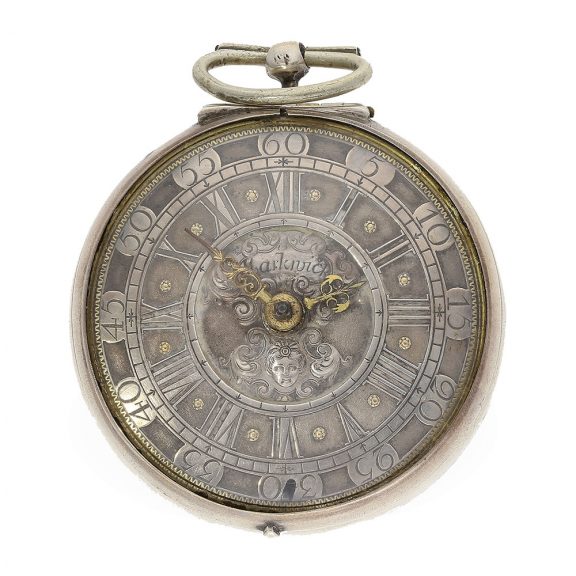
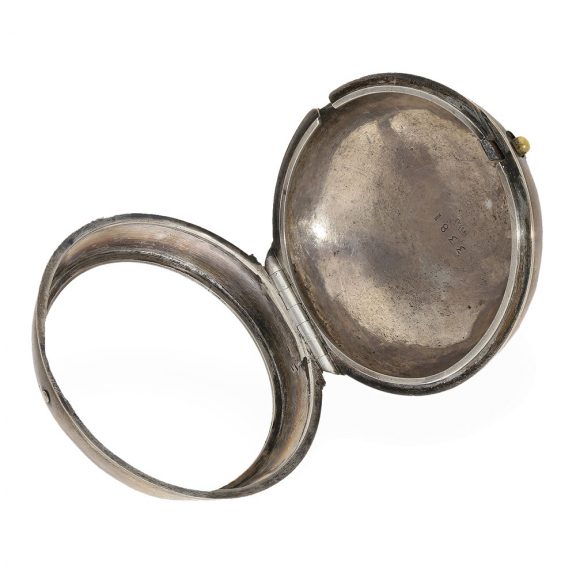
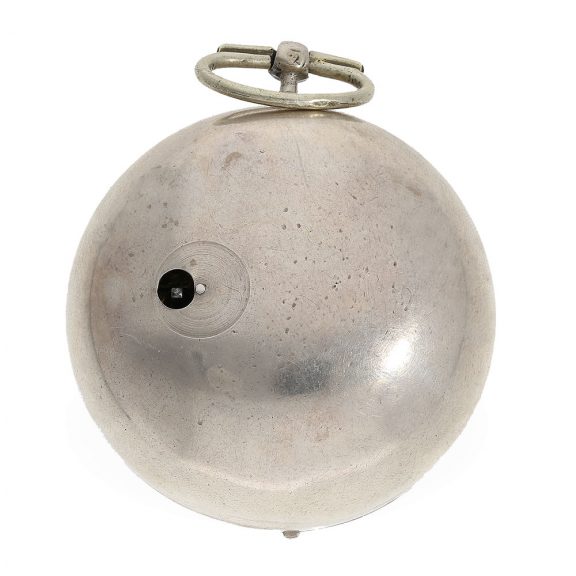
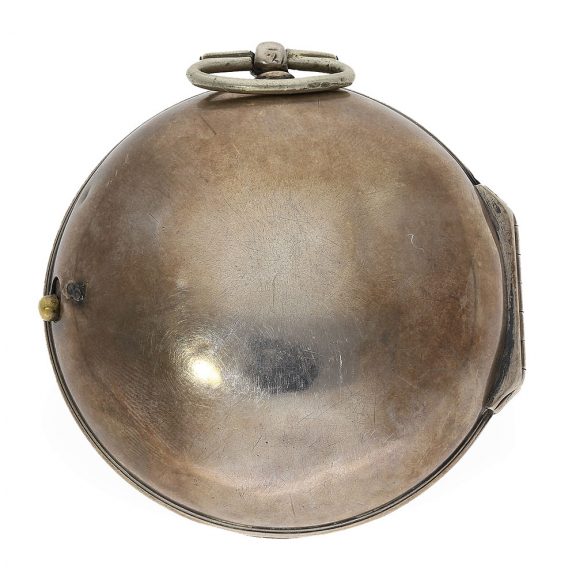
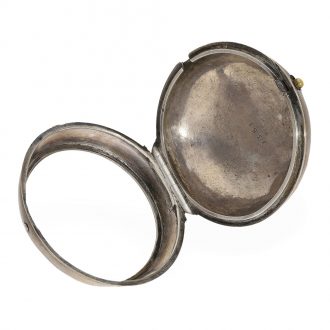
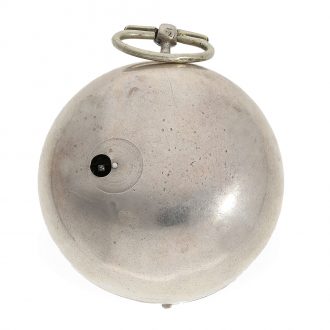
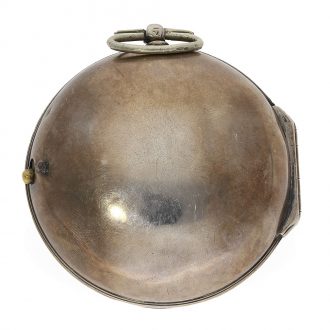
Silver very round plain pair cased pocket watch
–
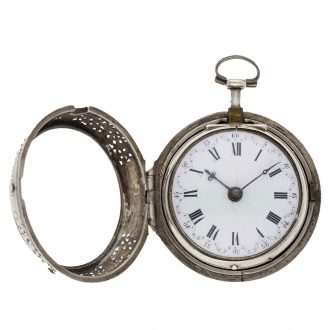
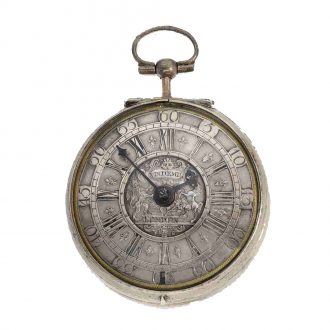
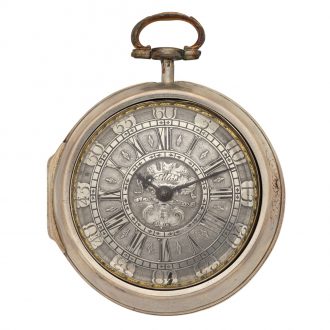
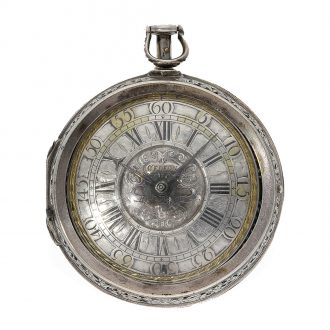
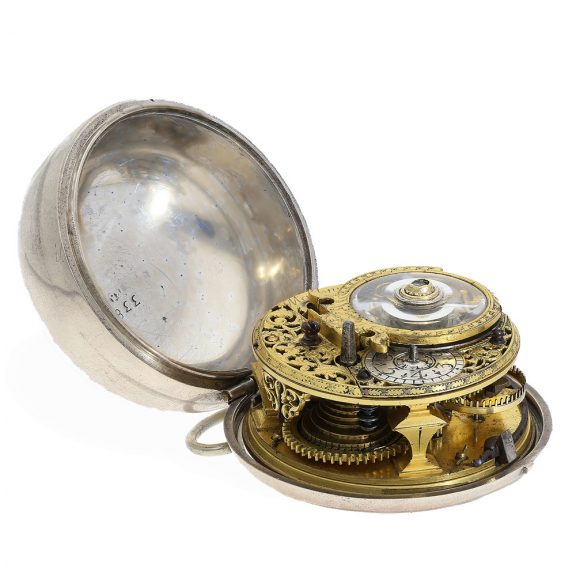
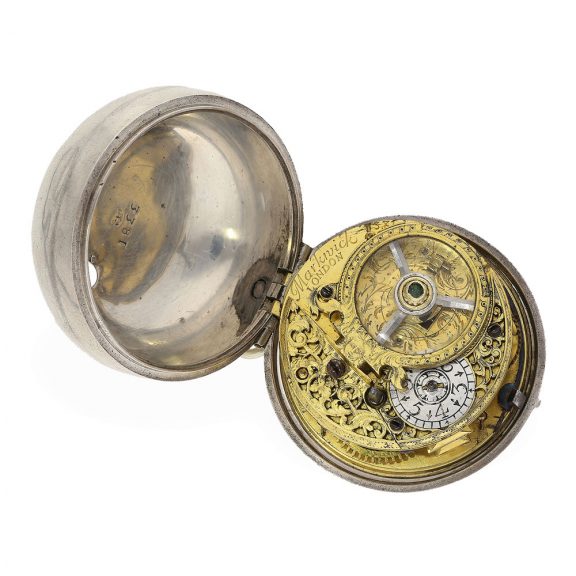
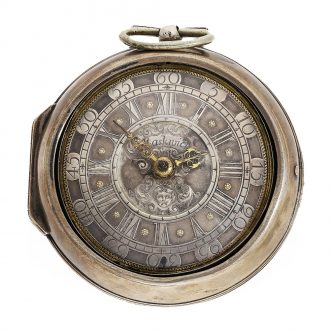
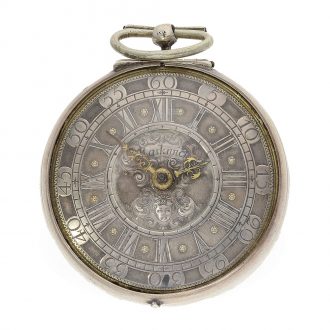
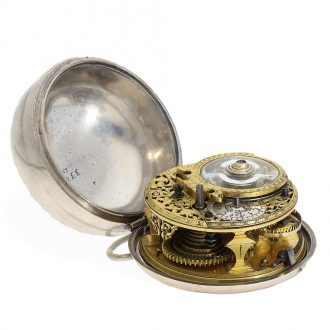
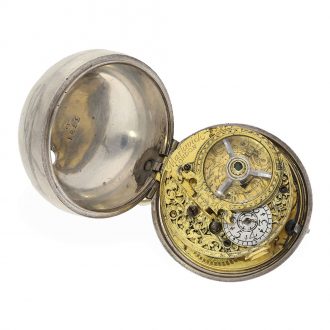
A pocket watch with a rock crystal cock, made by James Markwick in London, England, circa 1700. The open faced very round plain case of this rare collector’s watch is crafted from silver. The champlevé dial has Arabic five minute numerals, Roman hour numerals and the probably, original hands. The movement of especially beautiful workmanship with rock crystal cock has a verge escapement and Egyptian pillars.
Case and movement have matching numbers and dial and movement are signed.
–
Diameter: 58 mm
–
Weight: 140 g
–
Signed: Markwick, London
–
James Markwick
Early watches by James Markwick, who was active from about 1655, are very rare. Later, through its merger with Markham the company became one of the most important manufacturers for the Ottoman market.
James Markwick and his son James Jr. were both fine watchmakers and worked in London. The elder was apprenticed on 25 June 1656 to Richard Taylor and subsequently to Edward Gilpin. He became free of the Clockmakers’ Company on 6 August 1666. Six apprentices were bound to him between 1674 and 1699. In 1673 he succeeded the business of Samuel Betts behind the Royal Exchange. Although he held office in the Clockmakers’ Company, he was irregular in attendance, ceasing to tend to its affairs after 1700. He worked until at least 1706. His son, James Markwick Jr., became free of the Company in 1692 by patrimony. The younger James Markwick was an eminent maker, Master of the Clockmakers’ Company in 1720 and a very early user of jewelled bearings. Later, he was in partnership with his son in law Robert Markham, who succeeded him using the trading name of Markwick Markham, which became famous for watches destined for the Turkish market. Not only did this notoriety encourage the appearance of spuriously signed watches, but at the end of the century, Markham, or his successor, associated the names of other watchmakers with their own products intended for the East. The makers thus found associated are Francis Perigal, Peter Upjohn, H. Story, Borrell, John Johnson, Louis Recordon and Dupont. All were reputable watchmakers in their own right, selling other products under their own names.
–
James Markwick & Markwick
Markham James Markwick and his son James were fine watchmakers and worked in London. The elder was apprenticed on 25 June 1656 to Richard Taylor and Edward Gilpin. He became free of the Clockmakers’ Company on 6 August 1666. Six apprentices were bound to him between 1674 and 1699. In 1673, he succeeded the business of Samuel Betts behind the Royal Exchange. Although he held office in the Clockmakers’ Company, he was irregular in attendance, ceasing to tend to its affairs after 1700. He worked until at least 1706. His son, James Markwick Jr., became free of the Company in 1692 by patrimony. The younger James Markwick was an eminent maker, Master of the Clockmakers’ Company in 1720 and a very early user of jewelled bearings. In later years he was in partnership with his son in law Robert Markham, who succeeded him using the trading name of Markwick Markham, which became famous for watches destined for the Turkish market. Not only did this notoriety encourage the appearance of spuriously signed watches, but at the end of the century, Markham, or his successor, associated the names of other watchmakers with their products intended for the East. The makers thus found associated Francis Perigal, Peter Upjohn, H. Story, Borrell, John Johnson, Louis Recordon, Dupont. All were reputable watchmakers in their own right, selling other products under their names.
Signed: Markwick, London
Share this page: