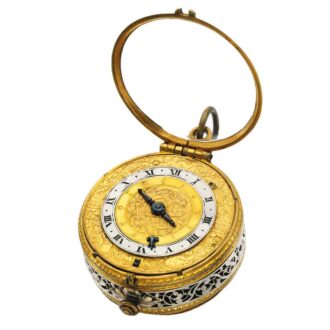
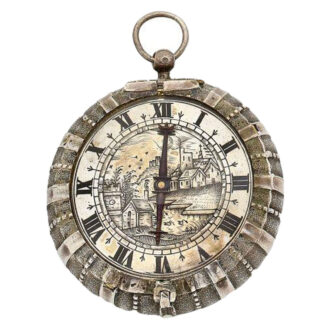
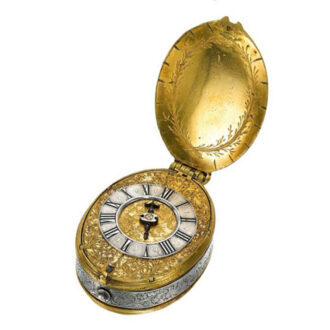
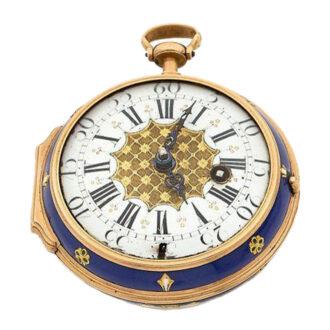
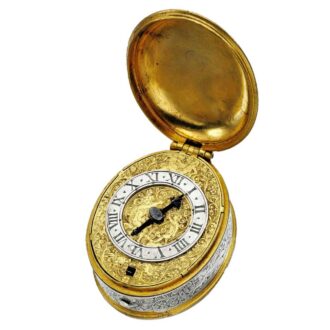
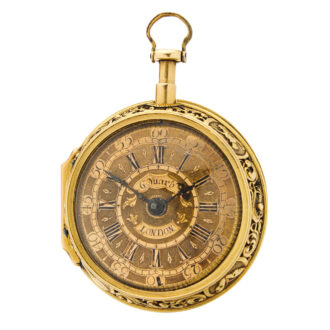
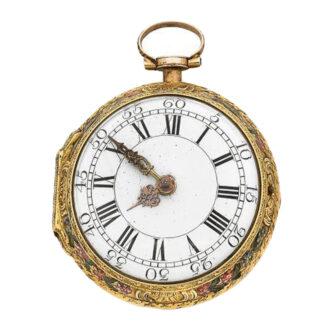
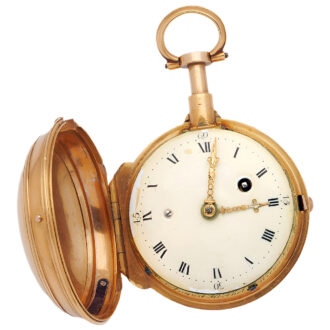
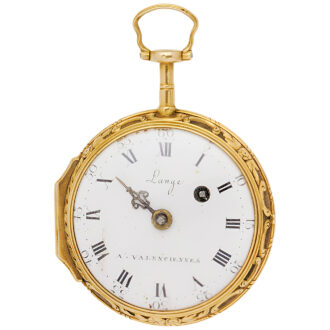
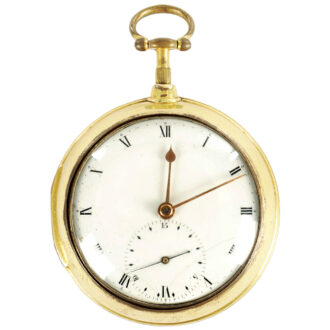
English rare silver pair cased verge pocket watch Circa 1743
- Kenmerk
- AD7229
- Diameter
- 51 mm
- Estimate
- € 1.500 - 3.000
- Price sold
- € 1.400
Silver open faced pocket watch by John Sanderson
–
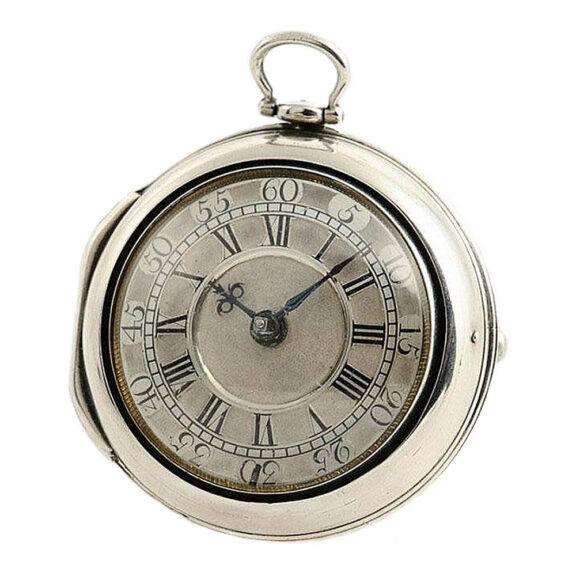
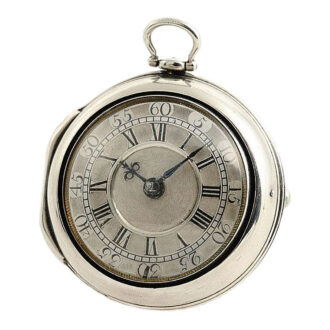
An English rare silver pair cased verge pocket watch, circa 1743.
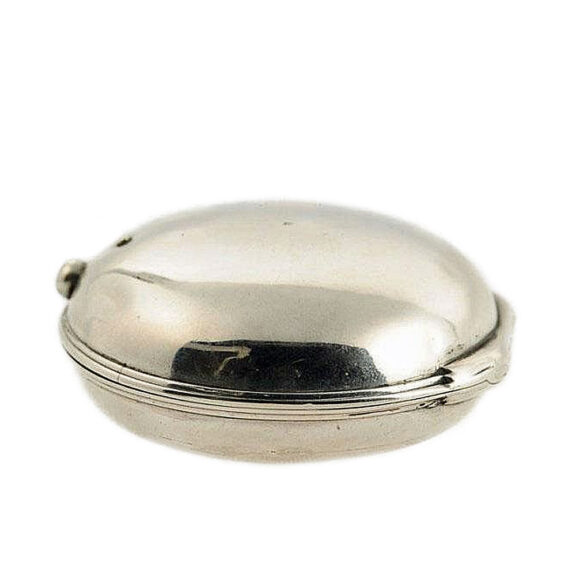
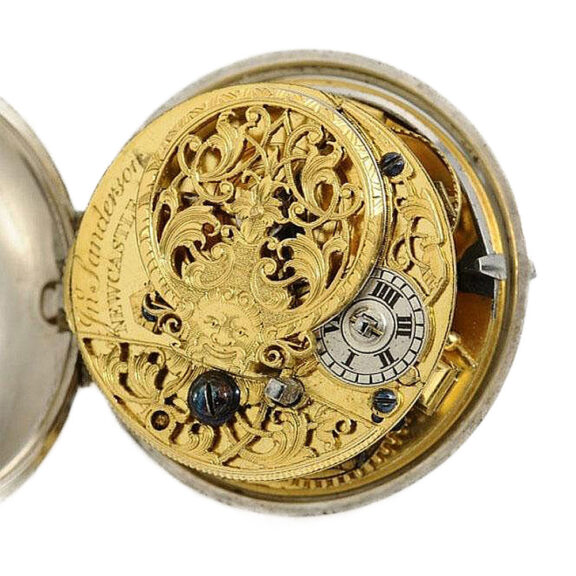
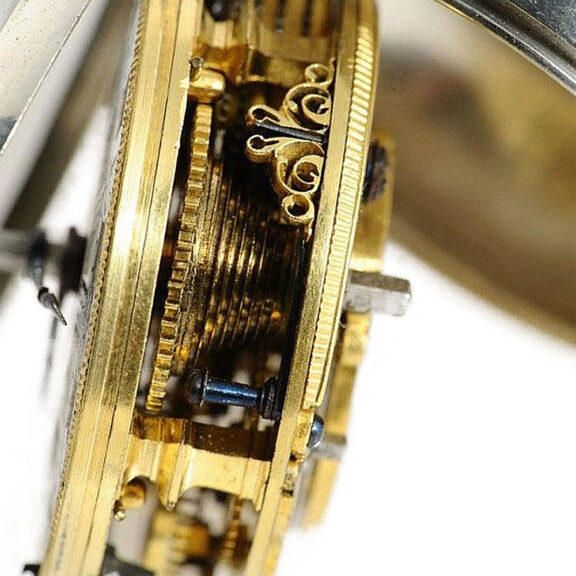
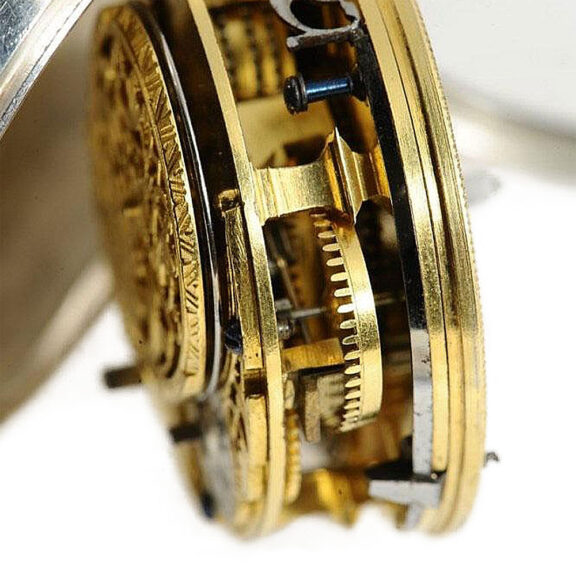
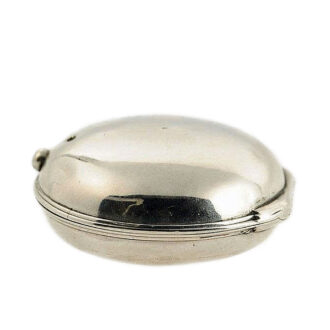
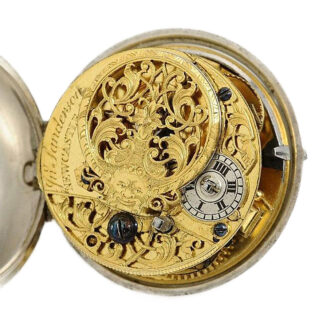
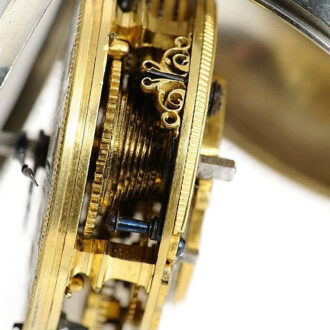
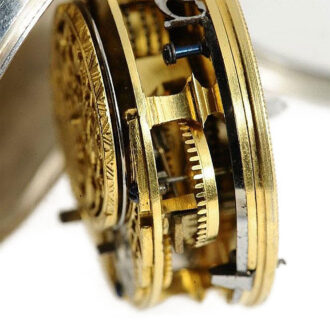
Two cases: outer case – silver, polished, with a large lateral hinge; inner case – silver, polished, with case maker’s punch mark PC (Peter Cromillou of London). Silver and Champlevé dial with inlaid radial Roman hours and blued steel Poker & Beetle hands. Full plate movement, keywind, signed and fire gilt, with applied engraved ornaments, chain/fusee, square baluster pillars, three-arm steel balance and a very finely engraved pierced balance cock with a grotesque face.
–
Diameter: 51 mm
–
Weight: 102 g
–
Signed: John Sanderson, Newcastle
–
John Sanderson, English watchmaker and Quaker
John Sanderson Jr. was based in Wigton, southwest of Carlile, Cumbria, and worked as a watchmaker around 1720. He was born in 1671 in the Quaker settlement of Low Tiffenthwaite near Wigton, the son of Robert Sanderson, a blacksmith who may have worked for William Pearson. William Pearson hosted George Fox in 1653, the founder of the Quakers. John’s father died when he was only twelve years old. Young John then lived with his paternal uncle John Sanderson and Aunt Mabel in the “Grand House” near Highmoor and later called himself John Sanderson Jr. It is believed that during this time, he was apprenticed to the Quaker watchmaker John Ogden of Bowbridge in Yorkshire.
In 1691 he finished his apprenticeship and returned to Tiffenthwaite, where he married Quaker Elizabeth Pearson (William Pearson’s daughter or granddaughter). The couple lived in Tiffenthwaite, where John Sanderson began making his first watches and signed them “Wigton Fecit”, probably because no one had heard of Tiffenthwaite. Elizabeth died two years later, and Sanderson did not become a Quaker until many years later. He married twice more and worked in Wigton and nearby until his death, probably in 1754was the one shortly after that, although his burial documents were never found. His clocks are often engraved in the middle of the dial with religious texts such as “Remember man, That die thou must, And after that, To judgment just” or “Momento Mori”.
All watchmakers who worked in Wigton before 1730 worked for John Sanderson at one point or another, who was as eccentric in his watchmaking as he was in his personal life. This period is called “The Wigton School of Clockmaking”. This “school” included John Ismay and Richard Sill, Joseph Calvert, Henry Sheppard and Redge Buckell. Only one watch of Joseph Calvert, Sanderson’s neighbour and a farmer, is known.
Signed: John Sanderson, Newcastle
Share this page: