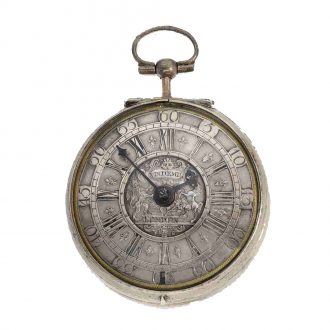
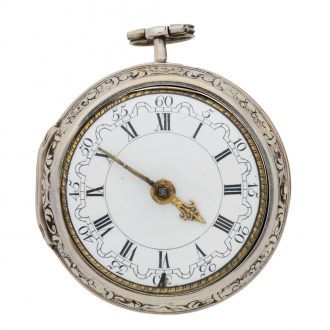
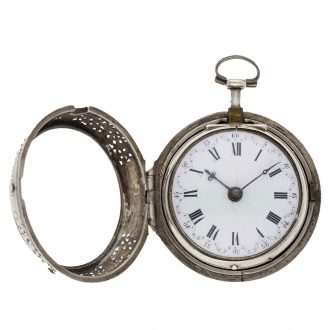
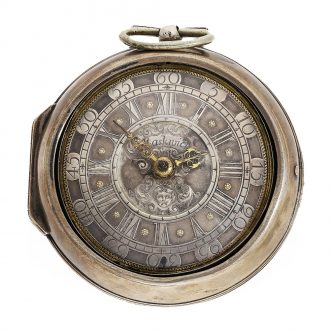
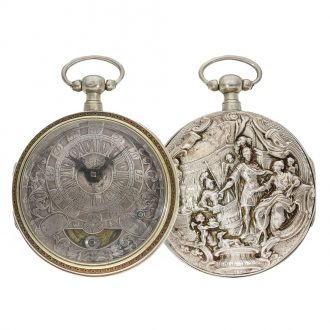
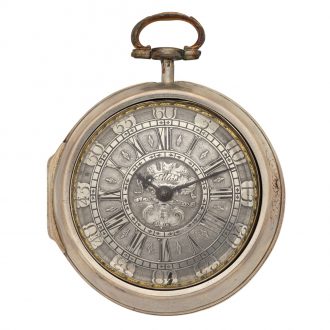
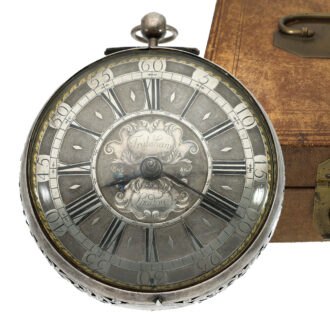
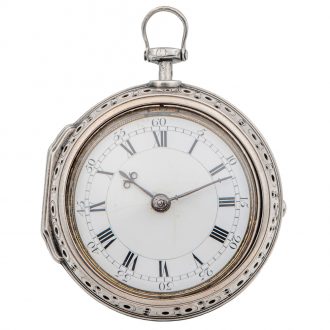
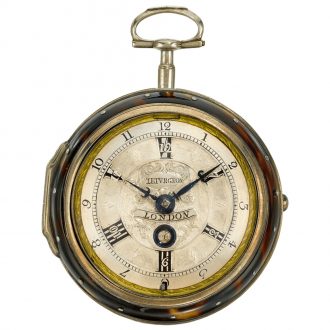
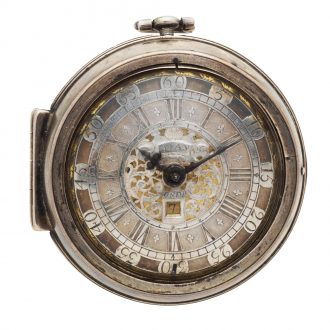
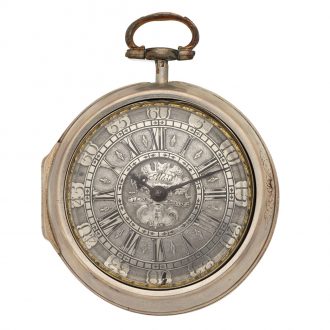
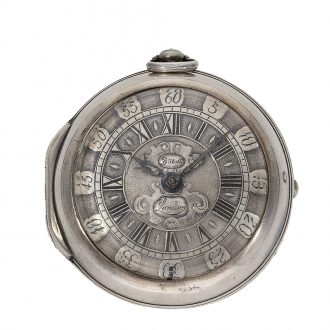
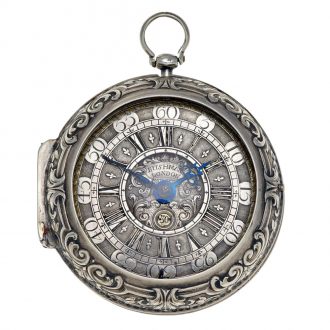
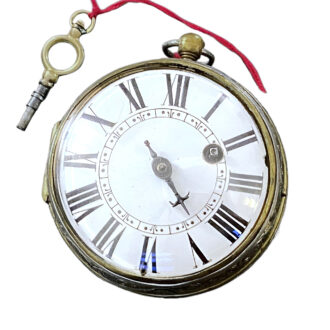
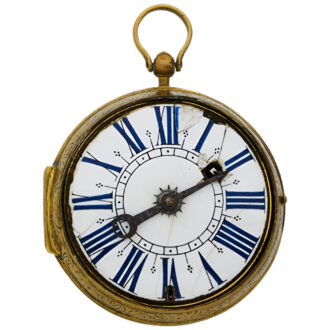
Fine English silver à tact oignon watch with à toc repeater Circa 1700
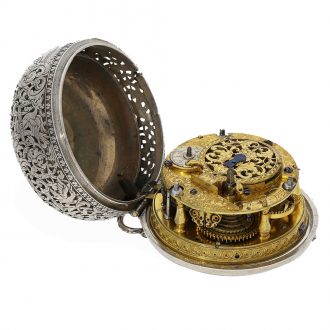
- Kenmerk
- HC0949
- Diameter
- 59 mm
- Estimate
- € 4.000 - 8.000
- Price sold
- -
Silver oignon watch
–
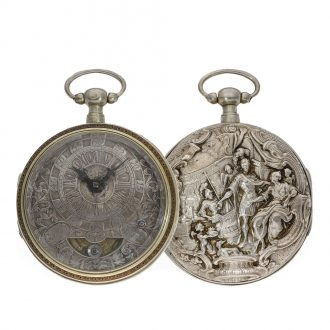
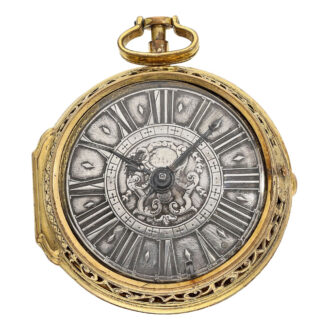
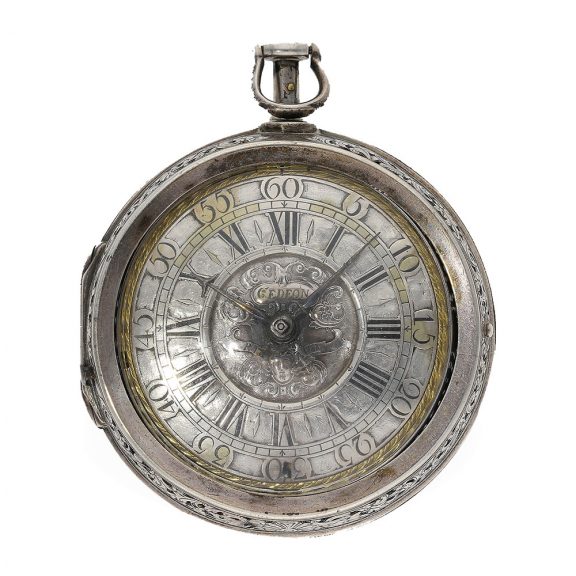
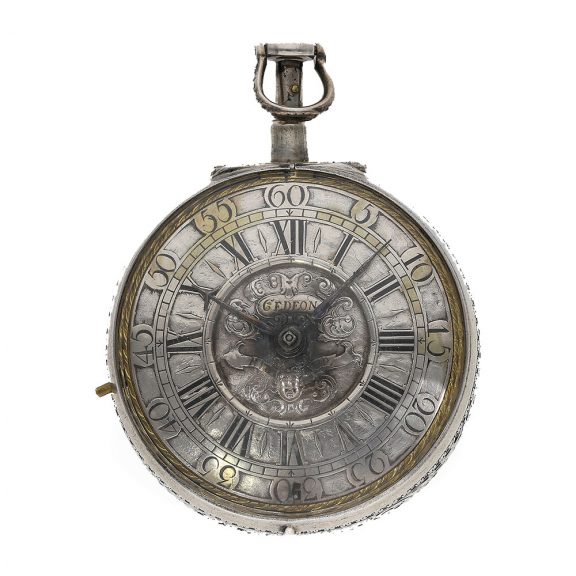
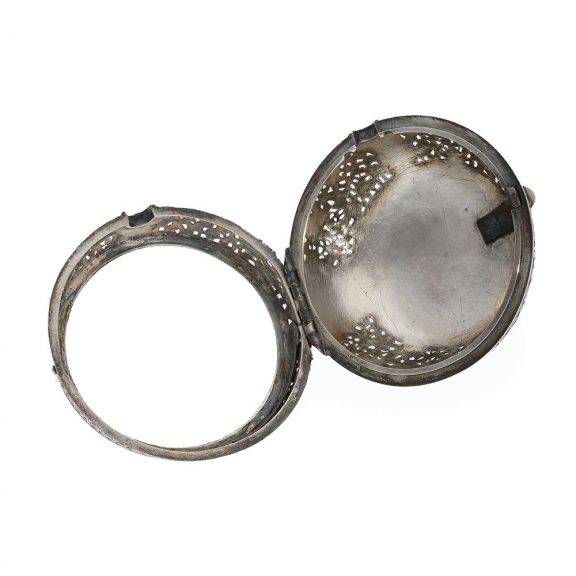
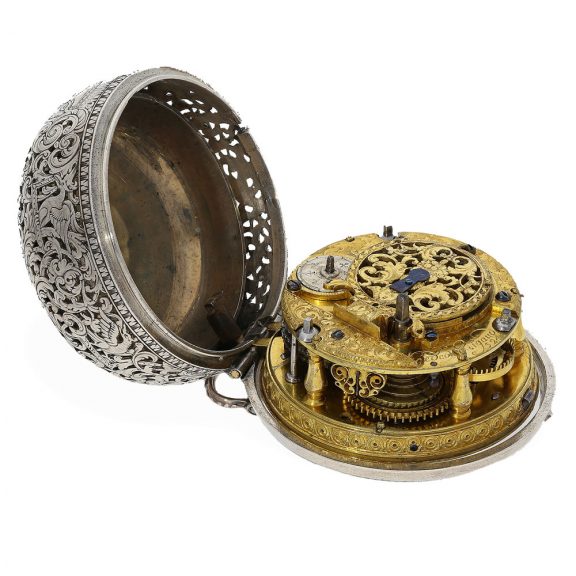
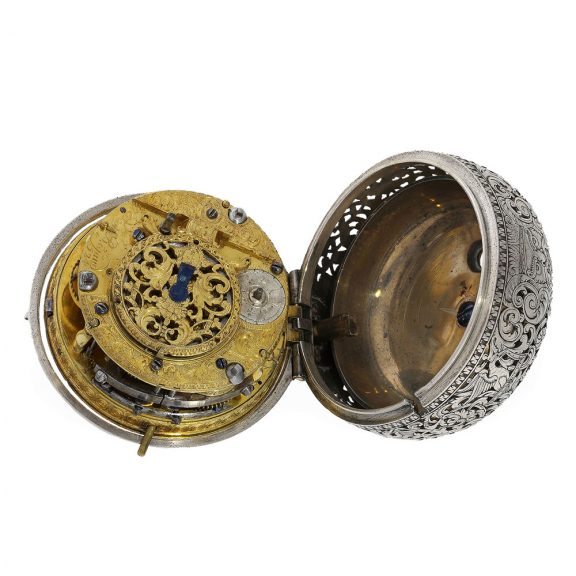
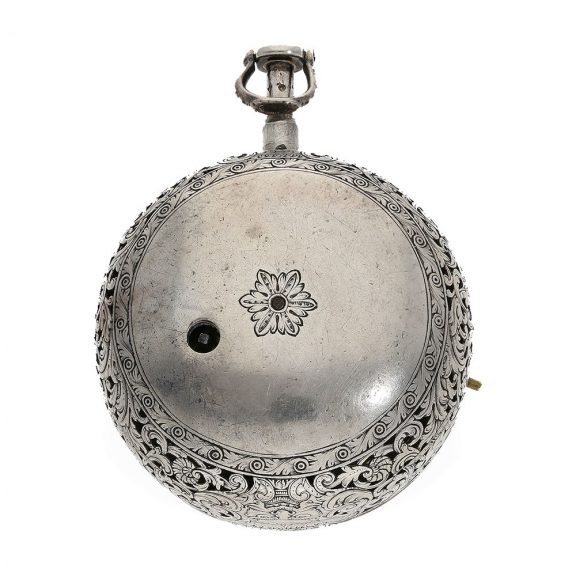
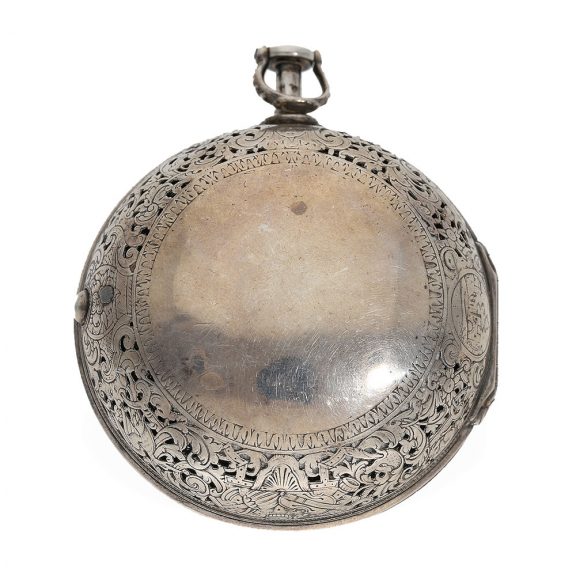
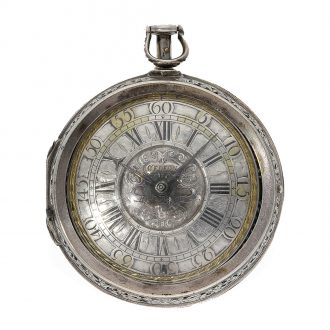
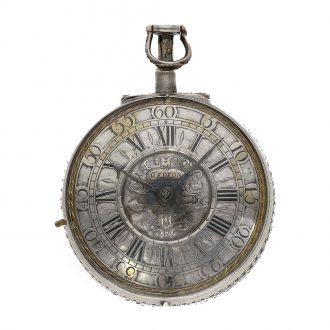
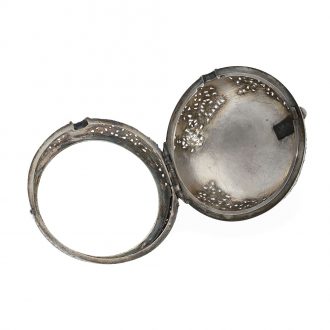
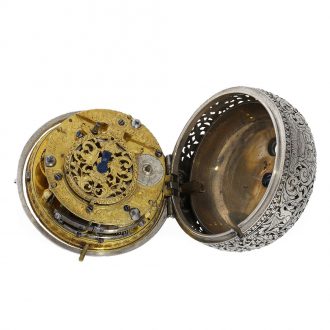
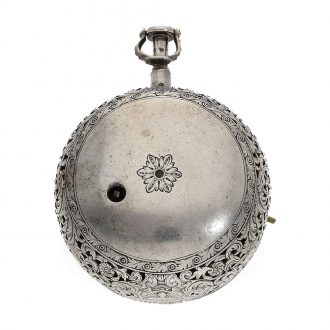
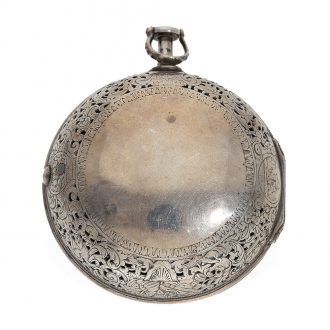
A very fine à tact oignon pocket watch with early à toc repeater made by Gedeon Rigaud in London, England, circa 1700. This silver pair cased watch of magnificent quality is pierced and engraved with masks, animal motifs, instruments and a village view, the inner case has a bell. The champlevé dial has Roman hours, an outer minute track, Arabic five minute numerals and probably original hands. The movement has a very early verge escapement, extremely fine vase pillars and repeats the hours and quarter hours on a bell or, optionally, can be used as a silent repeater.
Dial and movement are signed.
–
Diameter: 59 mm
–
Weight: 182 g
–
Signed: Gedeon Rigaud
–
Very rare for such an early pocket watch is the combination of a repeater on a bell and silent repeater.
–
Montre à toc. A ‘dumb’ repeater watch in which a hammer strikes the inside of the case to produce a muffled sound. Invented by Julian Le Roy in 1740.
–
Montre à tact. A type of watch made after 1795 by Abraham Louis Breguet to give time by touch. In the late 18th century it was considered impolite to consult one’s watch in company, a question of etiquette which the à tact watch helped to solve (the French tact, meaning touch, has given the English tact and tactful). Knobs representing the hours are positioned around the case with a large hand that could be turned until it met resistance. Its position to the knobs gave the time. This kind of tactile watch is now mainly used by the blind and visually impaired.
–
Gedeon Rigaud
Gedeon Rigaud worked as a watchmaker in London from around 1700 to 1740. Rigaud probably came from Geneva or Paris as a Huguenot. He also signed his watches with Gede Rigaud. Several verge pocket watches with rotating automate are known from him. There was also a watchmaker, Gedeon Rigaud (1686-1732) in Geneva.
The present watch No. 680 was once in the collection of Wilhelm Triebold. Triebold was a passionate watch collector, one of the greatest of his time. He also had good contacts with Carl Marfels, the most famous watch collector at the beginning of the 20th century. Unfortunately, Triebold’s collection was almost destroyed in World War II. Jürgen Abeler writes in Klassik Uhren 4/2006: “A large part of his Renaissance clocks was housed in a heavy iron safe. In a major attack on Hanover, the Triebold House burned down completely. When the safe was opened later, the entire wooden inlays and floors were charred, and a tar substance had deposited on all clock parts made of brass and steel. This burned in coating could no longer be removed with normal means. We, therefore, carried out experiments with rare acids, formic acid and bromic acid in our workshop. And eventually found a way to put the clocks back in order.”
Signed: Gedeon Rigaud
Share this page: