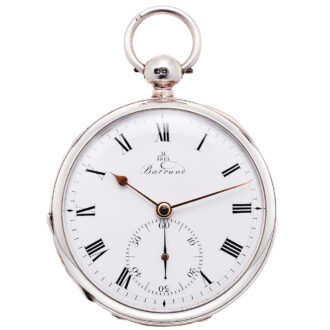
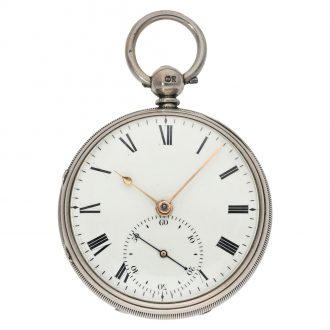
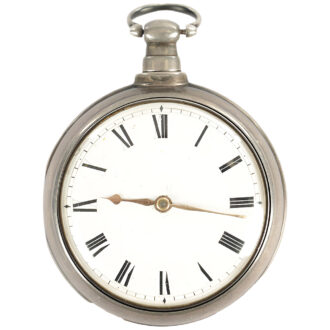
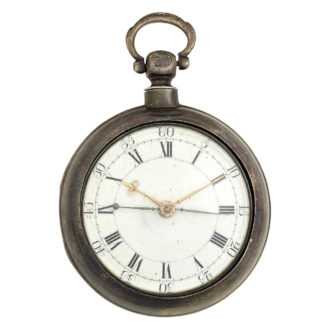
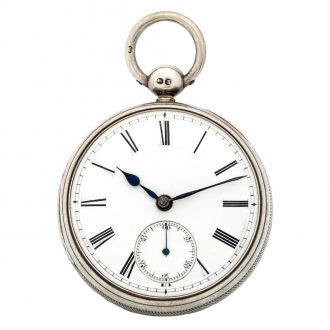
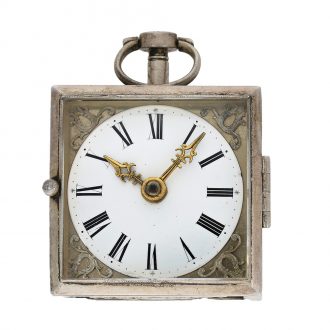
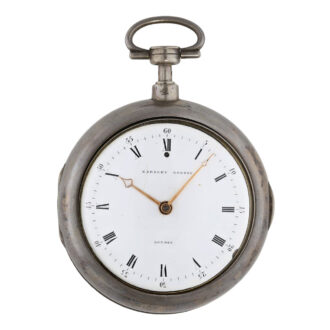
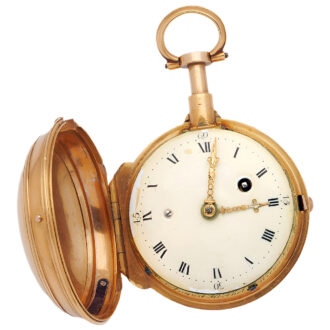
Important English pocket chronometer by Thomas Earnshaw Circa 1800
- Kenmerk
- ZF0224
- Diameter
- 57 mm
- Estimate
- € 7.500 - 15.000
- Price sold
- € 12.450
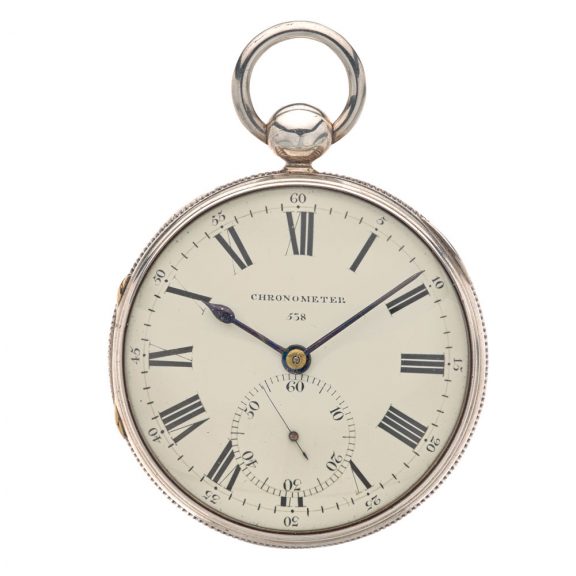
Silver pocket chronometer by Thomas Earnshaw
–
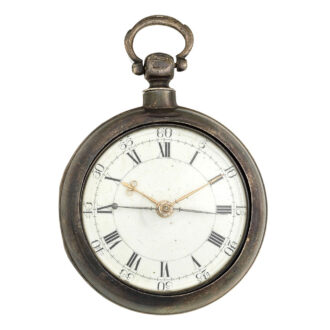
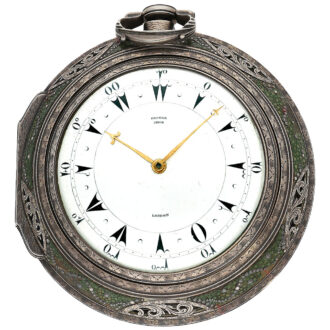
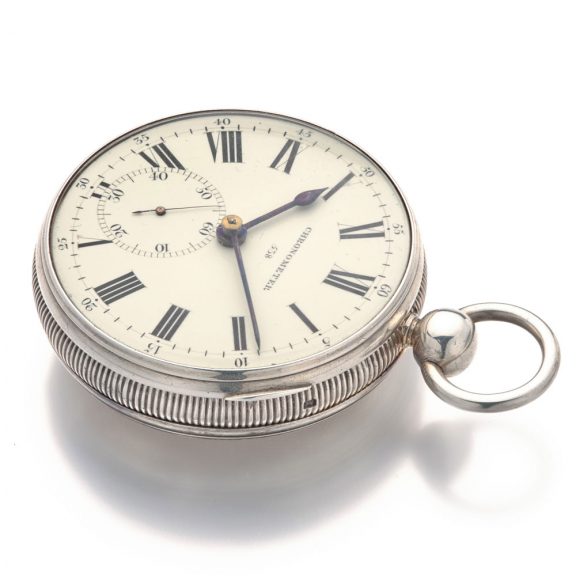
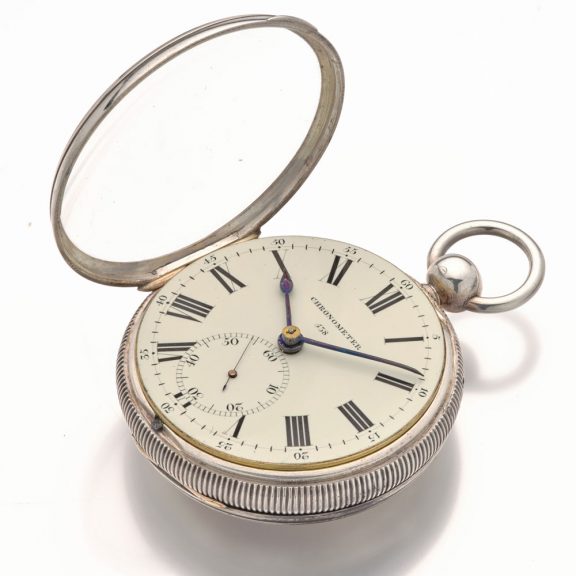
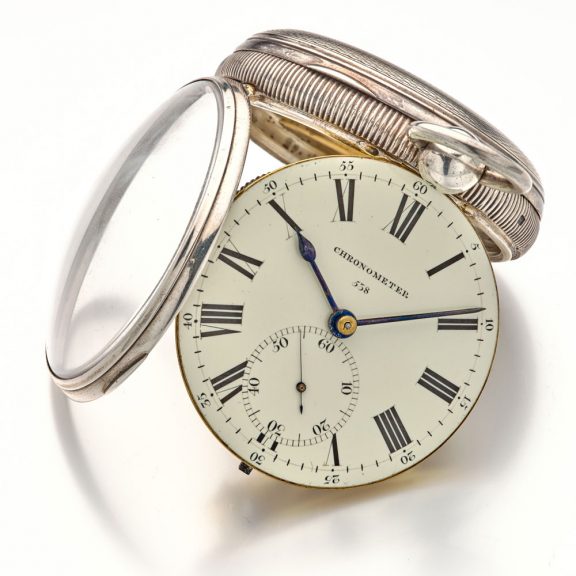
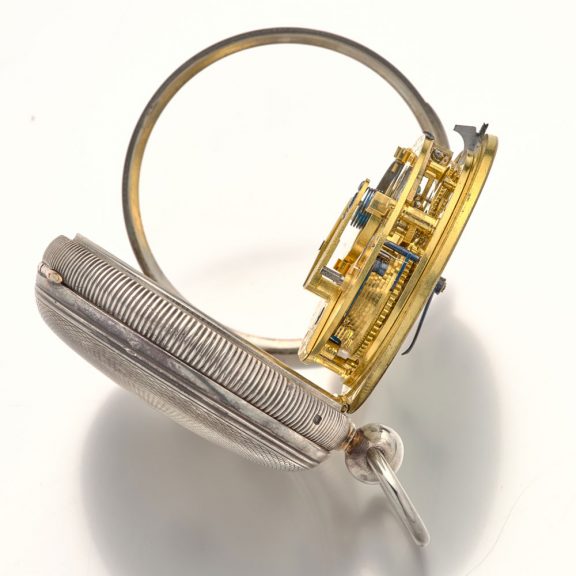
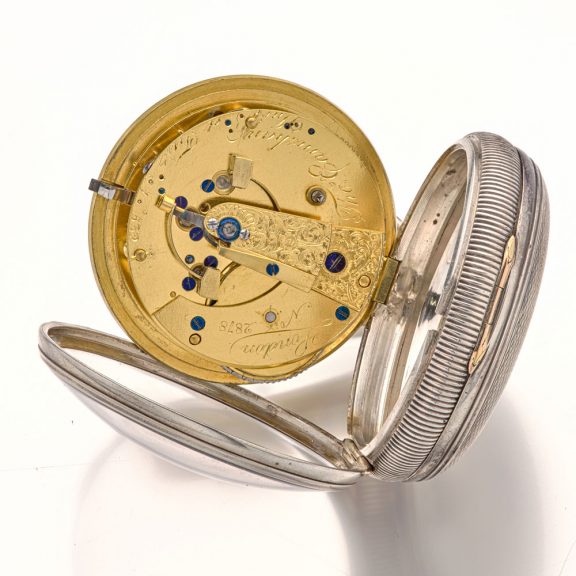
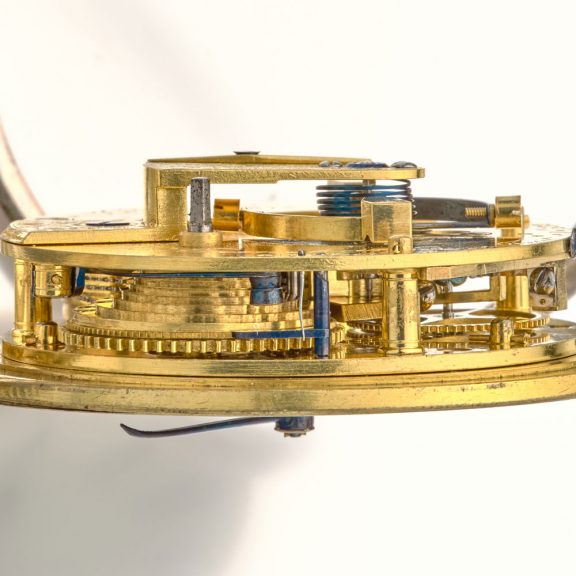
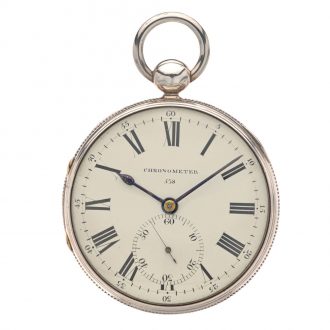
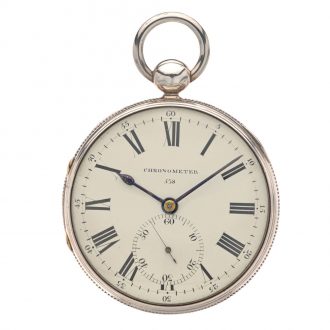
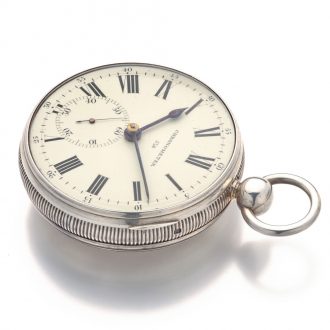
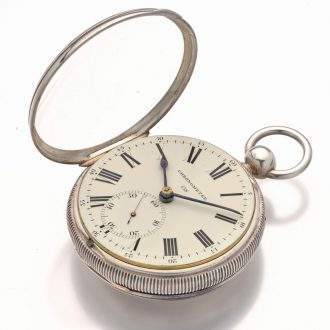
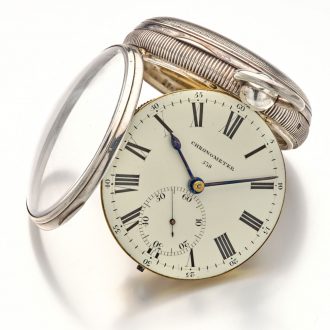
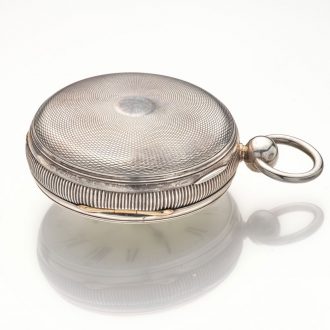
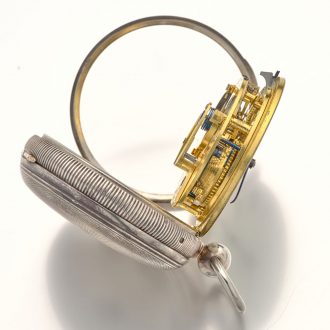
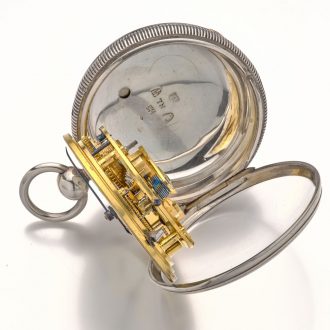
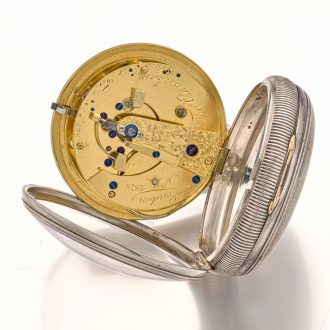
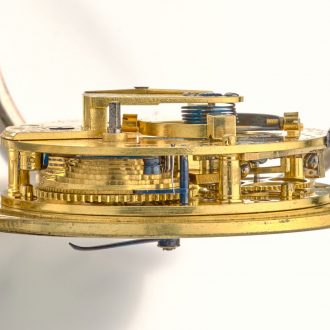
A rare English silver pocket chronometer with an extremely rare spring chronometer escapement by Thomas Earnshaw and only four other pocket chronometers of this type are known, circa 1800. Brass full plate movement, key wind, chain/fusee, spring chronometer escapement, bimetallic chronometer balance with 2 screws and 2 trapezoidal sliding weights, free-swinging blued cylindrical balance spring with end curves on both sides, chatoned capstone on balance.
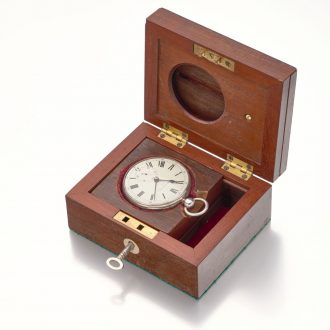
Off white enamel dial, radial Roman numerals, outer minute track, subsidiary seconds at 6 and blued steel spade hands.
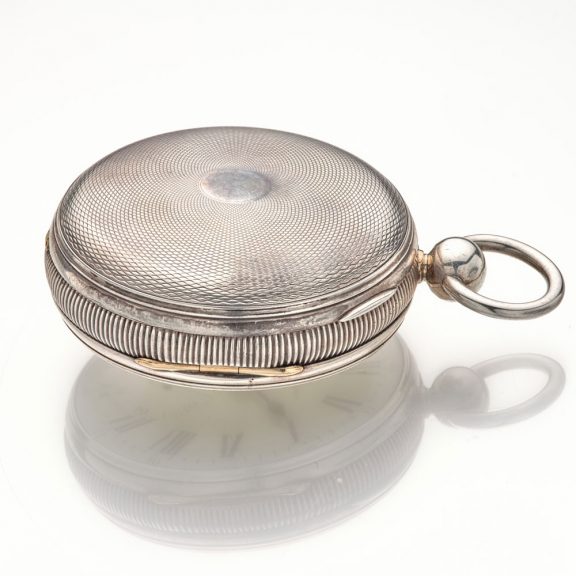
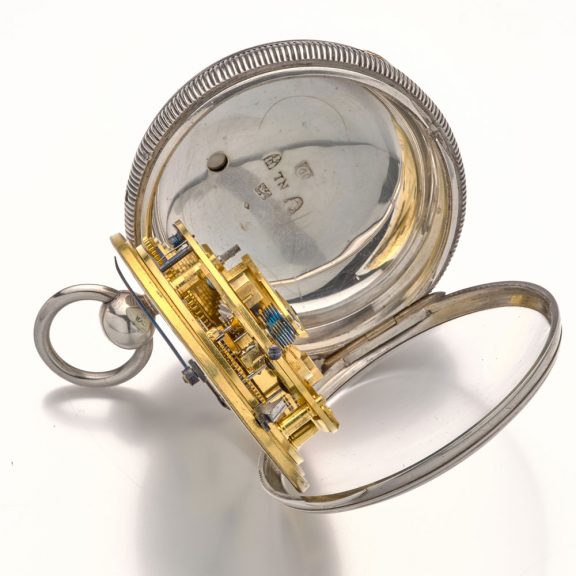
Silver case with engine turned back and ribbed band, case maker’s hallmark NL (Nicholson Lee, active 1796-1817 or his son Nathaniel Lee, active 1818-1829, both from Liverpool).
–
Diameter: 57 mm
–
Thickness: 27 mm
–
Weight: 152 g
–
Signed: Thomas Earnshaw London
–
In 1763 Thomas Earnshaw (1749-1829) was trained as a watchmaker. From 1780 he completed works for Brockbanks. In his own factory in London around 1781, Earnshaw developed a spring-loaded chronometer escapement that became common practice and binding for more than 150 years. Thomas Earnshaw took over the business from William Hughes at High Holborn 119 in 1794/1795. Thomas Earnshaw is considered one of the pioneers in chronometer construction, especially in the further development of the chronometer escapement. Around 3,000 pocket watches and around 1,500 marine and pocket chronometers of the best quality come from his factory.
–
Using Earnshaw’s numbering system, the first number is the number of watches made at that point using Earnshaw’s spring detent escapement. The second number, is the total number of watches produced at that point. Thomas Earnshaw (1749-1829) Born in Ashton-Under-Lyne in Lancashire, by 1780 he had the reputation of being a very fine watch finisher. He invented the modern Chronometer spring detent escapement towards the end of 1780, a design that he insisted was stolen by Arnold. However, Earnshaw and Arnold likely arrived at their conclusions separately. Earnshaw perfected the fusing together of brass and steel to make laminae for compensation balances which previously had to be riveted.
–
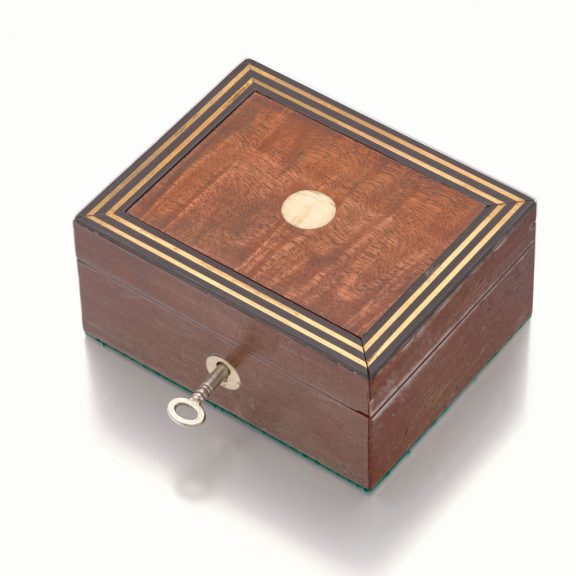
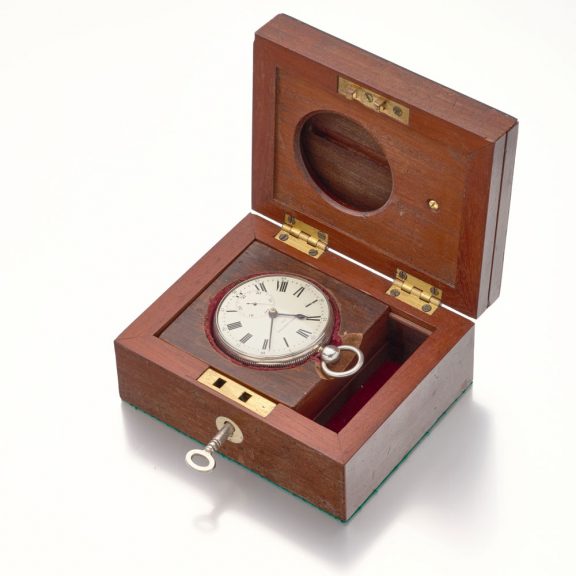
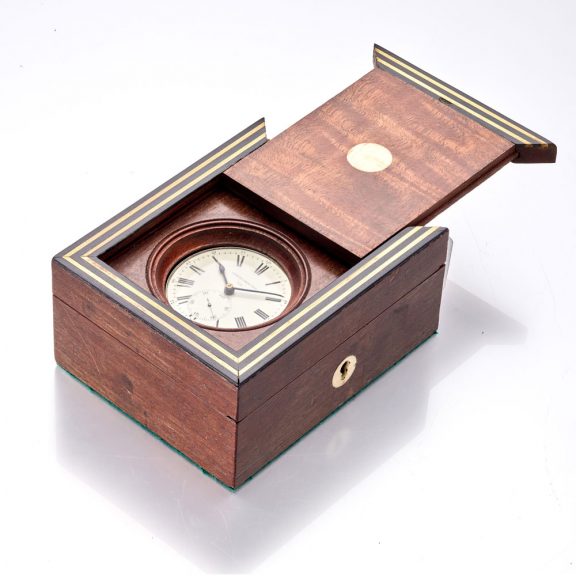
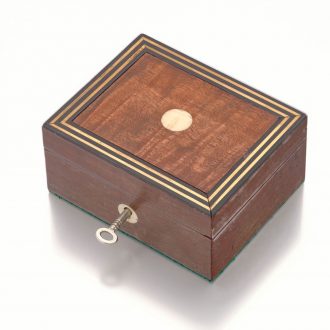
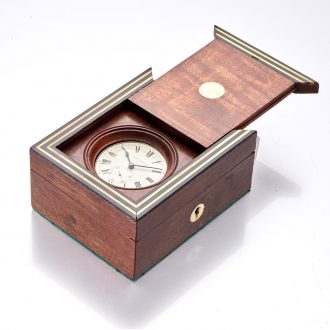
Comes with the original wooden box.
–
Reference 030000
Signed: Thomas Earnshaw London
Share this page: