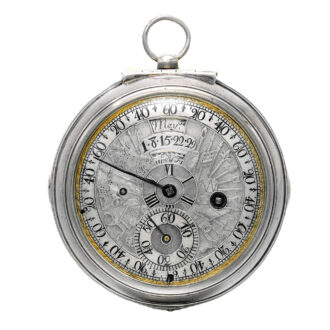
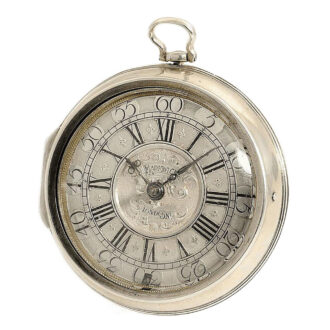
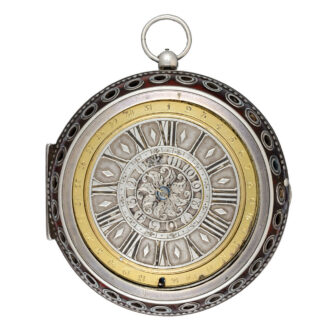
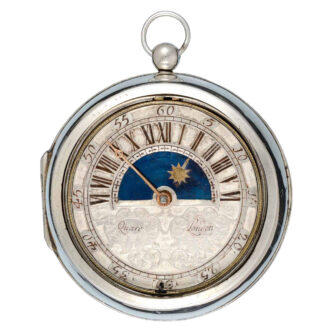
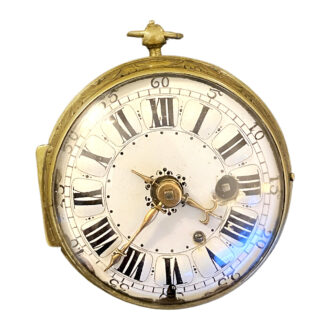
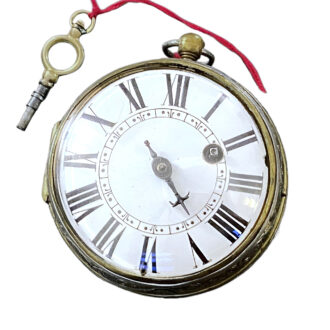
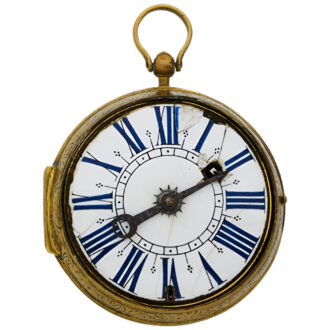
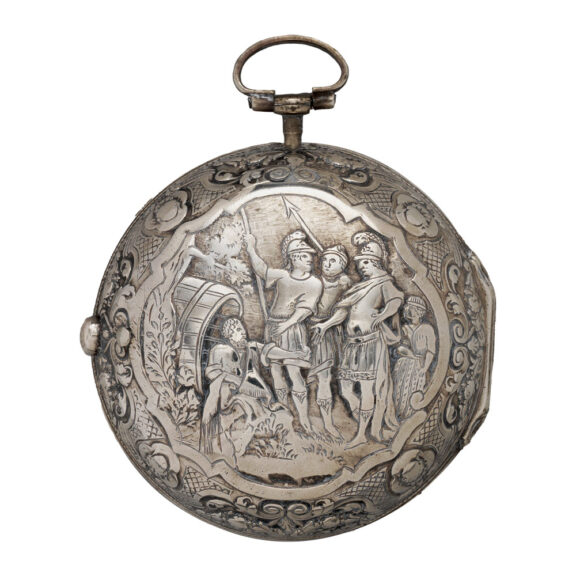
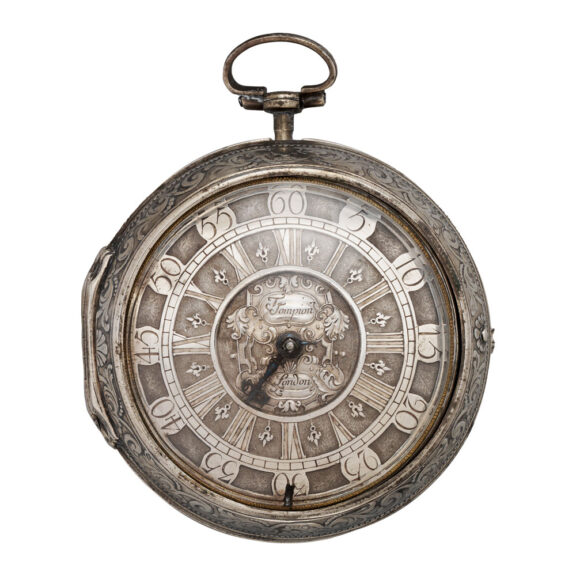
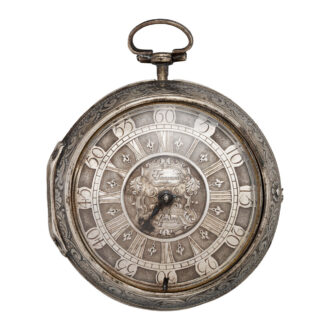
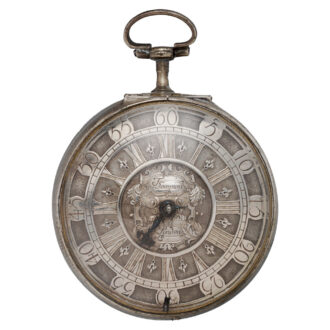
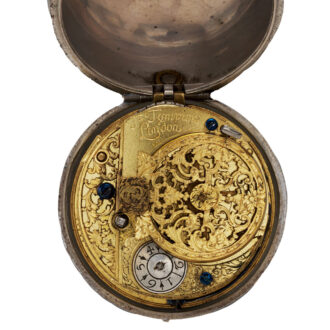
English silver pair cased repoussé pocket watch Circa 1695
- Kenmerk
- AM0037
- Diameter
- 57 mm
- Estimate
- € 7.500 - 15.000
- Price sold
- € 2.200
Silver pair cased pocket watch by Thomas Tompion
–
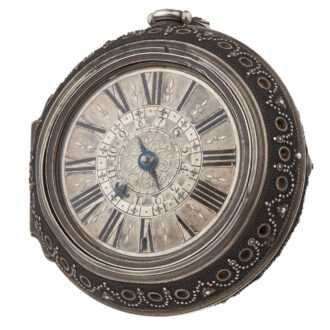
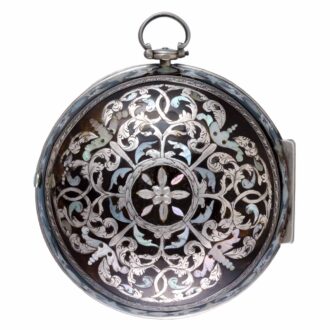
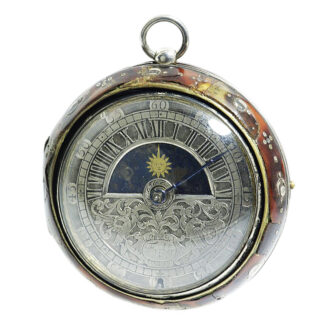
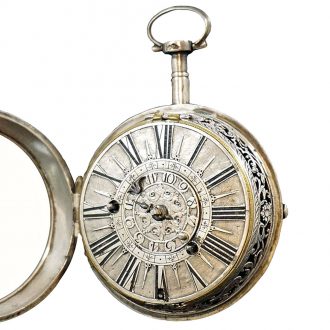
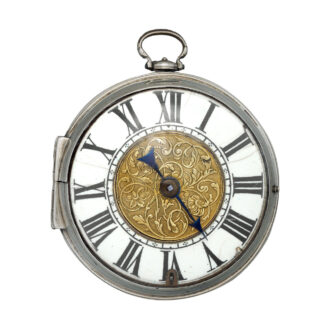
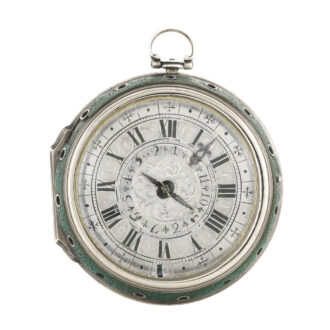
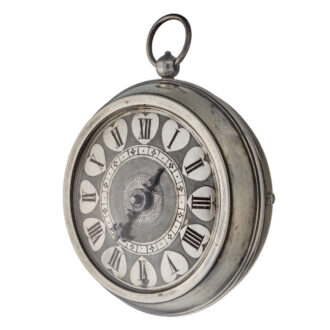
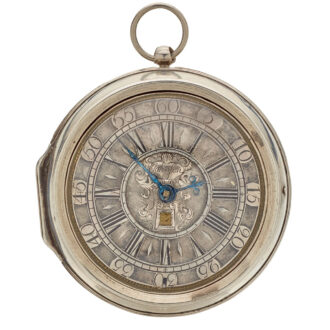
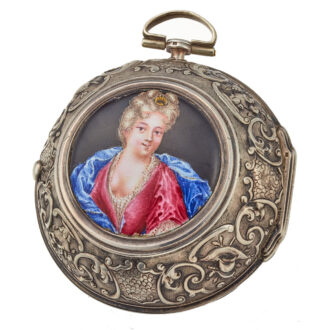
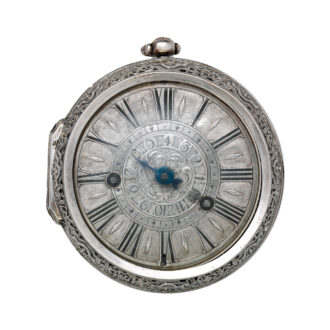
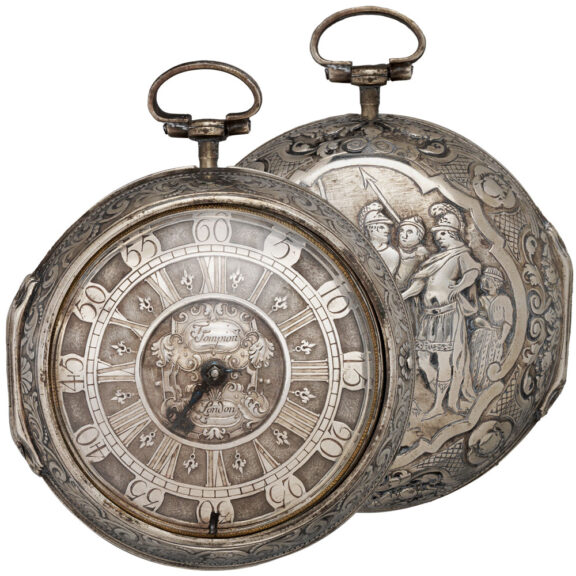
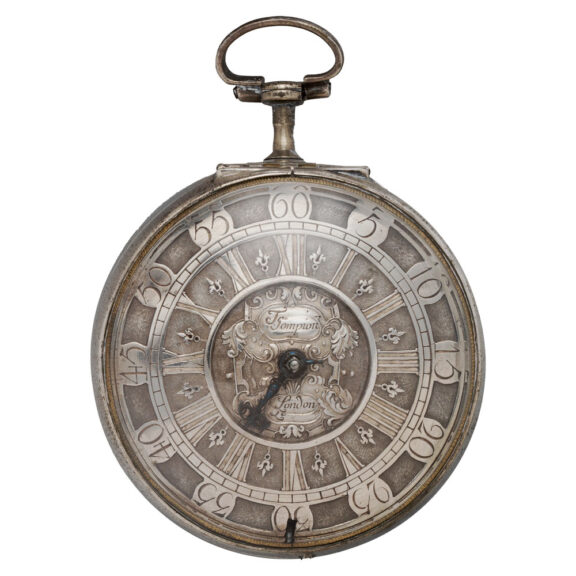
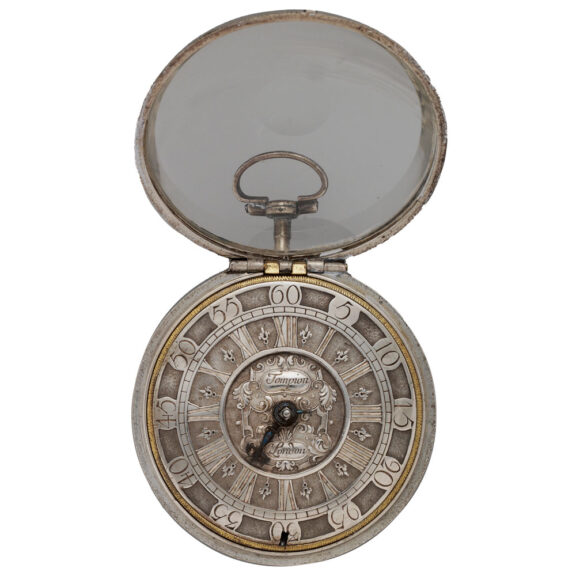
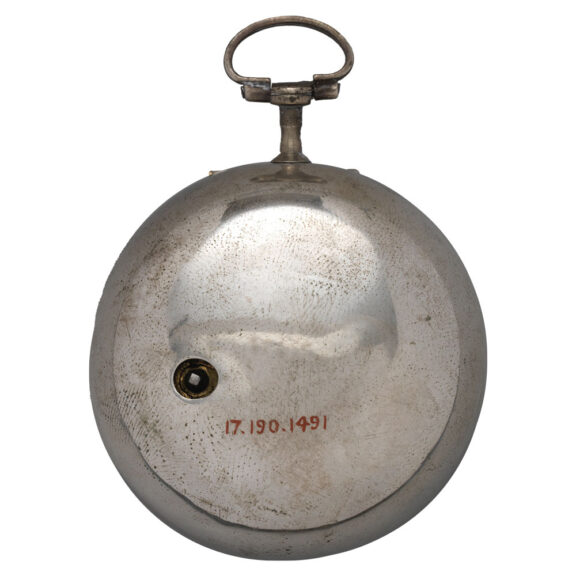
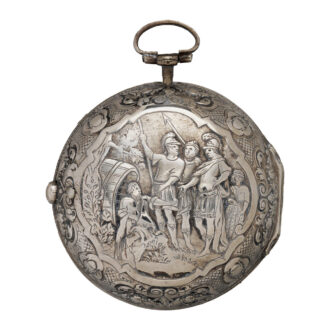
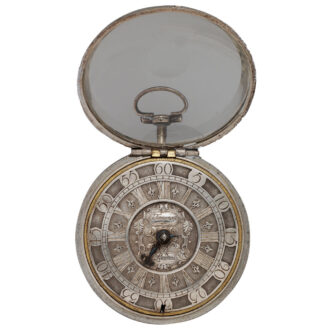
An English silver pair cased repoussé verge pocket watch, circa 1695.
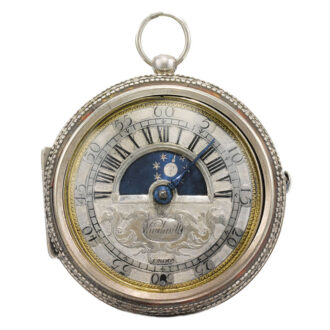
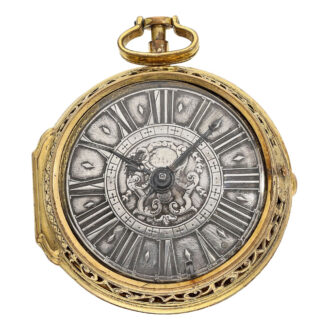
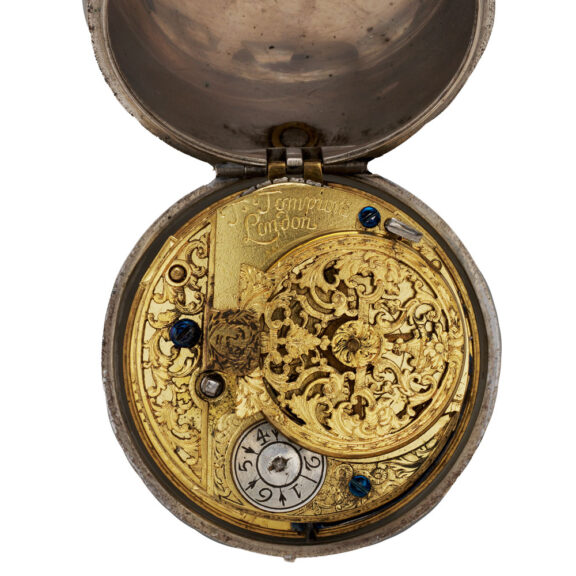
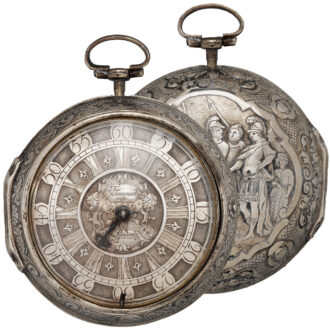
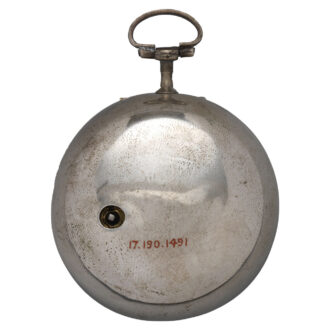
Verge movement, pierced and engraved bridge cock, silver regulator disc, fusee and chain with worm and wheel barrel set-up between the plates. Winding through the back. Silver champlevé dial, Roman hours and Arabic minutes, blued steel hands. Signed on movement and dial: Tompion London. Repoussé case makers art, silver inner case smooth.
–
Diameter: 57 mm
–
Signed: Tompion London.
–
Thomas Tompion, English watchmaker
Thomas Tompion, “Father of English Watchmaking”, was born on July 25, 1639, in Northill, Bedfordshire. He is said to have initially completed an apprenticeship as a blacksmith with his father in Bedfordshire. In 1671 he became a member of the Clockmakers Company and, in 1703, its master. In 1674, Tompion set up his own business in London. In competition with Huygens, he sometimes worked with Robert Hooke on developing a self-oscillating time standard for portable watches. In 1674, the Greenwich Observatory commissioned him to build two precision pendulum clocks. Tompion was the first in England to build pocket watches with the spiral balance spring invented by Huygens, starting in 1675, and also developed a reverse regulation mechanism. Tompion was also involved in the development of Edward Barlow’s repetition mechanism. Another joint development by Tompion, Barlow and William Houghton around 1695 is the so-called Sautrogh escapement, the forerunner of the cylinder escapement. A grandfather clock with the equation for King William III dates from the same year. From 1701 to 1708, he worked with Edward Banger, who had married one of his nieces. From 1711 he worked with his nephew George Graham (clock 4538 in the picture gallery), who married another of his nieces and later took over the workshop after Tompion’s death. Tompion died in London on November 20, 1713, and was buried in Westminster Abbey.
Signed: Tompion London
Share this page: