Extremely rare French miniature pocket watch Circa 1845
- Kenmerk
- AD9117
- Diameter
- 19 mm
- Estimate
- € 100.000 - 150.000
- Price sold
- -
Gold double cased miniature pocket watch by Breguet
–
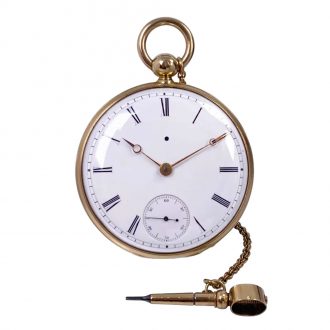
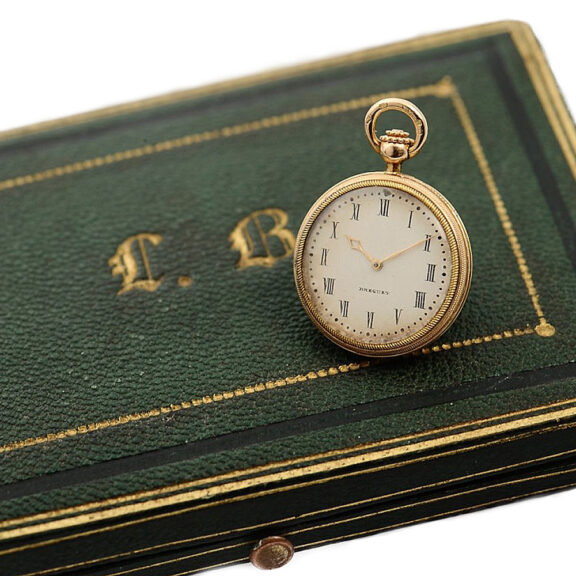
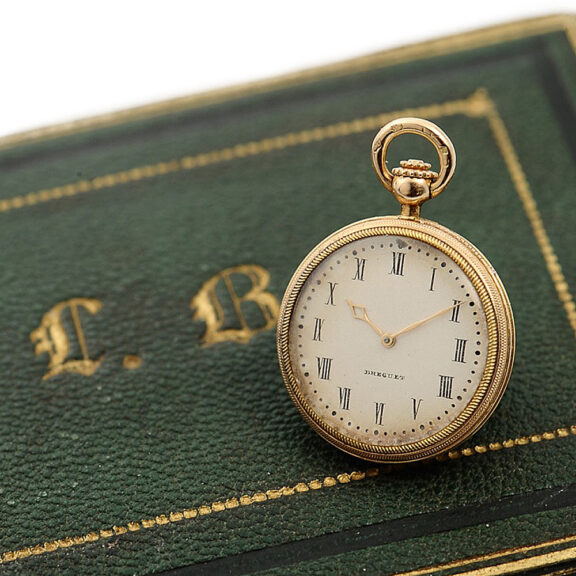
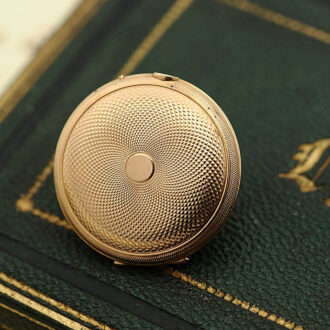
An important, French double cased miniature pocket watch with platinum balance tres petite montre simple sur les principes des chronomètres (very small simple watch on the principles of chronometers), circa 1845. One of only 16 miniature pocket watches ever produced in this version, where winding and hand-setting are combined through the crown.
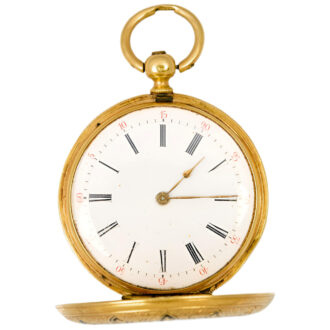
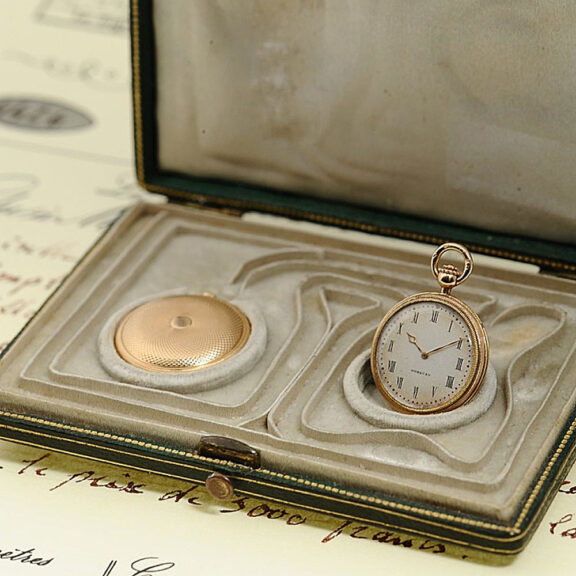
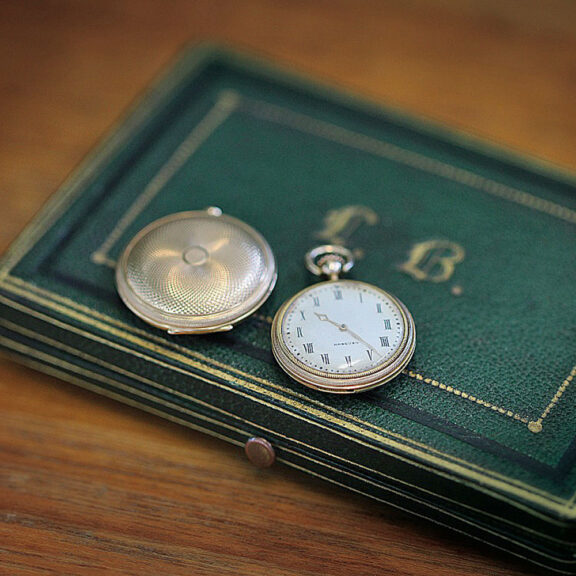
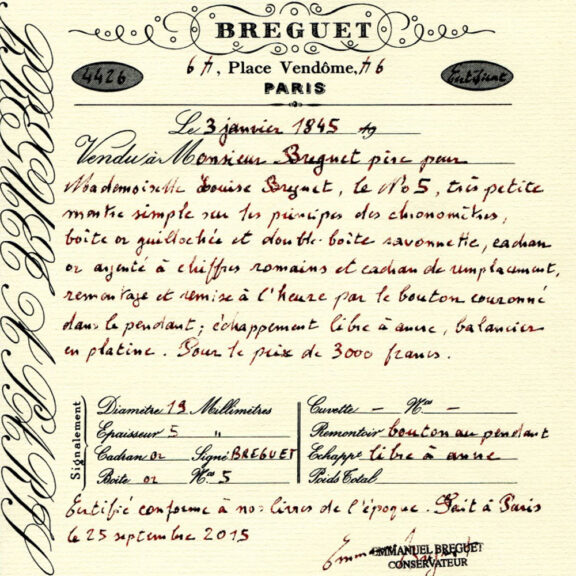
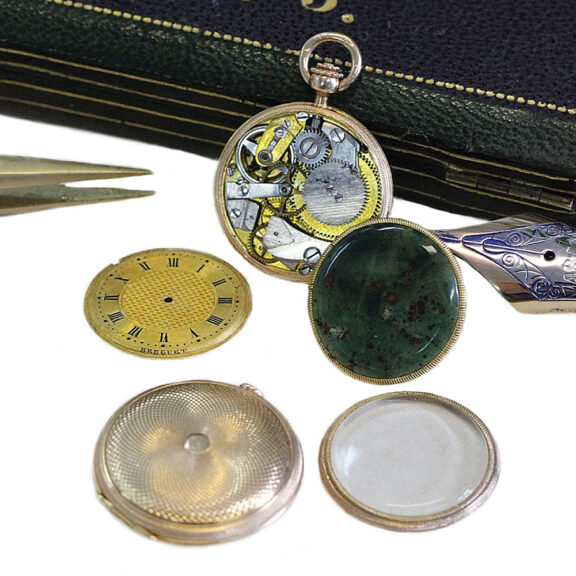
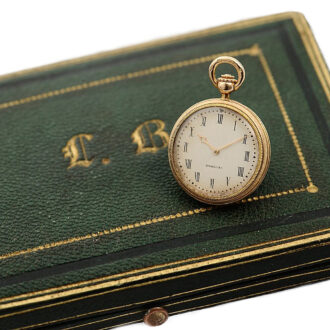
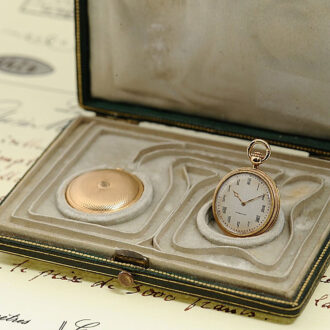
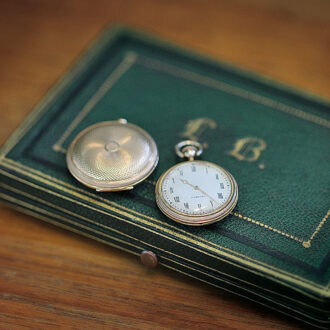
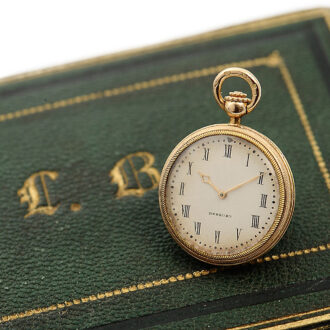
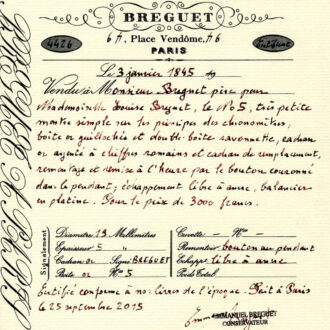
This watch comes with its numbered original silk lined green Morocco case with the initials LB (Louise Breguet), original gold replacement dial, and Breguet extract from the archives.
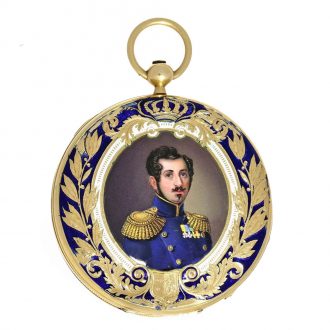
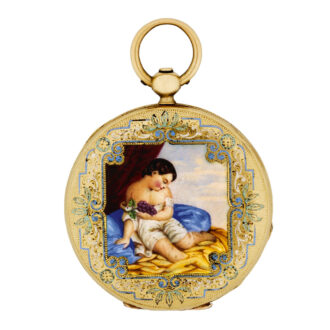
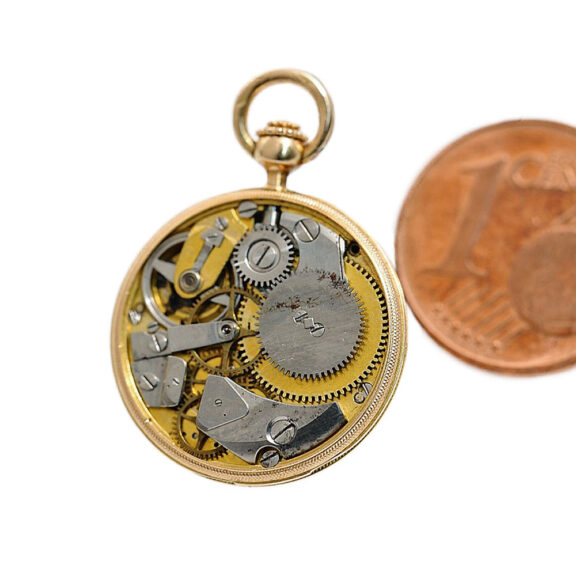
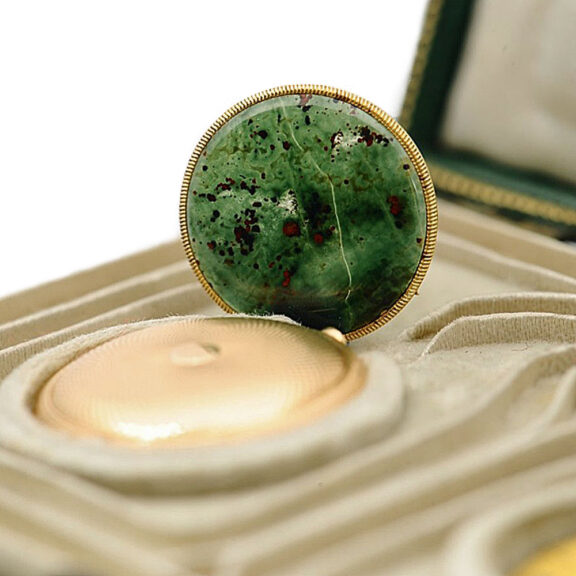
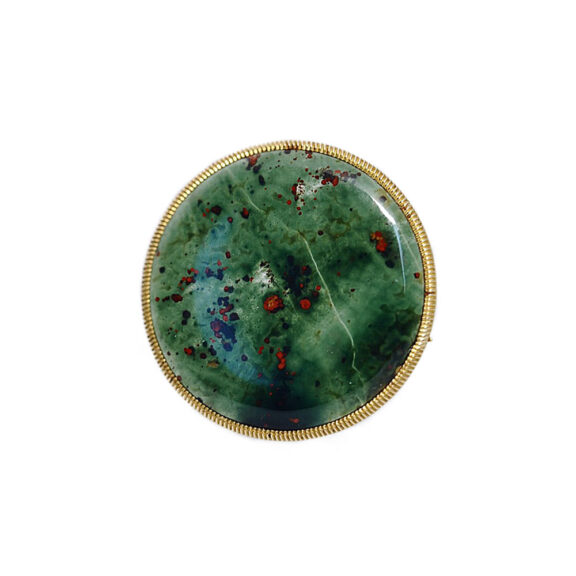
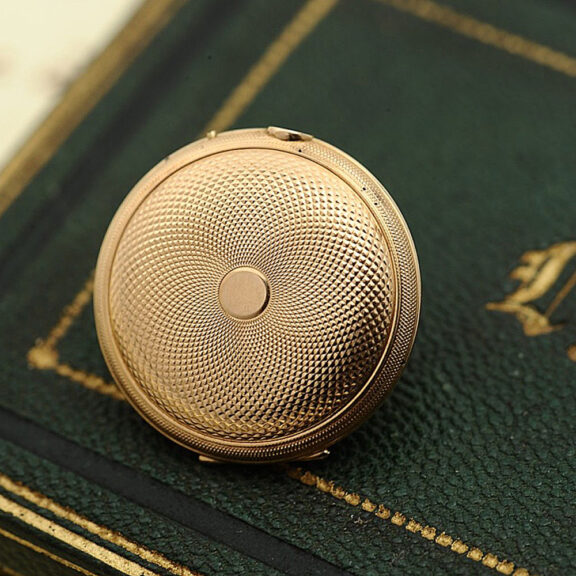
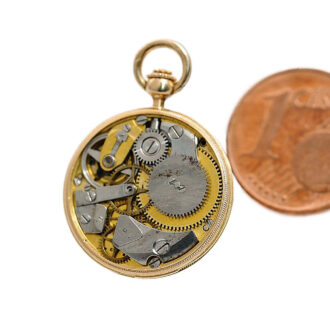
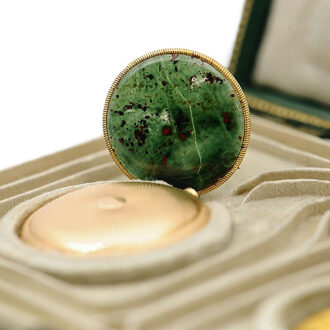
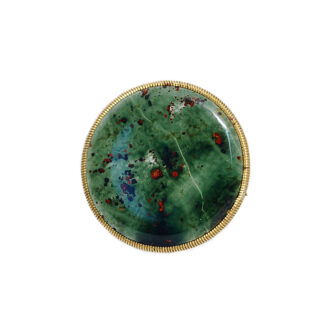
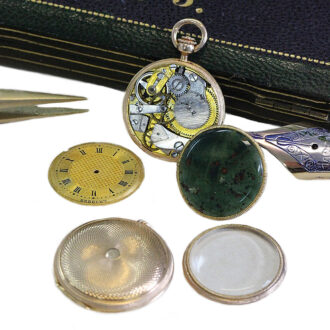
Two cases: an 18 Carat rose gold, engine turned, à goutte, full hunter cased outer case; and an 18 Carat gold and hematite open faced inner case with reeded band. Signed, gold, silvered dial with Roman hours and gold cathedral hands. Signed, gold replacement dial with an engine turned center and radial Roman numerals. Bridge movement, gilt brass with steel bridges, lever escapement “échappement libre à ancre” and platinum balance.
–
Diameter: 19 mm
–
Signed: Breguet à Paris
–
Louis Clément François Breguet sold the watch on January 3rd, 1845 for 3,000 francs to his father Antoine Louis Breguet (1776-1858), the son of the famous company founder, for Miss Louise Breguet.
–
Louis Clément François Breguet (1804- 1883) was head of his grandfather Abraham Louis Breguet’s company from 1833 to 1870 and sold the watch on January 3rd, 1845 for 3,000 francs to his father Antoine Louis Breguet (1776-1858), the son of the famous company founder. It is not sure whether Abraham Louis Breguet (1747-1823) himself invented the combined winding and hand setting function through the crown but is known that the mechanism was invented by the company before 1830, while it was under the direction of Antoine Louis Breguet.
Different keyless winding systems – which are in contrast to the automatic winding system – existed, the most important being the method developed by English maker Thomas Prest, who applied for a patent on his invention in 1820; however, the combined winding through one crown is firmly attributed to the house of Breguet.
Some of the earliest pocket watches Breguet produced with this technology were a series of 16 miniature pocket watches created between 1831 and 1839 in various case forms (as ring watches or in bracelets) and sold only to the most illustrious clientele – in 1838 Queen Victoria purchased the diamond studded No. 5102 for a sum of 4,250 francs. The first of the 16 watches (No. 4951, a bracelet version) was sold to the Marquess of Londonderry in September 1831 for 3,000 francs and supports the assumption that Breguet had developed the technology even before 1830.
Two other examples are described in Sir David Salomon’s book “Breguet” (No. 5019 and No. 5038). A certificate referring to no. 5019 describes what was at the time – due to its unusual size and the innovative crown – a unique and spectacular pocket watch: “…a superb creation and at the same time the most unusual and most perfect example of its kind. Platinum was used for the balance because it has the least expansion of all metals; it would be impossible to build a compensation balance into such a small watch”. No. 5038 was part of the Breguet exhibition at the Louvre in Paris in 2009, as was the ring watch No. 180. That piece has an additional alarm function and was sold for a sum of 260,000 US dollars at Sotheby’s “Masterpieces from the Time Museum” auction (lot 575) in 2004. In 1991 no. 7 was sold by Antiquorum during its auction “The Art of Breguet”, with an estimate of 180,000-220,000 Swiss francs (lot 95).
Signed: Breguet à Paris
Share this page: