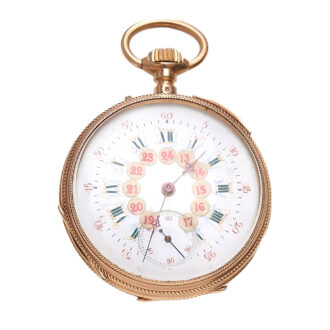
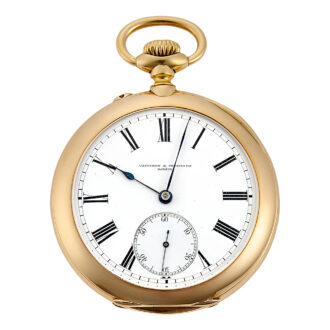
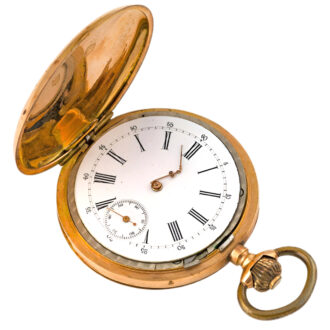
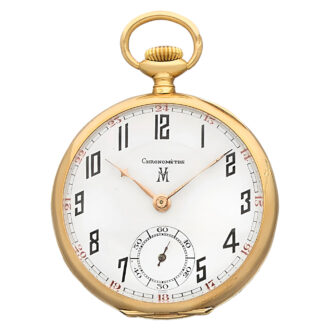
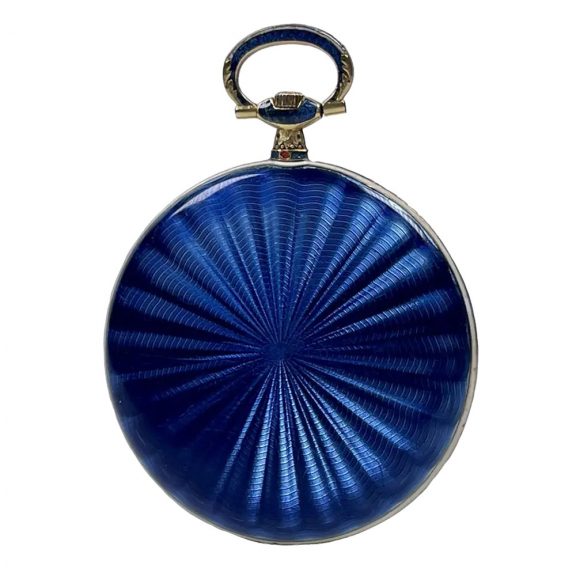
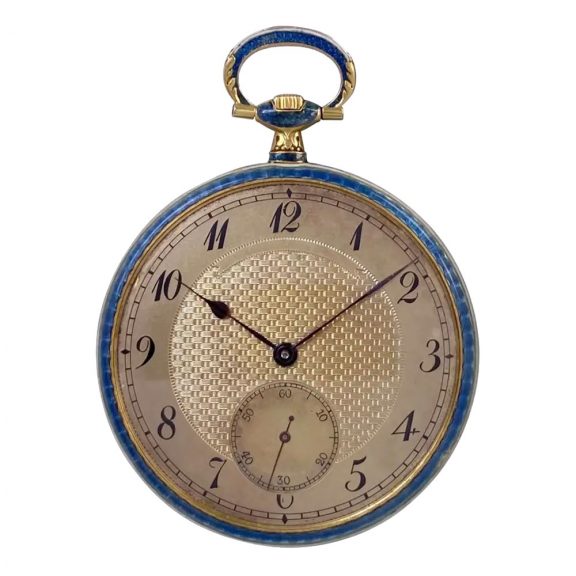
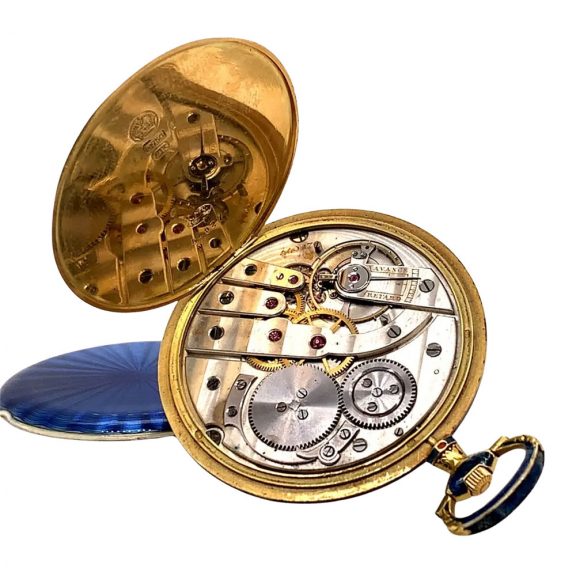
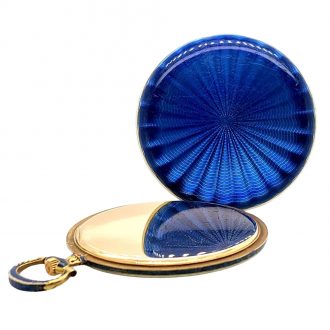
Flat Swiss 18K gold and enamel open faced lever Circa 1910
- Kenmerk
- DB0764
- Diameter
- 57 mm
- Estimate
- € 2.250 - 4.500
- Price sold
- -
Gold and enamel pocket watch by Haas Neveux & Cie
–
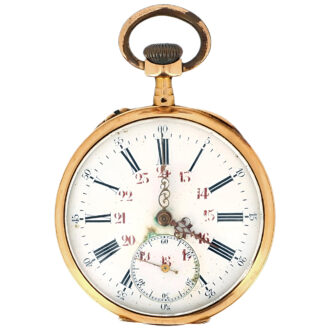
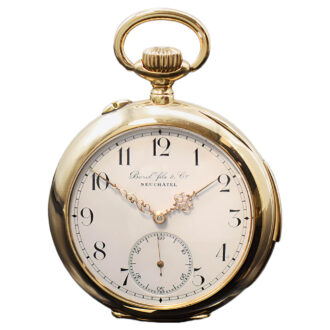
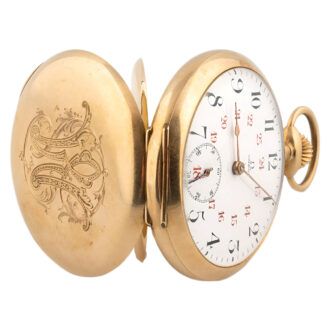
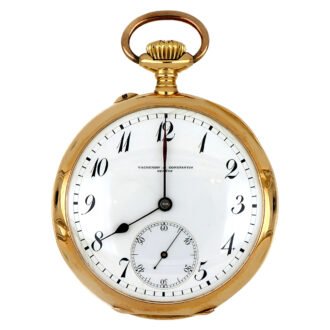
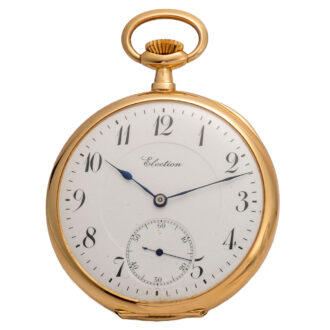
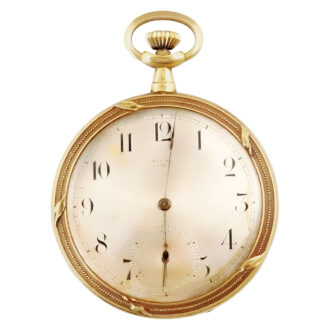
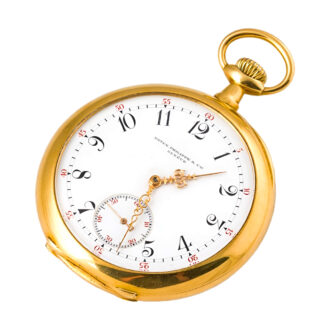
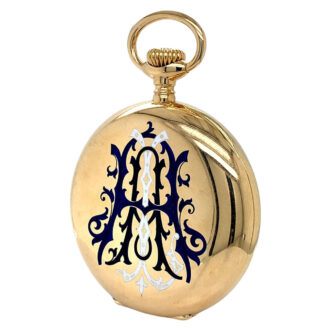
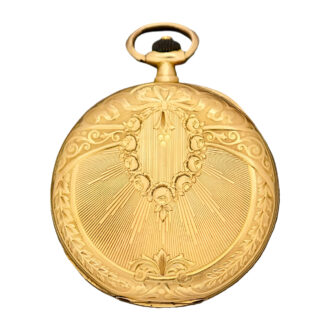
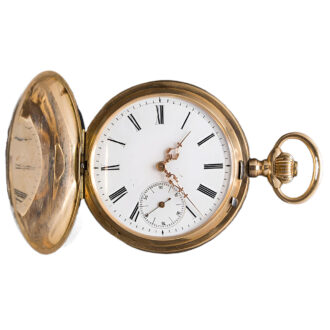
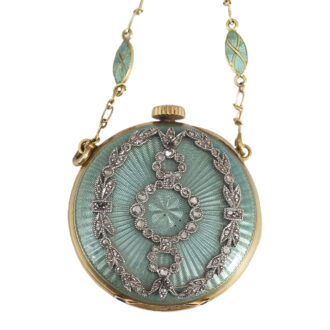
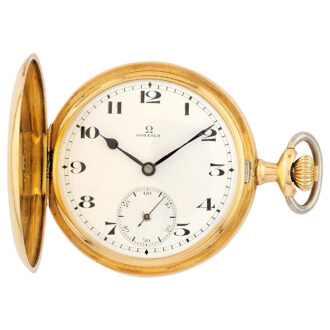
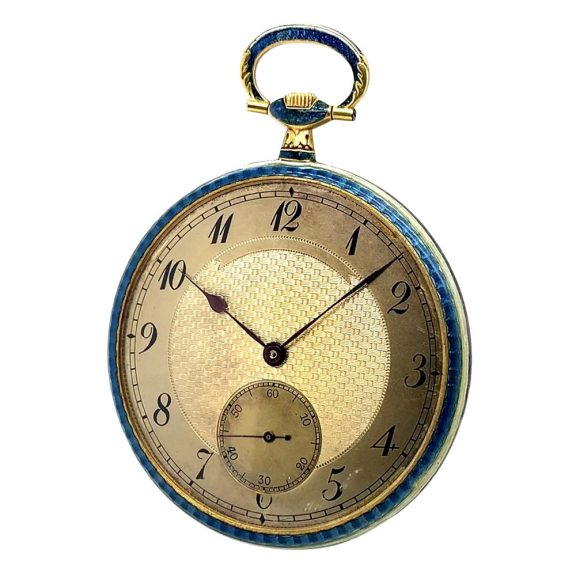
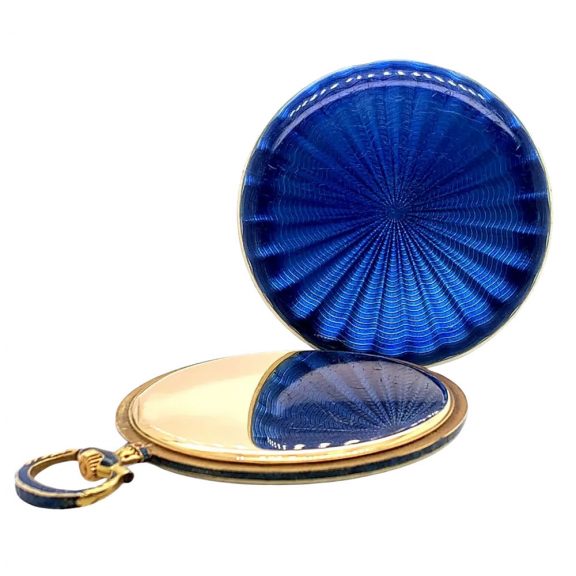
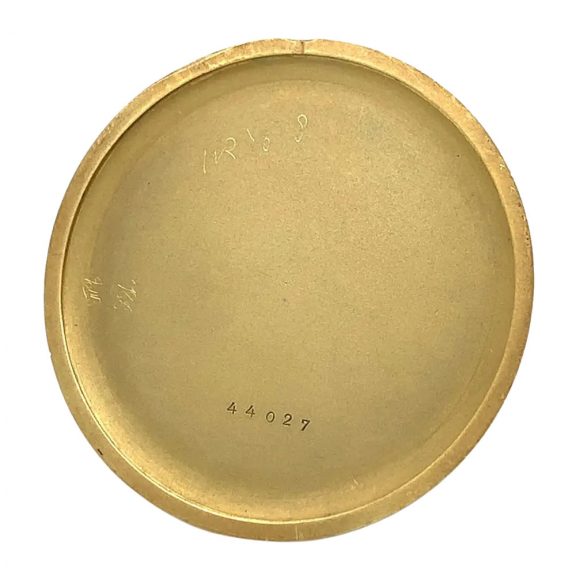
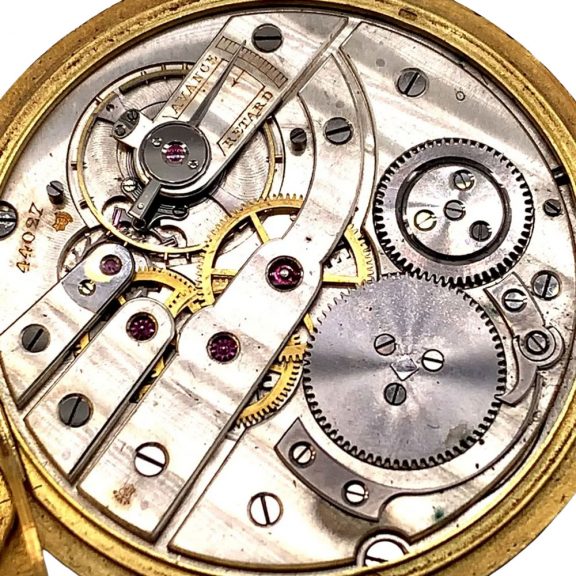
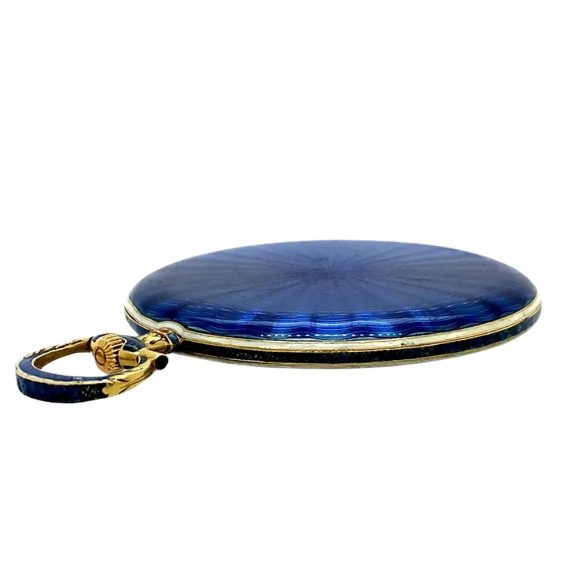
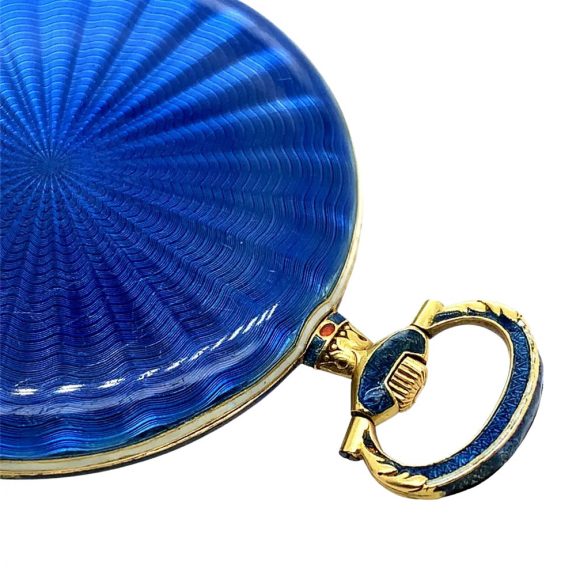
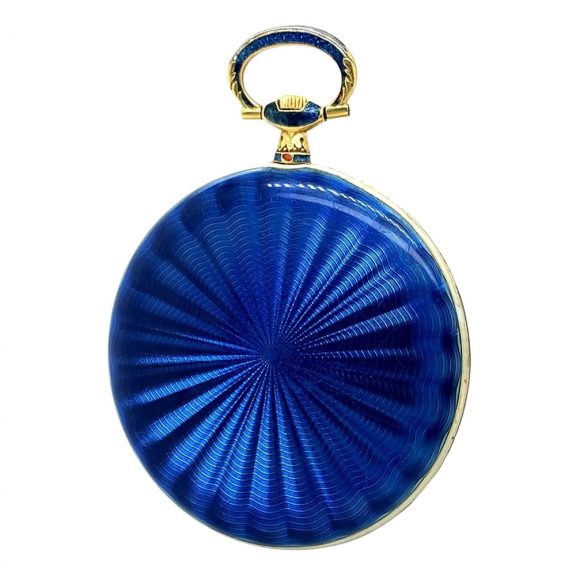
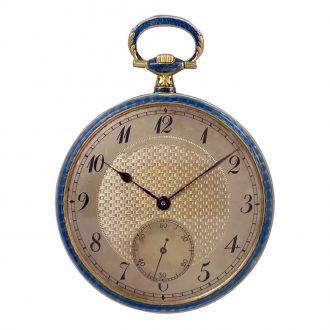
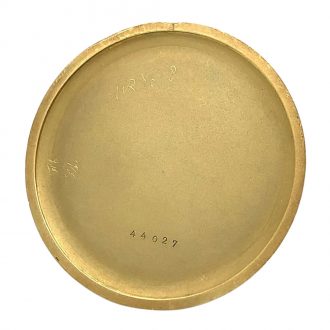
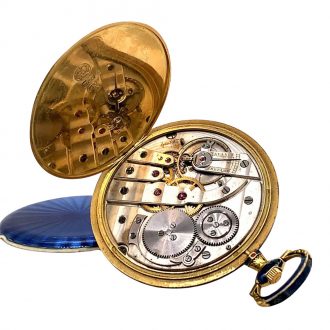
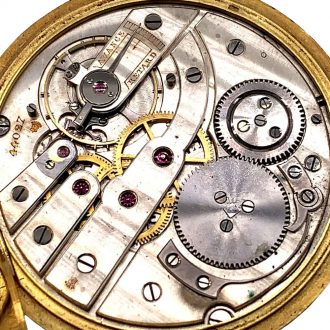
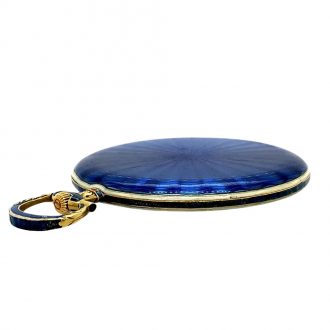
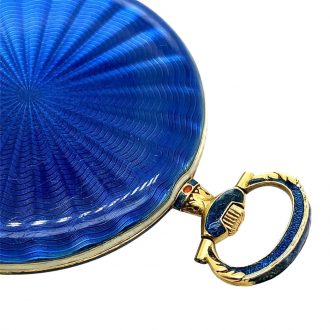
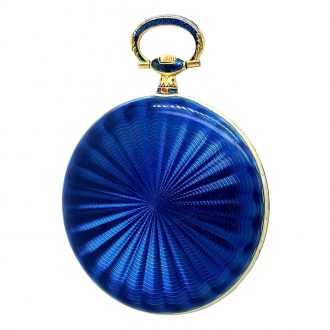
A fine and flat Swiss 18 carat gold and enamel open faced lever pocket watch, circa 1910. Bridge movement, the Geneva quality hallmark, a piston tooth lever escapement and gold screw compensation balance. Two-tone silver plated dial with Arabic hours, an outer minute track, subsidiary seconds at 6 o’clock, engine turned center and spade & whip hands. The case back with a translucent blue enamel radial guilloché pattern, an enamelled pendant and bezel with a narrow opaque white border. Movement and case numbered.
–
Diameter: 46 mm
–
Weight: 57 g
–
Signed: Haas Neveux & Cie
–
In 1848, the brothers Leopold (1827-1915) and Benjamin (1828-1925) Haas, both knights of the Legion of Honor, founded the Ancienne Manufacture Des Montres Haas & Cie. From Geneva, the house of Haas achieved its reputation with extraordinary timepieces that can still be considered modern even today. Even back then, the company was distinguished by its unique, exclusive watches. Rare pieces such as double chronographs were created as well as very fine crafted pocket watches and wristwatches. The outstanding principle of their watch making was the combination of simplicity, technology and elegance.
Benjamin Haas invented a winding system in which the spring was wound by opening the lid of the full hunter case. Patents 1873, page 48, explains and illustrates British Patent No. 3945, issued to Benjamin Haas on December 2nd, 1873. Other watchmakers used the patent for fees. To reflect that new family members had taken their place in the company, in 1884, the name Ancienne Manufacture Des Montres Haas & Cie was changed to Haas Neveux & Cie. At the same time, the original logo BH & Co. (for Benjamin Haas & Co) was changed to the little running rabbit, which embodies the dynamics of the house, in an oval below the letters HNC. The production set a record in 1896 with an ultra thin drive (2 mm) for a women’s watch. In 1902, Haas won first prize for precision in the competition of the renowned Observatoire de Genève.
Signed: Haas Neveux & Cie
Share this page: