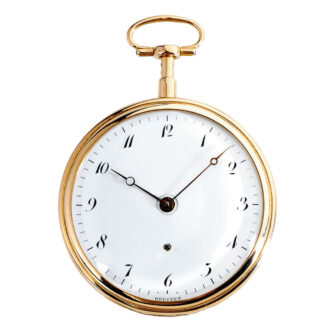
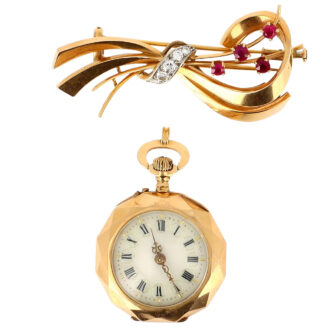
French gold 10 min repeater with jumping hours Circa 1802
- Kenmerk
- PD0577
- Diameter
- 57 mm
- Estimate
- € 45.000 - 65.000
- Price sold
- € 52.500
Gold open faced cylinder watch
–
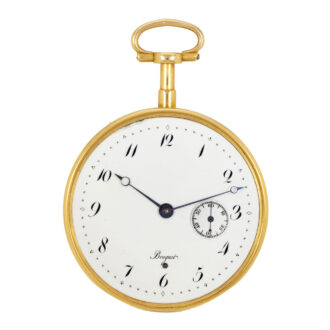
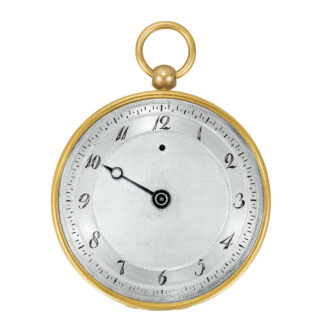
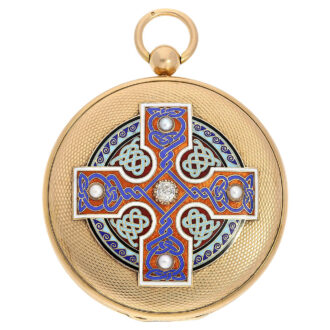
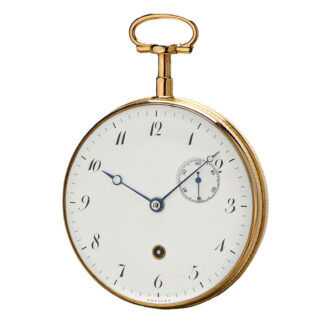
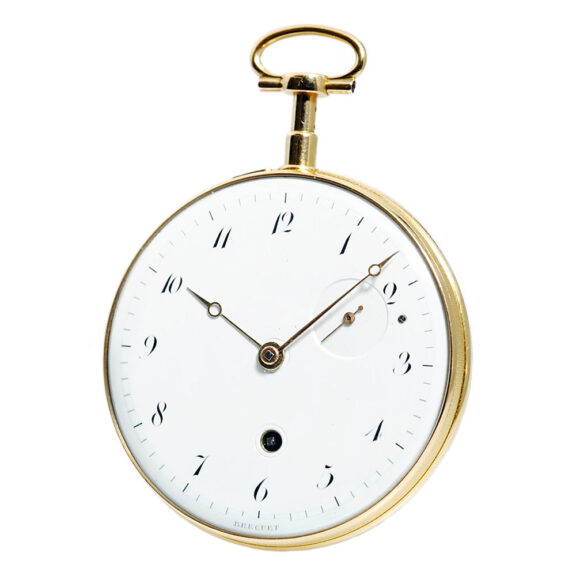
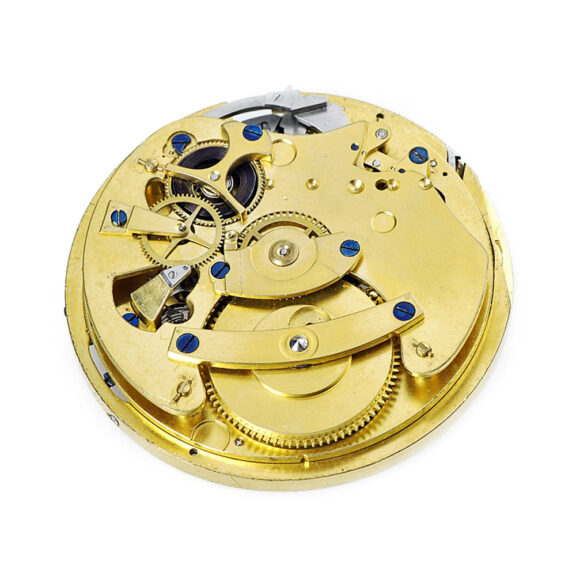
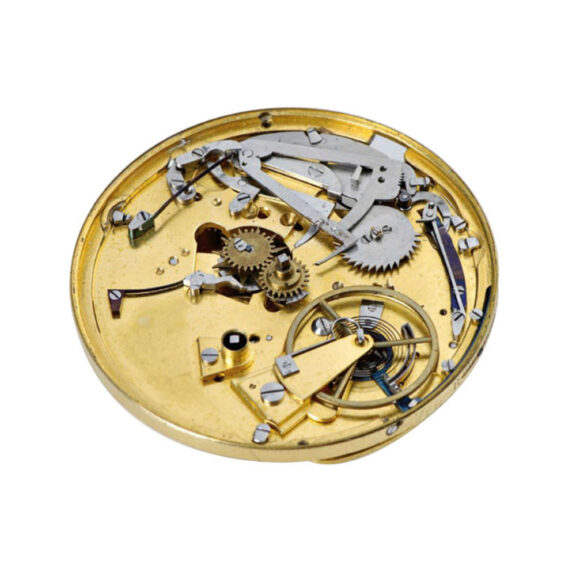
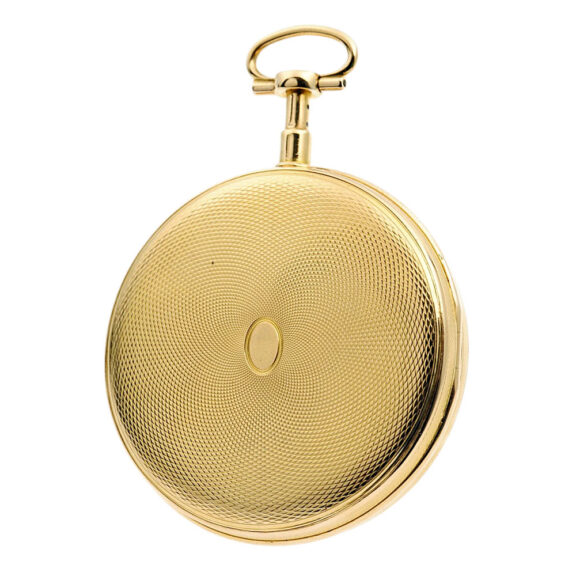
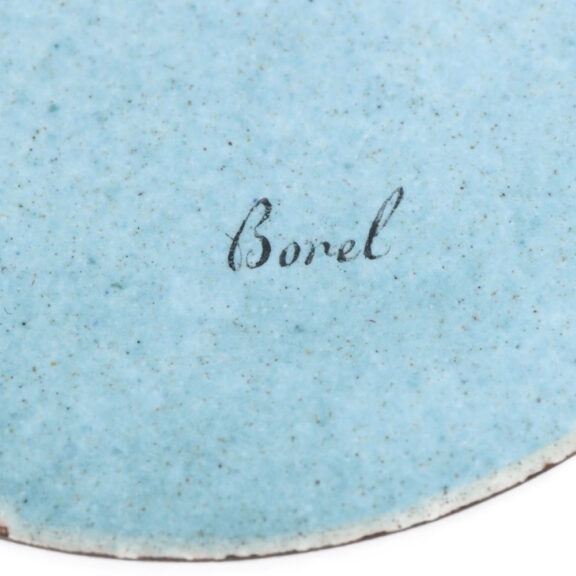
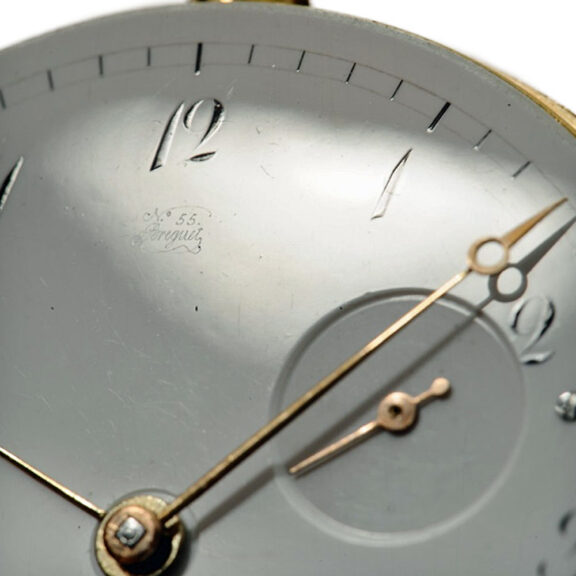
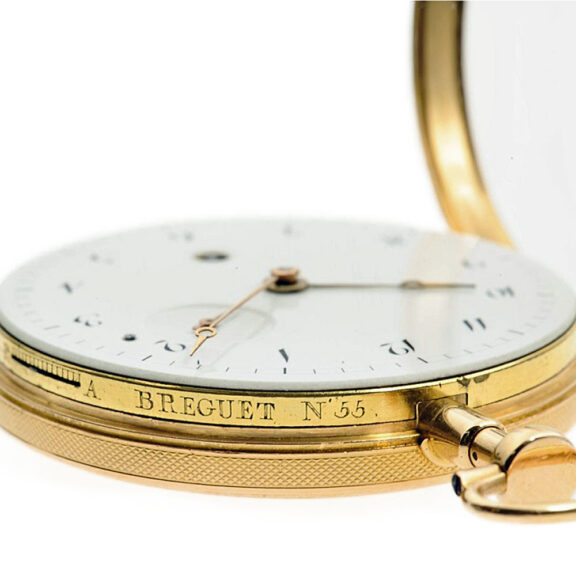
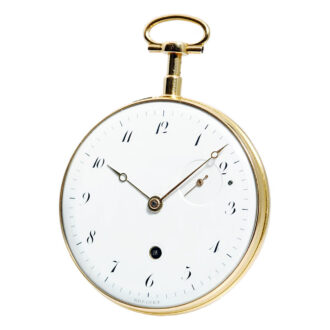
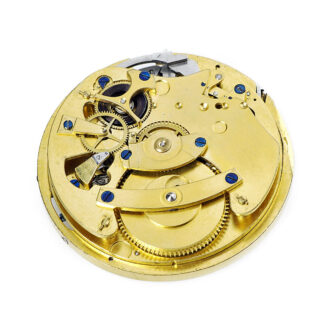
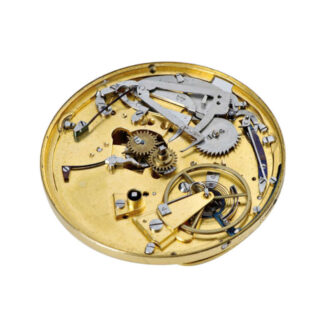
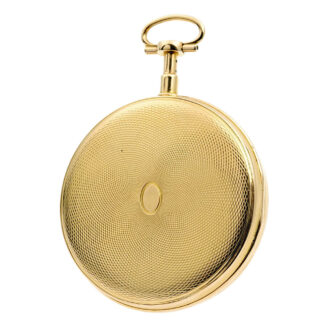
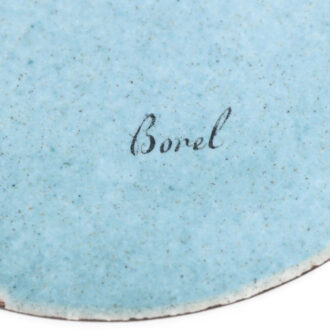
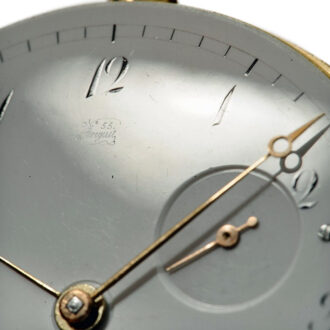
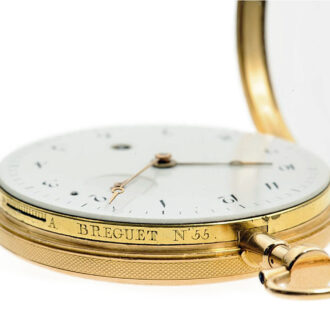
An important, extremely rare French 18 carat gold open faced pocket watch with jumping hours and 10 minute repeating, using both a gong with 10-minute strike and the case block with hour strike, circa 1802. Gilt bridge movement, keywind, one hammer, one gong, shock protection parachute, overhanging ruby cylinder escapement, three armed brass balance, blued balance spring with bimetallic compensation curb on the index. White enamel dial by Borel, Arabic Breguet numerals, blank subsidiary dial for auxiliary seconds at 2, signed Brequet, additional secret signature below 12 and gold Breguet hands. Case engine turned to the back, oval blank reserve, signed Breguet No. 55 to the rim of the middle part, case maker Guillaume Mermillod, pusher for repetition through the pendant, lever to adjust the velocity of the striking mechanism at 10, lever to stop the repeating mechanism mounted on the bezel between 11 and 12.
–
Diameter: 57 mm
–
Weight: 124 g
–
Signed: Abraham-Louis Breguet Paris
–
This timekeeper is an excellent example of the watches Breguet began producing after 1790 and which were so much more advanced than those of most other makers at the time. The watch is intriguing not only because of its movement calibre type that was developed for the first repeating timer watches – but there is also Breguet’s new double repeating system, which was dumb for the hours and used a gong for the intervals. This was the first time anyone used a gong fixed to the inside of the case and Breguet was one of the very few makers who created 10 minute repeaters. The style of the gold case is also very typical for the first timers.
–
An important, extremely rare French 18 carat gold open faced pocket watch with jumping hours and 10 minute repeating, using both a gong with 10-minute strike and the case block with hour strike, circa 1802. Gilt bridge movement, keywind, one hammer, one gong, shock protection parachute, overhanging ruby cylinder escapement, three armed brass balance, blued balance spring with bimetallic compensation curb on the index. White enamel dial by Borel, Arabic Breguet numerals, blank subsidiary dial for auxiliary seconds at 2, signed Brequet, additional secret signature below 12 and gold Breguet hands. Case engine turned to the back, oval blank reserve, signed Breguet No. 55 to the rim of the middle part, case maker Guillaume Mermillod, pusher for repetition through the pendant, lever to adjust the velocity of the striking mechanism at 10, lever to stop the repeating mechanism mounted on the bezel between 11 and 12.
–
Diameter: 57 mm
–
Weight: 124 g
–
Signed: Abraham-Louis Breguet Paris
–
This timekeeper is an excellent example of the watches Breguet began producing after 1790 and which were so much more advanced than those of most other makers at the time. The watch is intriguing not only because of its movement calibre type that was developed for the first repeating timer watches – but there is also Breguet’s new double repeating system, which was dumb for the hours and used a gong for the intervals. This was the first time anyone used a gong fixed to the inside of the case and Breguet was one of the very few makers who created 10 minute repeaters. The style of the gold case is also very typical for the first timers.
Signed: Abraham-Louis Breguet Paris
Share this page: