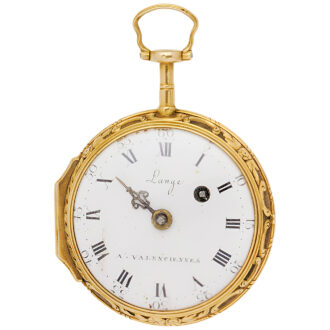
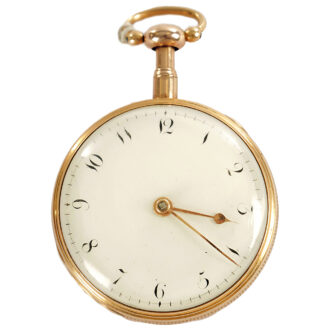
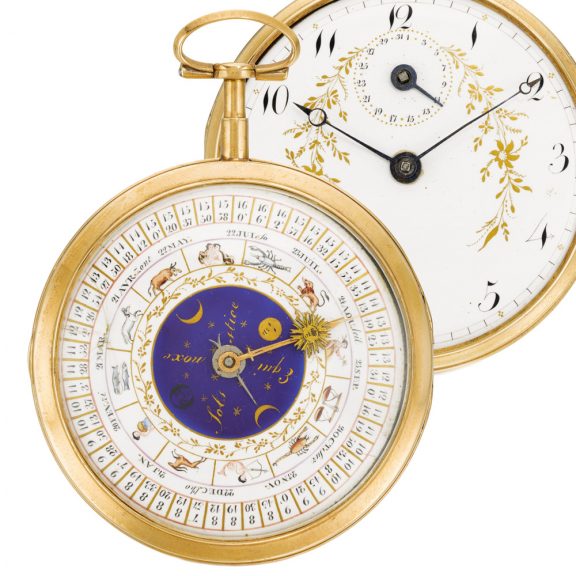
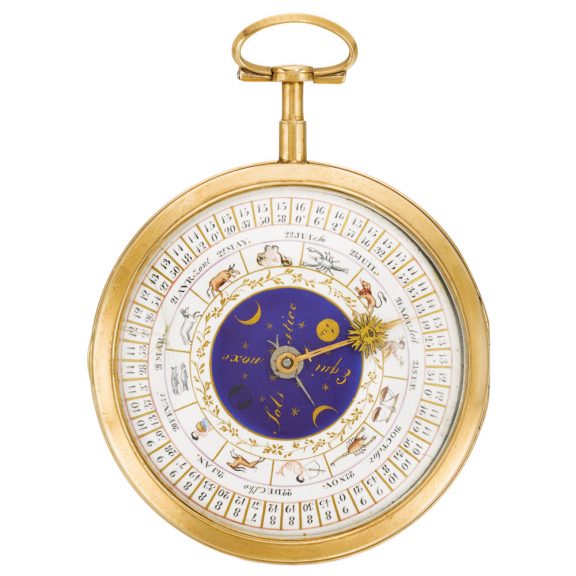
French gold astronomical watch with signs of the zodiac Circa 1800
- Kenmerk
- AS1779
- Diameter
- 57 mm
- Estimate
- € 10.000 - 22.000
- Price sold
- € 7.600
Unsigned gold double dialled pocket watch
–
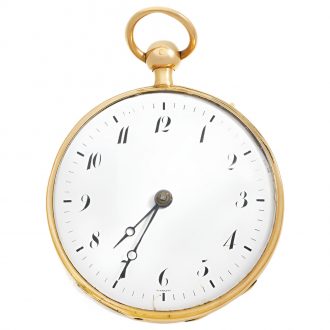
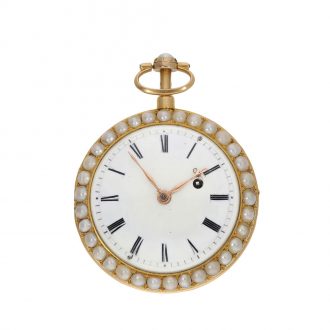
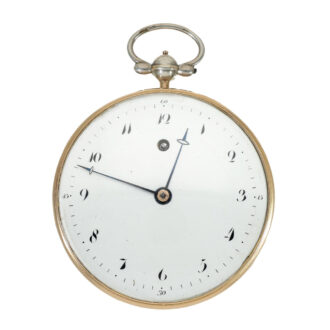
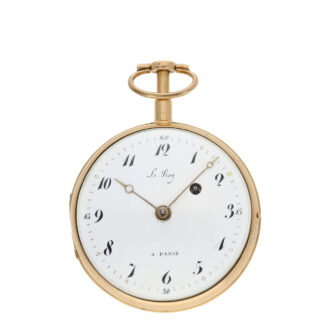
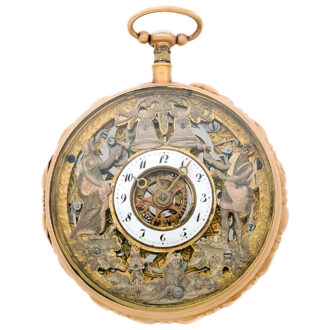
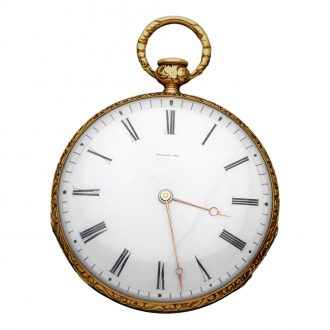
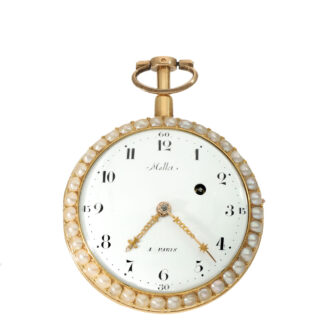
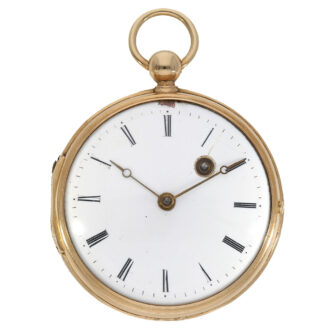
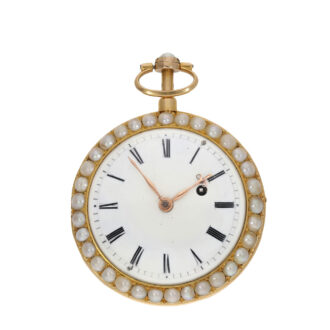
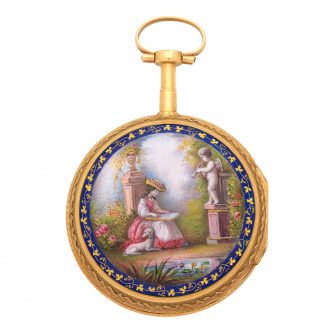
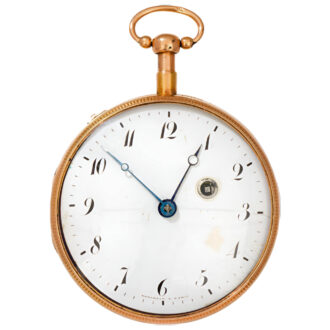
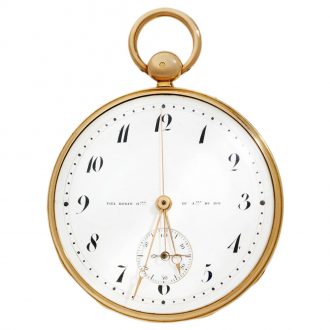
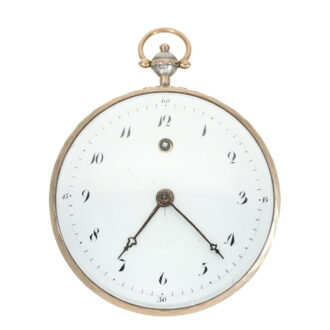
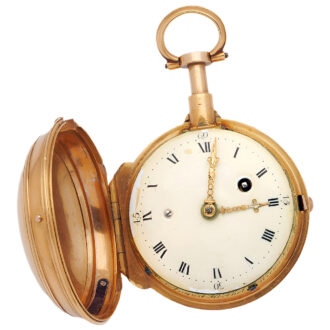
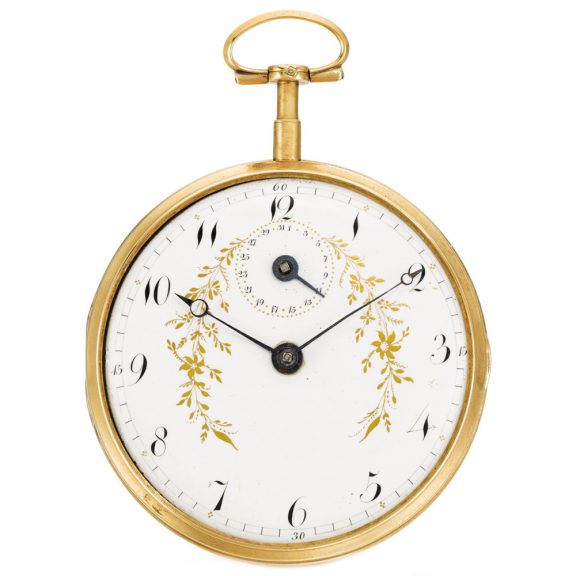
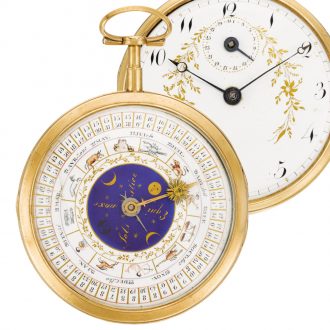
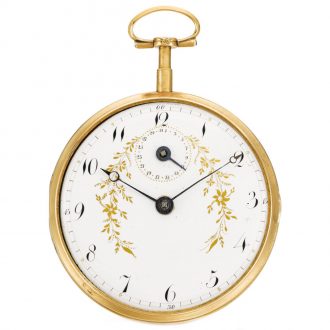
A French gold double dialled astronomical watch with date, signs of the zodiac, length of day and moon phases, circa 1800. The watch features a gilded movement with a cylinder escapement and cylindrical pillars. It has two dials: the first dial is white enamel with Arabic numerals, an outer minute ring, and a subsidiary dial for the date; its central arbour acts as the winding square; and it is adorned with gilt painted floral garlands and blued steel moon hands. The second dial is white enamel with a center of blue enamel displaying moon phases and indications for the equinox and solstice. It also features polychrome enamel painted signs of the zodiac above with their dates and an outermost scale for the lengths of the day divided into weeks, indicated via a sun tipped central hand. The case is plain gold, double open faced, with a gold stirrup pendant and bow.
–
Diameter: 57 mm
–
Signed: No name
–
The movement runs for short periods and the escape wheel is flat, with noticeable wear to the edges of the cylinder from its interaction. The time dial is in good condition, but the astronomical dial has hairline cracks, especially around March, where there is a star crack, and hairline cracks by October and January. The case has light scuffs and scratches, with a small indentation on the edge of the bezel above August. The pendant is stamped ‘G’ within a lozenge shaped cartouche.
–
The current dial design is influenced by Joseph Coteau, a renowned enameler known for supplying dials to the prominent clockmakers of France. Born in Geneva in 1740, Coteau achieved the title of maître peintre émailleur at the Académie de Saint-Luc in Geneva in 1766 and later established himself in Rue Poupée, Paris, by 1772.
–
Coteau’s expertise extended beyond dials, as he was also recognised for his skill as a miniaturist. He developed a new technique for affixing raised gold to porcelain and collaborated with the Sèvres factory to enhance their ‘jewelled’ porcelain. Following the guilds’ abolition in 1791, enamelers were permitted to sell complete clocks without the requirement to include the clockmaker’s name.
–
Astronomical dials like the one depicted here were typically found in larger formats, such as longcase clocks, due to their intricate nature. The fact that such a technically complex dial configuration could be produced within a case diameter of only 57 mm is a testament to the maker’s remarkable talent.
Share this page: