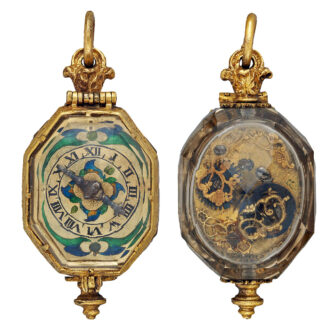
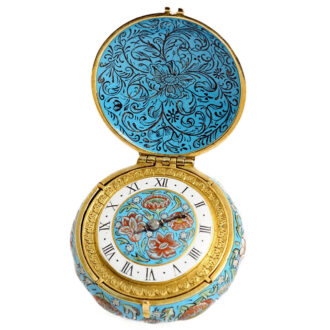
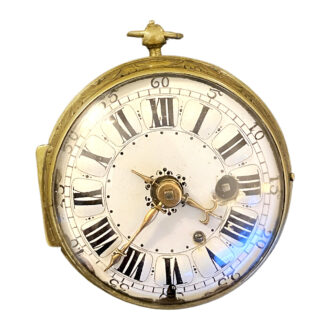
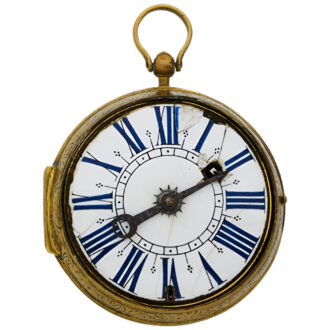
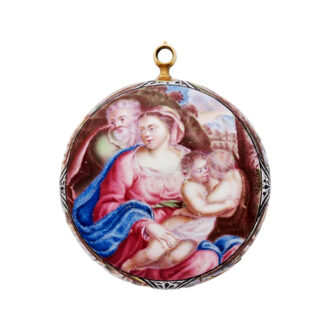
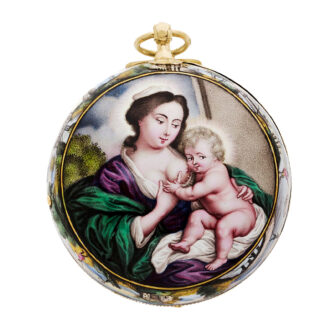
French or possibly German rare rock crystal watch Circa 1620
- Kenmerk
- AD9689
- Diameter
- 46 mm
- Estimate
- € 75.000 - 140.000
- Price sold
- -
Gold and enamel watch with cosse de pois enamel decoration
–
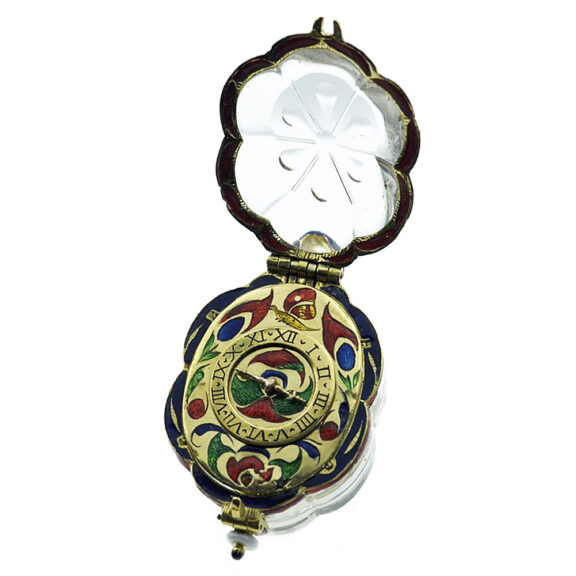
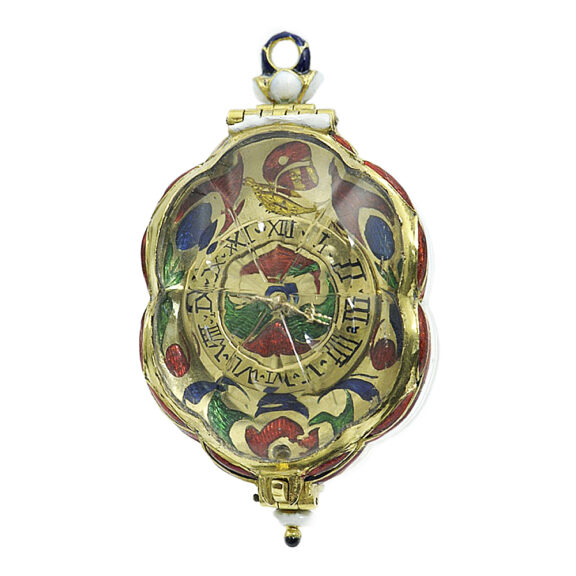
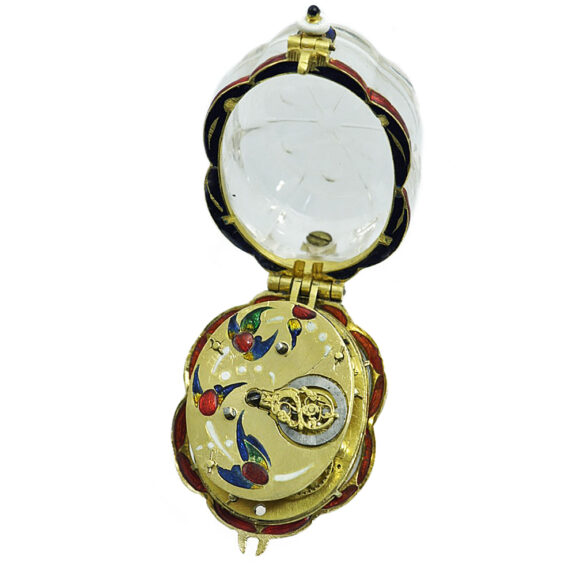
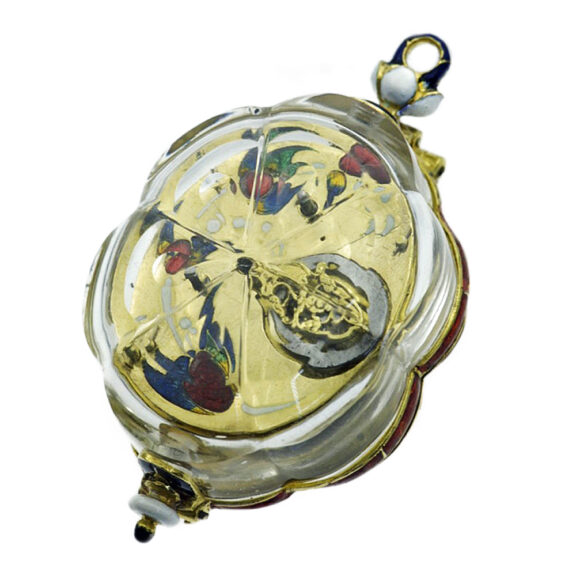
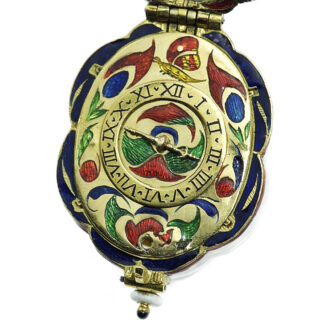
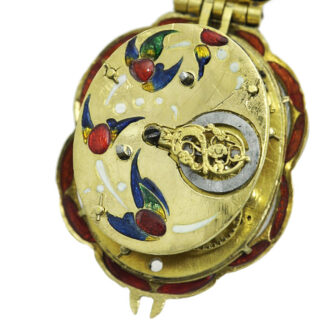
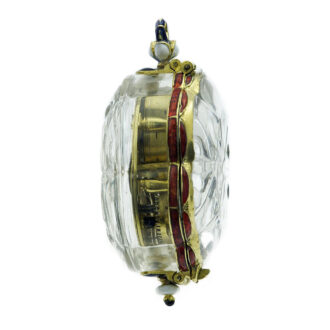
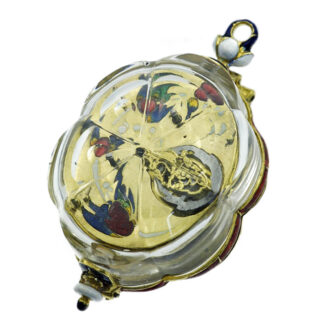
A French or possibly German, important and exceptionally rare gold and enamel lobed rock crystal watch with cosse de pois enamel decoration on the movement backplate, circa 1620.
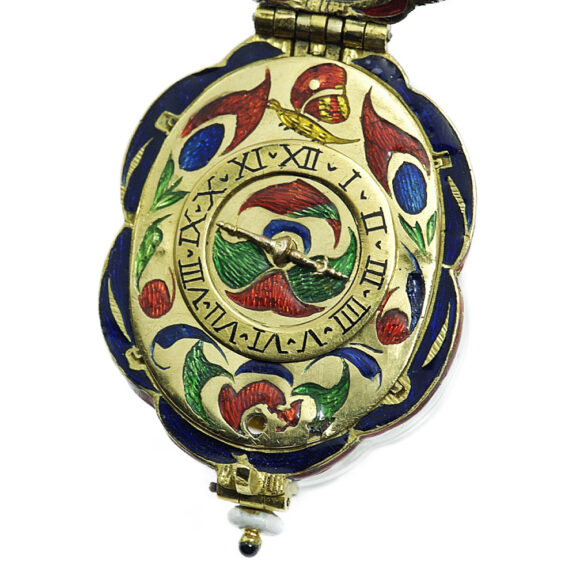
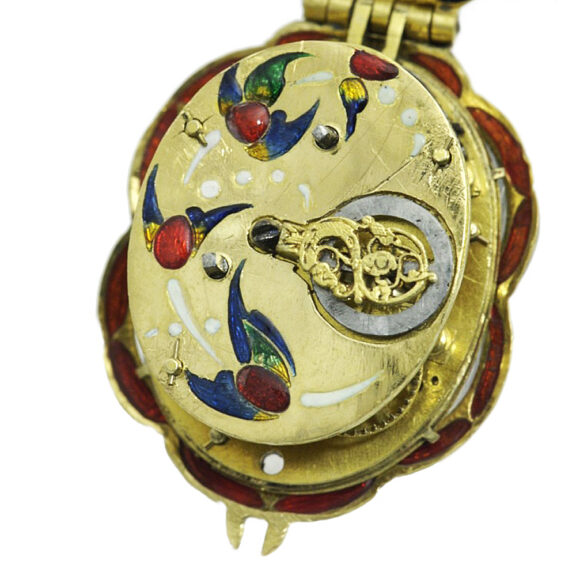
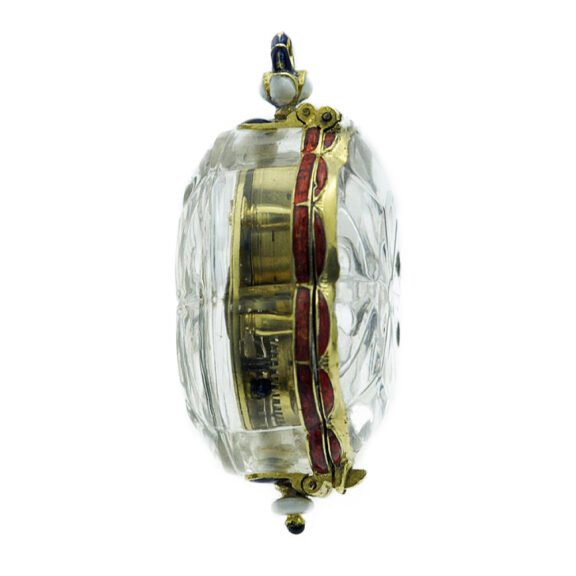
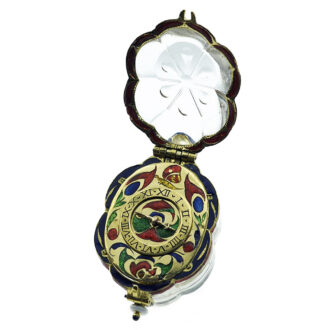
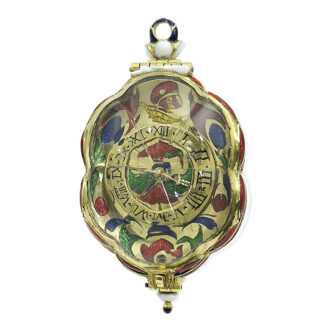
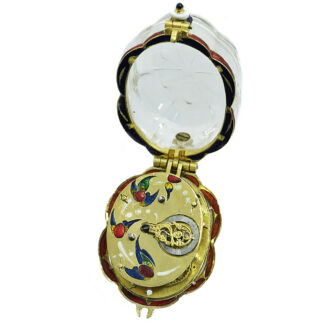
The case has gold and enamel frames decorated with translucent en plain scarlet enamel over a flinqué ground, the interior of the movement frame with similar blue champlevé decoration. Pendant and button finial enamelled in blue and solid white enamel and secured by screws to the hexagonal lobed and dimple engraved rock crystal back. The cover of the same design. The dial has an oval gold plaque pinned to the movement front plate, decorated in translucent scarlet, blue and green champlevé enamels with cosse de pois foliage and a yellow and red butterfly. Applied gold chapter ring with black enamelled Roman numerals and half hour marks. Single gold hand. The movement has oval gilt plates with baluster pillars, a narrow fusee with a gut line, a three wheel train with verge escapement, plain steel balance without spring. Pierced and engraved balance cock with reduced foot secured by a screw. The backplate is overlaid with a gold plaque decorated similarly to the dial with red, blue, green and yellow translucent and opaque white enamel with a cosse de pois design.
Watches with an enamelled gold overlay on the movement are exceptionally rare although not unknown.
–
Dimensions: 46 x 26 mm
–
Weight: 35 g
–
Signed: No name
–
A watch with such a plaque, also with gold and enamel frames and rock crystal covers was sold at Christie’s Geneva in 1989. The movement was stamped with the initials MB, and certain of the translucent enamel colours indicated that it might be of French origin. Indeed, without a signature, it is difficult to be definitive as to the country of origin of the present lot. The technique of the enamelling is common to both French and German watches and jewels of the period, as indeed is the construction of the movement. The style of ornament known as Cosse de Pois (pea pod) flourished for only a short period during the first half of the 17th Century and mainly in France. Although a number of artists created and published designs, very few items of jewellery and even fewer watches were created using the style.
Peter Fuhring and Michele Bimbenet, whose extensive work on the subject was published in 2002 recorded some forty engravings dating between 1612 and circa 1640. Among these can be noted Jacques Briot, Paris,1629, and Pierre DeLaBarre, Paris circa 1640. In addition, there is a series of monogrammed prints stamped AD and dated 1608, and the series by Jean Toutin, the famous designer, engraver and enameller published in Chateaudun in 1619. A further set of designs were engraved by the Strasbourg artist Isaac Brun, after Peter Symony and published in 1621. Strasbourg was a free imperial city in the southwest of the Holy Roman Empire, with a guild of exceptional gold and silversmiths.
Flinqué
Engraving done by hand using a graver or by machine using a rose-engine and comprising intersecting straight or wavy lines. The tool is always moved concentrically.
Signed: No name
Share this page: