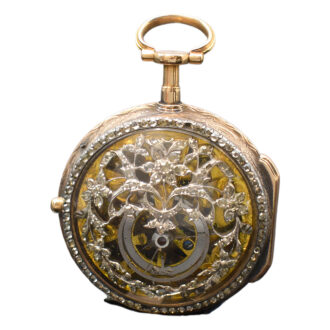
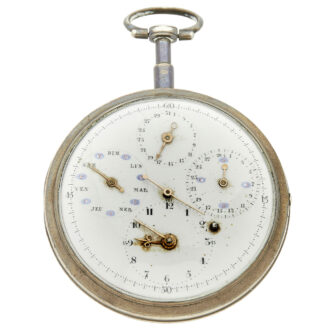
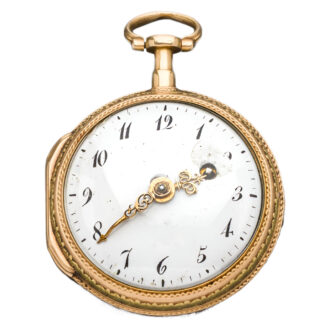
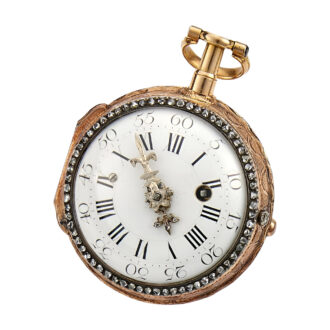
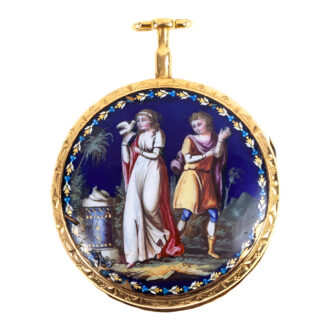
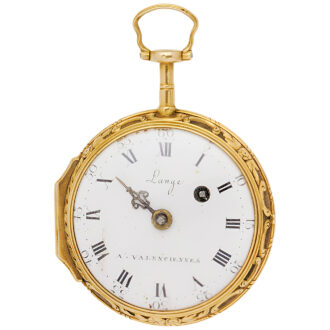
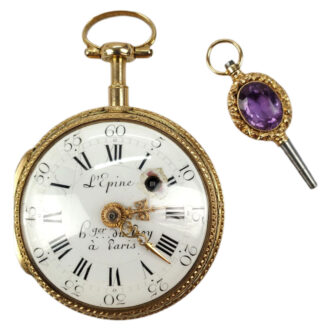
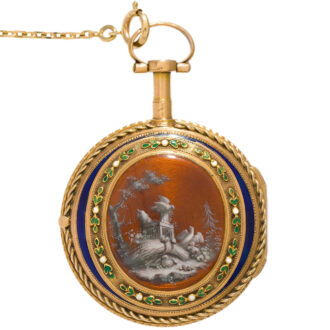
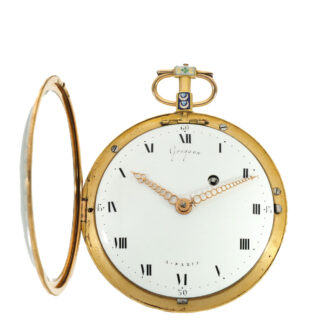
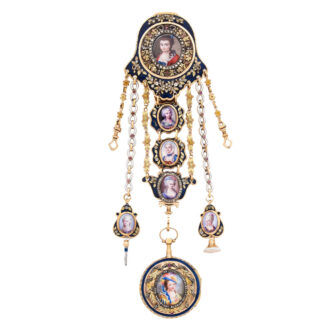
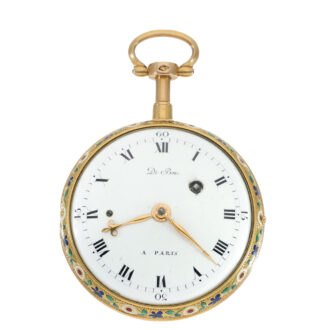
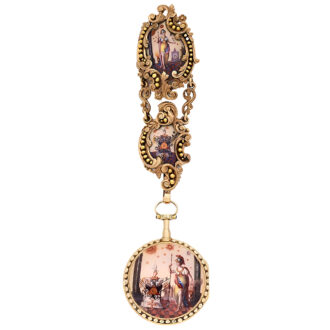
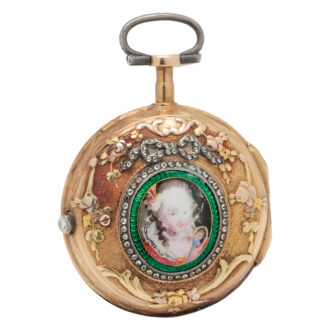
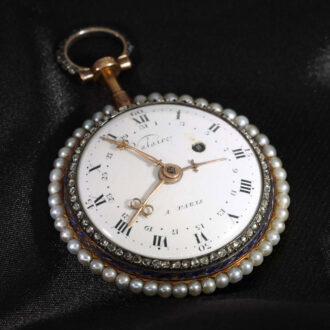
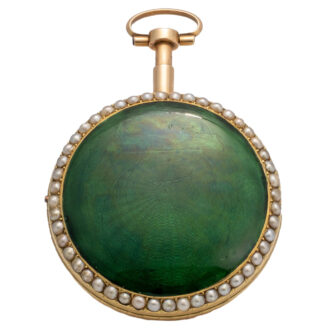
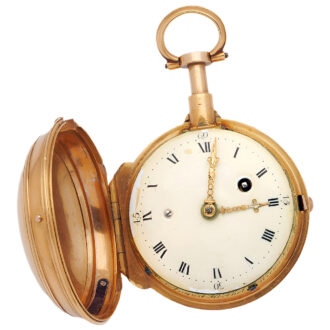
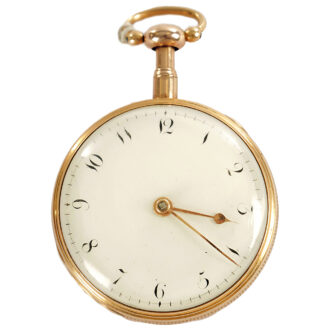
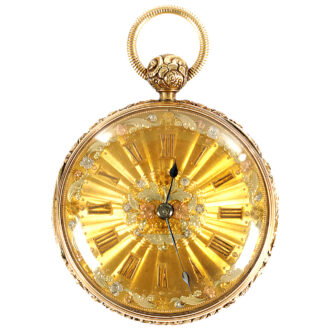
French rare gold and enamel manual calendar pocket watch Circa 1780
- Kenmerk
- AD9764
- Diameter
- 41 mm
- Estimate
- € 7.500 - 14.000
- Price sold
- € 13.200
Gold and enamel manual calendar with moon-phases
–
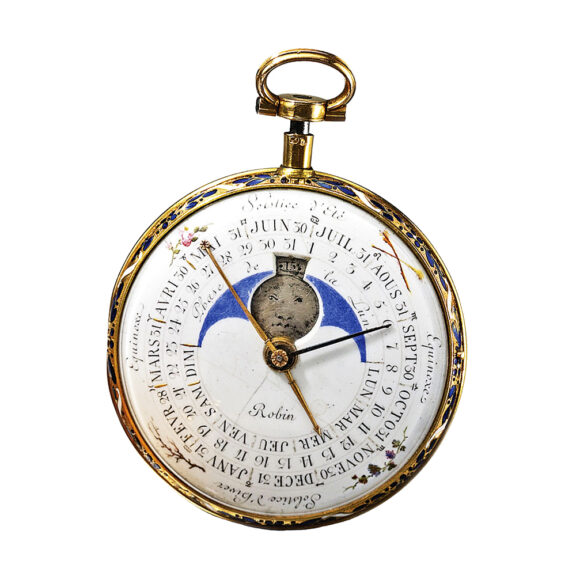
An extremely rare French gold and enamel open faced manual calendar watch with moon phases, circa 1785.
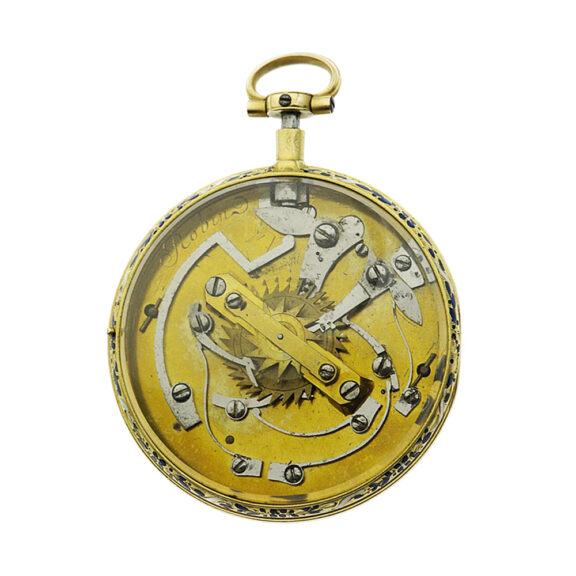
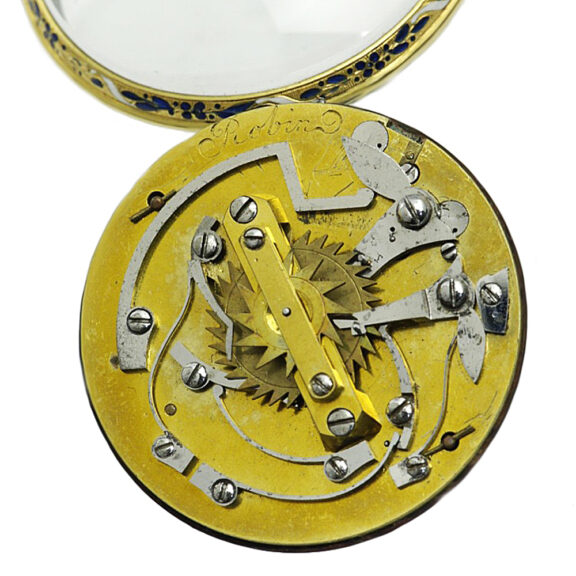
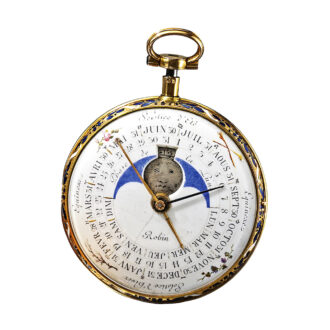
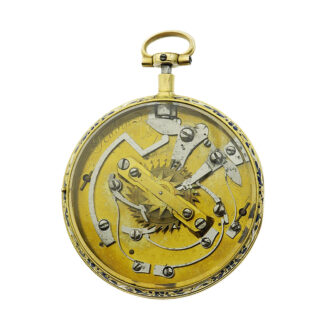
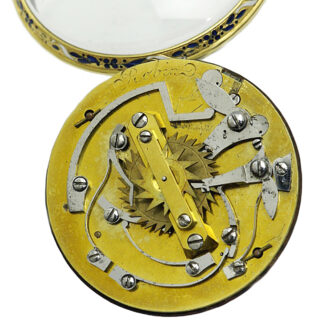
A white enamel dial with concentric rings calibrated for the four seasons and punctuated with painted enamel emblems for each, the months with a corresponding number of days, date and days of the week, centred by phases of the moon with an aperture for the ages, the bezels are decorated with a blue and white champlevé enamel foliate motif, the gilt and steel calendar work is visible through glazed back. Dial and movement signed by the watchmaker, the dial signed Coteau underneath.
–
Diameter: 41 mm
–
Signed: Robin
–
Robert Robin (1741-1799) was a talented and inventive clock and watchmaker who counted among his clientele the French Royal Family. He became Marchand-Horloger Privilégié du Roi on 22 October 1763 and resigned on 13 September 1765 in favour of Jean-Pierre Courtois. In 1778 the Académie des Sciences approved two of his inventions, one being an astronomical clock representing a meridian drawn on a pyramid, which the Menus Plaisirs acquired that year for Louis XIV, for 30,000 livres. During the same period, he perfected his famous mantel clocks with astronomical indications and compensated pendulums, one of the first owners being the Marquis de Courtanvaux. Robin applied these principles to regulators, the Duc d’Aumont possessed an early model of this kind. He was equally interested in watches, using a special escapement that bears his name from 1786 onwards and in monumental clocks, supplying the Grand Commun at Versailles (1782), the Menus Plaisirs and the Petit Trianon (1785). Many members of Parisian high society were clients of Robin, including the maréchaux Ducs of Duras and Richelieu and the marquis de Sérent, tutor to the dukes of Angoulême and Berry. In 1794, Robin was appointed Horloger de la République. After the French Revolution, he was given the task of making an inventory of the Royal clocks including the 23 that belonged to Marie Antoinette.
Joseph Coteau (1740-1812) was possibly the most famous enameller of his day, supplying dials for the great clockmakers of France. Born in Geneva, he became maître-peintre-émailleur at the Académie de Saint-Luc in Geneva in 1766. By 1772 he was installed in Rue Poupée, Paris. Coteau is celebrated not only for his dials but also as a skilled miniaturist. He discovered a new method for fixing raised gold on porcelain and worked closely with the Sèvres factory in developing their ‘jewelled’ porcelain. After the abolition of the guilds in 1791, enamellers were allowed to sell complete clocks without being required to include the name of the clockmaker.
Signed: Robin
Share this page: