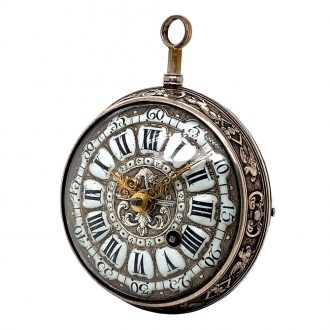
French silver quarter repeating verge pocket watch Circa 1750


- Kenmerk
- DB0738
- Diameter
- 52 mm
- Estimate
- € 3.500 - 6.000
- Price sold
- € 4.500
Silver repoussé watch by Baptiste Paillard
–
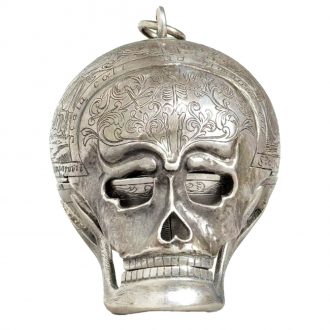
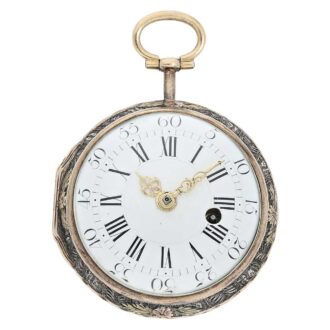
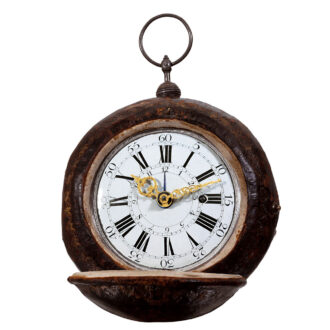
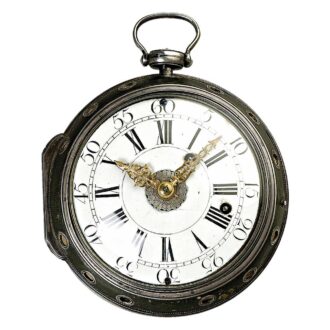
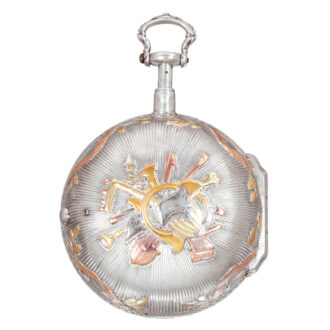
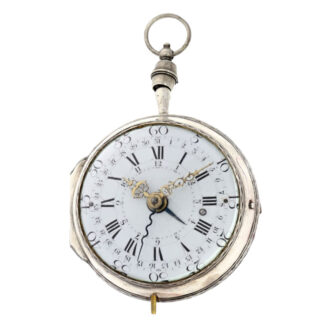
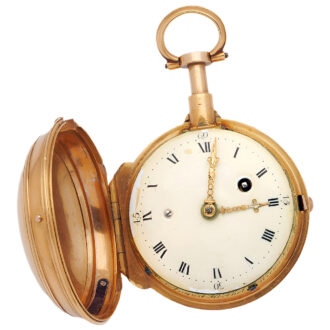
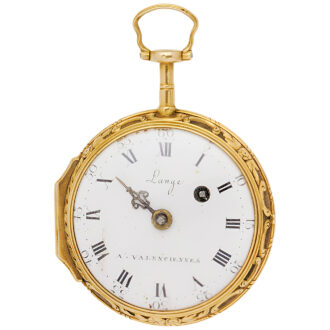
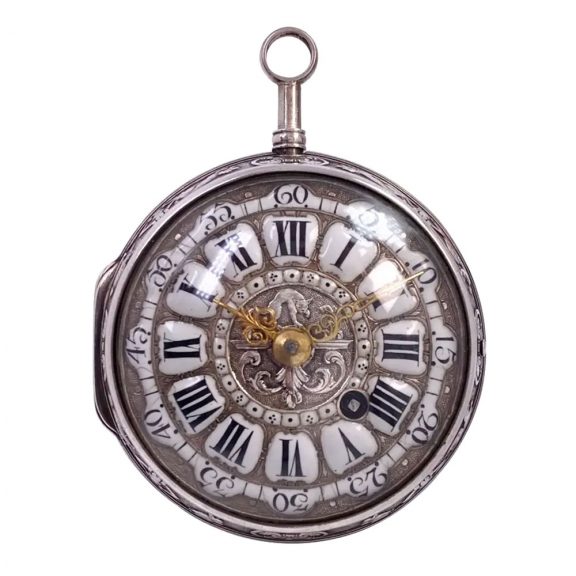
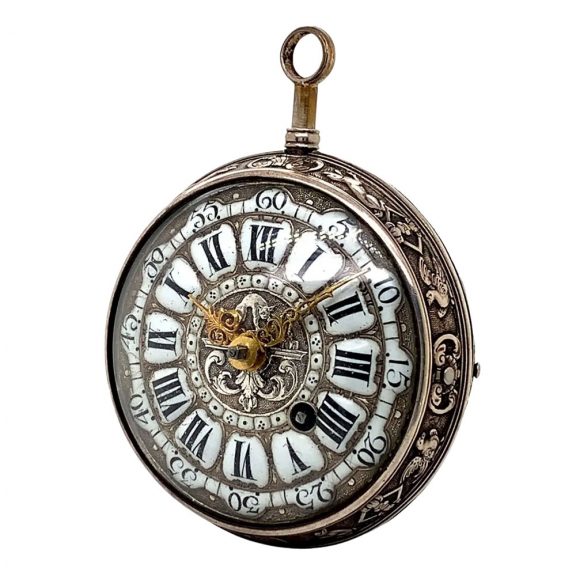
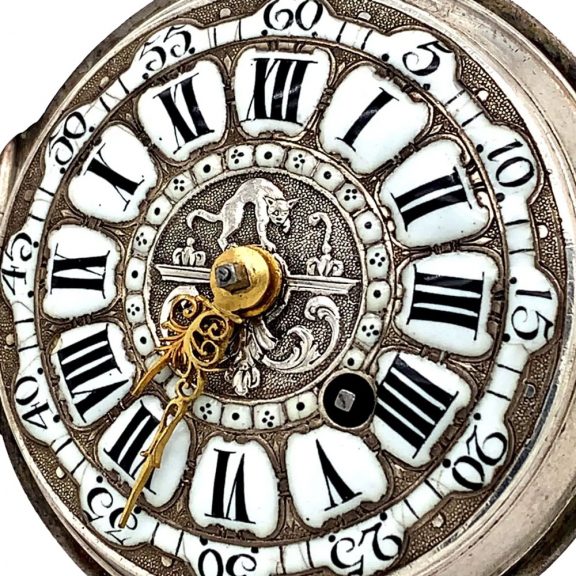
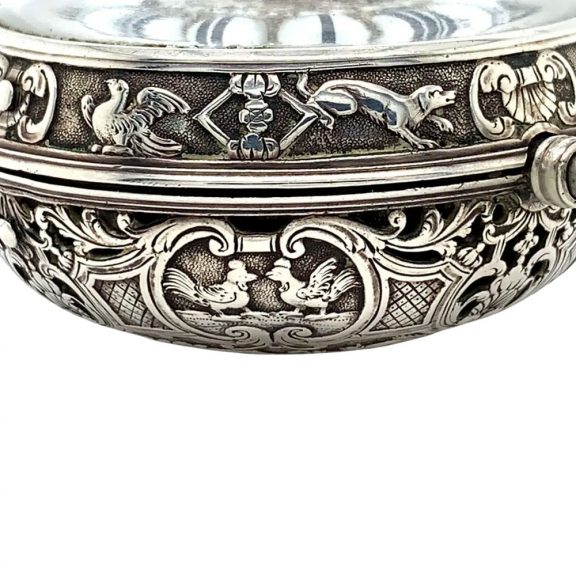
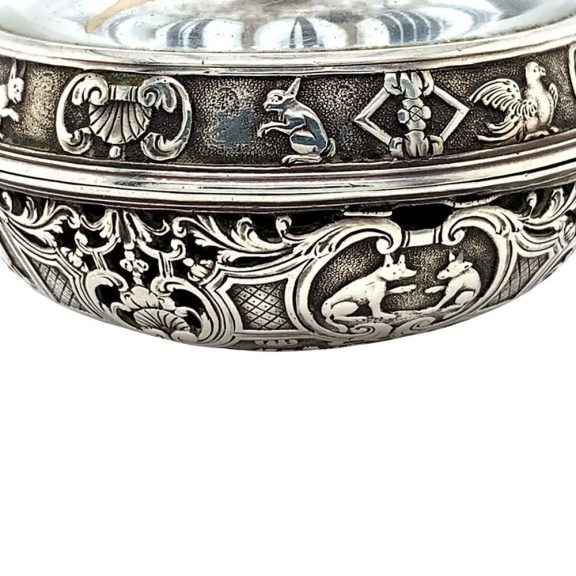
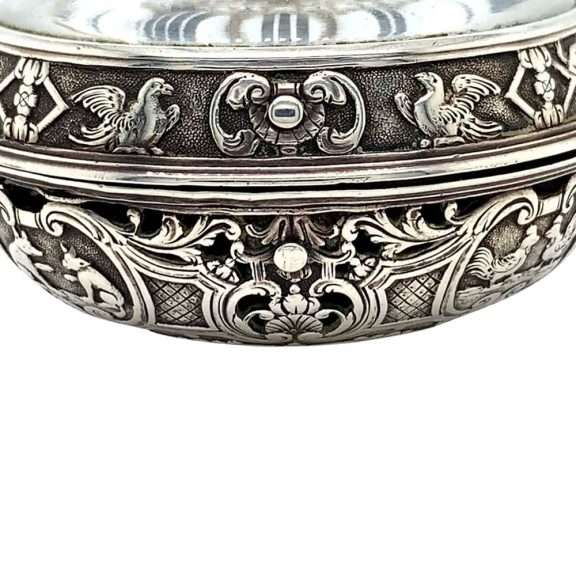
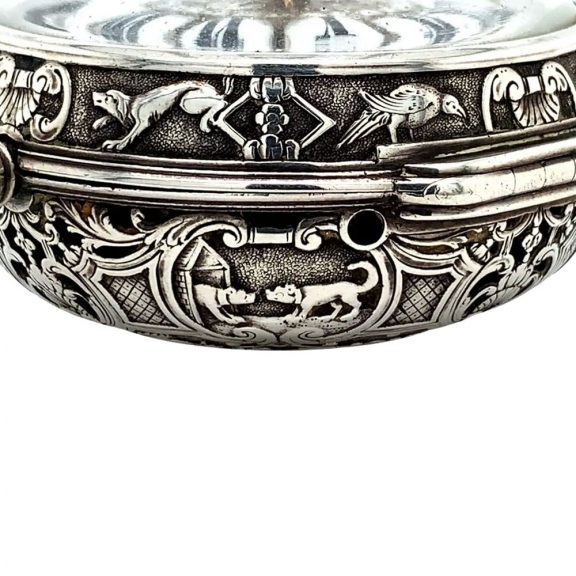
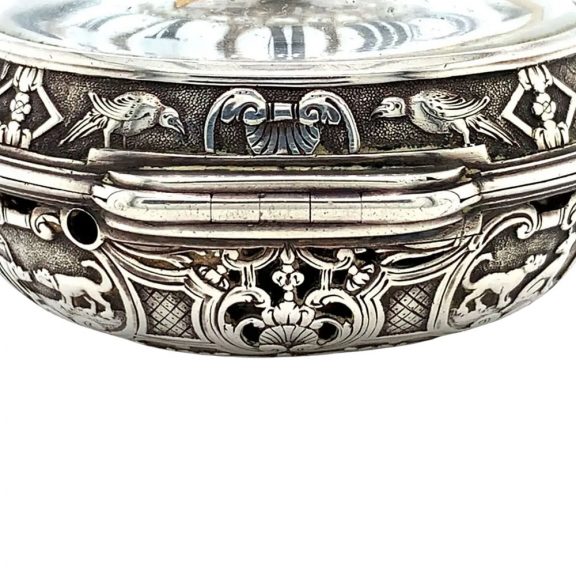
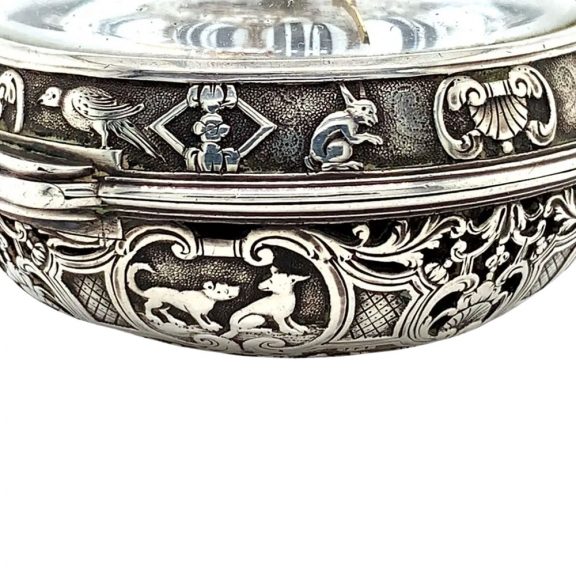
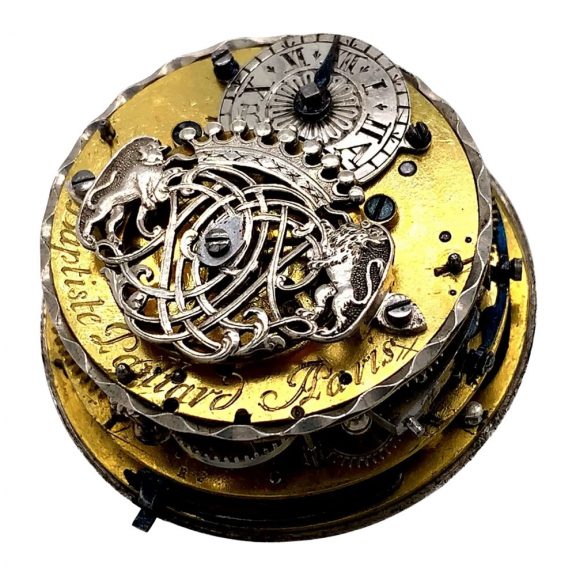
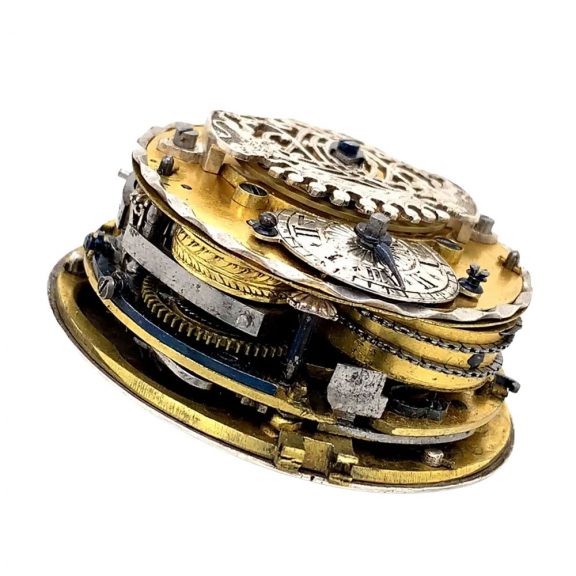
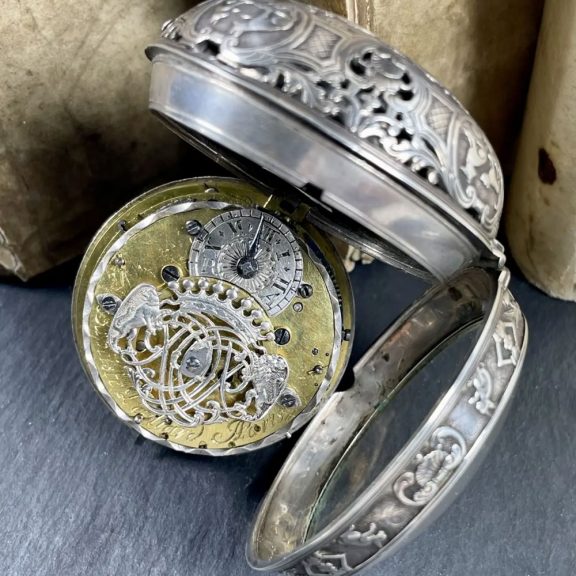
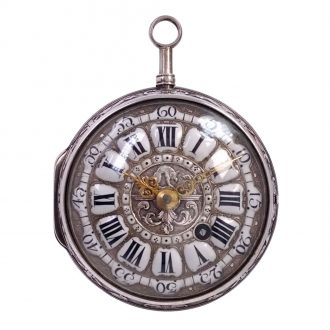
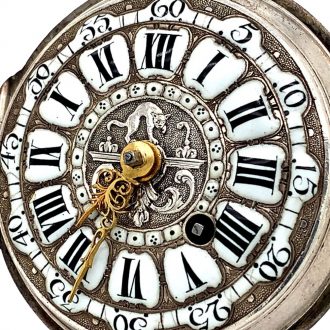
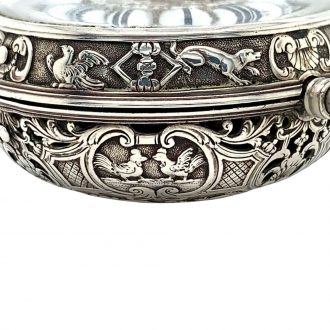
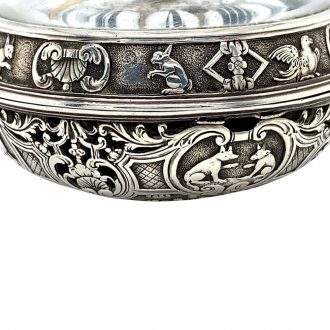
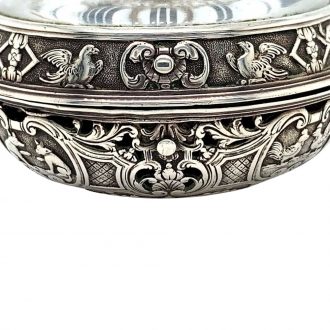
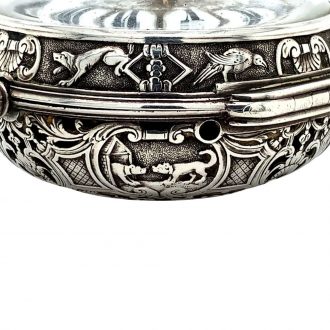
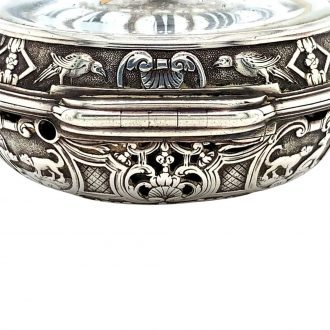
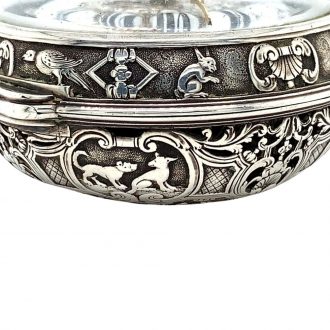
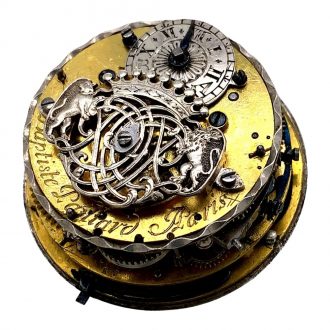
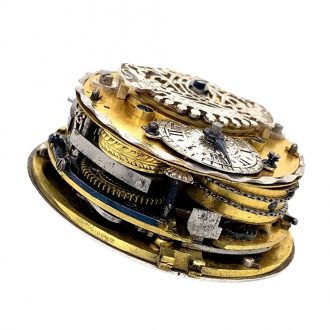
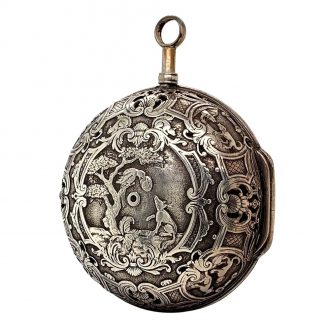
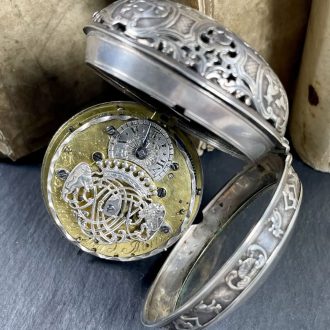
A decorative French silver open faced quarter repeating verge pocket watch, circa 1750. Full plate movement, chain and fusee, one hammer, a three arm brass balance, silver balance bridge with monogram and French count’s crown as well as a bear and lion as monogram holders. Finely engraved silver dial, white enamel cartouches with black Roman hours, outer black Arabic five minute numerals on cambered white enamel and Louis XIV hands. The case with repoussé fable depictions of the ancient Greek poet Aesop, a pierced edge and bottom bell. Movement signed.
–
Diameter: 52 mm
–
Weight: 131 g
–
Signed: Baptiste Paillard Paris
–
Unfortunately, very little is to be found in the relevant literature about the Parisian watchmaker Baptiste Paillard. Around 1750, he lived as a watchmaker in Paris, where he became a master craftsman in 1717. According to the archives, he was based at Quai Bourbon (1723), sur le Pont Marie (1741), Ile Notre Dame (1743) and finally Quai le Pelletier.
–
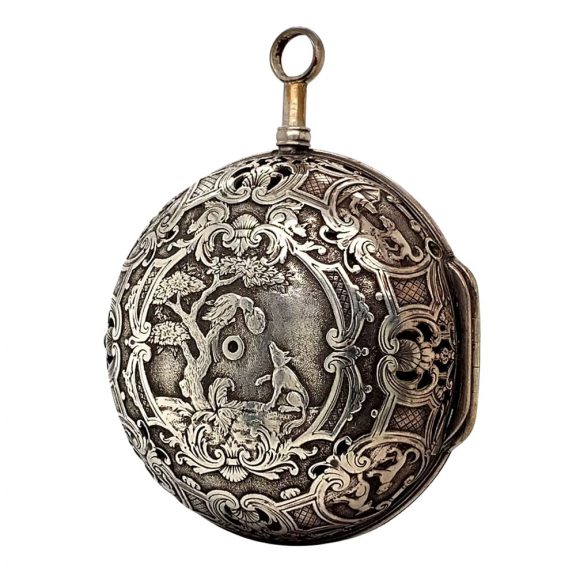
Selected, symbolic fables by the ancient Greek poet Aesop are depicted using the repoussé technique:
The central medallion on the back shows the fable “The Raven and the Fox”. On the edge, there are four cartouches with further fable scenes, including: “The Wolf and the Dog”, “The Two Roosters” and “The Pig and the Bitch”. There is openwork, baroque decor between the medallions. Further animal depictions can be found on the bezel and in the center of the dial.
Aesop used his animal fables to characterize the behaviour of his fellow human beings. Setting an example and with moralizing and educating intentions, he held up a mirror to people in which they should recognize themselves. The human weaknesses mentioned are envy, stupidity, greed, vanity, etc.
The fable on the back of the case is one of the best known of Aesop’s fables and is generally understood as a warning against flatterers:
A raven has found a piece of cheese and retreated to a branch to eat it when a fox comes by. The fox, who would like to have the cheese himself, flatters the raven, calling him beautiful and the king of the birds. Finally the fox asks the raven to sing for him. Made unwary by the fox’s flattery, the raven begins to sing to prove that he is the best singer. When he opens his beak, the cheese falls out and the fox catches it and eats it. Then he laughs and says: Beware of flatterers!
The models for the fable depictions are the woodcuts created in 1551 by Bernard Salomon (circa 1506-1566), about whose life very little is known. His family came from Lyon. He received commissions for decoration from Ippolito II d’Este (1540), Henry II of France (1548) and Jacques Dalbon, Seigneur de Saint-André (1550). He worked closely with the printer Jean de Tournes to design, engrave and illustrate numerous books, including emblem books, documentaries and scientific works, as well as literary works including the Bible and Ovid’s Metamorphoses.
Signed: Baptiste Paillard Paris
Share this page: