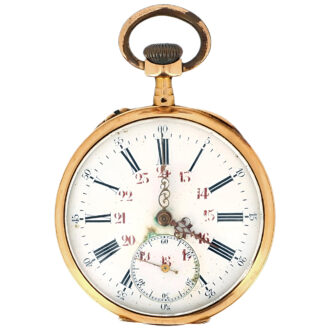
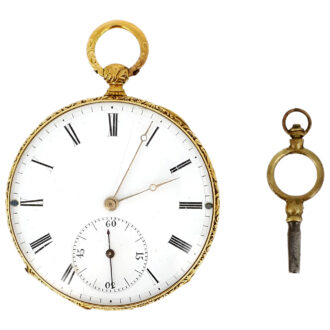
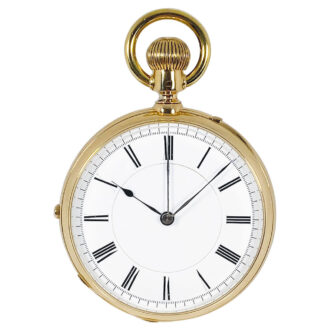
Important German chronograph so-called Chronoscope Circa 1880
- Kenmerk
- AA0758
- Diameter
- 50 mm
- Estimate
- € 17.500 - 35.000
- Price sold
- € 37.500
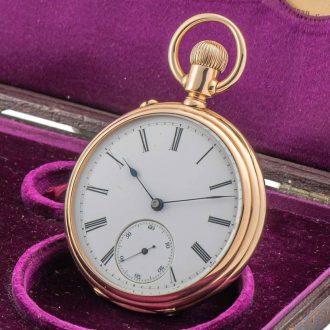
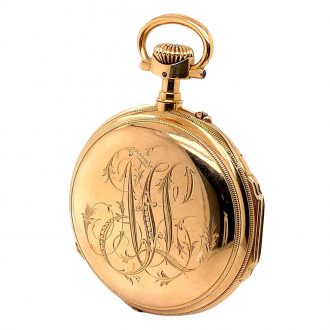
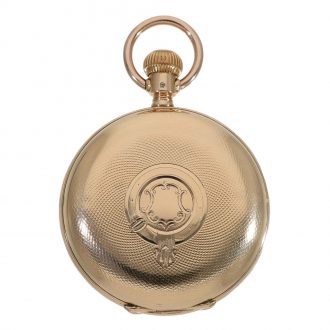
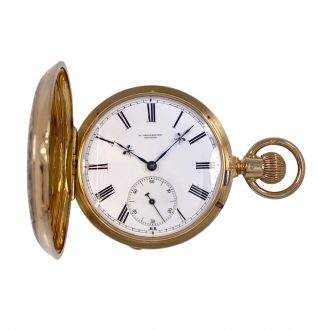
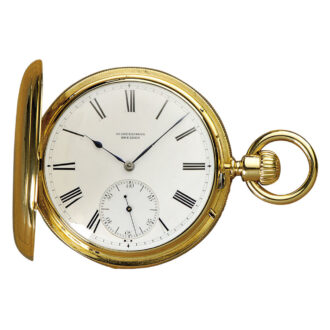
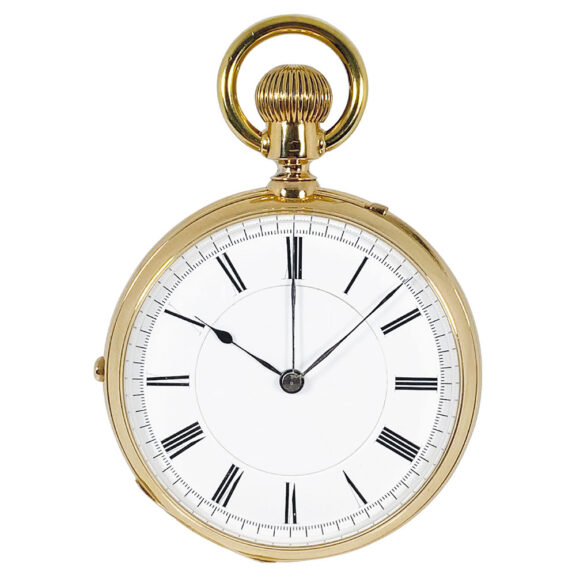
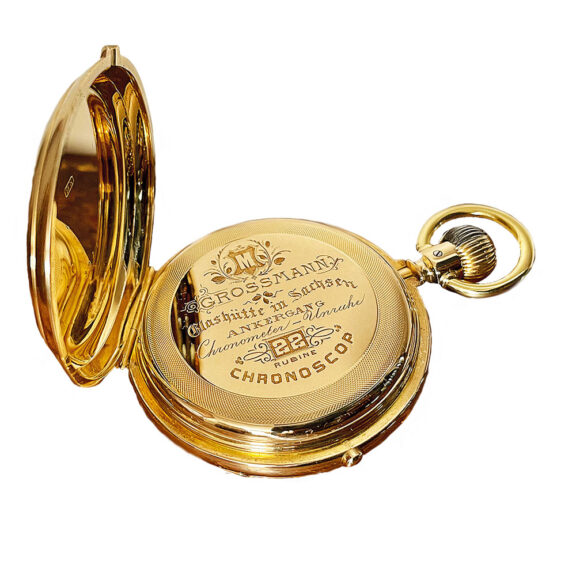
Open faced gold Chronoscope by Carl Moritz Grossmann
–
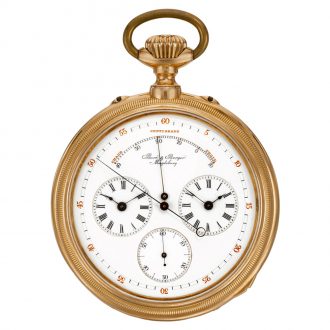
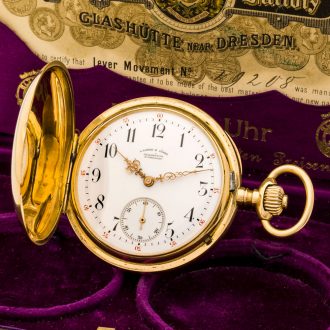
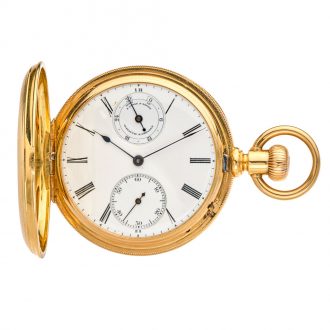
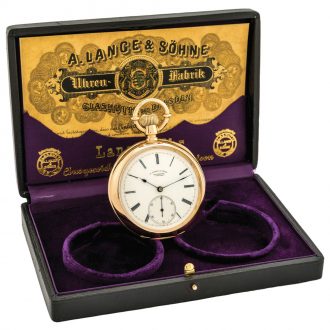
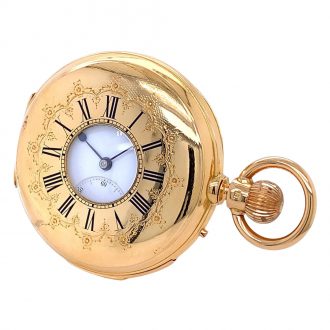
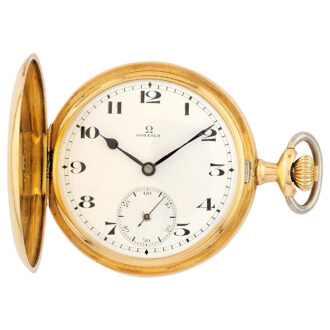
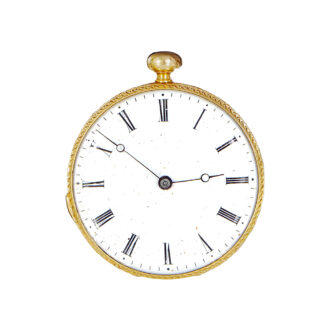
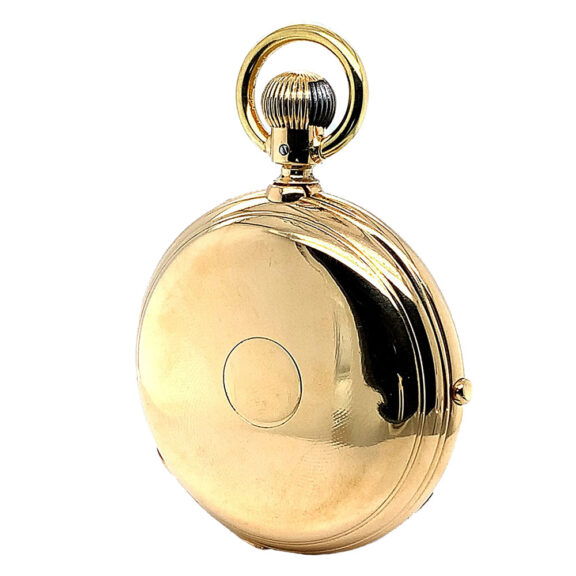
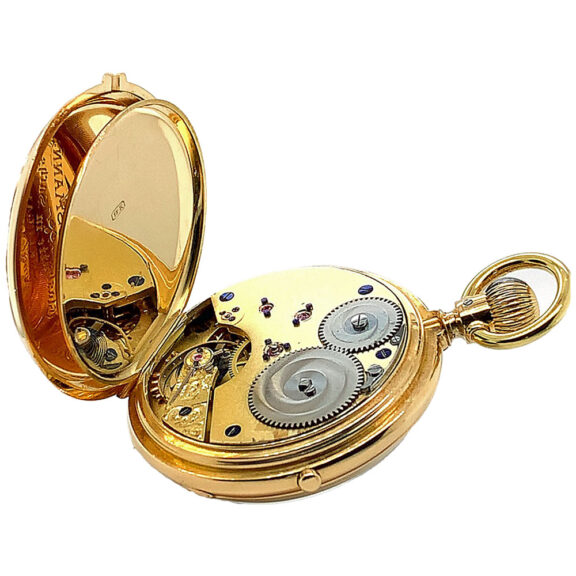
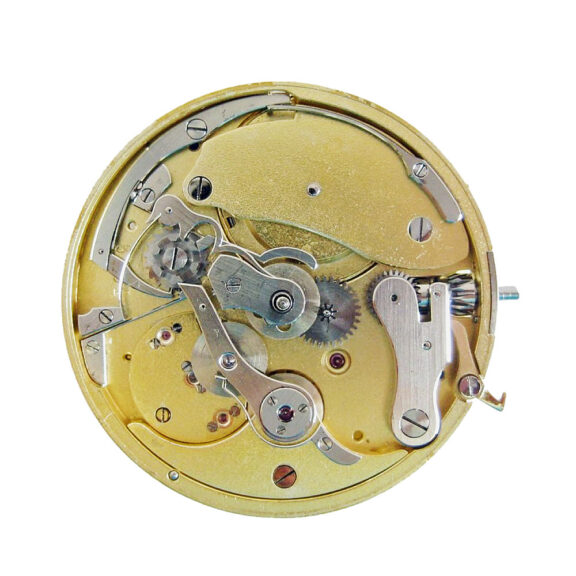
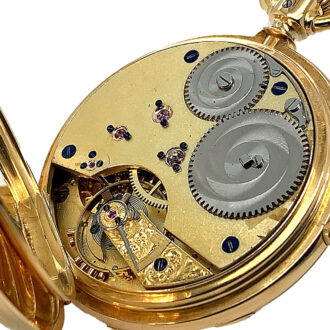
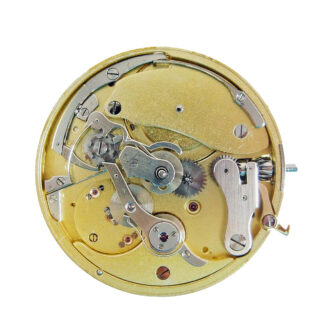
A historically important Glashütte chronograph in a gold case so-called Chronoscope, circa 1880.
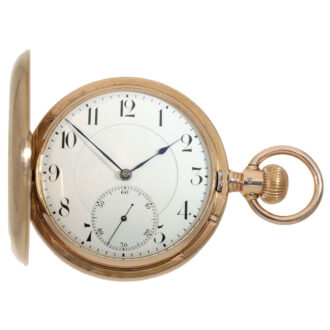
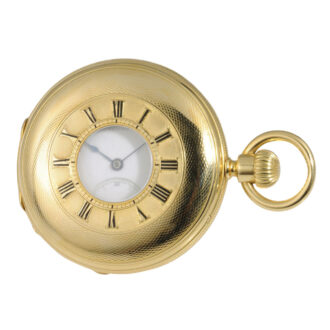
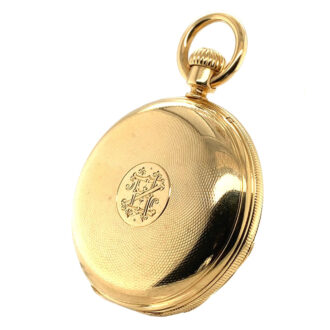
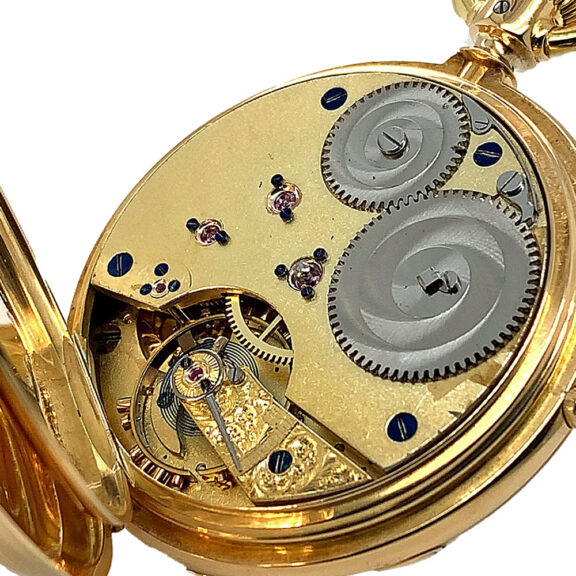
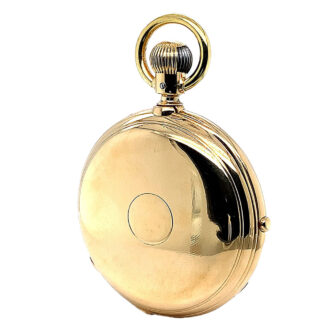
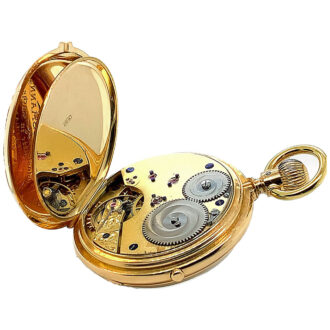
3/4 plate movement, manufactured in 1A quality, gold screw compensation balance. Enamel dial, Roman radial hours, outer minutes/seconds track, centre chronograph hand, spade hands. Engine turned, 18K gold case, dome signed and inscribed.
–
Diameter: 50 mm
–
Weight: 110 g
–
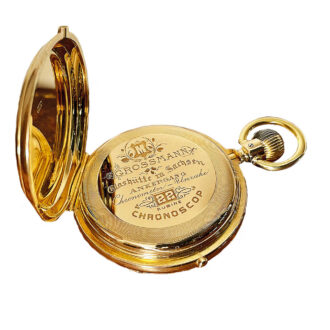
Signed: Grossmann Glashütte in Sachsen
–
Chronoscope
The correct term for what watchmakers call a chronograph. A chronoscope shows intervals of time, while a chronograph, strictly speaking, ought to record time. A device for measuring short time intervals, especially in determining the velocity of projectiles or a person’s reaction time.
–
Carl Moritz Grossmann was born on March 27, 1826, in Dresden; his father was a mail sorter at the royal post office in Dresden. Moritz grows up in modest circumstances, but his teachers recognize from his excellent academic performance that he has an extraordinary talent. He was given a so-called free position and studied – just like Ferdinand Adolph Lange years earlier – for two years at Dresden’s Technical College, the forerunner of today’s Technical University. In 1842, Grossmann began an apprenticeship as a watchmaker with Gottfried Friedrich Kumme (senior) in Dresden, which he was allowed to end early due to his talent. In addition, he is learning English, French and Italian. During this time, Grossmann became friends with the watchmaker Lange, who was eleven years his senior. Both are ambitious, tinker with things, want to know how everything works and want to build watches. Moritz Grossmann’s wanderings in 1847 first led him to the chronometer maker Moritz Krille in Altona, then to the court watchmaker Josef Bierganz in Munich. A little later, he moved to the Swiss watch metropolis La Chaux-de-Fonds, England, France, Denmark and Sweden. He is always looking for further training and additional knowledge in his field. He did not return to Dresden until 1854, and a short time later, he went to the glassworks 30 kilometres away. Moritz Grossmann developed the “Glashütte swivel chair” (a small lathe for watchmakers); later, he concentrated on the anchorage of the clocks and the optimal construction of the chronometer rocker; he made precision tools, gait models, fine pocket watches, precision pendulum clocks and marine chronometers.
Signed: Grossmann Glashütte in Sachsen
Share this page: