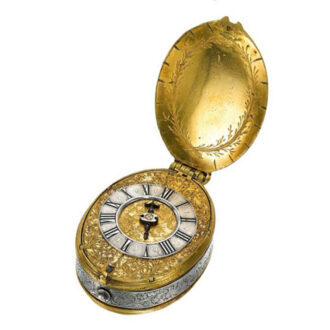
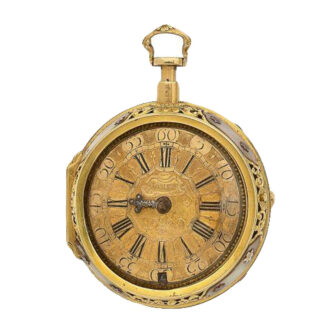
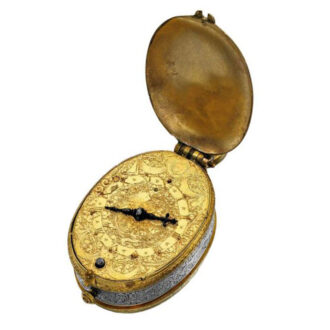
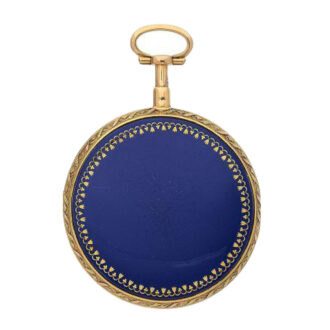
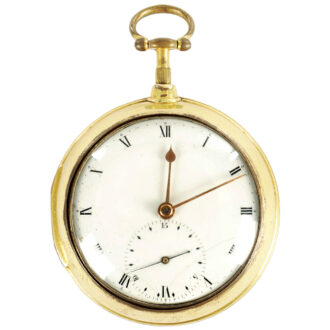
Early French fire gilt cylinder chronometer Circa 1765
- Kenmerk
- DB0009
- Diameter
- 81 mm
- Estimate
- € 30.000 - 60.000
- Price sold
- € 55.000
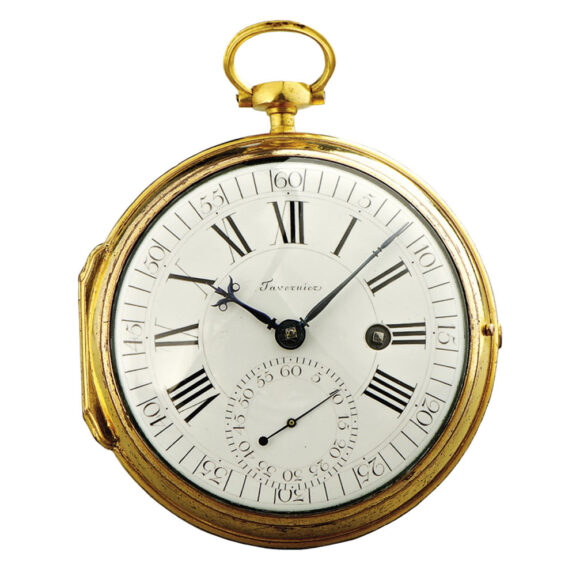
Fire-gilded brass deck chronometer by Jean-Pierre Tavernier
–
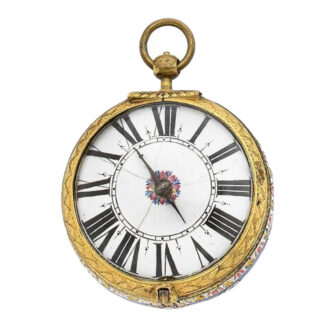
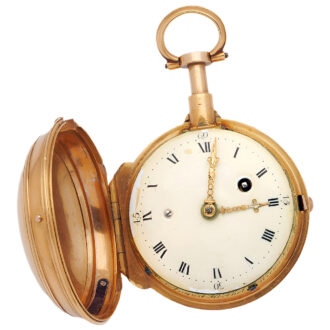
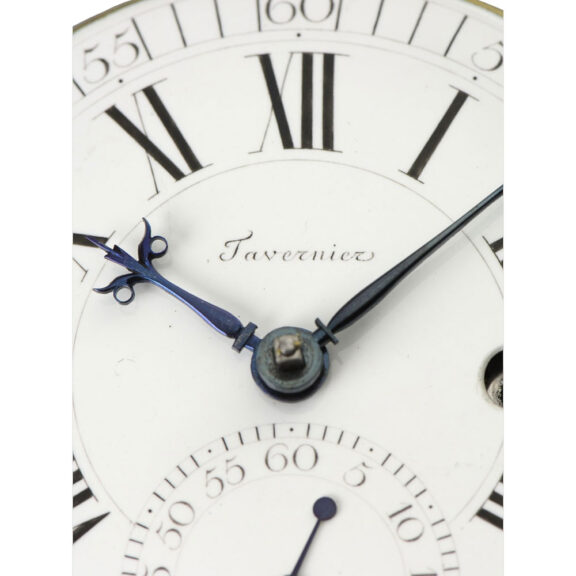
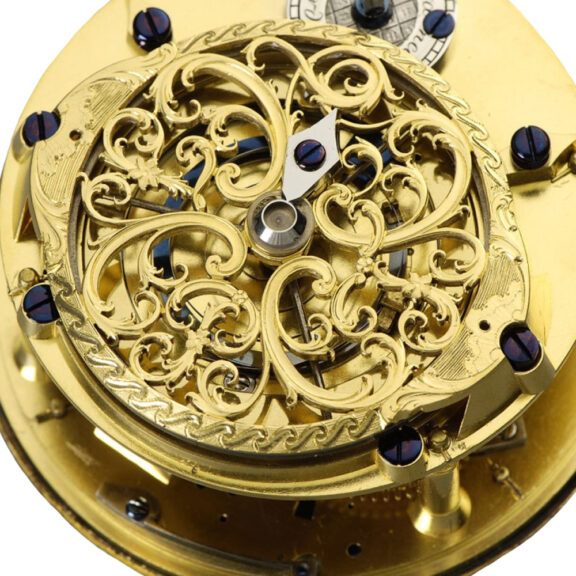
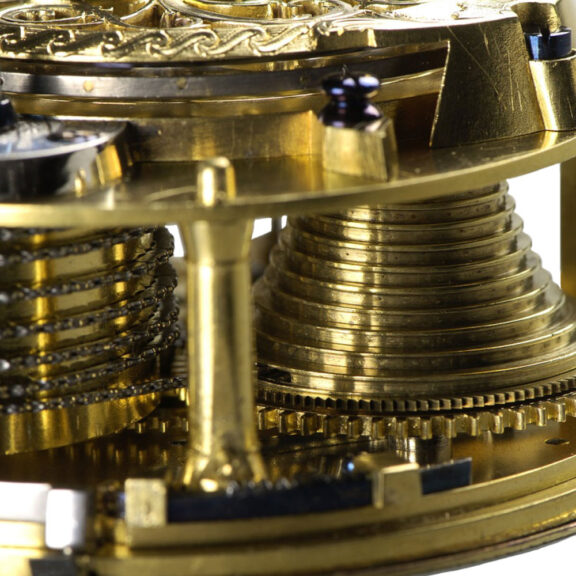
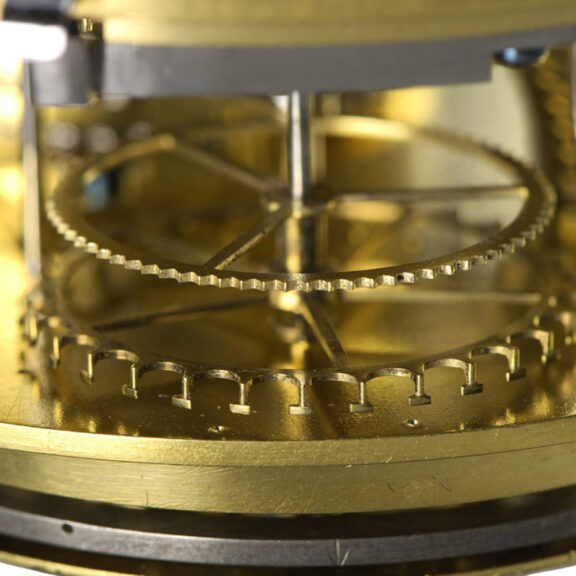
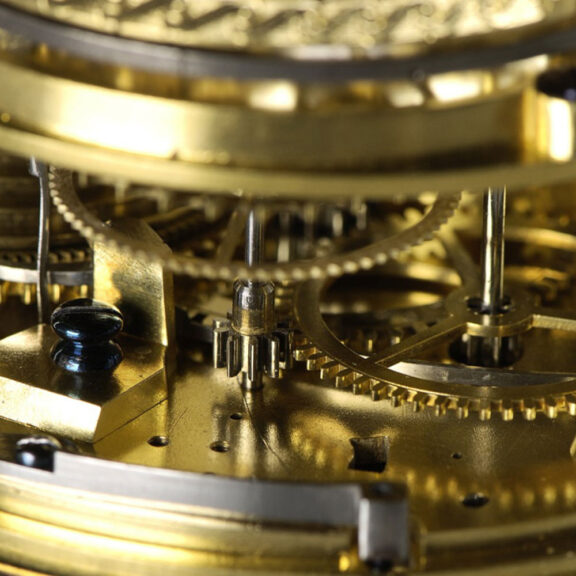
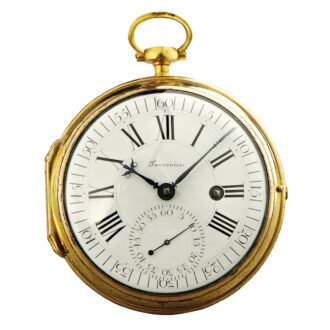
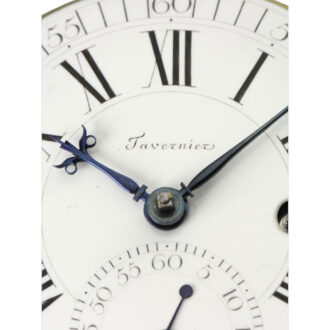
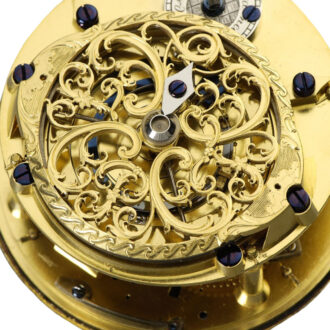
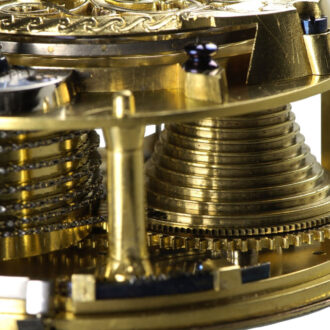
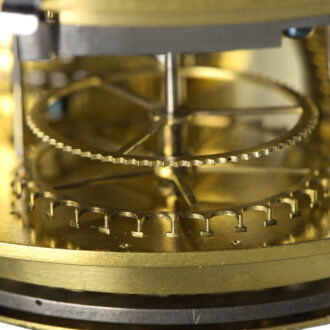
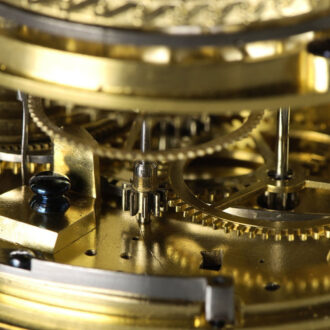
An early and historically important French brass fire gilt open faced cylinder navigation deck chronometer, circa 1765. Montre de Marine. Fire-gilded brass full plate movement, cylinder escapement, chain and fusee, balance stop device, three-armed steel balance, oversized brass cylinder wheel, fine florally engraved, pierced balance cock. White enamel dial with Roman hours and Arabic minutes, subsidiary seconds at 6 o’clock. Plain case. dial signed, movement monogrammed.
–
Diameter: 81 mm
–
Weight: 411 g
–
Signed: Jean-Pierre Tavernier Paris
–
A chronometer of such outstanding design and quality must be regarded as the predecessor of the marine chronometers developed later, such as the work of Arnold or Le Roy. Presumably dating from a time when Harrison had finally won the reward for calculating longitude at sea from the Board of Longitude, this timepiece was obviously not yet fitted with the spring detent escapement, which John Arnold would eventually invent. Instead, this movement uses a cylinder escapement with a steel cylinder and a 60-teeth wheel, which results in a jumping second (seconde morte) and a correspondingly slow beat of the 45 mm balance. A second gear wheel sits on the spindle of the escapement wheel and interacts with the balance locking lever. The execution of the construction attests to Tavernier’s remarkable skills and the immaculate dial with its beautiful poker and beetle hands is a feast for the eyes. The movement is unsigned but the inside of the magnificent balance cock bears the initials of the maker J. P. T. for Jean-Pierre Tavernier. The retaining spring to prevent removal of the movement can be set with a special key by means of a device on the upper work plate. It is possible that it was such a timepiece Tavernier presented to the Académie des Sciences in 1766 as his ship’s watch, which is recorded in the Histoire de l’Académie Royale des Sciences of 1767.
–
Jean-Pierre Tavernier was born in 1714 and became a master in 1746. He specialized in small, portable watches but also published tables on the equation of time. He died in 1795. His sons Louis, Etiënne and Pierre Benjamin worked as watch and casemakers in Paris as well.
Signed: Jean-Pierre Tavernier Paris
Share this page: