Swiss gold skeletonized carillon repeater with automaton Circa 1820
- Kenmerk
- FF0013
- Diameter
- 59 mm
- Estimate
- € 10.000 - 18.000
- Price sold
- -
Gold skeletonized carillon quarter repeater
–
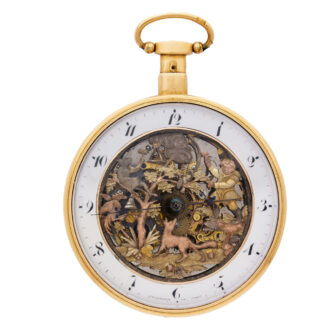
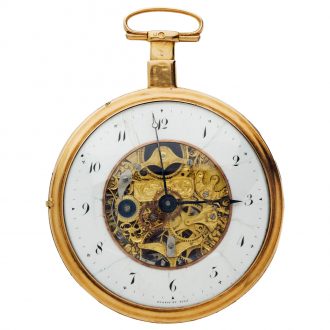
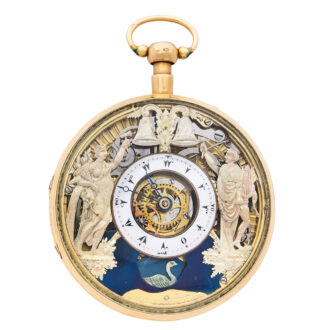
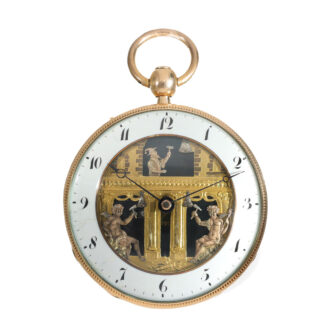
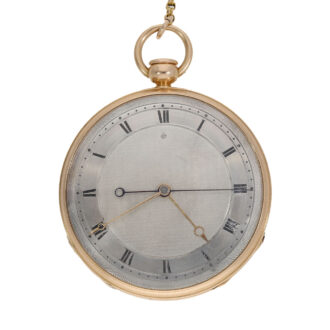
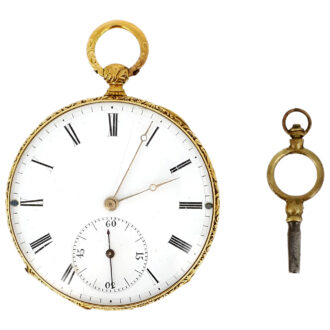
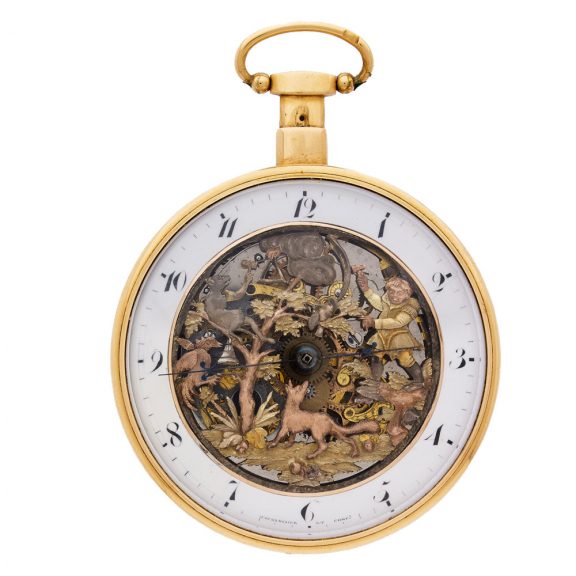
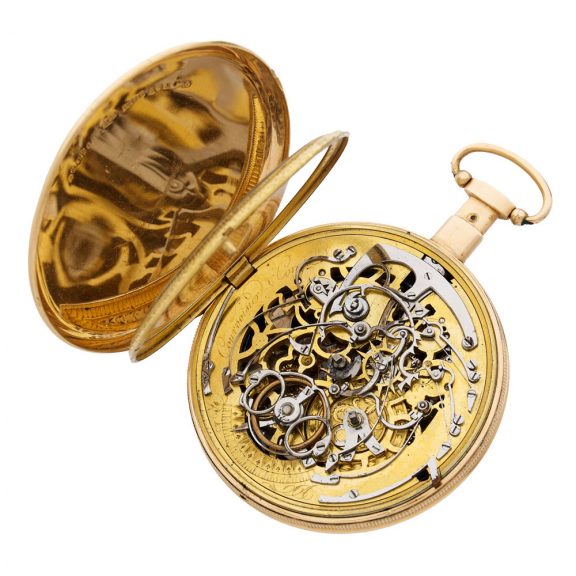
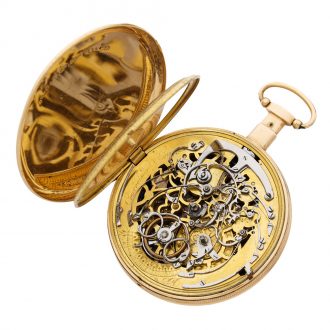
A Swiss 18 carat gold open faced skeleton watch with Jaquemart automatons, chime strike with carillon quarter repeater with three hammers on three gongs, circa 1820. Gilt movement with key winding, the skeleton assembly with a three arm balance spring fixed at two ends, cylinder escapement, chime with three hammers on three gongs, all the gears with a mirror polish, advance / delay adjustment slide.
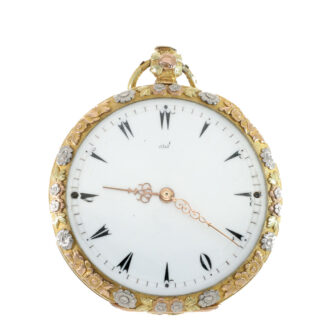
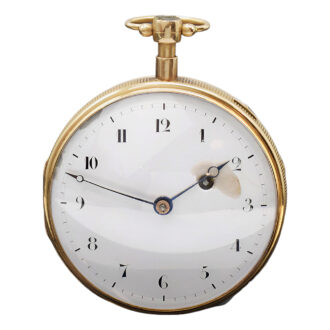
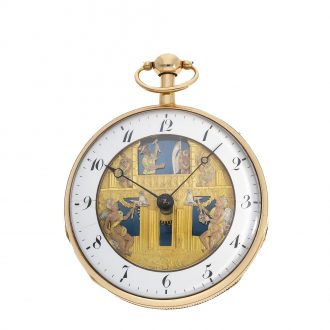
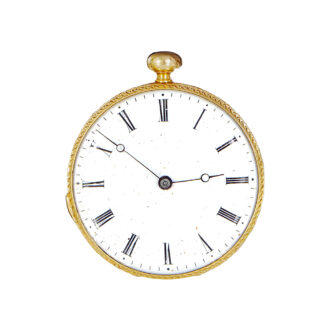
Annular dial in white enamel with Arabic numerals in the Breguet style, steel hands, railway minute outer track with signature Courvoisier & Comp, the centre with a scene reinterpreting the scene from La Fontaine’s Fables The Crow and the Fox, the entire strike mechanism activated by pushing the pendant.
–
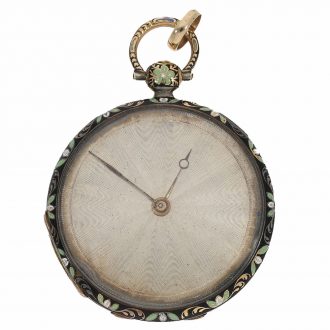
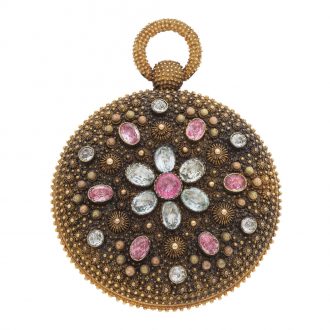
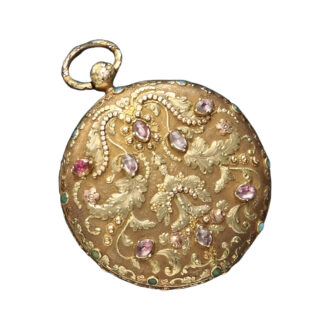
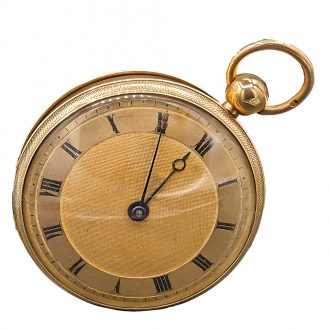
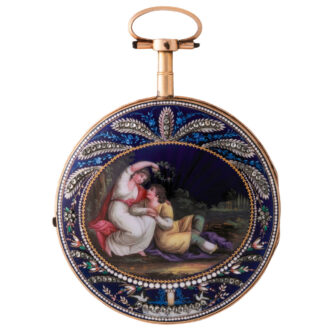
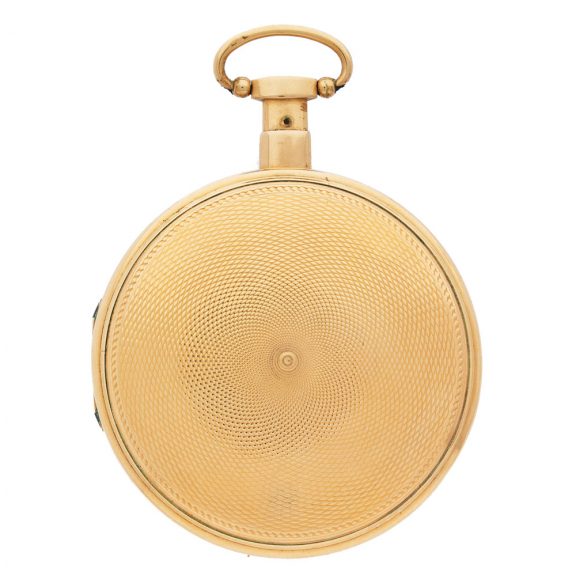
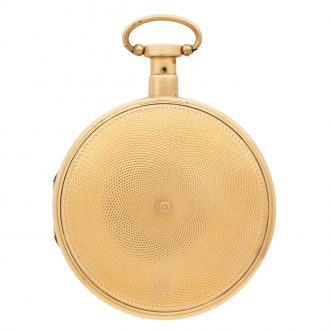
18 Carat round case , the transparent bowl revealing the skeleton movement, the fluted case band, the strike triggered by the pendant, the back entirely guilloché with a master’s mark inside PHMI
Skeleton automaton in the centre represents a scene with a standing peasant striking a scythe symbolizing time, to his left a monkey striking a triangle held by a hand protruding from a cloud above and a striking crow a bell at the end of a tree branch, the whole comes to life in unison with the chime, observed by a fixed fox in the lower part, the whole finely sculpted and chiselled in several colours of gold.
–
Diameter: 59 mm
–
Weight. 117.6 gr.
–
Signed: Courvoisier & Comp.
–
In the fable The Crow and the Fox by Jean de La Fontaine, time plays a subtle but essential symbolic role in the plot and moral of the story. Although time is not explicitly mentioned, it manifests itself in the actions and in the narrative progression, reinforcing themes related to the moment, but also to the cunning and consequences of choices. This is probably one of the few watches known to date that uses this symbolism from the fables of La Fontaine, one of the greatest minds in French literature.
The time of flattery and impatience
The fox, by flattering the crow, creates a moment of seduction, where time seems suspended. The crow, seduced by the flattery, lets himself be carried away by an instant desire for recognition. He does not think about the consequences of his act, and this haste costs him his cheese. Here, time symbolizes impatience and lack of perspective. La Fontaine thus shows that lack of reflection and haste can lead to loss.
The fox’s cunning and control of the opportune moment
The fox, for his part, embodies a perfect mastery of time and opportunity. He waits patiently for the crow to be flattered enough to sing, thus marking the importance of waiting in the success of his cunning. This calculated wait shows that the fox understands the importance of the moment to achieve his ends. Time then becomes a tool of strategy and manipulation in his hands, demonstrating that he who knows how to wait and calculate the opportune moment is often victorious.
The symbolism of time and the moral of the fable
At the end, La Fontaine uses the crow and the fox to illustrate the popular wisdom that one should be wary of flattery and take the time to think before acting. The fable thus underlines the importance of time in decision-making. The crow could have kept his cheese by remaining cautious and taking the time to analyze the situation, rather than giving in to the immediate attraction of flattery.
Signed: Courvoisier & Comp.
Share this page: